

Headtorches are those items you don’t think about much until you really need them.
Whether it’s an early alpine start, late finish on a long hike, or simply finding your way after dark, a reliable light source will quickly become essential.
A head torch is more practical than using a handheld torch and phones as a light source, for the simple reason that they allow for both of your hands to remain free.
This becomes even more important when hiking over unlevel territory in poor visibility or when fatigue sets in.
This guide provides information on how to choose a headtorch based upon your travel style (hiking, trekking etc.) rather than specific models.
It will also explain what actually matters so that you can choose a headtorch that is both reliable and suited to your needs.
- Quick Guide: Choosing the Right Headtorch at a Glance
- How to Choose a Headtorch
- Headtorches in Real Hiking Conditions
- Common Mistakes to Avoid
- Fit, Comfort & Practical Tips
- How a Headtorch Fits Into Your Overall Setup
- Care, Maintenance & Lifespan
- Explore Headtorch Options by Use Case
- FAQs About Headtorches
- Where to Next?
Quick Guide: Choosing the Right Headtorch at a Glance
You can use these as starting points to match a headtorch to your hiking style.]:
General Hiking & Walking Holidays
Simple, reliable headtorches with balanced brightness and battery life.
Early Starts & Late Finishes
Brighter headtorches that provide better visibility over longer distances.
Lightweight & Emergency Use
Compact, minimal designs that are easy to carry “just in case.”
Multi-Day Hiking & Trekking
Headtorches with longer battery life or rechargeable options that can last multiple days.
Travel & Packability
Lightweight, compact designs that fit easily into a backpack or luggage.
Battery life is only one part of preparing for longer adventures. Proper planning a multi-day trek will help you avoid unnecessary problems on the trail
“Every hiker starts somewhere — grab your free Hiking for Beginners guide.”
How to Choose a Headtorch
Choosing a headtorch isn’t about having the brightest option available.
It’s much more about having the right level of light for your needs and knowing it will work when you need it.
Do You Actually Need a Headtorch?
For many hikers, a headtorch is carried as a backup rather than a primary tool.
It becomes essential, however, when:
- starting before sunrise
- finishing after sunset
- hiking in remote or unfamiliar terrain
- dealing with unexpected delays
Even on shorter hikes, carrying a small headtorch adds a layer of safety with very little downside.
It’s one of the essential gear for a day hike that you’ll hopefully never need—but will be glad to have
Brightness (Lumens): How Much Do You Need?
Brightness is measured in lumens, but more isn’t always better.
- Lower brightness
- suitable for close-up tasks or campsite use
- preserves battery life
- Moderate brightness
- ideal for general hiking in the dark
- balances visibility and battery use
- High brightness
- useful for faster movement or technical terrain
- drains battery more quickly
For most hiking scenarios, a moderate brightness level is more than enough.
Beam Type: Flood vs Spot
Headtorches typically use different beam patterns.
- Flood beam
- wide, even light
- better for close-range visibility and general use
- Spot beam
- focused, longer-distance light
- useful for navigating further ahead
Many headtorches combine both, allowing you to adjust based on conditions.
Battery Type: Rechargeable vs Disposable
If you’re preparing for overnight adventures, our guide to backpacking for beginners covers the other gear you’ll want to bring.
Power source is an important consideration, especially for longer trips.
Rechargeable batteries
- convenient for regular use
- easy to top up with a power bank
- reduce waste
Disposable batteries
- useful as backups
- easy to replace on longer trips
- don’t require charging infrastructure
For walking holidays, rechargeable options paired with a power bank often work well.
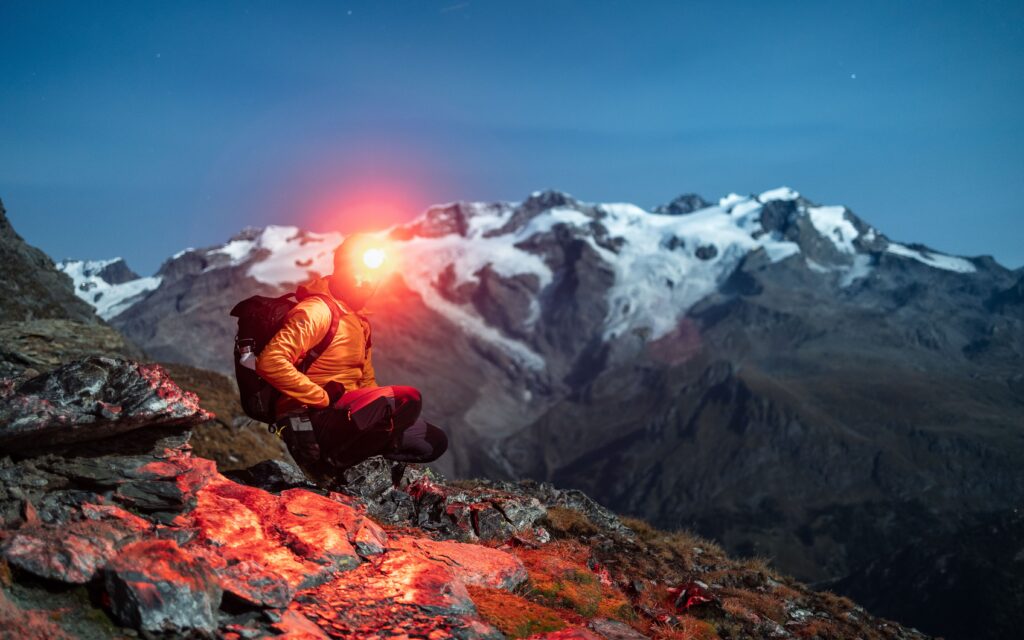
Weight and Comfort
Headtorches are worn for extended periods, so comfort matters.
Look for:
- a secure, adjustable headband
- lightweight design
- stable fit that doesn’t bounce while moving
- Even small weight differences can become noticeable over time.
Keeping your headtorch easy to access is just as important as choosing the right one. Here’s how to pack a hiking backpack so essential gear is always within reach.
Ease of Use
When it’s dark or cold, simple controls make a big difference.
A good headtorch should:
- be easy to turn on and off
- allow quick brightness adjustment
- not require complicated button sequences
Ease of use is often more important than extra features.
Headtorches in Real Hiking Conditions
Headtorches are often carried “just in case,” but when you need one, it quickly becomes essential.
Early Starts & Alpine Conditions
For early starts:
- reliable brightness is important
- battery life needs to last the duration
- beam distance becomes more relevant
This is where slightly more powerful headtorches are useful.
A headtorch is one of the most important tools for hiking safely after dark, but it’s only one part of staying safe in low-light conditions
Late Finishes and Unexpected Delays
If a hike runs longer than expected:
- consistent light becomes critical
- comfort over time matters
- ease of use helps when fatigued
A dependable headtorch can turn a stressful situation into a manageable one.
Multi-Day Hiking
Over several days:
- battery management becomes important
- charging options matter
- reliability is key
This is where rechargeable headtorches paired with a power bank work well.
Campsite and General Use
Headtorches are also useful around campsites or accommodation.
- lower brightness modes are often enough
- wider beam patterns improve usability
- comfort matters for extended wear
Common Mistakes to Avoid
- choosing the brightest option without considering battery life
- not carrying spare batteries or a backup plan
- relying solely on a phone light
- ignoring comfort and fit
- overcomplicating features
Remember, simple and reliable setups usually perform best!
Fit, Comfort & Practical Tips
- adjust the headband for a secure fit
- test controls before heading out
- use lower brightness when possible to extend battery life
- carry a backup power source if needed
A headtorch should feel natural to use, even when you’re tired.
How a Headtorch Fits Into Your Overall Setup
A headtorch works alongside your other gear.
- Navigation tools help you stay on track in low light
- Backpacks carry spare batteries or power banks
- A hiking layering system also affects comfort when wearing a headtorch during colder conditions
It’s a small item, but an important part of your overall safety setup.
Care, Maintenance & Lifespan
- keep the lens clean
- store with batteries removed if not in use
- recharge regularly
- avoid exposure to prolonged moisture
With proper care, most headtorches last for years.
Explore Headtorch Options by Use Case
If you want to refine your choice further, these guides break things down into more specific scenarios:
- Best Headtorches for Hiking
- Reliable, balanced options suitable for most hiking situations.
- Reliable, balanced options suitable for most hiking situations.
- Best Lightweight Headtorches
- Compact designs ideal for carrying as a backup or for minimal setups.
- Compact designs ideal for carrying as a backup or for minimal setups.
- Best Rechargeable Headtorches
- Convenient options for regular use and multi-day trips.
- Convenient options for regular use and multi-day trips.
- Best Headtorches for Long Battery Life
- Designed for extended use without frequent charging.
FAQs About Headtorches
Do I need a headtorch for day hikes?
It’s not always necessary, but carrying one adds a useful safety backup.
Are brighter headtorches always better?
No, because brightness needs to match your use, not exceed it.
Can I use my phone instead?
Phones work in emergencies but aren’t a reliable primary light source.
How long should a headtorch battery last?
Long enough to cover your expected use, with some margin.
Are rechargeable headtorches worth it?
For regular hiking, they’re often more convenient.
Where to Next?
f you’re new to hiking, our beginner hiking guide covers everything from choosing gear to planning your first adventure
To build a complete setup, you may also want to explore:
- Buyers Guide: Navigation
- Buyers Guide: Layering systems
- Buyer Guide: Waterproof Jackets
Many of our Best Hikes and Walking Holiday guides also show how headtorches fit into real-world hiking scenarios.


