
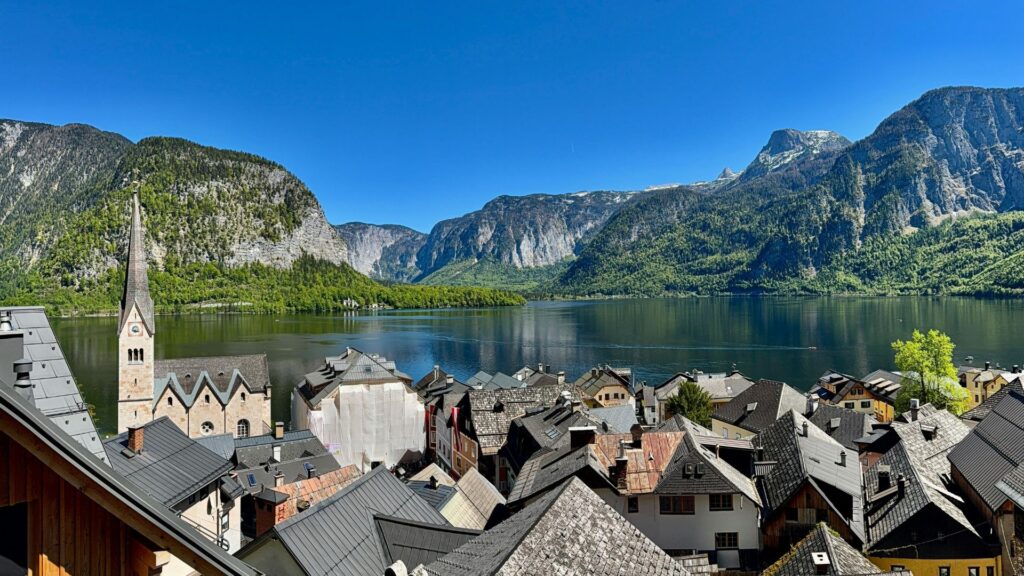
Winter hiking in Austria ranges from easy prepared valley trails to longer walks through snowy forests and alpine plateaus.
These five routes cover some of the best winter walks in Tyrol, Upper Austria, Styria and Salzburger Land, with options for beginners, families and anyone after a longer day in the snow.
- Why try Winter Hiking in Austria?
- 1. Best Winter Hike in Austria for Beginners: Gnadenwald Reflection Path (Tyrol)
- 2. Best Winter Day Hike in Austria for Families: Gosauschmied Winter Trail (Upper Austria)
- 3. Best Winter Trek in Austria: Seefeld to Wildmoosalm Loop (Tyrol)
- 4. Best Winter Mountain Walk in Austria: Rittisberg Winter Hiking Trail (Styria)
- 5. Best Short Winter Walk in Austria: Filzmoos to Hofalmen (Salzburger Land)
- When Is the Best Time for Winter Hiking in Austria?
- What to Bring for Winter Hiking in Austria
- Winter Walking Holidays in Austria
- Winter Hiking in Austria FAQs
- Conclusion
- Where to Next? More Hiking in Europe
Why try Winter Hiking in Austria?
Winter in Austria isn’t just for skiers and snowboarders like you may have thought.
For those of you who prefer snow underfoot at a slower pace (and want to actually hear the crunch of their boots instead of the whir of ski lifts) winter hiking in this country truly is a magical alternative.
Picture quiet trails that wind through frost-covered forests, mountain views that are made even crisper by the cold, and alpine huts that come with steaming mugs of something strong waiting at the end.
Winter is simply another incredible season for hiking in Austria. It’s peaceful, it’s breathtaking, and yes, it’s a lot more accessible than you might think.
This guide covers the best winter hikes in Austria:
“Avoid rookie mistakes. Our free ebook Hiking for Beginners shows you how.”
1. Best Winter Hike in Austria for Beginners: Gnadenwald Reflection Path (Tyrol)
If you’re just dipping your toes (well, boots) into the world of winter hiking, the Gnadenwald Winter Trail is the perfect place to start.
Tucked in the Hall-Wattens region of Tyrol, The Reflection Path runs from Absam towards St. Martin in Gnadenwald, following the lower slopes beneath the Karwendel rather than climbing high into the mountains.
It’s short, easy and open throughout the year, with forest, mountain views and the peaceful surroundings of St. Martin making it a good introduction to winter walking without committing to a long alpine day.
It’s also groomed specifically for winter walkers, which means you won’t need snowshoes or a mountaineering degree to enjoy it.
Gnadenwald Reflection Path Details
- Difficulty: Easy
- Average time: Approx. 1 hour
- Distance: 3.8 km / 2.4 miles
- Elevation gain: 130 m / 427 ft
- Elevation loss: 16 m / 52 ft
- Route type: Linear
- Start: Absam
- End: St. Martin, Gnadenwald
- Highest point: Approx. 908 m / 2,979 ft
- Best for: Beginners and shorter winter walks
- Highlights: Karwendel views, woodland, St. Martin and quiet foothill scenery
- Trail highlight: Reaching the sunny Gnadenwald plateau beneath the much higher Karwendel peaks gives you alpine scenery without a demanding mountain climb.
2. Best Winter Day Hike in Austria for Families: Gosauschmied Winter Trail (Upper Austria)
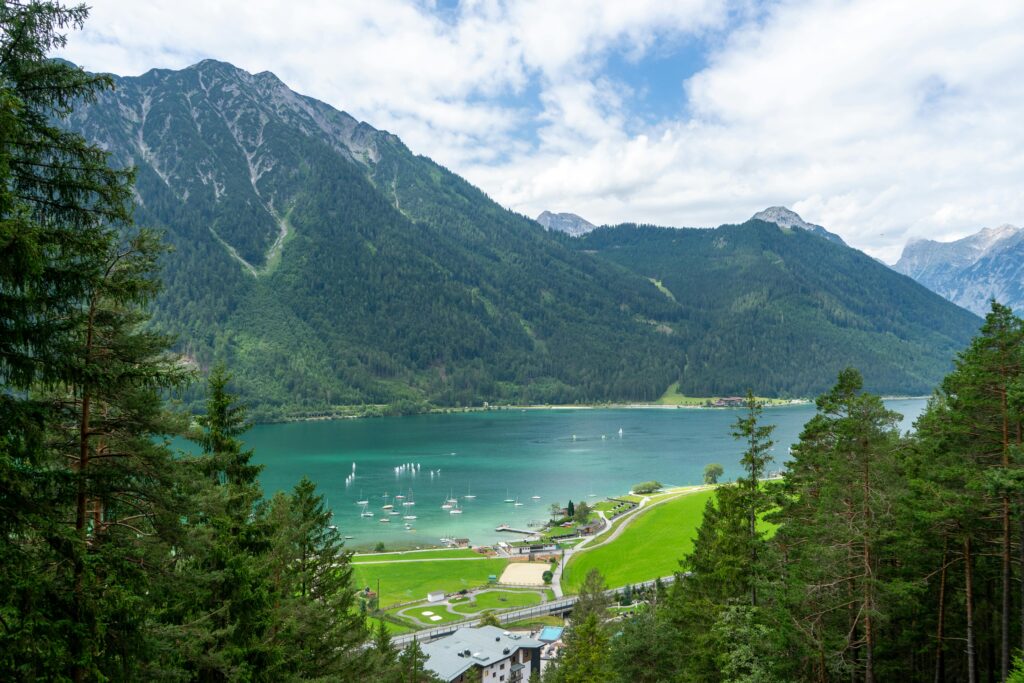
When it comes to family-friendly winter hikes, the Gosausee Loop ticks all the right boxes: easy terrain, stunning scenery, and plenty of snow-dusted magic to keep everyone engaged (yes, even the teens).
This trail circles the Vorderer Gosausee, which is a glacial lake that is nestled beneath the towering Dachstein peaks.
In winter, the lake often freezes over, the surrounding trees wear coats of snow, and the whole scene looks like a postcard from another century.
The path is flat, it’s well-cleared, and it’s also perfect for all ages, including kids in sleds or snow boots. It’s more of a scenic stroll than a full-on trek, but the views pack a serious punch
Gosauschmied Winter Trail Details
- Difficulty: Easy
- Average time: Approx. 1–1.5 hours
- Distance: 4 km / 2.5 miles
- Elevation gain: 106 m / 348 ft
- Elevation loss: 106 m / 348 ft
- Route type: Circular
- Start/end: Gasthof Gosauschmied, Gosau
- Highest point: 845 m / 2,772 ft
- Best for: Families and shorter prepared winter walks
- Highlights: Snowy forest, reservoir, Gosau valley scenery and mountain views
- Trail highlight: The reservoir section opens up the surrounding winter landscape after the initial woodland climb.
3. Best Winter Trek in Austria: Seefeld to Wildmoosalm Loop (Tyrol)
For those of you who are ready to trade in the easy stroll for a proper winter trek, the Seefeld to Wildmoosalm loop is a real standout.
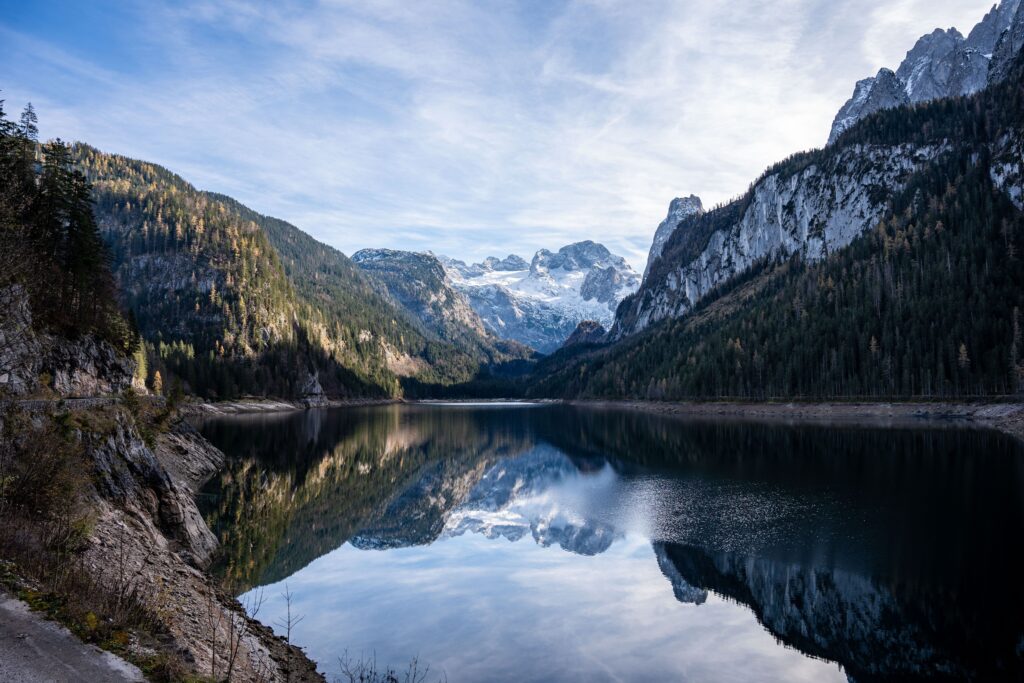
This trail takes you through snowy forests, across high plateaus, and into quiet alpine clearings that feel a world away from the ski crowds.
Starting from the charming village of Seefeld, the route gently climbs through some truly pristine winter landscapes to the iconic Wildmoosalm, which is a rustic alpine hut that is known for hearty food and warm hospitality.
It’s long enough to feel like a full day out, but manageable without technical gear…as long as you’ve got warm layers, solid boots, and maybe a pair of trekking poles for good measure!
Seefeld to Wildmoosalm Loop Details
- Difficulty: Easy
- Average time: Approx. 3.5 hours
- Distance: 11.8 km / 7.3 miles
- Elevation gain: 250 m / 820 ft
- Elevation loss: 250 m / 820 ft
- Route type: Circular
- Start/end: Seefeld railway station
- Highest point: 1,340 m / 4,396 ft
- Best for: A longer prepared winter walk with an alpine hut
- Highlights: Wildmoos plateau, snowy forest, Fludertal and Wildmoosalm
- Trail highlight: Wildmoosalm provides an atmospheric halfway stop surrounded by the snowy forests and open clearings of the plateau.
4. Best Winter Mountain Walk in Austria: Rittisberg Winter Hiking Trail (Styria)
If you’re after big mountain views without needing crampons or a climbing rope, the Rittisberg Panorama Trail is your ticket.
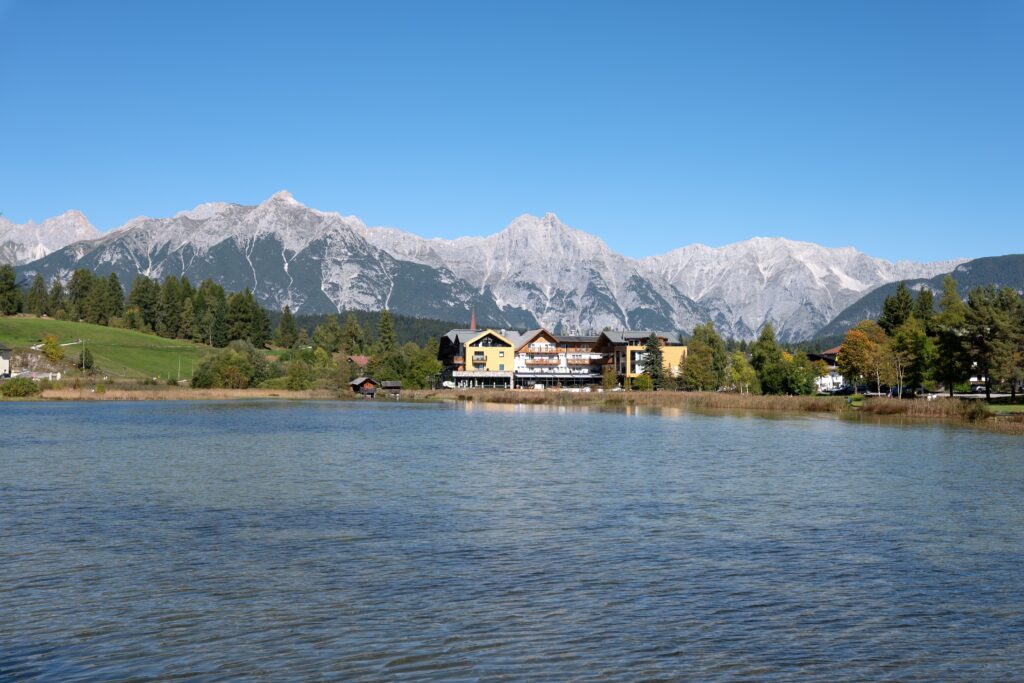
Located in the Ramsau am Dachstein region of Styria, this well-marked winter walking path loops around the base of the Rittisberg and delivers sweeping views of the Dachstein mountains and snow-covered forests that look straight out of a fairy tale.
It’s a proper mountain walk that’s both accessible and manageable at the same time, and this is true even in deep winter, thanks to the well-prepared trails and gentle gradients found throughout the Austrian Alps.
On clear days, the panoramic scenery is truly next level.
Rittisberg Winter Hiking Trail Details
- Difficulty: Moderate
- Average time: Approx. 2 hours 45 minutes
- Distance: 7.6 km / 4.7 miles
- Elevation gain: 336 m / 1,102 ft
- Elevation loss: 336 m / 1,102 ft
- Route type: Circular
- Highest point: 1,555 m / 5,102 ft
- Best for: Panoramic winter mountain walking
- Highlights: Dachstein south walls, Schladminger Tauern, snowy forest and Ramsau plateau views
- Trail highlight: The elevated circuit around Rittisberg delivers some of the biggest mountain scenery in the article without requiring a summit ascent.
More Hiking in Austria
Planning more time on the trails? These guides will help you explore Austria beyond the winter season:
- Ultimate Guide to Hiking in Austria — explore Austria’s main hiking regions, landscapes and practical planning information.
- Best Hikes in Austria — discover more standout mountain and valley routes from across the country.
- Hut-to-Hut Hiking in Austria — plan a longer alpine adventure linking mountain huts and high-level trails.
- Walking Holiday in Austria — compare destinations and routes for a longer walking-focused trip.
5. Best Short Winter Walk in Austria: Filzmoos to Hofalmen (Salzburger Land)
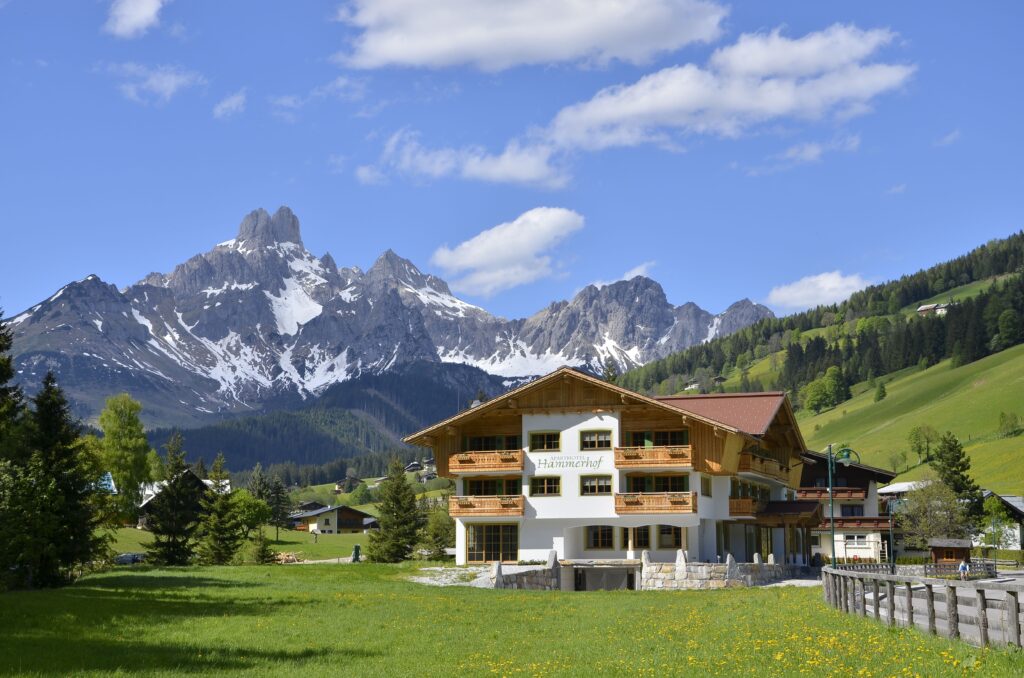
Short, sweet, and snowy in all the right ways, the winter walk from Filzmoos to the Hofalmen huts is a picture-perfect 5 km trail ideal for a crisp morning or relaxed afternoon outing.
The route follows a gently rising valley beneath the towering Bischofsmütze peak, and with groomed paths that make it accessible for most walkers, even in deep winter.
Along the way, you’ll pass frozen streams, pine forests, and quiet alpine pastures.
At the turnaround point, you’ll find the Oberhofalm and Unterhofalm huts, both of which are serving traditional Austrian fare and warm drinks in a setting so scenic that it feels almost staged.
Filzmoos to Hofalmen Winter Trail Details
- Difficulty: Easy
- Average time: Approx. 1.5 hours one way
- Distance: Approx. 4.7 km / 2.9 miles one way
- Elevation gain: 209 m / 686 ft
- Elevation loss: Minimal on the outward route
- Route type: Linear
- Start: Filzmoos
- End: Hofalmen / Oberhofalm and Unterhofalm
- Highest point: Approx. 1,281 m / 4,203 ft
- Best for: A shorter winter walk with alpine huts
- Highlights: Bischofsmütze views, snowy forest, Hofalmen and traditional huts
- Trail highlight: Arriving beneath the Bischofsmütze at the Hofalmen gives this relatively easy valley walk a properly dramatic alpine finish.
When Is the Best Time for Winter Hiking in Austria?
December to March is the main winter hiking season in Austria, although snow conditions and prepared trail openings vary considerably between regions and elevations.
December and January bring some of the most atmospheric winter scenery, with snowy villages, forests and shorter daylight hours. This is a great time for easier prepared trails, but an early start is sensible on longer walks.
February is often one of the best all-round months, with established snow cover in many alpine areas and gradually longer days.
March can bring milder temperatures and more sunshine, especially lower down, although snow conditions can change quickly as spring approaches.
Always check local trail and weather conditions before setting out. A groomed winter walking trail can be straightforward one day and icy, snow-covered or temporarily closed the next.
What to Bring for Winter Hiking in Austria
Winter walking doesn’t automatically mean technical mountaineering kit, especially on Austria’s prepared winter trails, but cold temperatures, snow and ice mean you’ll want a little more in your pack than you would on a summer stroll.
For most of these routes, consider bringing:
- Waterproof hiking boots with good grip and enough room for warm socks
- A waterproof outer layer for snow, wind and quickly changing mountain weather
- Warm layers that can be added or removed as you warm up
- A comfortable daypack for spare layers, food and winter essentials
- Gloves, a warm hat and sunglasses for glare from the snow
- Offline maps or reliable navigation on longer or less familiar routes
- Trekking poles for a little extra stability on packed or slippery snow
- Enough water — cold weather can make it surprisingly easy to forget to drink
For icy conditions, traction aids may also be useful, but always follow local guidance and turn back if conditions are beyond the equipment or experience you have with you.
🗒️ Free Checklist: “Never forget the essentials — grab your free Ultimate Hiking Packing List.”
Winter Walking Holidays in Austria
At the end of the day, a winter walking holiday in Austria is a pretty good alternative for anyone who prefers crunching snow underfoot to queuing for ski lifts.
The big advantage is that you don’t need to spend every day tackling a major route.
Austria’s winter walking network makes it easy to mix shorter prepared trails with longer days through forests and alpine valleys, usually with a warm hut or village waiting somewhere along the way.
Base yourself somewhere like Seefeld, Filzmoos or Ramsau am Dachstein and you can build several days of winter walking without needing to move accommodation every night.
There’s something particularly relaxing about the slower pace too. Snow-covered trails, quiet forests, huge mountain views and hot soup at the end of the day — sometimes that’s really all you need from a winter trip.
“Plan less, walk more.” Pick a route, set your pace, and let Europe unfold under your boots: grab your free Walking Holiday ebook today”
Winter Hiking in Austria FAQs
Is winter hiking in Austria safe?
Yes, provided you choose routes that match the conditions and your experience.
Many Austrian resorts maintain dedicated winter walking trails that are separate from technical alpine routes, but snow, ice and changing weather can still make even easy walks more challenging.
Check the local weather and trail status before setting off, stick to marked winter routes and avoid continuing onto closed or avalanche-prone terrain.
Do you need snowshoes for winter hiking in Austria?
Not usually on prepared winter hiking trails.
Many of Austria’s designated winter walking routes are groomed or compacted specifically for walkers, so ordinary winter hiking boots with good grip are often enough.
Snowshoes become more useful on deeper, unprepared snow away from maintained trails. If a route specifically requires snowshoes, treat it as a different type of outing rather than assuming a normal winter walking setup will be suitable.
Do you need special boots for winter hiking in Austria?
For most prepared trails, waterproof hiking boots with good grip are a sensible choice.
Warm socks and enough room inside your boots to keep your feet comfortable are also important. Packed snow can become slippery, so lightweight traction aids can be useful in icy conditions.
You can see our full hiking footwear guide if you’re putting together your winter walking kit.
Can beginners go winter hiking in Austria?
Absolutely.
Austria has plenty of short, prepared winter walking routes with relatively gentle gradients, particularly around established alpine villages and resorts.
Beginners should start with a shorter marked route, check conditions beforehand and avoid treating a winter hike like the same walk in summer. Snow and ice can make even straightforward trails slower and more tiring.
What is the difference between winter hiking and snowshoeing?
Winter hiking normally takes place on prepared or well-used trails where the snow has been compacted enough to walk in ordinary hiking boots.
Snowshoeing is designed for deeper, softer snow where normal boots would sink.
The two activities can sometimes overlap, but if you’re following one of Austria’s groomed winter walking trails, snowshoes are generally unnecessary unless local conditions say otherwise.
Are winter hiking trails in Austria groomed?
Many are, particularly around established winter destinations such as Seefeld, Ramsau am Dachstein and Filzmoos.
However, not every route is maintained every day, and heavy snowfall, ice, wind or avalanche conditions can temporarily affect access.
Always check the local tourism or resort trail report rather than assuming a route will be open simply because it is normally promoted as a winter hiking trail.
What is the best month for winter hiking in Austria?
January and February generally offer the most reliable winter conditions in the Austrian Alps, with established snow cover across many higher areas.
December can be excellent when snowfall arrives early, while March often brings longer daylight hours and milder temperatures.
The best month ultimately depends on elevation and region, so check current conditions if snow-covered landscapes are an important part of the trip.
Conclusion
Winter hiking in Austria is a very different experience from the busier summer season, but that is exactly what makes it so appealing.
The trails are quieter, the landscapes feel sharper under snow, and even a relatively easy walk can feel like a proper alpine outing once the forests, valleys and mountain huts are covered in white.
The best part is that there is plenty of variety. You can keep things simple on a short prepared trail, head out for a longer walk through the Tyrolean forests, or spend a few hours taking in big Dachstein views without needing technical mountaineering skills.
As always in winter, conditions matter more than the route description itself. Snow, ice and weather can change quickly, so it is worth checking local trail updates before setting off and being flexible if a route is temporarily closed.
But with the right conditions and a bit of preparation, winter walking can be one of the most rewarding ways to experience Austria.
Less crowded trails, crisp mountain air, snowy scenery and a warm hut waiting at the end — it is hard to ask for much more than that.
Where to Next? More Hiking in Europe
If Austria has you thinking about your next European hiking trip, these guides are a good place to continue:
- Best Hikes in Italy — head south for Dolomite peaks, alpine lakes and some of Europe’s most dramatic mountain scenery.
- Best Hikes in Slovenia — explore the Julian Alps, Triglav National Park and quieter mountain landscapes just across the border.
- Walking Holiday in Switzerland — combine alpine villages, mountain transport and some of Europe’s classic walking country.
- Best Hikes in Germany — discover more mountain, forest and lakeside walking across Bavaria and beyond.


