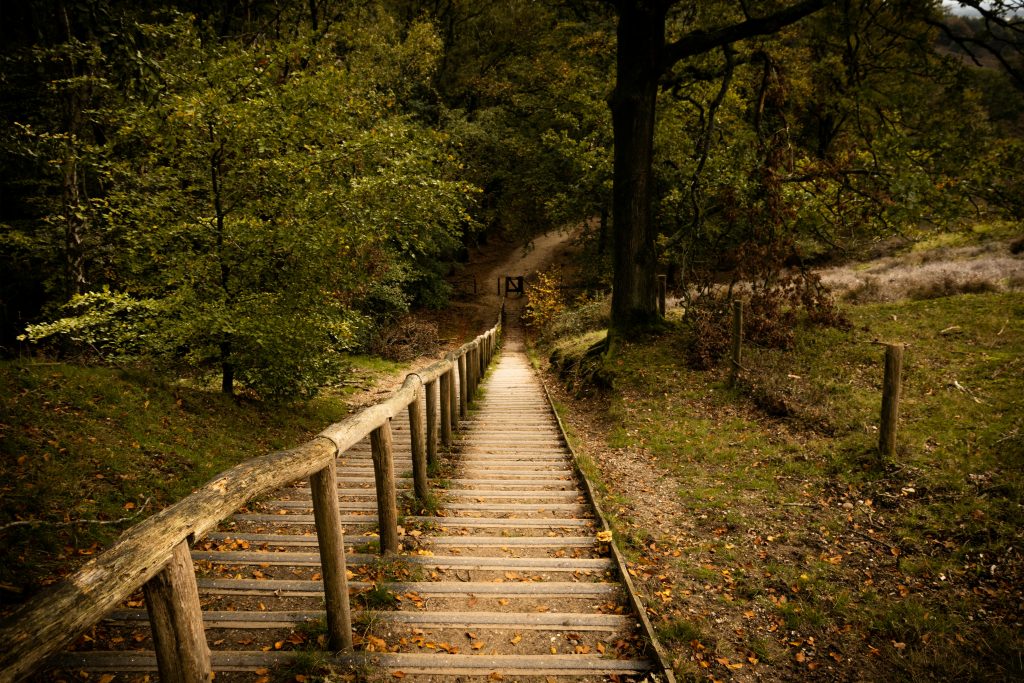
Are you looking to explore Germany’s natural beauty on foot? If so, you’re reading the right article!
In this guide, we’re going to cover some of Deutschland’s very best hiking trails that offer something for everyone, from national parks and fairy-tale castles to thrilling suspension bridges.
Whether you’re an experienced hiker, traveling with family, or simply looking to dive into Germany’s rich history and culture, there’s going to be a trail here for you.
Why Hike in Germany?
Germany is an outstanding hiking destination thanks to its balance of natural beauty, accessibility, and cultural depth. Trails are clearly marked, well maintained, and often connected to towns, public transport, and historic landmarks, which makes planning refreshingly straightforward.
National parks protect forests, river valleys, alpine regions, and unique rock formations, while strict conservation rules help preserve these landscapes. Whether you’re drawn to dramatic viewpoints, peaceful woodland paths, or routes steeped in history, Germany offers rewarding hikes for beginners and experienced walkers alike.
Companion Article: Ultimate Guide to Hiking in Germany
If you’re planning a hiking trip, our complete guide covers Germany’s main hiking regions, seasonal considerations, trail etiquette, and what to expect in national parks and protected landscapes.
Check out our Ultimate Guide to Hiking in Germany for planning tips, regional breakdowns, and practical advice.
The Best Hikes in Germany
Germany offers countless hiking opportunities, each of which help to showcase the country’s stunning landscapes:
1. Route W4 of Harz National Park
Harz National Park boasts a remarkable variety of vegetation, thanks to its diverse elevation, which ranges from 200 to over 1,100 meters.
This variation creates a dynamic landscape perfect for exploring, whether you’re after a short family-friendly hike or something more challenging.
One of the most captivating routes in the park is W4: Durch das Eckerloch zum Brocken, which translates to “Through the Eckerloch to Brocken.”
This trail leads you through the enchanting Eckerloch Valley, which is surrounded by forested mountains and accompanied by the soothing sounds of streams.
Then as you hike, you’ll gradually ascend to the summit of Brocken, the highest peak in the park at 1,142 meters above sea level.
With an elevation gain of 500 meters and a distance of roughly 10 kilometers, the hike takes about 4 to 5 hours to complete.
For those of you who think you’ll be seeking a longer adventure, there are additional paths that allow you to extend the hike by 2 kilometers on the descent.
The lush landscapes and panoramic views make Harz National Park a must-see destination for any hiker visiting northern Germany.
Trail Snapshot
• Difficulty: Moderate
• Distance: ~10 km
• Elevation Gain: ~500 m
• Start / End: Harz National Park → Brocken summit
• Highlights: Forest valleys, mountain streams, Brocken peak
Difficulty / Recommended Fitness Level
A moderate hike suitable for hikers comfortable with steady ascents.
Distance
Roughly 10 kilometers, with options to extend the route.
Elevation Gain
Around 500 meters of ascent.
Start and End Point
The trail runs through the Eckerloch Valley and climbs to the summit of Brocken, the park’s highest peak at 1,142 meters.
Get to the Trailhead
Harz National Park is accessible by car and regional transport. Trail access points are well signposted.
Highlights & Landmarks
Forest-lined valleys, flowing streams, and panoramic views from the Brocken summit.
2. Geierlayschleife, Rheinland-Pfalz
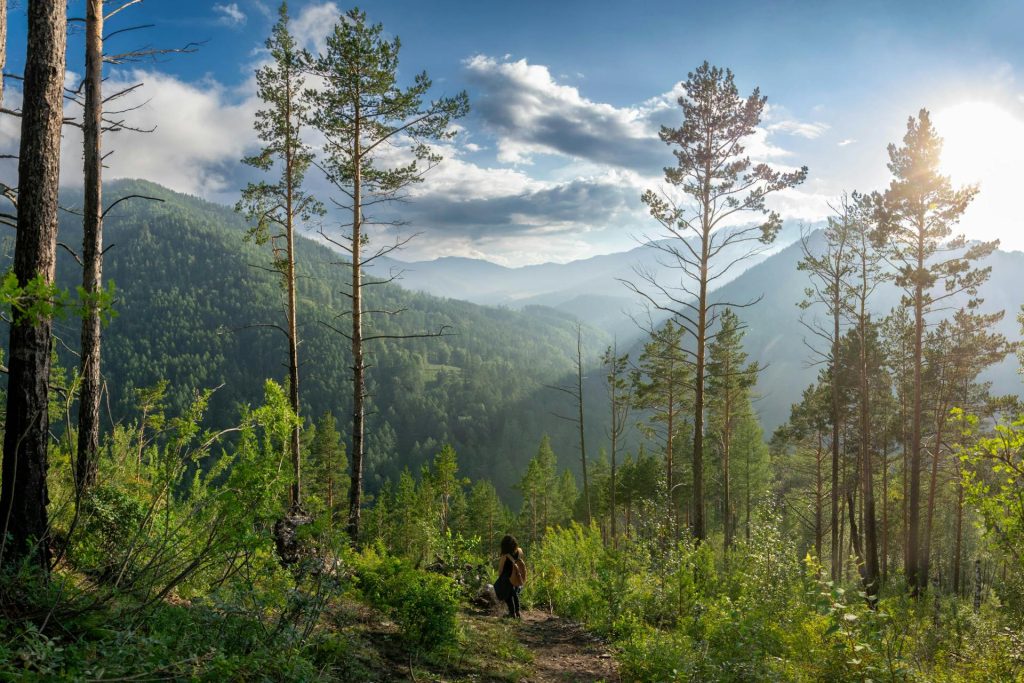
In the state of Rhineland-Palatinate (Rheinland-Pfalz), near the border with Luxembourg, lies one of Germany’s most thrilling hikes: the Geierlay Loop (Geierlayschleife).
This trail takes you through a scenic forest and across the breathtaking Geierlay Suspension Bridge, which hangs 100 meters above the lush greenery. Spanning 360 meters, the bridge offers a nerve-wracking yet exhilarating experience for those brave enough to cross.
But the hike is much more than just the bridge. The full trail stretches 7.7 kilometers, with an elevation gain of 289 meters, winding through verdant forests and offering stunning views along the way.
Although the trail can be difficult to reach by public transportation, it’s well worth the effort whether you rent a car or drive your own. With its official designation as one of the best hikes in Germany, the Geierlay Loop is an adventure you won’t want to miss.
Trail Snapshot
• Difficulty: Moderate
• Distance: 7.7 km
• Elevation Gain: 289 m
• Start / End: Forest loop near Mörsdorf
• Highlights: Suspension bridge, forest paths, viewpoints
Difficulty / Recommended Fitness Level
Moderate, with exposure on the suspension bridge.
Distance
7.7 kilometers.
Elevation Gain
Approximately 289 meters.
Start and End Point
A circular route looping through forested terrain.
Get to the Trailhead
Best reached by car, as public transport access is limited.
Highlights & Landmarks
The Geierlay Suspension Bridge spans 360 meters and hangs 100 meters above the valley.

3. Rundwanderweg Alpsee, Neuschwanstein Castle
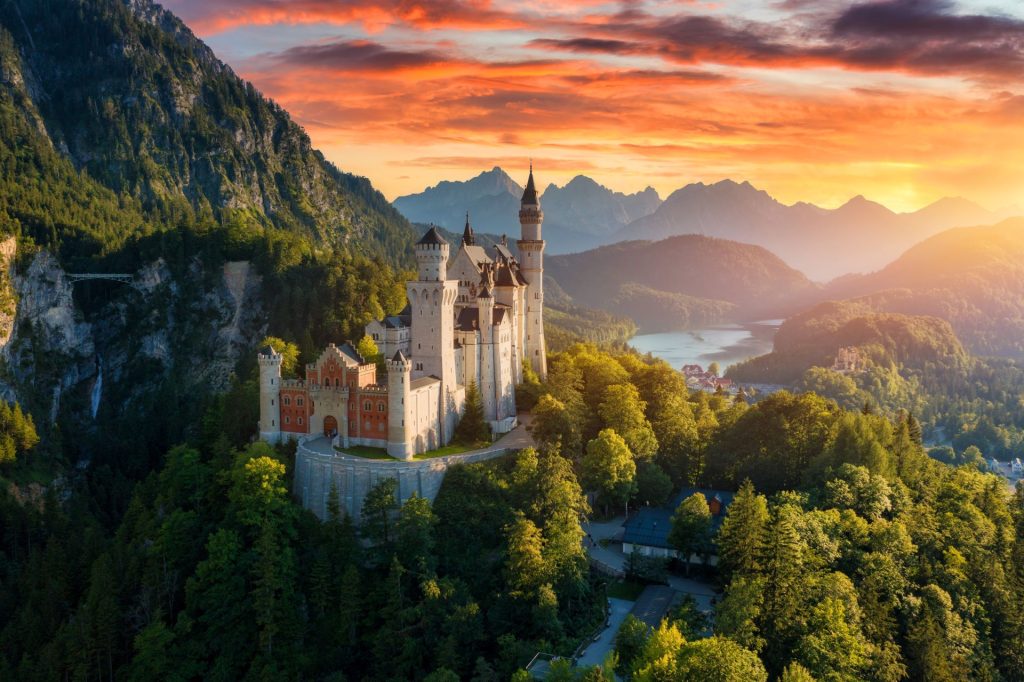
This historic and artistic gem, Neuschwanstein Castle, stands at the northern gateway to the Alps, surrounded by a dramatic landscape where various natural elements collide to create breathtaking views.
Commissioned by King Ludwig II in the 1860s, the castle offers not only a glimpse into Bavaria’s royal past but also access to some of the region’s most scenic hiking trails.
While the castle itself is a major draw, the surrounding foothills offer equally enchanting experiences. The castle can be reached via a short 1.6-kilometer hike, or you can opt for a bus ride.
However, for those who want to fully immerse themselves in the beauty of the area, the Rundwanderweg Alpsee – Schloss Neuschwanstein Loop from Hohenschwangau is the perfect choice.
This 10-kilometer loop trail boasts an elevation gain of just under 275 meters and begins in the valley below the castle. The path takes you around the crystal-clear Alpsee lake, and gradually rises to offer panoramic views before leading you to the majestic Neuschwanstein Castle itself.
From there, the trail winds back down to the starting point in the valley. This loop is undeniably one of the best hiking experiences in southern Germany.
Trail Snapshot
• Difficulty: Moderate
• Distance: ~10 km
• Elevation Gain: ~275 m
• Start / End: Hohenschwangau loop
• Highlights: Alpsee lake, Neuschwanstein Castle
Difficulty / Recommended Fitness Level
Suitable for hikers with moderate fitness.
Distance
Approximately 10 kilometers.
Elevation Gain
Just under 275 meters.
Start and End Point
A loop beginning in the valley near Hohenschwangau.
Get to the Trailhead
Hohenschwangau is easily reached by car or bus. Shuttle buses also serve the castle area.
Highlights & Landmarks
Crystal-clear lake views and panoramic perspectives of Neuschwanstein Castle.
4. T2, Eifel National Park
In this national park, you’ll find a variety of trails offering different experiences depending on the route you choose. One standout hike is Themen-Tour 2 (T2), which takes you through an old, lush forest brimming with biodiversity.
Along the way, you’ll encounter a rich array of flora and fauna, which makes it a perfect route for nature lovers. A highlight of the hike is the Hirschley viewpoint, where you’ll be treated to stunning panoramic views of this national park, which was officially established in 2004.
The T2 trail covers 13.6 kilometers, with a manageable elevation gain of 214 meters. It’s a pleasant and yet engaging hike. Before you set off, be sure to stop by the park’s tourist information center, where you can learn about the park’s history, ecology, and get answers to any questions you may have.
If you’re planning hikes in Europe, the ultimate guide to hiking in France offers excellent insights for your next adventure.
Trail Snapshot
• Difficulty: Moderate
• Distance: 13.6 km
• Elevation Gain: ~214 m
• Start / End: Circular route within Eifel National Park
• Highlights: Ancient forests, Hirschley viewpoint, biodiversity, quiet woodland trails
Difficulty / Recommended Fitness Level
Moderate. Suitable for hikers comfortable with steady walking on forest terrain.
Distance
13.6 kilometers.
Elevation Gain
Approximately 214 meters.
Start and End Point
The hike follows a circular route entirely within Eifel National Park.
Get to the Trailhead
Trailheads are clearly marked and accessible by car or regional transport. Visitor centers nearby provide maps and local guidance.
Highlights & Landmarks
Dense forests, rich flora and fauna, and panoramic views from the Hirschley viewpoint.

5. Basteibrücke, Nationalpark Sächsische Schweiz
Despite its name, Saxon Switzerland National Park (Nationalpark Sächsische Schweiz) is located in Germany, near the border with the Czech Republic, where it connects with the Bohemian Switzerland National Park (České Švýcarsko).
One of the most iconic landmarks in the park is the Basteibrücke (Bastion Bridge), an impressive stone structure built to connect with the nearby ruins of Felsenburg Neurathen (Neurathen Castle).
The bridge is nestled among towering sandstone formations, which have been shaped by wind and water over millions of years. One fascinating feature of this area is its reverse climate.
As you ascend, the temperature actually increases, unlike most places where higher elevations are cooler. This makes the area even more unique and intriguing.
To reach the trailhead, you’ll need to take a ferry from the small town of Rathen across the Elbe River. This is the only access point to the trail that leads to both the bridge and the castle ruins.
The hike is 3.7 kilometers (out and back), with an elevation gain of 211 meters, which makes it a manageable and enjoyable trek for the whole family. This world-renowned trail offers stunning views and an unforgettable day trip filled with natural and historical wonders.
Trail Snapshot
• Difficulty: Easy–Moderate
• Distance: 3.7 km (out and back)
• Elevation Gain: ~211 m
• Start / End: Rathen → Basteibrücke → return
• Highlights: Bastei Bridge, sandstone cliffs, Elbe River views, castle ruins
Difficulty / Recommended Fitness Level
Easy to moderate. Suitable for families and casual hikers.
Distance
3.7 kilometers, out and back.
Elevation Gain
Approximately 211 meters.
Start and End Point
The hike begins and ends in the village of Rathen.
Get to the Trailhead
Take the ferry from Rathen across the Elbe River—the only access point to the trail.
Highlights & Landmarks
Bastei Bridge, Neurathen Castle ruins, towering sandstone formations, river panoramas.

6. Eibsee, Bayern
In the southern German state of Bavaria (Bayern), nestled in the Bavarian Alps, lies the stunning Eibsee, which is one of the region’s most picturesque lakes. Bavaria is a top holiday destination in Germany, and Eibsee is located close to the famous ski resort town of Garmisch-Partenkirchen.
A scenic hiking trail loops around the entire lake, offering a chance to admire its beauty from every angle. The water is remarkably clear, and the lake is dotted with small islands that add to its natural charm.
This 7.2-kilometer trail features an elevation gain of just over 200 meters. It’s largely an enjoyable and accessible hike.
The serene waters of the lake and the dramatic backdrop of the towering mountains create a tranquil yet awe-inspiring atmosphere. It’s a must-do when visiting Bavaria.
Trail Snapshot
• Difficulty: Easy
• Distance: 7.2 km
• Elevation Gain: ~200 m
• Start / End: Eibsee car park (loop trail)
• Highlights: Alpine lake, Zugspitze views, clear turquoise water
Difficulty / Recommended Fitness Level
Easy. Suitable for all fitness levels.
Distance
7.2 kilometers.
Elevation Gain
Just over 200 meters.
Start and End Point
Loop trail beginning and ending at the Eibsee car park.
Get to the Trailhead
Easily reached by car or bus from Garmisch-Partenkirchen.
Highlights & Landmarks
Turquoise alpine lake, mountain reflections, forested shoreline, Zugspitze backdrop.

7. Siebengebirge, Nordrhein-Westfalen (Seven Mountains)
Siebengebirge, a nature reserve in North Rhine-Westphalia (Nordrhein-Westfalen), is an area that truly stands out for its humble yet captivating landscape.
The name translates to “Seven Mountains,” although there are actually over forty peaks in the region. The seven that lend their name to the reserve are the tallest, though they appear as gently rolling hills, adding to the charm of the area.
The trail highlighted here takes you through these hills and past two fascinating castles: Drachenfels and Löwenburg.
The Siebengebirge Loop, a 14-kilometer trail, offers a grand tour of the area’s natural beauty and historical landmarks. It traverses steep terrain with an elevation gain of 661 meters.
Along the way, you’ll take in views of the Rhine River, the iconic Drachenfels, and the ruins of Löwenburg. For an extra touch of adventure, you can also explore the nearby ruins of Philippsburg.
With numerous viewpoints along the trail, it’s easy to take breaks and soak in the breathtaking scenery. Depending on how much time you spend sightseeing, the hike can be a half-day outing or a full-day excursion.
Trail Snapshot
• Difficulty: Moderate–Challenging
• Distance: 14 km
• Elevation Gain: ~661 m
• Start / End: Circular route within the Siebengebirge reserve
• Highlights: Rhine Valley views, Drachenfels, Löwenburg ruins
Difficulty / Recommended Fitness Level
Moderate to challenging. Best for hikers comfortable with sustained climbs.
Distance
14 kilometers.
Elevation Gain
Approximately 661 meters.
Start and End Point
Circular route within the Siebengebirge nature reserve.
Get to the Trailhead
Accessible by train from Bonn or Cologne, followed by short local connections.
Highlights & Landmarks
Rhine River viewpoints, Drachenfels Castle, Löwenburg ruins, volcanic terrain.
Walking Holidays in Germany
Germany is exceptionally well suited to walking holidays, especially for hikers who enjoy combining nature with culture, history, and comfort. Well-marked long-distance trails, reliable public transport, and accommodation-rich routes make multi-day hiking accessible even for first-timers.
Popular routes such as forest and river trails in central Germany allow you to walk point-to-point while staying in guesthouses or small towns along the way. In the south, alpine regions offer more challenging terrain with dramatic scenery, while still maintaining excellent trail infrastructure.
One of Germany’s greatest strengths for walking holidays is flexibility. You can tailor routes to suit your pace, mix shorter day hikes with rest days, or break longer trails into manageable sections without complicated logistics.
Efficient trains and buses mean you rarely need a car, and luggage transfer services are widely available in popular regions. Add in hearty local cuisine, historic villages, and scenic viewpoints, and Germany becomes an ideal destination for a balanced, low-stress walking holiday.
If multi-day walking sounds like your style, explore our Walking Holidays in Germany for full itineraries, accommodation tips, and route maps.
“From Alps to coastlines, our free Walking Holiday guide helps you plan smarter.”
Conclusion
From mountainous paths to historical landmarks, Germany caters to all types of hikers: mountain climbers, flora and fauna enthusiasts, wildlife observers, history and architecture buffs, and even adrenaline seekers.
Where to Next?
- Ultimate Guide to Hiking in France – France offers diverse hiking, from alpine trails to coastal paths and rural countryside.
- Walking Holidays in Wales – Wales is ideal for walking holidays, with coastal paths, national parks, and compact distances.
- Best Hikes in the Netherlands – The Netherlands offers flat, scenic hikes through dunes, countryside, and historic waterways.