
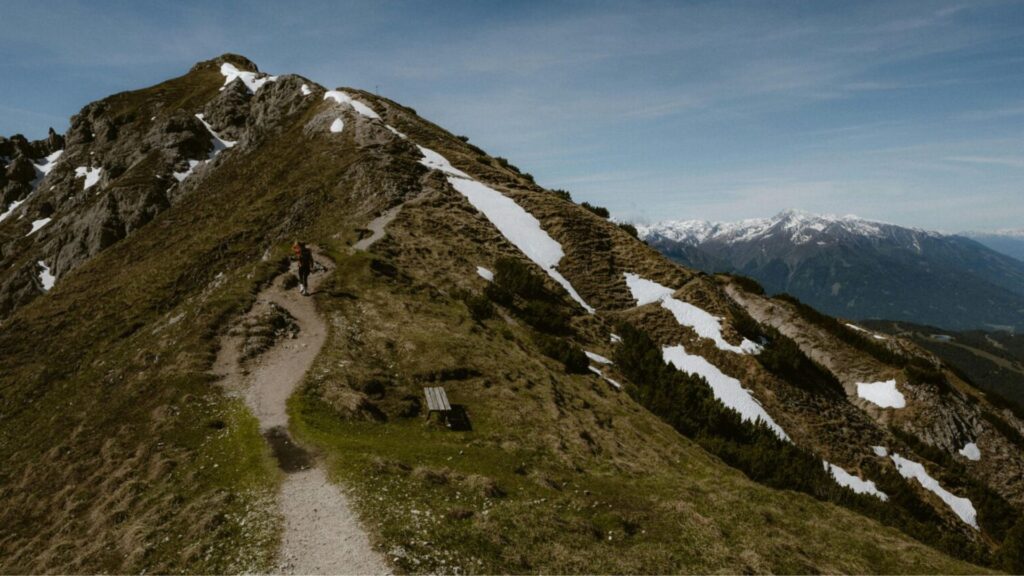
Running from glaciers all the way to the sea, the Alpe-Adria Trail is one of the most satisfying long-distance hikes in Europe that gives any hiker a taste of three different countries.
The trail stretches roughly 750 kilometers from the mountain Grossglockner deep in Austria, to the Adriatic coast at Trieste, in Italy.
The trail takes hikers on a meandering journey through the mountains of Austria, Slovenia, and Italy through high alpine landscapes, river valleys, wine fields, historic towns, and finally along the coast of the Mediterranean.
This guide helps anyone, from beginner to expert hiker, prepare themselves to take on a thru-hike, or single sections, of the Alpe-Adria Trail.
We’ll cover logistics, difficulty, accommodation, and a detailed itinerary for each country.
Trail Snapshot
Location: Austria, Slovenia, Italy
Distance: ~750 km
Stages: 37 core stages / 43 with variants
Typical duration: 6–8 weeks
Start: Kaiser-Franz-Josefs-Höhe / Grossglockner region
Finish: Muggia / Trieste area
Difficulty: Moderate overall
Best time: June–September
Accommodation: guesthouses, hotels, farm stays, mountain huts
Wild camping: generally not permitted / not the standard approach
Best for: hikers wanting a long, cultural, village-to-village trek
- Is the Alpe-Adria Trail Right for You?
- Why Hike the Alpe-Adria Trail?
- The Need-to-Know for the Alpe-Adria Trail
- Alpe-Adria Trail Stages at a Glance
- Country-by-Country Overview of the Alpe-Adria Trail
- Hiking Alone vs Group vs Guided Tour
- What to Pack to Hike the Alpe-Adria
- FAQ About Hiking the Alpe-Adria Trail
- The Alpe-Adria Trail: A Hike That Has It All
- Where to Next?
Is the Alpe-Adria Trail Right for You?
The Alpe-Adria Trail is best for hikers who want a long, scenic, village-to-village walk with comfortable accommodation and strong cultural variety.
It suits fit beginners, intermediate hikers, and experienced walkers who prefer a journey-style trek rather than a technical mountain route.
It is less ideal if you want remote wilderness, wild camping, high-altitude exposure, or a rugged expedition feel.
This is a long-distance European walking route built around landscapes, food, towns, and gradual change — not survival-style trekking.
“Every hiker starts somewhere — grab your free Hiking for Beginners guide.”
Why Hike the Alpe-Adria Trail?
The Alpe-Adria Trail stands out because it feels like three different hiking holidays stitched into one journey.
You begin beneath Austria’s high alpine peaks, move through Slovenia’s river valleys and mountain villages, and finish among Italian vineyards, historic towns, and coastal paths leading toward the Adriatic.
Few long-distance hikes in Europe offer that kind of gradual transformation.
It’s also a rare trail that feels adventurous without being extreme.
The route follows existing footpaths, valley trails, forest tracks, and cultural routes rather than technical mountaineering lines, making it accessible for fit beginners while still rewarding experienced hikers.
For anyone who wants a long-distance walk with big scenery, comfortable accommodation, strong food culture, and a real sense of travelling across Europe on foot, the Alpe-Adria Trail is one of the most complete options out there.
The Need-to-Know for the Alpe-Adria Trail
Terrain
This stunning thru-hike crosses a massive variety of terrain along the 750-kilometer trek.
You start on well-maintained high alpine paths that demonstrate the beauty of the Austrian Alps.
Forest roads and singletrack trails accompany the high alpine as you bounce up and down in elevation through these majestic mountains.
At times, you’ll drop lower and walk alongside coursing rivers and the valleys that they have carved over millions of years.
The Alpe-Adria Trail is accessible rather than technical, but its mix of alpine paths, forest tracks, river valleys, and long descents still demands steady legs.
The trail was designed to be accessible, so there is little exposure when compared to the high-alpine routes and contains very little scrambling across rock faces.
Even though the trail is made to be accessible, the Alps are still quite the undertaking.
This means that there are frequent steep ascents and descents that can be difficult for those without a high level of fitness already established.
Difficulty Level
Overall, the trail can be labelled as moderately difficult. There aren’t any technical portions of the trail that require a set of mountaineering skills, but the trail wears on you over time.
Hiking for 750 kilometers straight can also end up becoming more of a mental endurance race than anything when you’re in the mountains.
The Alpe-Adria is perfect for beginners who already have a baseline level of fitness and a bit of hiking experience.
While it could be taken on by those with no hiking experience, it’s never recommended to travel deep into the wilderness without some knowledge of what you’re getting into.
The trail is moderate overall, with the real challenge coming from consistency, distance, and repeated hiking days rather than scrambling or mountaineering.
Essentially, this trail is for anyone. Intermediate and expert hikers looking for a long journey on a very safe, social, and forgiving route will thrive on this journey.
The hike itself can be easily modified, meaning you aren’t required to sign up for the entire 750-kilometer trek.
You can easily shorten or skip different stages, as public transit along the way has a fantastic infrastructure. You can make the Alpe-Adria your own.
Accommodation
The Alpe-Adria doesn’t dump you into the deep wilderness of the region. Rather, you’re following historic and cultural routes that will provide a host of options for accommodation.
There are guesthouses, small hotels, farm stays, and occasional mountain huts that will be easily found while planning your trip.
It’s important to note that a lot of these lodging options will fill up quickly, especially in the summer.
This is a village-to-village trail, so guesthouses, hotels, farm stays, and occasional huts make the Alpe-Adria far more comfortable than a remote wilderness trek.
Slovenia and Italy are particularly heavy with tourists along this route, so advanced booking is highly recommended for most hikers.
A lot of these lodging options will provide breakfasts, and there’s always the option for village cafes, bakeries, or hearty regional restaurants to fill and end your day with.
It’s safe to say that you can eat well, and that you’ll want to after a huge day of hiking.
Wildlife
These mountains are home to a huge number of small and large creatures that you’re sure to encounter along your hike.
There are chamois, red deer, ibex, marmots, foxes, golden eagles, buzzards, owls, and so much more that you can spot along the trail.
There’s also the potential to sight brown bears in Slovenia, although they are increasingly rare, and wolves.
Wolves tend to be extremely shy and always stay away from humans, so if you catch a glance, count yourself lucky!
From marmots and chamois to golden eagles and the rare chance of spotting larger animals in Slovenia, the trail gives you a quiet window into the wildlife of the Alps and Adriatic regions.
Wayfinding
These regions are home to some of the most well-maintained walking paths in the entire world.
For that reason, wayfinding can be incredibly simple. The Alpe-Adria Trail is excellently marked with the AAT logo and red/white trail marking along the way.
Even on a trail that’s well-marked, it’s important to have a redundant system for navigation.
You can always use an offline app on your phone, or a GPS unit, but a paper map and compass with a guidebook is always a great idea for when tech doesn’t decide it wants to work in your favor.
These moments happen, so it’s best to learn how to use a map and compass before heading out.
The Alpe-Adria is well-marked and generally easy to follow, but offline navigation is still worth carrying for bad weather, tired days, or confusing junctions.
Getting to the Trail
The start in the Grossglockner Region of Austria is easily accessible via public transportation.
You can fly to Salzburg, Munich, or Vienna, then hop on a train to Mallnitz or Heiligenblut.
From here, you can take local buses that will connect you straight to the trailhead, where you won’t need to worry about transportation other than your own two feet for a long time.
At the end of the hike in Muggia/Trieste, you can easily take a train to Venice, Ljubljana, or Vienna to jump on an international flight.
Even the airport in Trieste offers some international flights, all depending on where you’re headed next.
There’s excellent public transport access at both ends of the route, but also along the way. You can use trains and buses to see the surrounding areas, or change the route to fit your own time schedule or desired sightseeing.
Strong public transport at both ends — and along the route — makes the Alpe-Adria easier to access, shorten, or adapt than many long-distance European hikes.
When to Hike the Alpe-Adria Trail
The trail itself is typically accessible from May to October. The biggest barrier is the snowfall in the high alpine sections.
These areas can still be blocked in by snow into late May, and can start getting snow in October.
The months from June to September are when you want to take on the high alpine sections so you can be sure to steer clear of snowfall.
That being said, these are incredibly popular months for tourists in the region.
July and August will see a massive influx of visitors, and the trail will be heavily packed. If you’re looking for a more isolated feel, hiking in May and October will be the best bet.
June to September is the safest window for the alpine sections, while May and October can work for quieter lower sections if you’re prepared for less predictable conditions.
Alpe-Adria Trail Stages at a Glance
The Alpe-Adria Trail is officially divided into a long sequence of daily stages, but most hikers don’t need a full narrative breakdown of every single one.
The table below gives you a practical overview of the main sections so you can understand distance, difficulty, and how the route progresses from the Alps toward the Adriatic.
| # | Stage | Distance (km) | Elevation gain/loss (m) | Difficulty |
| 1 | Kaiser-Franz-Josefs-Höhe → Heiligenblut | 13 | +250 / −1,300 | Moderate |
| 2 | Heiligenblut → Apriach | 16 | +700 / −600 | Moderate |
| 3 | Apriach → Mallnitz | 15 | +850 / −750 | Moderate/Hard |
| 4 | Mallnitz → Obervellach | 18 | +300 / −1,200 | Moderate |
| 5 | Obervellach → Kolbnitz | 20 | +450 / −650 | Moderate |
| 6 | Kolbnitz → Spittal an der Drau | 19 | +350 / −500 | Easy/Moderate |
| 7 | Spittal an der Drau → Seeboden | 8 | +120 / −150 | Easy |
| 8 | Seeboden → Treffling | 23 | +850 / −650 | Moderate |
| 9 | Treffling → Arriach | 16 | +700 / −550 | Moderate |
| 10 | Arriach → Villach | 22 | +500 / −800 | Moderate |
| 11 | Villach → Warmbad Villach | 11 | +200 / −300 | Easy |
| 12 | Warmbad Villach → Feistritz an der Gail | 18 | +600 / −500 | Moderate |
| 13 | Feistritz an der Gail → Thörl-Maglern | 16 | +350 / −400 | Easy/Moderate |
| 14 | Thörl-Maglern → Valbruna (IT) | 14 | +550 / −450 | Moderate |
| 15 | Valbruna → Rateče (SI) | 12 | +500 / −350 | Moderate |
| 16 | Rateče → Kranjska Gora | 15 | +300 / −450 | Easy/Moderate |
| 17 | Kranjska Gora → Vršič Pass | 11 | +850 / −150 | Hard |
| 18 | Vršič Pass → Trenta | 10 | +150 / −900 | Moderate/Hard |
| 19 | Trenta → Bovec | 22 | +650 / −1,000 | Hard |
| 20 | Bovec → Kobarid | 20 | +450 / −600 | Moderate |
| 21 | Kobarid → Tolmin | 16 | +300 / −450 | Easy/Moderate |
| 22 | Tolmin → Most na Soči | 13 | +250 / −350 | Easy |
| 23 | Most na Soči → Kanal ob Soči | 17 | +400 / −450 | Moderate |
| 24 | Kanal ob Soči → Brda (Goriška Brda) | 20 | +700 / −350 | Moderate |
| 25 | Brda → Šmartno | 12 | +350 / −300 | Easy/Moderate |
| 26 | Šmartno → Cormons (IT) | 18 | +300 / −650 | Moderate |
| 27 | Cormons → Gradisca d’Isonzo | 17 | +200 / −250 | Easy |
| 28 | Gradisca d’Isonzo → Monfalcone | 20 | +150 / −200 | Easy |
| 29 | Monfalcone → Duino | 15 | +350 / −300 | Easy/Moderate |
| 30 | Duino → Sistiana | 12 | +300 / −250 | Easy/Moderate |
| 31 | Sistiana → Prosecco | 14 | +450 / −200 | Moderate |
| 32 | Prosecco → Trieste | 10 | +200 / −450 | Easy/Moderate |
| 33 | Trieste (urban crossing) | 7 | +100 / −100 | Easy |
| 34 | Trieste → Muggia | 8 | +150 / −200 | Easy |
| 35 | Muggia inland loop | 10 | +250 / −250 | Easy/Moderate |
| 36 | Karst plateau cultural section | 12 | +300 / −300 | Easy/Moderate |
| 37 | Final Adriatic coastal connector | 9 | +100 / −150 | Easy |
Country-by-Country Overview of the Alpe-Adria Trail
The Alpe-Adria Trail is unique to many long-distance European hikes because it’s defined by a wide variety of terrains across three different countries.
It’s a journey of transitions where you find yourself walking by glaciers one day and along coastal beaches a few weeks later.
From German-speaking small mountain villages to the Slavic river valleys and Italian cafes set by the sea, it’s an unforgettable trek that highlights the differences between cultures in the region.
Instead of providing a stage-by-stage guide, we believe it’s best to understand the trail by the countries you’re hiking through.
The cultural norms, terrain, and overall character of the trail change along with the borders. Understanding that is one of the most useful ways to help plan and pace your hike.
Austria: High Alps and Big Descents
The Austrian portion of the Alpe-Adria Trail is where the train gets its biggest source of credibility.
The high alpine trails tend to be the most physically demanding of the entire trail, and it’s where people find their rhythm to get the thru-hike started.
With a dramatic beginning right below the Grossglockner, Austria’s highest mountain, the Alpe-Adria doesn’t mess around right away.
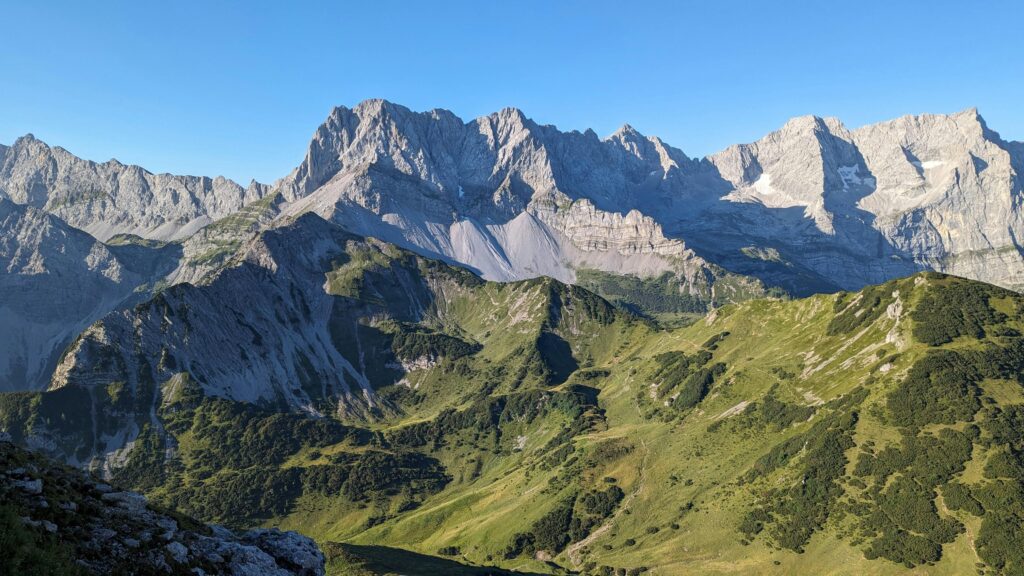
You start the trek surrounded by glaciers, exposed rock, and high-mountain passes, all complemented by the rich infrastructure of mountain huts and services that Austria has put in place.
Over these 22-23 stages, you make your way from high, true, alpine terrain into broad valleys and lakes that are scattered throughout the mid-elevation farmland that defines the eastern portion of Austria.
Austria makes you feel comfortable with a structured, well-marked, and predictable trail system that can push you physically without the discomfort of not knowing where to go.
It’s a great section to lay down a solid foundation of strong legs and tune in to the perfect pack weight.
Terrain and Difficulty
Austria is easily the most physically challenging of the three countries that the Alpe-Adria route passes through.
There are some long ascents right out of the gate that are followed by multiple long descents.
These ups and downs can work your legs quickly, and with the consecutive full hiking days ahead of you, it’s worth taking it slow.
While the physical portion is hard, the technical difficulty is quite low.
The trails here are well-maintained, the trail follows lower trails that don’t require scrambling, and navigation is straightforward with well-marked trails.
Here, you’ll find alpine paths that pass by glaciers in the early sections, forest trails and farm tracks, gorge walks and river valleys, and some occasional sections that are paved near the larger towns.
Notable Stages and Highlights
Kaiser-Franz-Josefs-Höhe → Heiligenblut
The opening stage really sets the tone for the entire 750-kilometer trail ahead of you.
There are massive glaciers above you with huge descents waiting for your arrival.
There are unforgettable views of the Pasterze Glacier that can give you the sense of starting the hike from the very top, and an emotionally powerful experience that can fuel you for days to come.
Heiligenblut → Mallnitz (via Apriach)
The second stage doesn’t let up after a big first day. There’s a lot of sustained climbing and descending, which can be tough for hikers who didn’t get their legs strong enough before starting.
Mallnitz → Obervellach
This section is absolutely beautiful, but it is one of the longest descents on the trail. This can be tough on your knees, so we recommend utilizing trekking poles on this section.
Raggaschlucht Gorge (near Flattach)
The trail here leads you through a short, but spectacular gorge walk across wooden boardwalks. This is easily one of the most memorable parts of Austria.
Millstätter See area (Spittal → Seeboden)
The trail here starts to shift its character as you get more opportunities to swim, cafes to sit in, and the walking eases up a bit. It’s a great spot to rest for an afternoon after some big days.
Accommodation and Logistics
Austria is logistically the most straightforward country. There are frequent trains and buses to move you around, with abundant accommodation at almost every stop.
You’ll find plenty of English speakers who are ready to help you eat and sleep well after many long days on the trail.
Slovenia: Wild Beauty Defining the Soul of the Trail
The Slovenian portion of the Alpe-Adria is known not for its difficulty, but for its ability to capture your heart and make you never want to leave.
While it’s a shorter section, it’s widely regarded as the most beautiful and emotionally resonant section of the trail.
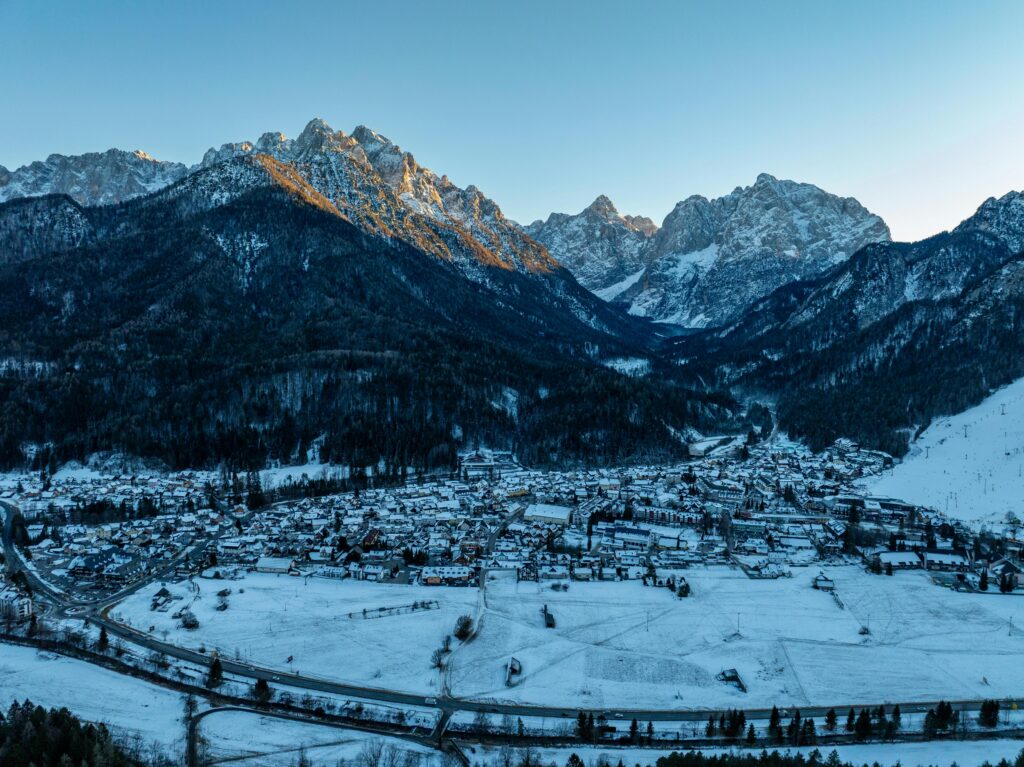
The trail enters the Julian Alps and crosses the Vršič Pass before following the mind-blowing turquoise waters of the Soča River.
This section feels wild, less curated, and more intimate to give you a more emotionally impactful experience with true nature.
The magic found here is one of the main reasons that they filmed sections of The Chronicles of Narnia here.
Terrain and Difficulty
While Austria offers intense ascents and descents, Slovenia offers some of the hardest individual stages, but it is slightly easier overall.
The steep ascents (especially up and over Vršič Pass) are incredibly challenging. The trails are narrower, there are faster weather changes, and the well-kept feel of Austria is left far behind.
The trail is made up of limestone alpine paths, forested mountain slopes, river gorges, and karst landscapes. All of these offer up a beautiful, non-technical, challenging hike through a gorgeous country.
Notable Stages and Highlights
Kranjska Gora → Vršič Pass
This stage takes you to the highest point of the entire trail (1,611 meters). It’s a short stage, but the climbing makes it feel long.
There can be a lot of exposure to weather depending on the time of the year, but when you fight through it all, it is seriously rewarding. Many people will call this the toughest stage, but also the most memorable.
Vršič Pass → Trenta
The dramatic descent into the Soča Valley is tough on the knees, but offers wide, sweeping views of stunning scenery.
Trenta → Bovec
This trek is often cited as a favorite. There’s plentiful deep wilderness, glacial rivers, and a sense of remoteness that isn’t found elsewhere on the trail. Here, you’ll feel like you’re in the middle of nowhere, fully immersed in nature.
Kobarid
If you’re a history buff, Kobarid is a must-see. There is a memorable World War I exhibit here that adds knowledge and understanding of this region’s past, which can complement the hiking experience.
Goriška Brda (Brda wine region)
From the dramatic mountain scenes, you can feel a big shift in the mood here. The vineyards among the rolling hills give a Mediterranean feel, helping you prepare for the next sections to come.
Accommodation and Logistics
Many of the accommodation options in Slovenia are smaller and more personal as they are often family-owned and operated.
There are plenty of guesthouses and farm stays, or small alpine lodges that you can find along the way.
You’ll find yourself eating hearty stews and dumplings paired with local cheeses and honey. All of this can be put together with local wines that pull it all together.
The logistics here can be a bit more difficult to figure out with less frequent public transport, and a need to book ahead in the high season.
However, English is popular here and you should be able to figure things out with a bit of local help.
Italy: Easing through a Rich Cultural Landscape
Italy is where the Alpe-Adria eases up a bit and starts to feel like a more laid-back stroll through cultural history rather than tackling massive mountain passes.
The mountains start to recede and are replaced with culture, good food, and self-reflection. After many weeks of hard work, it can be a huge relief to reach Italy.
The gentler, warmer, and more social vibes of this section are totally different to the rest, but it ends the trail nicely and adds a totally new element to the experience.
Terrain and Difficulty
The hiking through Italy is by far the easiest on the Alpe-Adria. However, that doesn’t mean there’s not a lot to be aware of.
The heat in the summer can be incredibly intense, especially when walking through some urban and paved sections of the trail.
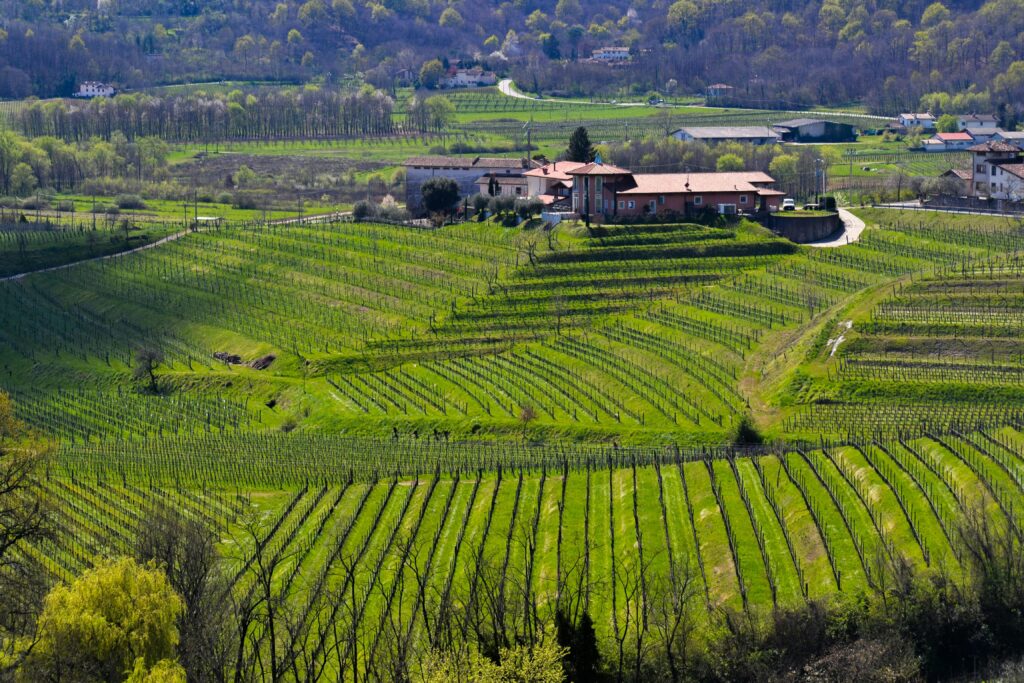
While the mountains are gone, there’s still plenty of beauty to be found on the vineyard paths, limestone plateaus, coastal trails, and occasional city walking.
There’s not much elevation change along here, and the stages are significantly shorter to allow for more exploration of the local region.
Notable Stages and Highlights
Cormons & Collio Wine Region
Here you find gorgeous vineyard walking with great agrotourism. It’s one of the most pleasant and laid-back landscapes on the entire trail.
Gradisca d’Isonzo
This town is known for being a historic fortified town that has a lot of rich history. You can take a great cultural rest day here to explore and learn more about the area.
Duino Castle
Perched dramatically above the Adriatic, the Duino Castle is a major landmark and sign that the sea is getting closer.
Rilke Trail (Duino → Sistiana)
This coastal path provides constant sea views. After weeks of walking through dense trees and open mountains, finding the sea is refreshing and offers a new perspective.
Trieste
Trieste is a fascinating city that’s been shaped by Italian, Austrian, and Slavic histories. While it isn’t the official end, many people will take a rest day here to celebrate before the final day to push to Muggia.
Trieste → Muggia
The final stage is short but sweet. After so long, it can be an overwhelming emotional experience to finally touch your feet to the Adriatic Sea.
Accommodation and Logistics
Italy is incredibly easy to navigate with a wealth of accommodation options. You pass several cafes and water sources that are all nearby public transit options when needed.
Italy is centered around the experience of food, where you can enjoy pasta, seafood, espresso, gelato, and regional wines around just about every corner of the trail.
If you’re looking to shift things around and try out some spontaneous travel, this is a great spot to do it. You can often book tours the same day, and there are a lot of options to try that out with.
“Plan less, walk more.” Pick a route, set your pace, and let Europe unfold under your boots: grab your free Walking Holiday ebook today”
Hiking Alone vs Group vs Guided Tour
There are a lot of pros and cons to hiking on your own or with a group.
Many people even find that taking a guided tour of the Alpe-Adria Trail can take a lot of worries off their mind and allow them to simply walk.
This decision ends up being deeply personal, but it’s important to understand your options.
Solo Hiking
Walking the trail alone gives you the opportunity to have a deep personal experience that’s complemented by the freedom and flexibility of being alone.
It’s easy to meet other solo hikers and choose if you want to keep hiking together or not.
However, there’s a lot to plan to hike this trail, and solo hiking means doing it all on your own.
There are also some long stages that can get quite lonely when you’re alone, but this can also provide a powerful opportunity for self-reflection.
Group Hiking
Hiking with friends or a group can create shared memories that will last a lifetime.
You also get the benefit of a safety buffer and additional motivation for when days are long and hard.
You do need to be aware of group pace compromises where you need to match the slowest person in the group.
There can also be added logistics complexity when planning for lodging for multiple people.
Guided Tour
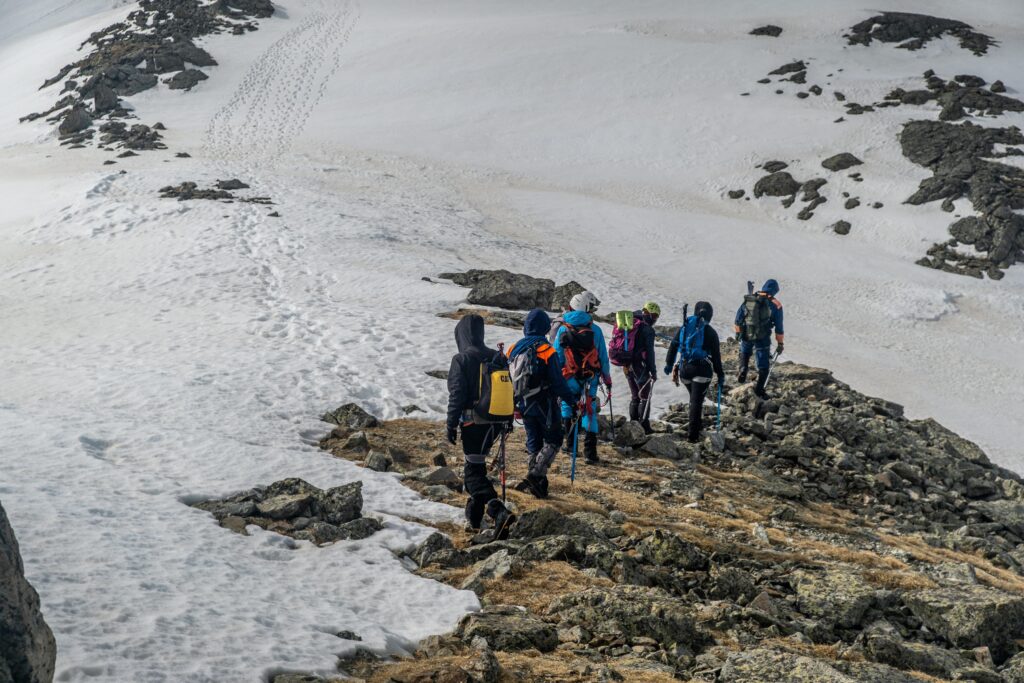
A guided tour can give you the freedom of having your luggage hauled from one stop to another so you can hike with a lighter bag.
They take care of the bookings and provide local insight that’s not easy to find on your own.
The cost of all this is financial, but it can also give you less autonomy and decision-making freedom than you would have if you were alone.
This is a curated experience, rather than one that unfolds as you go.
What to Pack to Hike the Alpe-Adria
Packing for the Alpe-Adria is about finding the perfect balance of gear between what you’ll encounter in the high alpine terrain of Austria and the coastal trails of Italy.
The good news is, this trail is designed to find accommodation from town to town, and you can get by with a simpler gear system.
Footwear: Biggest Trail Decision
The choice between hiking boots and a solid pair of trail runners is going to influence a lot of your experience on the trail.
Since you’re on your feet for long chunks of the day each and every day, finding the perfect shoe for what you’re comfortable with is a key choice to make.
For experienced hikers, trail runners can be perfect. You have lightweight comfort with a decent amount of protection, but sometimes this isn’t enough for people who might have ankle issues.
A solid pair of higher hiking boots will give better knee and ankle protection, which can be huge for the long descents in Austria and Slovenia.
Merino wool or synthetic hiking socks can be the protection you need in order to avoid a challenging set of blisters on a long hike. If you are susceptible to blisters and know that, a good pair of sock liners can be a great fix.
🗒️ Free Checklist: “Never forget the essentials — grab your free Ultimate Hiking Packing List.”
Clothing: Layers are Key
The weather in the Alps can change fast. This means that you need to be ready for all types of weather at all times.
A layering system of clothing is the best way to be prepared and adjust to the changing weather.
This looks like a moisture-wicking baselayer on the bottom with a sun shirt or warmer long-sleeve layer on top.
Then you need an insulating layer made of fleece, wool, or another synthetic. Finally, an outer waterproof shell is key for the days when you’ll inevitably encounter rain.
With clothes on a long hike, one of the most important things is to stay away from cotton.
When it gets wet, it won’t keep you warm and can take ages to dry. Synthetics and wool are the best options for any layer on a long thru-hike in Europe.
Pack and Carry System
When hiking the Alpe-Adria Trail, you get the opportunity to utilize plenty of small and large villages along the way.
Because of this, you can often carry a smaller backpack with plenty of space for everything you need on the hike. It’s more like packing for a day hike than it is for a thru-hike, where you are wild camping.
A 30-40L backpack with good hip support is often more than enough when packing for the Alpe-Adria. It can fit your extra layers, trekking poles, food for the day, a first aid kit, and plenty of water.
Essentials and Safety
For a lot of long-distance trails, you need to pack a lot to take care of yourself when hiking through remote locations.
Hiking the Alpe-Adria is different because you often go through villages, which means you have access to plenty of services, sometimes multiple times per day.
However, you still need to be prepared for both the everyday encounters as well as potential emergencies or slight mishaps.
A basic first aid kit, sunscreen, sunglasses, a headlamp, a hat, and your navigation system are all essential for your safety while out there.
Toiletries and Personals
One of the most often overlooked parts of your packing list is the small toiletries and personal items that you’ll regret not having.
This is everything from a toothbrush and toothpaste to a travel towel and earplugs to use while in small guesthouses with multiple people.
FAQ About Hiking the Alpe-Adria Trail
The Alpe-Adria Trail: A Hike That Has It All
The Alpe-Adria is a journey through a wide variety of terrains and cultures that the region has to offer.
As the trail unfolds, you step into a new place every day and learn more about yourself and the space you walk through.
With patience, consistency, and determination, you can walk from the high Alps all the way to the Mediterranean.
The trail is special because you don’t need to be an elite mountaineer or even need to carry a heavy pack.
All you need is the determination and curiosity that can carry you the 750 kilometers from mountains to sea.
Where to Next?
If this guide has helped you start planning your hike, these related articles will help you explore nearby routes, country guides, and longer walking adventures across Europe.
Related Country Guides
- Ultimate Guide to Hiking in Austria
- Ultimate Guide to Hiking in Slovenia
- Ultimate Guide to Hiking in Italy
More Hikes in These Countries
More Long-Distance Treks Across Europe
- Tour du Mont Blanc
- Juliana Trail
- Via Francigena: Tuscan Section


