The Austrian Alps are one of Europe’s most approachable places to begin alpine hiking.
Trails range from gentle valley walks and waterfall paths to cable-car-assisted viewpoints, hut-to-hut routes, and more challenging mountain days.
For beginners, Austria has a useful mix of clear trail markings, well-connected villages, scenic bases, and a strong mountain hut system, making the Alps feel adventurous without being overwhelming.
This guide covers when to hike, where to base yourself, beginner-friendly routes, hut-to-hut walking, walking holidays, and how the Austrian Alps compare with Switzerland.
Whether you want a relaxed day walk, your first alpine trail, or a soft introduction to multi-day hiking, the Austrian Alps are a brilliant place to start.
- Why Hike in the Austrian Alps?
- Best Time to Hike in the Austrian Alps
- Best Bases for Hiking in the Austrian Alps
- Best Hikes in the Austrian Alps
- Hut to Hut Hiking in the Austrian Alps
- Walking Holidays in Austrian Alps
- Austrian Alps vs Swiss Alps: Which Is Better for Beginners?
- What Is the Highest Mountain in Austria?
- Practical Tips for First-Time Hikers in the Austrian Alps
- Final Thoughts on Hiking in the Austrian Alps.
- Where to Next?
Why Hike in the Austrian Alps?
The Austrian Alps have a lovely balance that makes them especially good for beginner and intermediate hikers.
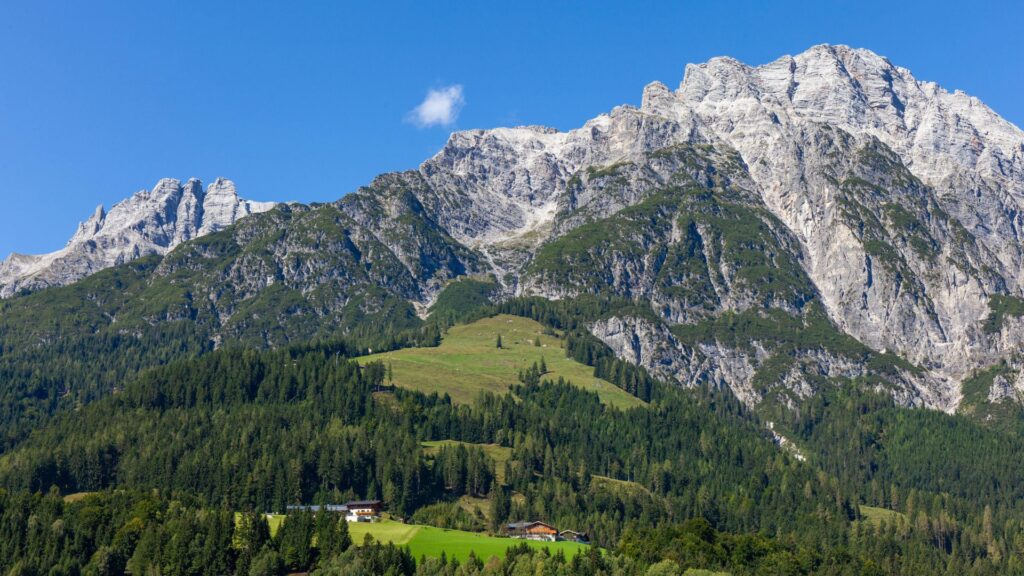
They still offer the classic alpine scenery — snowy peaks, green valleys, wooden chalets, flower-filled meadows, waterfalls, and dramatic ridgelines — but they often feel a little softer and more approachable than some of Europe’s more intense mountain regions.
One of the biggest advantages is accessibility. Towns like Innsbruck, Mayrhofen, Kitzbühel, Lech, Zell am See, and Schladming make it easy to base yourself somewhere comfortable while still having trails, lifts, viewpoints, and mountain huts close by.
You don’t always need to commit to a huge expedition to enjoy the mountains here. Some days can be gentle valley walks, while others can involve higher trails, cable cars, lakes, ridges, or hut-to-hut sections.
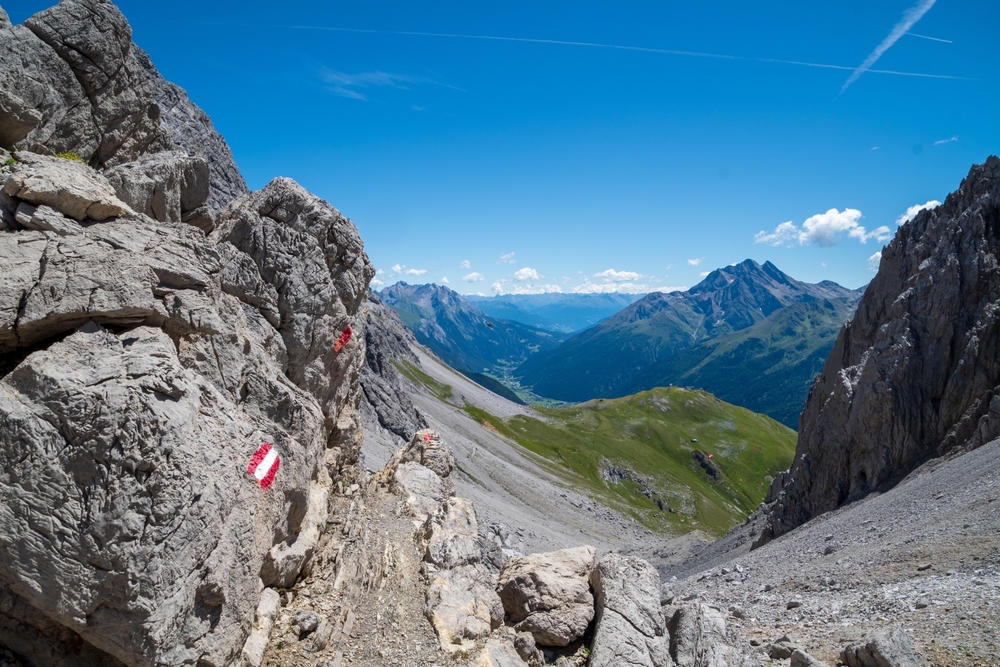
Austria is also excellent for hikers who want structure without feeling boxed in. Trails are generally well marked, public transport is useful in many hiking areas, and the hut system means you can experience multi-day walking without carrying camping gear.
Add in hearty food, alpine villages, lakeside towns, and good-value accommodation compared with Switzerland, and the Austrian Alps become one of the easiest places in Europe to fall in love with mountain hiking.
“Avoid rookie mistakes. Our free ebook Hiking for Beginners shows you how.”
Best Time to Hike in the Austrian Alps
Timing matters, and in the Alps it can mean a very big difference between strolling through flower-strewn meadows or trudging through snowdrifts.
June to September is the prime hiking season in the Austrian Alps.
June
June is when the wildflowers bloom, and if you are the type who likes your hikes to double as a botanical tour, then this is the month for you.
Trails at higher altitudes might still have some snow patches, but the valleys will be bursting with color.
July to August
July and August are the busiest months, which means more hikers but also more open huts, cable cars, and facilities.
The weather is at its most reliable, and the long daylight hours give you extra time to explore.
June to September is the prime hiking season in the Austrian Alps.
If you are someone who enjoys a social buzz on the trail, then these months are ideal.
September
September is cooler and quieter, and it’s also tinged with golden autumn light.
It’s perfect for hikers who want crisp air and fewer crowds, and the mountains that look particularly photogenic in the softer light.
Just be aware that some huts and lifts may start to close toward the end of the month.
Weather
Mountain weather can still change quickly, even in the main summer season.
Valleys may feel warm and settled while higher trails, ridgelines, and cable-car viewpoints can be colder, windier, or cloudier.
In July and August, afternoon storms can also build on hot days, so early starts are usually a smart idea.
Before heading out, check the local forecast, ask your accommodation or hut staff for advice, and keep a shorter valley or lakeside walk in mind as a backup.
Best Bases for Hiking in the Austrian Alps
Picking a base for your alpine adventure is like choosing the right flavor of ice cream.
Mayrhofen
There are no bad choices, but some offer a bit more variety than others. If you like quaint alpine villages where cowbells are the soundtrack, then Mayrhofen in the Zillertal Valley is a winner.
This town has easy access to beginner-friendly hikes and higher peaks, plus it is also sprinkled with cozy cafés that make rainy days far more pleasant!
Innsbruck
Innsbruck, on the other hand, is perfect for those of you who want both city life and mountain trails.
You can spend the morning browsing shops or sipping coffee on a medieval square, and then you can hop on a cable car and be high above the city in less than an hour.
Let’s put it this way, Innsbruck basically gives you a taste of everything, only without sacrificing accessibility.
Kitzbühel
Kitzbühel is often thought of as a ski town, but in the summertime, it is a lush green haven with trails that weave past pastures and through forests.
So for travelers who prefer a mix of luxury and rustic charm (and maybe that’s you!), Kitzbühel checks both boxes.
Lech am Arlberg
If you are more into remote tranquility, try Lech am Arlberg.
Known for its winter glamour, it transforms into a peaceful summer retreat with jaw-dropping scenery and fewer crowds.
It’s also a great base for hut-to-hut hikes, which we’re going to get to shortly.
Best Hikes in the Austrian Alps
If you are wondering where to start, here are some standout hikes that offer everything from leisurely strolls to thigh-burning challenges:
The Eagle Walk (Adlerweg)
The Eagle Walk is Austria’s flagship long-distance route, and it stretches across Tyrol with 33 stages. Beginners don’t need to tackle the whole thing, either.
Just pick a stage that suits your time and energy. You’ll find a mix of valleys, ridges, and classic alpine views.
Krimml Waterfalls Trail
For those of you who really like a bit of drama with their hikes, this is the highest waterfall in Austria and it’s a spectacle worth seeing.
The trail winds alongside the thundering falls and it also offers shorter options for families.
Schladminger Tauern High Trail
This route is for those of you who crave lakes, ridges, and rugged beauty. It is moderately challenging, so be prepared, but the payoff is alpine scenery that feels truly untouched.
Gosaukamm Circuit
For hikers who love a good view of the Dachstein mountains, this circular route offers constant panoramas and varied terrain. It’s a feast for the eyes and the legs.
Leutasch Gorge Trail
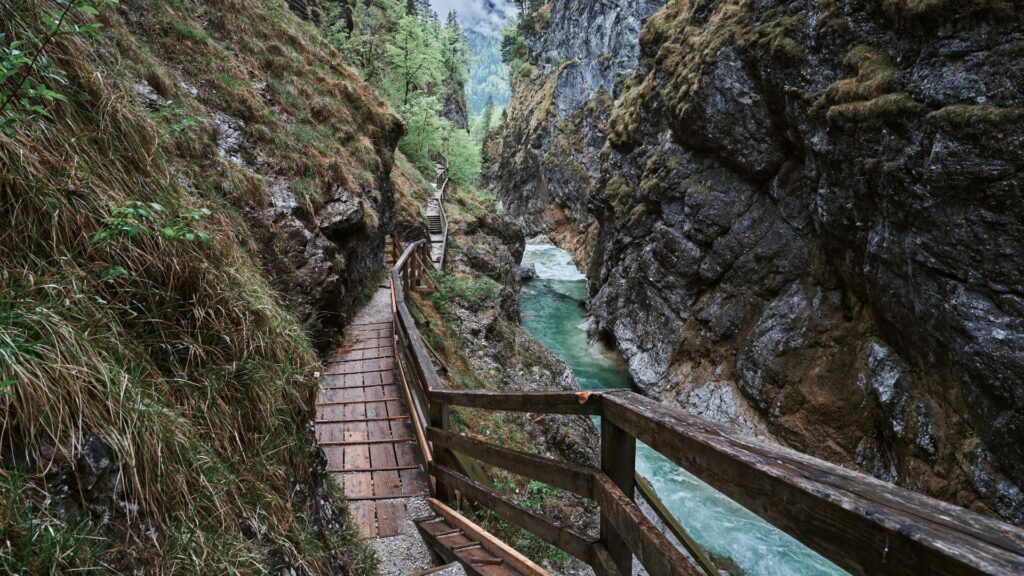
Short but unforgettable, this trail crosses bridges and walkways through a gorge where water roars beneath you. It’s accessible and it’s also perfect for a half-day outing.
Hut to Hut Hiking in the Austrian Alps
Hut-to-hut hiking (or Hüttentour) is one of the Austrian Alps’ greatest treasures.
Imagine hiking through valleys and over ridges, and then arriving at a mountain hut where a warm meal, a bed, and maybe even a slice of apple strudel await.
That’s hut-to-hut hiking in a nutshell.
The beauty of this system is how accessible it is. Many huts are just a few hours apart, so you can easily string together a multi-day trek without needing to carry a tent or days of food.
For those of you who enjoy long walks but prefer not to feel like a pack mule, this style of hiking is perfect for you.
If you’re planning a hut stay in Tyrol, the regional tourism site has a practical overview of Alpine Club huts, including what they are and how they support hikers on multi-day routes.
Popular hut-to-hut routes include the Eagle Walk (Adlerweg), which stretches across Tyrol and offers stunning variety in landscapes.
Then there’s also the Lechweg Trail, which is a gentler route that follows the Lech River and is suitable for beginners.
Huts themselves range from rustic and cozy to surprisingly comfortable. Some even have showers and hearty menus.
Reservations are wise in peak season, and hikers are encouraged to bring a lightweight sleeping bag liner for hygiene.
Hut life is communal, so you can expect to share tables and swap stories and enjoy the camaraderie that comes with a shared love of mountains.
For some routes, you can also check hut availability through the official hut reservation platform before building your itinerary.
Walking Holidays in Austrian Alps
If you like the idea of blending relaxation with adventure, then a walking holiday in the Austrian Alps is a dream come true.
These are trips where the focus is on daily walks rather than extreme ascents, and they often include stays in charming inns or wellness hotels.
Organized walking holidays sometimes include luggage transfers, which means you can hike with just a daypack while your heavier bags magically appear at your next accommodation. This makes the whole experience lighter, both literally and figuratively.
The beauty of walking holidays is their flexibility. You can opt for gentle valley walks, lakeside strolls, or more demanding mountain routes depending on your mood and fitness level.
Many areas (like Tyrol or SalzburgerLand) come fully packed with trails that let you choose your adventure day by day.
After a few hours on the trail, nothing beats soaking in a spa, sipping local wine, or indulging in a plate of käsespätzle (AKA cheese noodles that will change your life).
This balance of effort and reward is precisely what makes walking holidays in Austria so popular.
“Plan less, walk more.” Pick a route, set your pace, and let Europe unfold under your boots: grab your free Walking Holiday ebook today”
Austrian Alps vs Swiss Alps: Which Is Better for Beginners?
This is the question that sparks heated debates in mountain huts. Both ranges are spectacular, but the Austrian Alps have a certain charm that makes them especially beginner-friendly.
The Swiss Alps are dramatic, with sharp peaks and famous names like the Matterhorn. They are also pricier, so if your wallet prefers not to hike uphill along with you, Austria is kinder on the budget.
For those of you who like accessibility, Austria offers much more straightforward logistics. For instance, towns are well-connected, trails are clearly marked, and there is an extensive hut system that makes multi-day treks manageable.
The Swiss Alps feel more like a stage set for epic mountaineering tales, while the Austrian Alps lean toward friendliness and inclusivity.
In short, Switzerland might make you feel like an extra in a dramatic alpine film, but Austria lets you settle into the role of happy wanderer, and it comes complete with strudel and schnapps at the end of the day.
What Is the Highest Mountain in Austria?
If you are curious about Austria’s heavyweight champion of peaks, that would be the Großglockner.
Towering at 3,798 meters (12,461 feet), it’s a striking pyramid of rock and snow that dominates the skyline of the Hohe Tauern National Park.
Climbing the Großglockner is not for beginners, but admiring it most certainly is!
There are numerous hiking routes nearby that will give you postcard-worthy views without requiring technical skills.
The Grossglockner High Alpine Road, which is a scenic drive that twists through the mountains, offers access to viewpoints where even non-hikers can stand in awe.
For those who like a challenge without needing ropes and harnesses, the surrounding area offers plenty of demanding day hikes.
Even if you do not attempt the summit, standing beneath the shadow of the Großglockner will make you feel tiny…only in the best possible way.
Practical Tips for First-Time Hikers in the Austrian Alps
For first-time hikers, the Austrian Alps are welcoming, but they are still mountains.
A little preparation goes a long way, especially when it comes to choosing the right route, checking local logistics, and packing for conditions that can change quickly.
Start Easier Than You Think
If this is your first time hiking in the Austrian Alps, start slightly easier than your confidence tells you to. Alpine trails can feel very different from lowland walks, especially once elevation gain, rocky paths, changing weather, and longer descents come into play.
A relaxed valley walk, gorge trail, waterfall route, or cable-car-assisted viewpoint is often a better first choice than a big mountain day. You can always build up once you know how your legs handle the terrain.
Check Lifts, Huts, and Transport
Before setting off, check cable car times, hut opening dates, and local bus or train connections. Some routes are easy to start but awkward to finish if you miss the final lift or last transport back to your base.
This matters even more later in the season, as some huts and lifts may begin closing toward the end of September, which the article already notes in the best-time section.
For extra mountain safety advice, Austria’s official tourism site has a useful guide to planning hikes, checking route difficulty, watching the weather, and choosing trails that match your fitness.
Pack for Changing Conditions
Even in summer, carry a waterproof jacket, warm layer, water, snacks, sun protection, and a basic first aid kit. Valleys may feel warm and settled, while higher trails and ridgelines can be colder, windier, or cloudier.
Good footwear also makes a difference. Many beginner-friendly Austrian trails are well marked, but they can still include stone tracks, forest paths, mud, or uneven ground.
Don’t Rush the Experience
The Austrian Alps are made for lingering. Give yourself time for a slow climb through meadows, a coffee in the village, a long lunch at a mountain hut, or a view that makes the uphill feel worth it.
For beginners, that slower pace is part of the appeal. The goal is not just to tick off a route, but to enjoy your first proper taste of alpine hiking.
🗒️ Free Checklist: “Pack light, pack right — download The Ultimate Hiking Packing List.”
Final Thoughts on Hiking in the Austrian Alps.
The Austrian Alps are the kind of destination that offers both grandeur and friendliness. They are magnificent but never too intimidating, and they are wild yet welcoming.
For those of you who like your hikes with a side of charm and strudel, the Austrian Alps will not disappoint.
Where to Next?
For more Austria hiking inspiration and nearby alpine adventures, these guides are useful next steps:
- Ultimate Guide to Hiking in Austria
- Best Hikes in Austria
- Innsbruck: A City Guide for Hikers
- The Eagle Walk / Adlerweg Trail
- Hiking the Tour du Mont Blanc