

Look, Switzerland has a bit of a problem. Everyone already knows it’s beautiful. The mountains show up in chocolate advertisements, watch commercials, and approximately seven thousand travel Instagram accounts. The country’s reputation precedes it to the point where mentioning a Swiss walking holiday sounds almost boringly predictable.
But here’s the thing nobody mentions until they actually go: Switzerland isn’t just beautiful in the way you expect. It’s also functional in ways that transform how hiking actually works!
This is a country where missing a mountain train connection by thirty seconds means waiting exactly six minutes for the next one. Where trail markers appear with such regularity that getting lost requires genuine effort. Where mountain huts serve proper wine with dinner at 2,800 meters (9,186 feet) because, well, why wouldn’t they?
What really sets Switzerland apart isn’t the scenery, though yes, the scenery is absurdly great. It’s that the entire country has spent over a century building infrastructure specifically so people can walk through mountains without things being unnecessarily difficult.
The trails connect logically. The huts open when they say they will. The transport actually reaches trailheads instead of getting you close enough to need a taxi.
And after a day covering serious elevation, you’re not collapsing in some barely adequate shelter. You’re sitting in a mountain hut with table service, watching the Matterhorn turn pink in evening light and also wondering why anywhere else even bothers trying.
Sounds good? Let’s get specific!
Check Out These Spots For Your Swiss Walking Holiday
Here are the destinations in Switzerland that actually deliver for walkers who take this stuff seriously:
Alpine Valley Walks
For those of you who want dramatic mountain scenery without immediately regretting your life choices, Switzerland’s valleys provide that sweet spot between accessible and impressive.
“Plan less, walk more.” Pick a route, set your pace, and let Europe unfold under your boots: grab your free Walking Holiday ebook today”
Lauterbrunnen Valley Trail
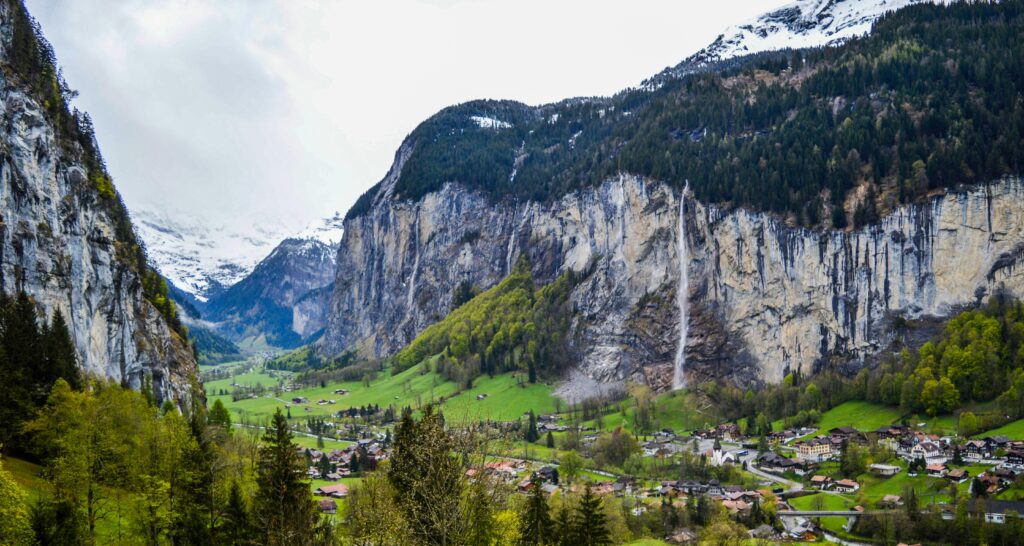
This valley contains 72 waterfalls. Seventy-two. The cliffs rise vertically for hundreds of meters on both sides, and the Eiger, Mönch, and Jungfrau arrange themselves at the valley head like they’re posing for currency.
The trail stays relatively flat as well, which means that you can focus on the scenery instead of just surviving the walk.
Engadin Valley Lake Circuit
Picture this: you’re walking at 1,800 meters elevation (which is already higher than most European peaks!) and also alongside turquoise lakes that look Photoshopped but aren’t, and with the Bernina Range providing a backdrop so dramatic it becomes almost irritating.
This is high-altitude walking that doesn’t punish you for it1
Lötschental Valley Route
For those moments when you want Swiss scenery without the tourist circus, Lötschental delivers.
The villages here still feel like actual villages rather than outdoor theme parks. People live in these chalets year-round, and the traditions aren’t being performed for your benefit. They just exist!
High Mountain Trails
If you’re the type who needs proper elevation to feel like you’ve actually hiked, these routes will satisfy that requirement thoroughly:
Schynige Platte Panorama Trail
You take a cogwheel train from 1914 up to Schynige Platte because even getting to the trailhead should involve vintage engineering.
Then you walk a ridge where wildflower meadows explode in July and the Eiger-Mönch-Jungfrau triumvirate dominates every view. It’s almost comically Swiss if you think about it.
Aletsch Glacier Trail
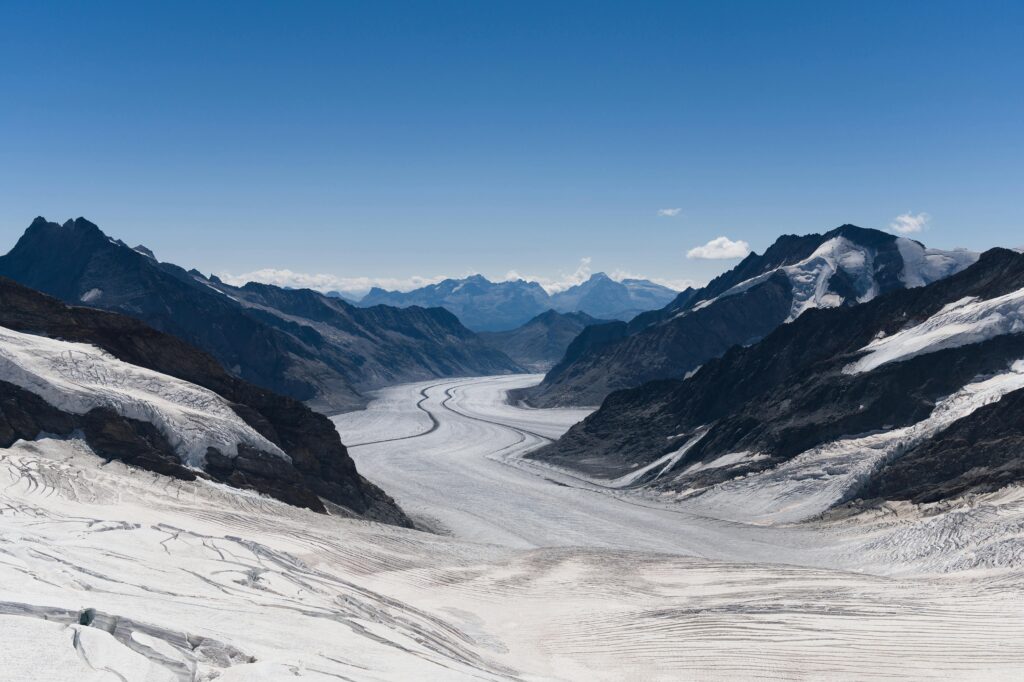
Europe’s largest glacier sits right there, and you can walk alongside it while contemplating both its current magnificence and the increasingly obvious evidence of its retreat.
This is where scenic hiking and climate anxiety merge into one complicated emotional experience.
Matterhorn Glacier Trail
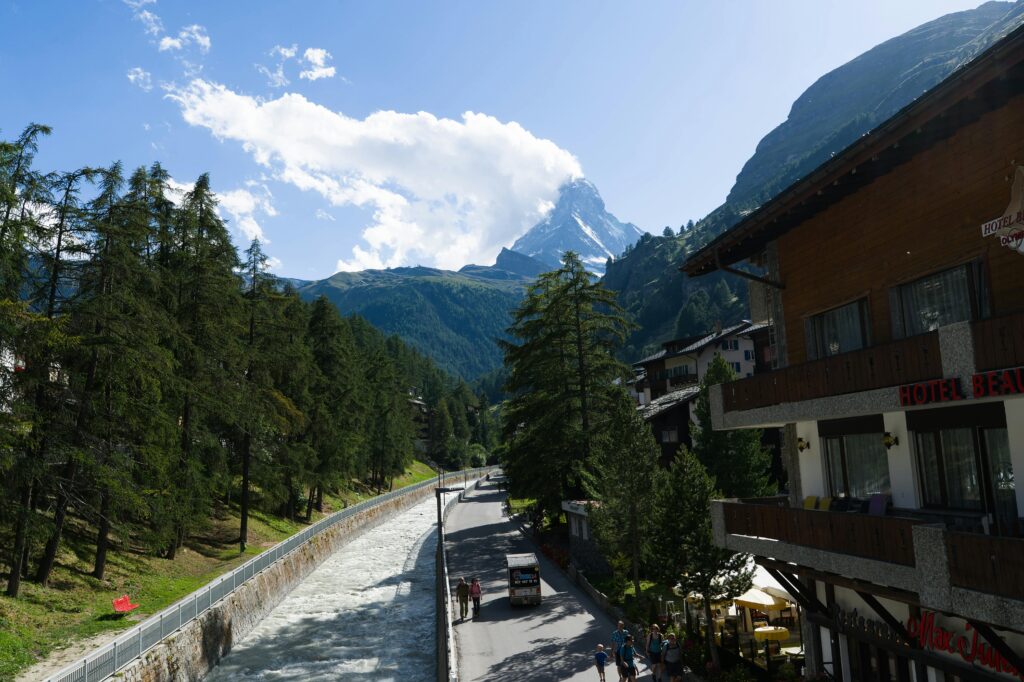
Yes, that Matterhorn. The one from the Toblerone wrapper.
You can hike beneath it on trails that include suspension bridges, glacier views, and enough elevation to make you earn the scenery rather than just purchasing it via cable car ticket.
Village-to-Village Routes
For those of you who like your hiking served with actual beds and proper meals at the end of each day, these routes connect traditional Swiss villages through legitimate mountain terrain:
Via Alpina (Selected Stages)
The Via Alpina crosses the entire country, but you don’t need to commit to the whole thing. Cherry-pick stages that connect villages you actually want to visit, and suddenly you’re experiencing Swiss mountain culture that feels genuine rather than curated for tourists.
Bernese Oberland Village Circuit
Link Grindelwald, Wengen, Mürren, and Lauterbrunnen on high trails that connect villages perched on cliff edges and mountainsides. Each settlement offers proper amenities, which means you get wilderness hiking with the knowledge that beer and a real bed await at day’s end.
Zermatt to Saas-Fee Route
This multi-day trek connects two proper mountain towns through high passes and glacier country. It’s serious alpine hiking, but you’re finishing each stage in villages with restaurants, hotels, and the kind of infrastructure that makes recovery actually pleasant.
“First time on the trail? Hiking for Beginners has your back.”
What Can You Expect on a Walking Holiday in Switzerland?
Here’s what actually happens when you commit to a Swiss walking holiday:
Adventures Beyond Walking
Switzerland’s hiking infrastructure is so developed that it accidentally supports about fifteen other mountain activities without even trying.
Via ferrata routes let you climb up cliff faces using permanently installed cables and ladders; it’s like hiking but vertical and slightly terrifying. Glacier walks with guides get you onto actual ice fields without requiring mountaineering certification. Mountain biking trails exist where they won’t conflict with hikers, which shows more planning consideration than most countries manage.
And then there’s the cultural side that nobody mentions in hiking guides but probably should. Traditional Swiss wrestling (Schwingen) happens in sawdust rings at summer festivals and looks exactly as odd as it sounds.
Cheese dairies will let you watch Gruyère production and sample results that are approximately six hours old. Some mountain restaurants have alphorn players who show up for evening performances, creating moments where you’re eating rösti while someone plays an instrument the size of a small tree.
For those of you who need recovery options beyond just sitting, Swiss wellness culture means thermal baths and spa facilities appear in mountain villages with surprising frequency. After two weeks of elevation gain, your knees will appreciate this.
🗒️ Free Checklist: “Never forget the essentials — grab your free Ultimate Hiking Packing List.”
The Food and Drink Experience
Swiss mountain food operates on a simple principle: if you just climbed 1,200 meters (3940 feet), you’ve earned something substantial and probably involving melted cheese.
Fondue here is not the sad tourist experience it becomes in other countries. It’s properly made, genuinely good, and served in quantities that acknowledge you’ve been walking all day. Rösti arrives crispy and golden, topped with everything from fried eggs to mushrooms to combinations that shouldn’t work but absolutely do.
Älplermagronen (which is basically pasta, potatoes, cheese, and onions having a party) tastes far better than that description makes it sound.
The beverage situation is more interesting than Switzerland gets credit for. Swiss wine from Valais stays mostly domestic, which means you’re drinking stuff that never exports and pairs beautifully with local food.
Coffee culture is also taken seriously enough that even mountain huts at 2,500 meters (8,200 feet) serve proper espresso rather than giving up and serving instant.
And while Swiss beer doesn’t have Germany’s reputation, local breweries nonetheless produce some truly excellent lagers as well as ales that taste especially good after covering ten kilometers.
Then there’s Zvieri, or the afternoon snack tradition that becomes essential hiking strategy. This means bread, cheese, dried meat, and chocolate consumed at scenic points along trails. Many serious hikers plan entire routes around mountain restaurants known for their Berner Platte or homemade Apfelstrudel, which transforms food from fuel into actual destination.
Fun Accommodations
Switzerland’s accommodation options range from practical to borderline excessive, but they maintain standards that make other countries look negligent.
SAC (Swiss Alpine Club) huts are not the rustic shelters the name suggests. These are staffed operations serving three-course dinners and offering actual beds with sheets, as well as maintaining cleanliness standards that would satisfy a moderately picky hotel inspector. You’ll pay 40-80 CHF for dormitory space and 15-25 CHF for dinner, which seems expensive until you consider that someone carried all those ingredients up a mountain.
Village hotels span every category, but the three-star family-run places often deliver more character and so better value than higher-rated properties in tourist centers. The breakfast buffets typically provide enough calories to skip lunch entirely, which is both economically and practically sound hiking strategy.
For those of you who are willing to pay for novelty, Swiss glamping has evolved beyond basic camping into territory involving geodesic domes and luxury pods and setups that include proper beds, heating, and sometimes even private bathrooms. This works particularly well in regions where traditional hotels charge prices that make you briefly reconsider your vacation choices.
The most uniquely Swiss option might be converted alpine dairies that now operate as small hotels. These maintain traditional architecture while offering modern comfort and creating accommodations that feel connected to actual mountain culture rather than just located near mountains for aesthetic purposes.
Where to Next?
- Ultimate Guides – your gateway to hiking across Europe
- Hikes & Trails – curated lists of the best hikes and local gems
- Walking Holidays – extended journeys for when a single day just isn’t enough
- General Blog – all the extras: gear reviews, planning tips, and personal stories
Embarking on a Swiss Walking Holiday
A Swiss walking holiday delivers exactly what Switzerland’s reputation promises, which is rarer than it should be.
In short, a Swiss walking holiday is where you discover that all those clichés about Switzerland being beautiful and efficient are actually just accurate.
The mountains exceed expectations, the systems function properly, and somehow the whole experience manages to be both predictable and completely worth it.


