
The Julian Alps are where Slovenia keeps most of its postcards. Lake Bled with its island church. Lake Bohinj looking unreasonably calm.
Triglav sitting on the national flag like it owns the place (which, to be fair, it sort of does).
Most visitors see these from a café terrace and move on.
Which is a shame, because the real point of the Julian Alps is that you can walk straight out of those postcards and into gorges, high valleys and limestone peaks, often from the same town.
For those of you who want mountains that work for a beginner on Monday and a seasoned hiker by Friday, this is the corner of Slovenia to come to.
Our guide to hiking in Slovenia covers the rest of the country, if the Julian Alps don’t keep you busy enough (they will).
- Hiking in the Julian Alps at a Glance
- Why Hike in the Julian Alps?
- Best Hiking Areas in the Julian Alps
- Signature Hikes in the Julian Alps
- How Many Days Do You Need in the Julian Alps?
- Planning Your Hiking in the Julian Alps
- Getting Around the Julian Alps
- Where to Stay for Hiking in the Julian Alps
- Beyond the Trails in the Julian Alps
- FAQs About Hiking in the Julian Alps
- Conclusion
- Where to Next?
- Where This Information Comes From
- Planning a walking trip in Slovenia?
Hiking in the Julian Alps at a Glance
| Best for: | Lake walks, gorges and Slovenia’s highest peak, all in one park |
| Best time: | June to September for the high routes; spring and autumn for the lakes and gorges |
| Best base: | Bled or Bohinj for a first visit; Kranjska Gora or Bovec for something quieter |
| Protected area: | Triglav National Park, Slovenia’s only national park |
| Highest point: | Triglav, 2,864 m |
| Mountain huts: | High huts usually open June to the end of September, by reservation |
| Long-distance route: | The Juliana Trail, 270 km in 16 stages |
| Getting around: | Buses from Ljubljana to the main bases; no car needed for most walks |
Why Hike in the Julian Alps?
Because nowhere else in Slovenia packs this much variety into such a small, well-marked and well-connected area.
Easy lake loops, river gorges and serious alpine climbs all start within an hour or so of each other.
Almost all of it sits inside Triglav National Park, named after the mountain at its centre.
Triglav is the highest peak in both the Julian Alps and Slovenia, and the climb to its summit is the country’s great hiking rite of passage.
But you don’t need to go anywhere near the top to have a brilliant time here: the lakes, gorges and valleys below it are where most of the best walking actually happens.
The park is also Slovenia’s only national park and sits at the heart of the Julian Alps Biosphere Reserve, which tells you how seriously the country takes it.
The Triglav Lakes have been protected for more than a century, since an alpine conservation park was set up there in 1924.
In other words, these trails are looked after because they matter to Slovenians, not because someone decided they’d look good in a brochure.
Best Hiking Areas in the Julian Alps
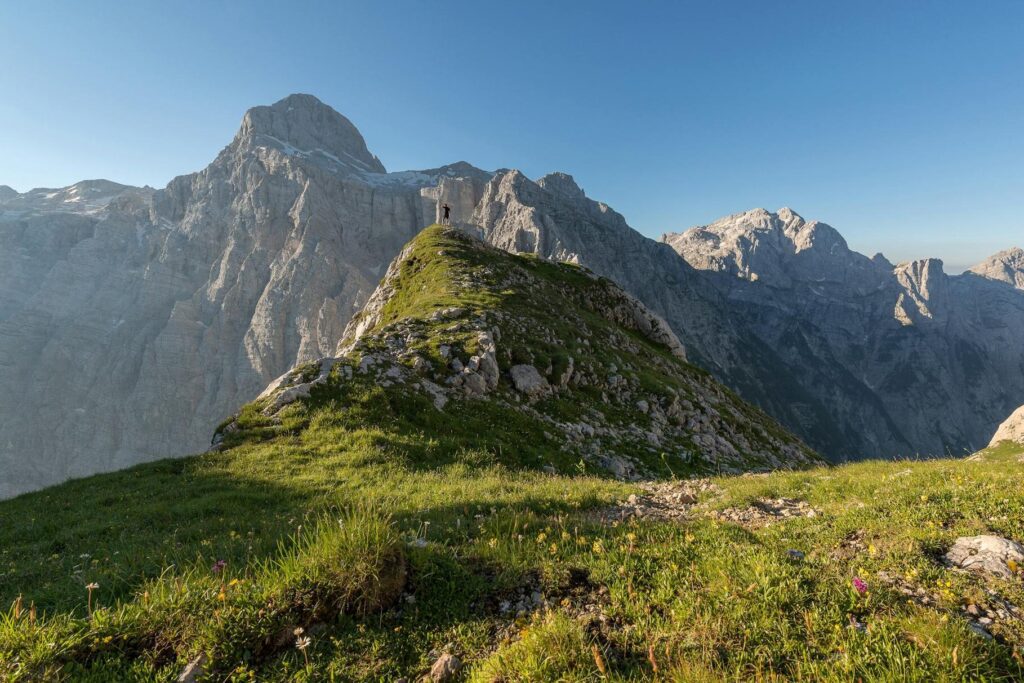
Four areas, each with its own base and its own personality. Bled and Bohinj are the classic pair; Kranjska Gora and the Soča Valley are where you go when you want the mountains a bit more to yourself.
Bled and Pokljuka: Lake Loops and River Gorges
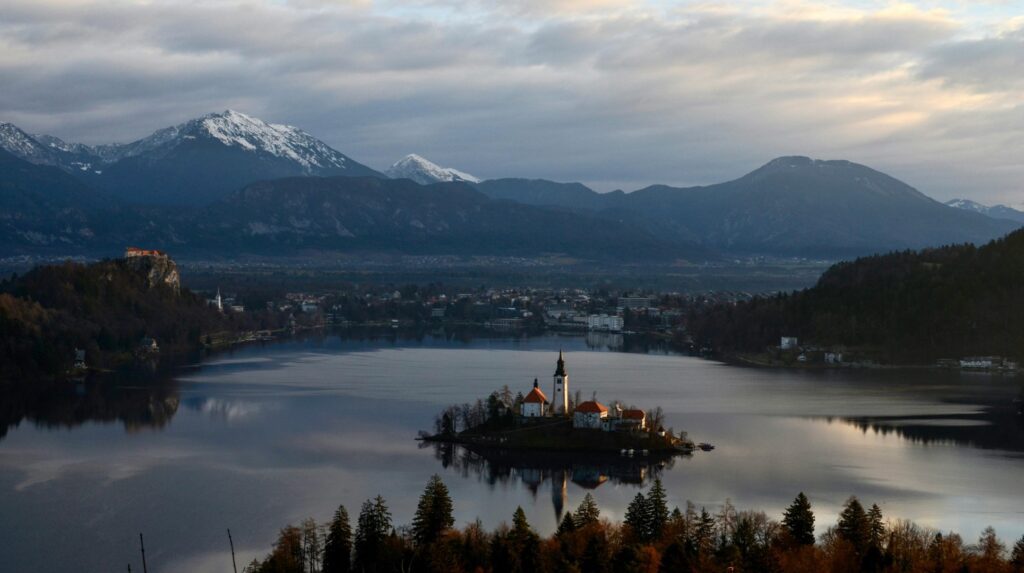
No trip to Slovenia is complete without Lake Bled, and walking all the way round it is the easiest introduction to the Julian Alps there is: flat, lakeside and studded with views of the castle on its cliff and the church on its island.
For a higher view, the park points walkers to the viewpoints of Mala and Velika Osojnica and Straža above the shore.
Just north of town, Vintgar Gorge squeezes the Radovna River between cliffs, with wooden walkways first built in 1893 (entry is by timed ticket, booked on the official Vintgar site).
Behind Bled, the forested Pokljuka plateau hides peat bogs and Pokljuka Gorge, where galleries bolted into the rock in 1930 still carry the path. Bled is the busiest base in the region, but it’s also the best connected.
Bohinj: The Quieter Lake
Bohinj is what Bled would be if fewer people had heard of it. The lake is bigger, the shore is wilder, and the mountains crowd right down to the water.
It sits in a basin carved by a glacier and holds nearly 100 million cubic metres of water, and a path runs all the way round it (with a panoramic boat for those of you whose legs give up halfway).
Bohinj is also the gateway to the high country. The Mostnica Gorge runs north from Stara Fužina, the Savica Waterfall is fed by the first of the Triglav Lakes, and from the hut at Savica a steep path climbs to the Seven Triglav Lakes Valley, the heart of the national park.
Kranjska Gora, Planica and Vršič: The Northern Valleys
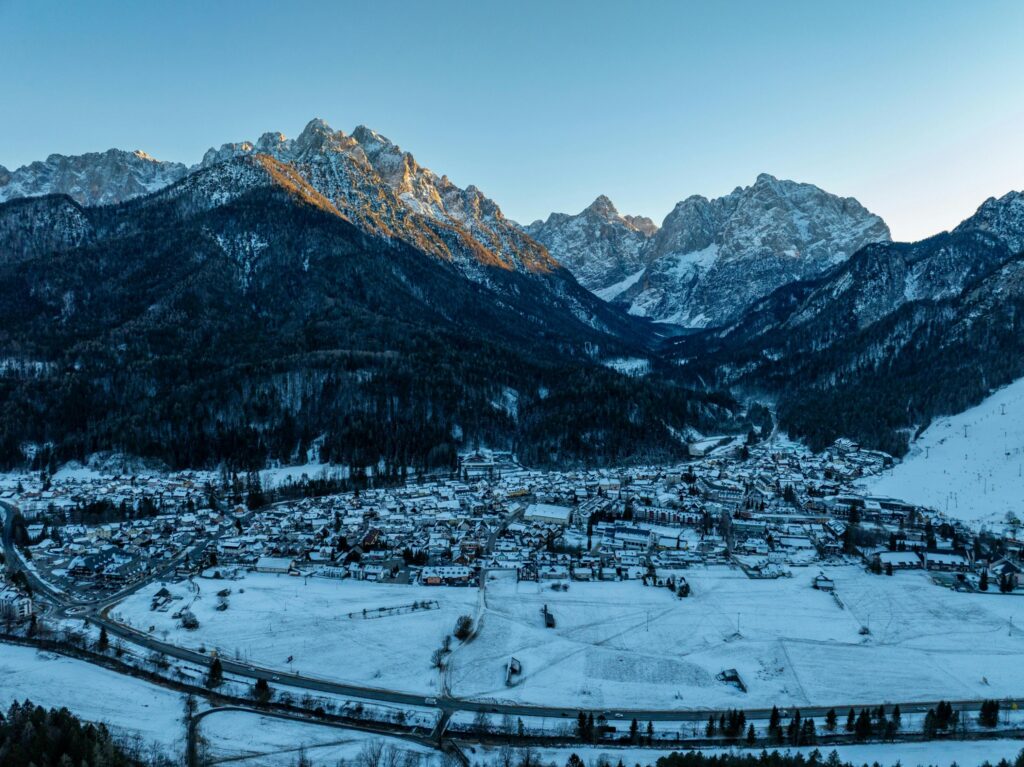
Kranjska Gora is a favourite among both winter and summer hikers. While the town is well-known for its ski resorts, it’s also a fantastic base for nearby trails, including those that lead to Planica Valley and Vršič Pass.
In Planica, a valley trail follows the Nadiža stream, which bursts out as a waterfall, vanishes underground, and resurfaces at Zelenci as the source of the Sava Dolinka. Above Rateče, a path climbs to Peč, where Slovenia, Austria and Italy meet.
The Vršič Pass road climbs from Kranjska Gora over to the Trenta Valley, and it’s famous for its winding hairpin turns as well as its dramatic views of the surrounding mountains.
The pass itself is rich in history, with remnants of the First World War Italian front, so if you’re a military history buff, you’ll want to check it out!
Nearby, the Vrata valley above Mojstrana leads to the foot of Triglav’s north face and the two-step Peričnik waterfall.
Trenta and the Soča Valley: Turquoise Water and Wartime History
West of Vršič, the Trenta Valley is where the Soča begins, and the river’s colour has to be seen to be believed: a blue-green so bright it looks edited.
The Soča Trail follows it from its source down to Bovec, past gorges and troughs where the water has carved the rock into pools. It’s linear, so most people walk it in sections and use the bus.
Further downstream, the valley was a battlefield during the First World War, and you’ll pass historical sites related to it along the way.
The Kobarid Museum is a great stop to learn more about the region’s history, and you can also explore the beautiful Kozjak Waterfall near Kobarid.
The Julian Alps don’t stop at the border, either. They run on into Italy around Tarvisio, and one stage of the Juliana Trail, the 270 km loop around the range, crosses over to it.
The Alpe-Adria Trail passes through too, on its way from Austria to the Adriatic: its Slovenian stages run from Kranjska Gora to Trenta, then down the Soča Valley through Bovec to Tolmin.
“Avoid rookie mistakes. Our free ebook Hiking for Beginners shows you how.”
Signature Hikes in the Julian Alps
Three walks that sum the region up. Routes, figures and four more favourites are in our guide to the best hikes in the Julian Alps.
- Lake Bled: the lap of the lake everyone should do once, ideally early, before the day-trippers arrive.
- The Soča Trail: a river walk from the source of the Soča, done in sections, with the colour of the water doing most of the talking.
- The Seven Triglav Lakes: a stiff climb from Bohinj into the protected heart of the national park, where a chain of glacial lakes sits below the limestone walls.
How Many Days Do You Need in the Julian Alps?
Three days gives you a proper taste; a week lets you add a high-mountain day. Here’s a three-day taster built from walks in our best hikes guide, with one base a night.
- Day 1 Bled: the lake loop in the morning, Vintgar Gorge in the afternoon.
- Day 2 Bohinj: the walk round Lake Bohinj, with the panoramic boat as a backup plan.
- Day 3 Kranjska Gora: the Planica valley trail along the Nadiža.
Our guide to a walking holiday in Slovenia has sample itineraries for Bled and Bohinj to turn a escape to nature into a an multi day adventure.
Planning Your Hiking in the Julian Alps
The short version: go between June and September for anything high, book huts early, start early, and check the weather before you set off.
When Is the Best Time to Hike in the Julian Alps?
June to September for the high routes, because that’s when the mountain huts are open (usually from June to the end of September) and most of the snow has gone.
The lakes and gorges work from spring to late autumn, though Vintgar Gorge closes for winter.
Summer is the busiest time at Bled and around Triglav, so for those of you who like your trails a little emptier, early September is the sweet spot: the huts are still open and the crowds have gone home.
Staying Safe in the Mountains
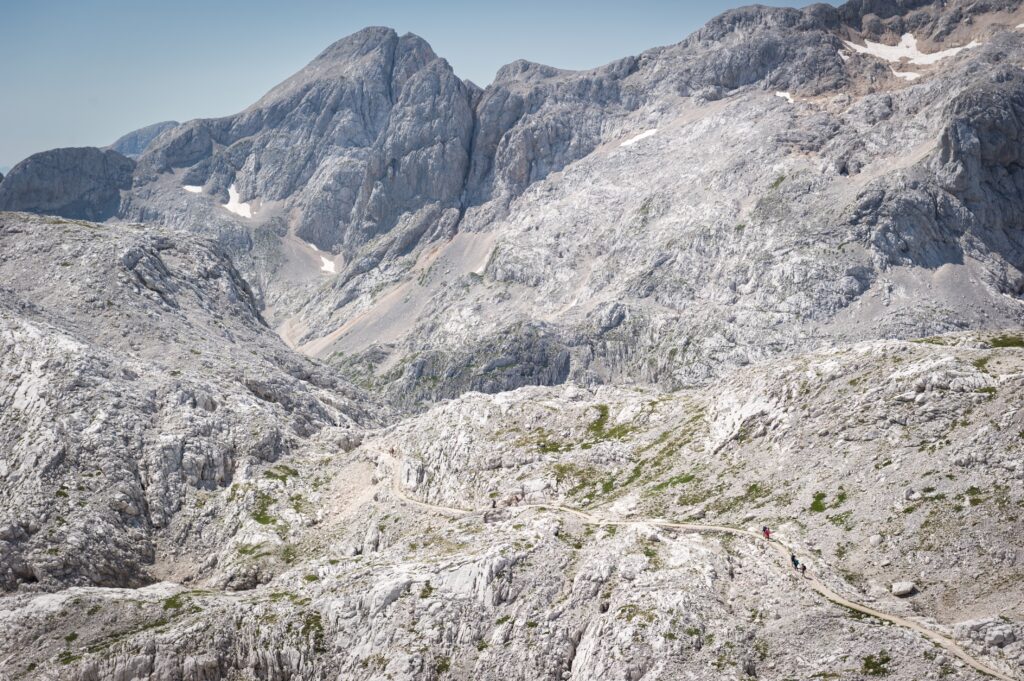
The high routes here are proper mountains, with weather to match. Triglav National Park asks walkers to start early, carry enough water and food for a long day, check the forecast, and stay cautious once they’re up there.
If you’re planning Triglav and haven’t climbed on steel cables before, the park recommends a licensed mountain guide.
And if you’re coming from sea level, a few weeks of training for a high-altitude hike will make the big days much more enjoyable. In an emergency, call 112.
A few park rules that catch people out: you can’t camp or sleep in your car anywhere in the park, swimming in the high mountain lakes is banned, dogs must be on a lead, and drones are prohibited.
What to Bring
- A layering system, because it can be warm at the lake and cold at 2,000 m on the same day. Our guide to layering for cold-weather hiking explains how to build one.
- Trekking poles for the long, steep descents from the high huts.
- A waterproof jacket, even when the morning looks perfect.
- Plenty of water: the park asks walkers to carry enough for the whole day, and our guide to how much water to take on a hike helps you work it out.
- A sleeping sheet if you’re staying in a mountain hut.
🗒️ Free Checklist: Planning your next hiking trip?? Download our printable hiking checklist to make sure you don’t miss the essentials.
Getting Around the Julian Alps
You don’t need a car for most of the walking here. Buses from Ljubljana reach Bled, Bohinj and Kranjska Gora, and Triglav National Park actively encourages visitors to use public transport.
In season, a free shuttle bus runs from Bled’s main bus station to Vintgar Gorge, and the Soča Trail is best walked using the valley buses.
A car makes it easier to reach the Vrata valley or to cross the Vršič Pass, but parking is controlled in places (the Vrata valley has a barrier at its entrance), so check the current traffic rules before you drive.
Long day on the lakeshore paths? Here’s how to treat sore feet after hiking, before you do it all again tomorrow.
Where to Stay for Hiking in the Julian Alps
Pick your base by what you want to walk:
| Base | Best for | Walks on the doorstep | Good to know |
|---|---|---|---|
| Bled | A first visit | Lake Bled, Vintgar Gorge, Pokljuka | Best connected; busy in summer |
| Bohinj | Quieter lake walks | Lake Bohinj path, Mostnica Gorge, Seven Triglav Lakes | Start point for the Seven Triglav Lakes |
| Kranjska Gora | The northern valleys | Planica, the triple border at Peč | On the Vršič road |
| Mojstrana | Triglav | Vrata valley | Below Triglav’s north face |
| Bovec | River walks | Soča Trail, Trenta Valley | Base for the Soča Valley |
If you’re heading high, your nights will be in mountain huts, and around Triglav these need booking well ahead; many book through the Alpine Association’s hut reservation system.
Beyond the Trails in the Julian Alps
Rest days don’t have to mean doing nothing. In Mojstrana, the Slovenian Alpine Museum sits at the start of the Vrata valley walk.
In the Radovna Valley, the Pocar Homestead, one of the oldest preserved farms in the park, opens on summer weekends.
And down in the Soča Valley, the river that looks so calm from the bank is one of Slovenia’s best-known rafting spots.
Nearby: the capital is an easy bus ride away, and our guide to hiking in Ljubljana covers its forest hills and marshes.
FAQs About Hiking in the Julian Alps
Where is the best base for hiking in the Julian Alps?
Bled for a first visit, because it’s the best connected and the easy walks start in town. Bohinj is better if you want quieter trails and quick access to the high country.
Can you hike in the Julian Alps without a car?
Yes, for most walks. Buses link Ljubljana with Bled, Bohinj and Kranjska Gora, a free shuttle runs to Vintgar Gorge in season, and the Soča Trail is designed to be walked with the bus.
Are the Julian Alps good for beginners?
Yes. The lake loops around Bled and Bohinj and the Planica valley trail are easy and well marked. Save the high routes, and especially Triglav, for when you’ve got a few mountain days behind you.
Can you swim in the Triglav Lakes?
No. Swimming is banned in all of the park’s high mountain lakes, which are strictly protected. Swim in the valley lakes instead, such as Bled and Bohinj.
Do you need a guide to climb Triglav?
Not legally, but Triglav National Park recommends a licensed mountain guide if you’re not experienced on exposed, cable-protected rock. The last section to the summit is the tricky part.
How many days do you need in the Julian Alps?
Three days covers Bled, Bohinj and one of the northern valleys. Allow a week if you want to add a two-day climb such as Triglav.
Can you walk from the Julian Alps into Italy?
Yes. One stage of the Juliana Trail crosses into Italy at Tarvisio, and above Rateče a path climbs to Peč, where Slovenia, Austria and Italy meet.
Conclusion
The Julian Alps don’t need to shout about themselves. They’ve got the lakes everyone photographs, the gorges hardly anyone expects, and a national mountain that’s literally on the flag.
For those of you who want all of that without fighting for a parking space, take the bus, start early and leave the café terraces to everyone else.
You won’t regret it.
Planning a walking trip in Slovenia?
Whether you’d like a guide, a self-guided route with your luggage moved for you, or to plan it all yourself, our guide to a walking holiday in Slovenia sets out the options, with sample itineraries.
Where to Next?
Ready to pick your routes, or tempted to see what’s over the border?
More in Slovenia
- Best Hikes in the Julian Alps: seven walks from the Lake Bled loop to Triglav, with distances, climbs and how to get there.
- Ultimate Guide to Hiking in Slovenia: the rest of the country, from the Karavanke to the Karst.
- Walking Holiday in Slovenia: sample itineraries for Bled, Bohinj and Ljubljana.
More Region Guides Nearby
- Hiking in the Dolomites: Italy’s limestone giants, a few hours to the west.
- Hiking Tyrol: Austria’s big-mountain region, with hut culture to match.
Further Afield
- A Beginners Guide to Hiking the Austrian Alps: if the Julian Alps have given you a taste for bigger ranges.
Where This Information Comes From
Last checked: 15 October 2026.
- Alpine Association of Slovenia (PZS): mountain huts (hut season and booking)
- Vintgar Gorge official site (tickets and shuttle)
- The Soča Trail, Triglav National Park and Soča Valley Tourism (PDF)
- Slovenian Tourist Board: Juliana Trail press release
- Mountain Rescue Association of Slovenia (GRZS) (112)


