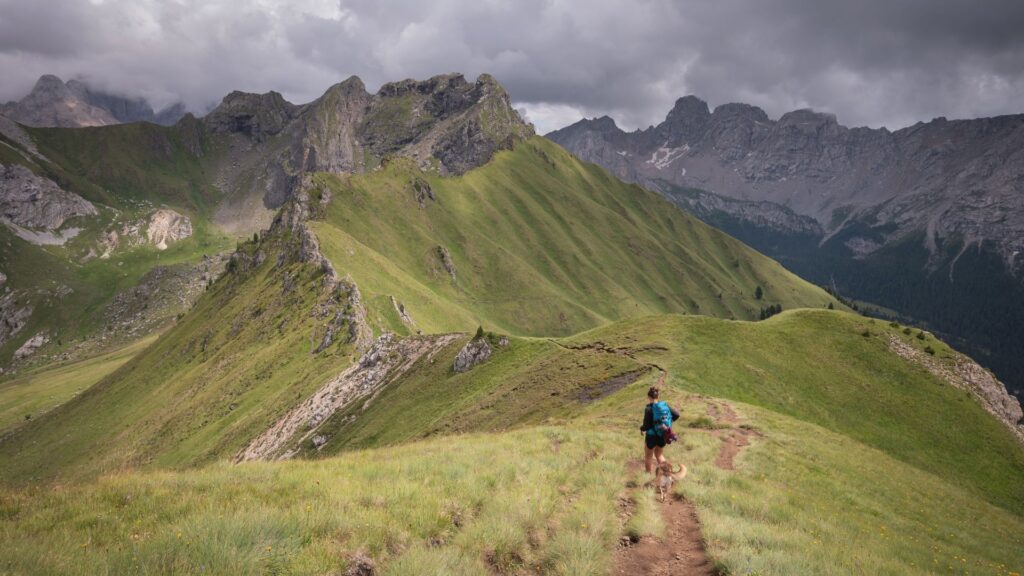
The Dolomites don’t look like the rest of the Alps. There is a pale limestone tower rising directly from an emerald colored green grassy plain. As the sun sets, they turn pink above pastures, larch forests, and villages where people still speak Ladin (that’s right, ‘Ladin,’ not Latin).
And since there are thousands of kilometers of trails marked with signs (as well as a very dense ski lift system along with many rifugi), the Dolomites are perhaps one of the most accessible major mountain ranges for hiking and walking.
However, what makes this range so difficult is that it is divided into many different mountain groups, which are all located throughout four Italian provinces and separated by long valleys that can take several hours to travel through. The choice of a place to stay is much more important in planning a trip in the Dolomites than in almost all other parts of the Alps.
- Why Go Hiking in the Dolomites?
- Where Are the Dolomites?
- The Main Hiking Areas in the Dolomites
- Which Part of the Dolomites Is Best for Hiking?
- Types of Hiking in the Dolomites
- Is Hiking in the Dolomites Difficult?
- Are the Dolomites Suitable for Beginners?
- Best Time to Hike in the Dolomites
- Weather and Mountain Safety
- Where to Stay in the Dolomites
- Getting to the Dolomites
- Getting Around Without a Car
- What to Pack for Hiking in the Dolomites
- Food and Mountain Huts
- Responsible Hiking in the Dolomites
- Frequently Asked Questions About Hiking in the Dolomites
- Conclusion
- Where to Next?
- Where to Next?
Why Go Hiking in the Dolomites?
The Dolomites are among Europe’s most distinctive mountain landscapes. Their steep towers, ridges and rock walls rise abruptly above forests, alpine meadows, and traditional mountain villages. This creates scenery that feels much different from much of the surrounding Alps.
The range forms part of the Southern Limestone Alps in northeastern Italy. Rather than being one continuous block of mountains, the Dolomites are divided into separate groups and valleys that are spread across South Tyrol, Trentino, Veneto and Friuli-Venezia Giulia.
This makes hiking in the Dolomites remarkably varied. You can follow easy valley paths, walk between mountain huts, cross exposed high passes, or use cable cars in order to reach panoramic trails without completing a major ascent first.
The Dolomites were added to the UNESCO World Heritage List in 2009. The protected area consists of nine mountain systems that are recognised for their exceptional landscapes, pale sculptural peaks, and geological importance.
Where Are the Dolomites?
The Dolomites are located in northeastern Italy, and they extend across several provinces rather than belonging to a single town or national park.
Bolzano and Trento sit to the west of the main mountain groups, while Belluno lies farther south. Popular hiking bases include Cortina d’Ampezzo, Ortisei, Selva di Val Gardena, Canazei, San Candido, and Dobbiaco.
The Main Hiking Areas in the Dolomites
Cortina d’Ampezzo and the Eastern Dolomites
Cortina d’Ampezzo is one of the best-known bases for hiking in the Dolomites. The town is surrounded by mountain groups such as the Tofane, Cristallo and Sorapiss, while Tre Cime di Lavaredo and the Cinque Torri are also within reach.
This is a strong choice for first-time visitors who want access to famous scenery, mountain huts and a wide range of walks.
Cortina also has plenty of accommodation, restaurants and outdoor shops, which makes it convenient for any travellers who desire a comfortable town base (rather than moving between huts).
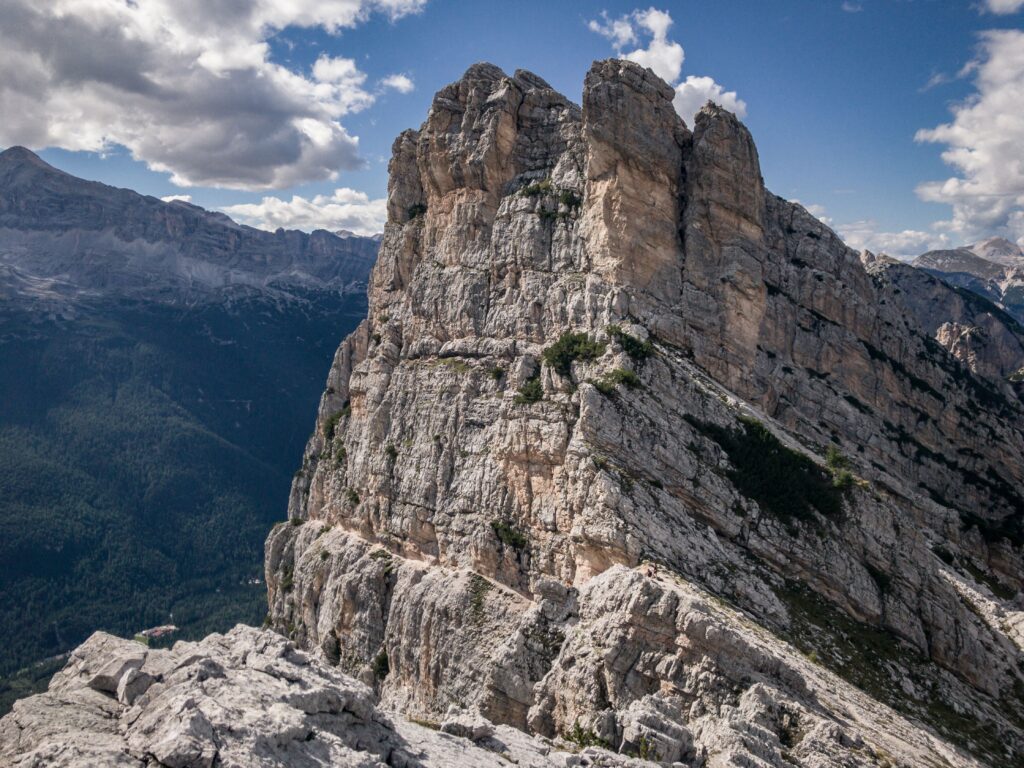
“Plan less, walk more.” Pick a route, set your pace, and let Europe unfold under your boots: grab your free Walking Holiday ebook today”
Val Gardena
Val Gardena sits in the western Dolomites and it includes the towns of Ortisei, Santa Cristina, and Selva di Val Gardena.
The valley provides access to some of the region’s most recognisable landscapes, including the Seceda ridgeline, the Puez-Odle Nature Park and the broad meadows of Alpe di Siusi. Cable cars from the valley make it relatively easy to reach higher walking areas without beginning every hike with a long ascent.
Ortisei is generally the liveliest base, while Selva sits deeper within the mountains and provides convenient access to the Sella and Puez groups.
Alta Badia
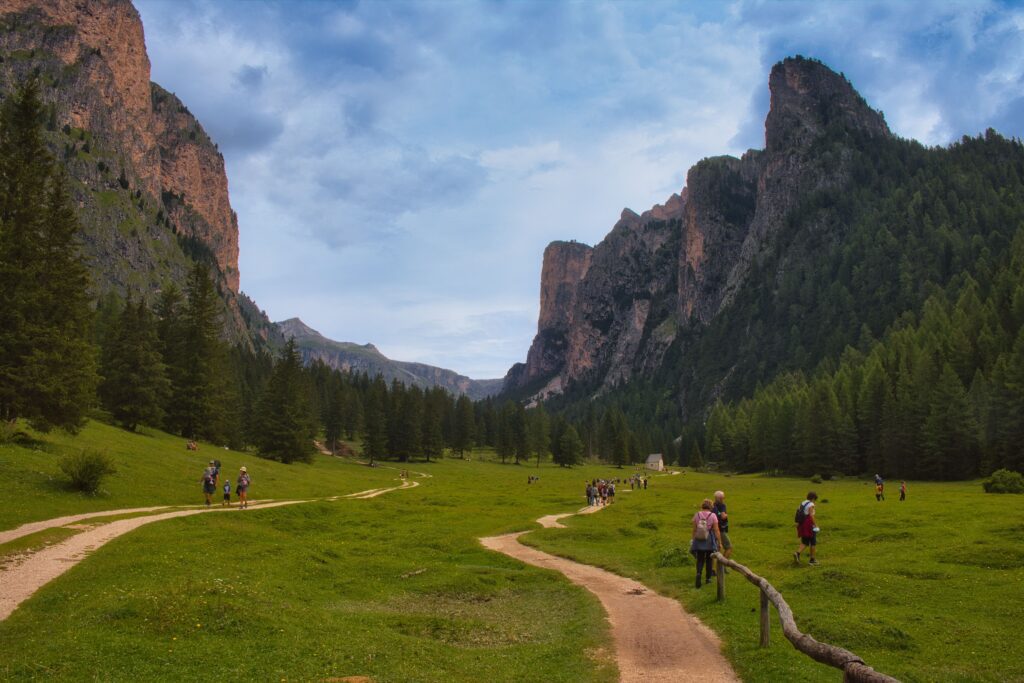
Alta Badia combines dramatic mountains with Ladin villages, mountain restaurants, and relatively accessible walking.
The area includes towns such as Corvara, Colfosco and La Villa. It’s particularly well-suited to travellers who want to combine hiking with local food and comfortable accommodation.
Val di Fassa
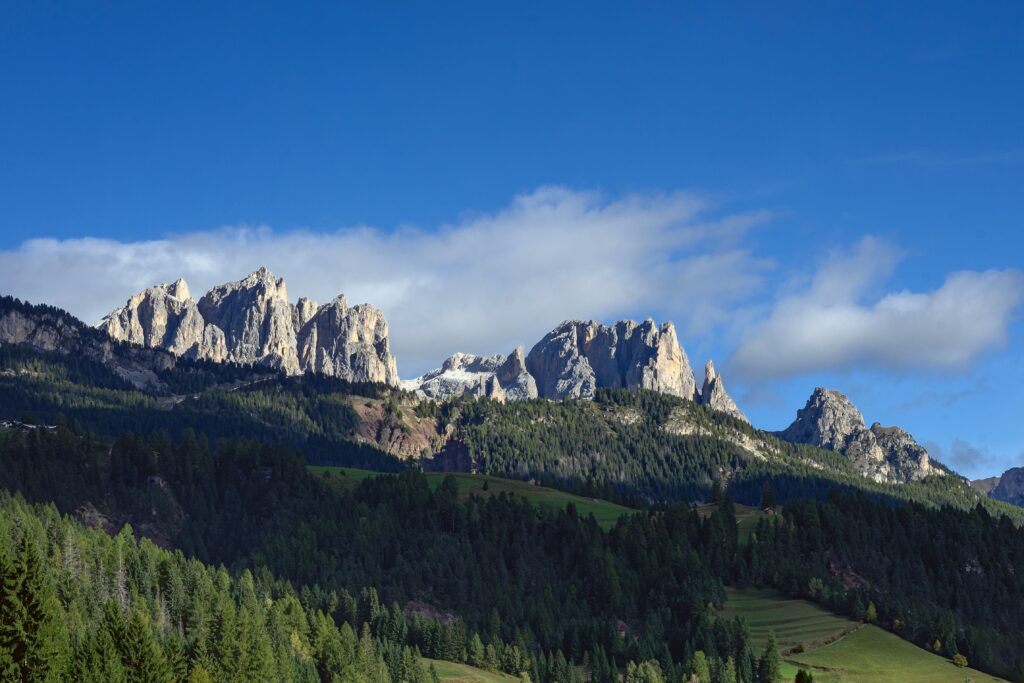
Val di Fassa lies in Trentino and is surrounded by major Dolomite groups, including the Sella, Sassolungo, Catinaccio and Marmolada.
Canazei and Campitello di Fassa make practical bases for hiking, and there is access to lifts, buses and numerous trailheads. The valley is also well positioned for exploring the passes around the Sella massif.
Tre Cime and the Sexten Dolomites
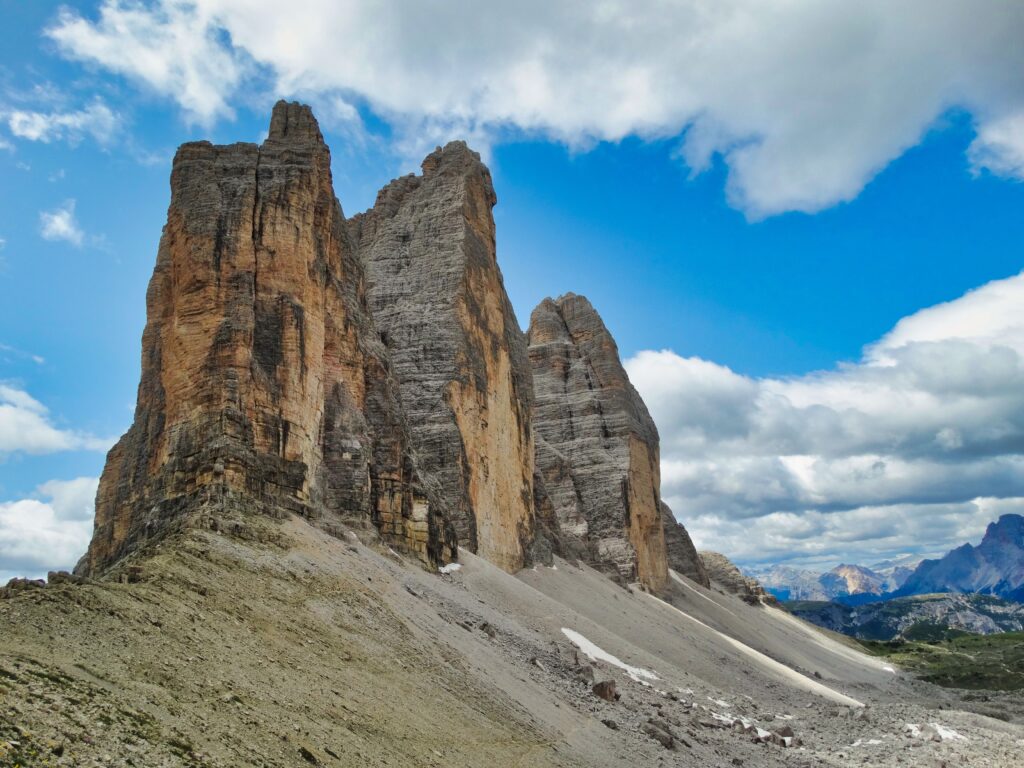
The Tre Cime di Lavaredo area contains some of the most photographed scenery in the Dolomites. This area is extremely popular in the summertime.
San Candido, Dobbiaco and Sesto are common bases for exploring the northeastern mountains. The wider area includes the Tre Cime Nature Park and Fanes-Sennes-Prags Nature Park, along with high plateaus, mountain lakes and extensive networks of marked trails.
San Martino di Castrozza and Pale di San Martino
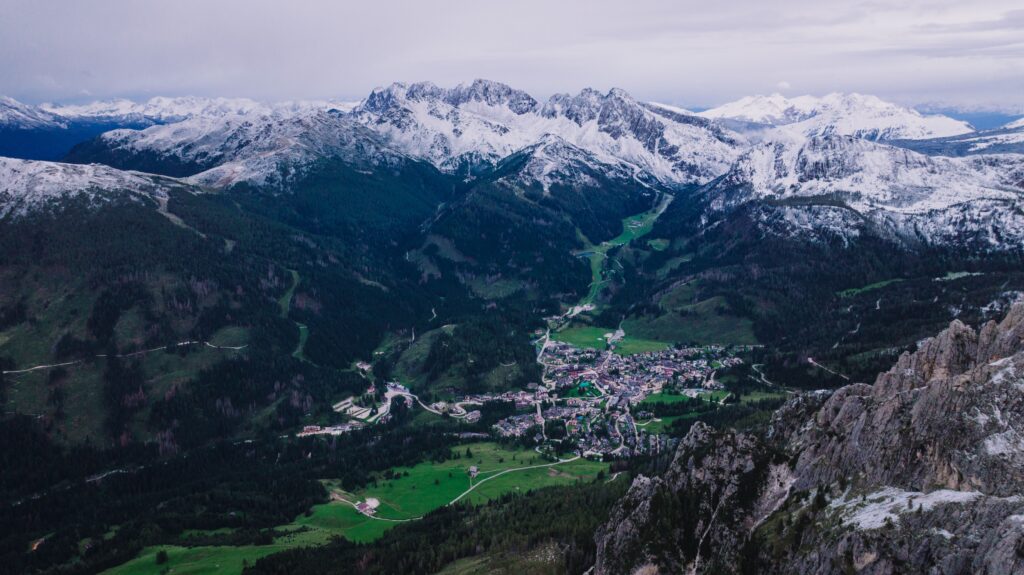
San Martino di Castrozza provides access to the Pale di San Martino, which is one of the most dramatic mountain groups in the Dolomites.
The scenery is dominated by huge rock walls, high plateaus, and sharp towers. It can be a useful alternative for travellers looking beyond the most heavily visited areas around Cortina and Val Gardena.
Which Part of the Dolomites Is Best for Hiking?
There is no single best base for every visitor, but here’s a few good rules of thumb to follow:
- Choose Cortina d’Ampezzo for famous eastern Dolomite scenery and a broad range of trails.
- Choose Val Gardena for easy lift access, panoramic walks, and convenient connections to Seceda, Alpe di Siusi, and the Puez-Odle area.
- Choose Alta Badia for a combination of hiking, rifugi, Ladin culture, and food.
- Choose Val di Fassa for access to major mountain groups and longer alpine routes.
- Choose San Candido, Dobbiaco or Sesto for Tre Cime and the northeastern Dolomites.
For a first trip of less than a week, it is usually better to choose one or two neighbouring bases rather than trying to cover the entire range.
Types of Hiking in the Dolomites
Day Hikes
Day hiking is the easiest way to explore the Dolomites. Trails begin from valleys, mountain passes, villages and cable-car stations, which is why walks can vary significantly in length and difficulty. If you want to explore beyond the Dolomites, see our guide to the best hikes in Italy for more mountain, coastal and countryside routes.
Our companion guide to the best hikes in the Dolomites compares individual trails, distances, difficulty levels and starting points.
Hut-to-Hut Hiking
For hikers interested in similar experiences elsewhere, our guide to hut-to-hut hiking in Europe looks at other destinations where walkers can travel between mountain refuges and spend nights along the route.
Hut-to-hut hiking also allows walkers to cross the mountains without returning to the valley each evening. Trips may last two or three nights or form part of a much longer route.
Alta Via Routes
The Dolomites contain several long-distance Alta Via routes.
Alta Via 1 is the best known and is generally considered to be more accessible than some of the higher and more technical alternatives. It crosses the eastern Dolomites between Lago di Braies and Belluno, using mountain huts along the way.
Cable-Car-Assisted Walking
Cable cars and chairlifts make many high-level areas accessible without a long climb from the valley.
This does not automatically make the resulting walk easy. A trail reached by cable car may still involve exposed terrain, steep descents, or rapidly changing mountain weather.
However, the lift network is extremely useful for shorter trips and for walkers who want high-mountain views without completing major ascents every day.
Via Ferrata
Via ferrata routes use fixed cables, ladders, steps, and bridges to cross steep or exposed mountain terrain.
Although they are often discussed alongside hiking, they require different equipment and skills. A normal walking route should not be confused with a via ferrata simply because both begin from the same valley or rifugio.
“First time on the trail? Hiking for Beginners has your back.”
‘For specific route ideas, compare our guide to the best hikes in the Dolomites, which covers standout walks by location, difficulty and scenery. ‘
Is Hiking in the Dolomites Difficult?
The Dolomites cater to a wide range of hikers, but the terrain should not be underestimated.
Easy walks may follow valleys, forest tracks, and alpine meadows. Moderate routes often involve sustained climbing, uneven rock, and steep descents. And more difficult trails can include scree, narrow ledges, exposed passes and sections where a slip could have serious consequences.
With that in mind, you should always check:
- total distance
- elevation gain and loss
- highest point
- trail classification
- exposure
- expected walking time
- whether the route includes a via ferrata
Are the Dolomites Suitable for Beginners?
Yes, provided beginners choose appropriate routes.
Beginners should avoid choosing trails purely because they are popular on social media. Some famous viewpoints require steep climbs, exposed paths. or difficult descents, so do your research in advance.
A suitable beginner route should have a manageable distance, moderate elevation gain, clear navigation, and an easy retreat if conditions deteriorate.
Best Time to Hike in the Dolomites
The main summer hiking season generally runs from late June until September.
By late June, more high trails become accessible and mountain huts begin their summer operations. July and August provide long days and the greatest number of open lifts and rifugi, but they are also the busiest months.
September often brings cooler conditions and fewer visitors, although huts and lifts may begin closing later in the month if it gets too cold.
Hiking the Dolomites in June
June can bring green valleys, wildflowers and fewer visitors than peak summer. However, high passes may still hold snow, and not every rifugio or cable car will be operating.
Hiking the Dolomites in July and August
July and August offer the widest choice of trails, open mountain huts, and operating lifts.
These are also the busiest months around Tre Cime, Seceda, Lago di Braies, and other major attractions. Accommodation, hut beds, and some parking arrangements should be booked ahead.
Hiking the Dolomites in September
September can be one of the best months for experienced walkers who prefer quieter trails and cooler temperatures. Days become shorter, and services gradually reduce as the month progresses.
Weather and Mountain Safety
Weather in the Dolomites can change quickly. A clear morning may be followed by cloud, rain, or an afternoon thunderstorm. Carry a waterproof shell, warm layer and navigation even when the valley forecast looks settled.A good layering system for hiking can also make it easier to adjust to changing temperatures and conditions throughout the day.
🗒️ Free Checklist: “Never forget the essentials — grab your free Ultimate Hiking Packing List.”
Where to Stay in the Dolomites
Hotels and Guesthouses
Valley towns offer the widest choice of hotels, apartments, and guesthouses. This is the easiest option for travellers who are completing day hikes.
Mountain Rifugi
Rifugi range from simple dormitory accommodation to more comfortable mountain lodges with private rooms.
Facilities vary, but most provide an evening meal and breakfast. Some accept online bookings, while others require direct email or telephone contact, so research in advance!
Choosing One Base or Moving Around
One base works well for a short trip focused on a particular valley.
If you’re planning a longer European walking trip, our guide to planning a trek in Europe covers some of the broader decisions involved in choosing routes, bases and logistics. For example, a visitor might combine Cortina with Val Gardena, or Val di Fassa with Alta Badia.
Avoid changing hotels every night unless the trip is specifically designed as a hut-to-hut trek.
Getting to the Dolomites
The Dolomites do not have one central airport or railway station. Common arrival points, however, include Venice, Verona, Innsbruck and Treviso, followed by a combination of train, bus, shuttle, or a hired car.
The Dolomites are just one part of Italy’s diverse hiking landscape. For more ideas, see our guide to hiking in Italy.
Getting Around Without a Car
A car provides the greatest flexibility, particularly for early starts and remote trailheads.
However, several valleys have useful local bus networks, and many accommodation providers issue or sell regional transport passes. Cable cars also connect towns with higher trail systems.
A car-free trip is most practical when based in a well-connected valley such as Val Gardena, Alta Badia (or around Dobbiaco), and San Candido.
What to Pack for Hiking in the Dolomites
A typical summer day-hiking kit should include:
- supportive hiking footwear
- waterproof jacket
- warm or insulating layer
- sun protection
- sufficient food and water
- map or offline navigation
- basic first-aid supplies
- charged phone and power bank
- trekking poles where useful
For hut-to-hut walks, add a lightweight sleeping-bag liner, spare clothing, toiletries, cash and any hut-specific items requested when booking.
Food and Mountain Huts
Eating at a rifugio is an entire part of the Dolomites hiking experience. Menus reflect the region’s mix of Italian, Austrian and Ladin influences. Depending on the valley, meals may include polenta, dumplings, pasta, soups, local cheeses, speck. and strudel.
Responsible Hiking in the Dolomites
Stay on recognised trails, carry out rubbish and avoid disturbing wildlife or livestock.
The UNESCO-listed Dolomites contain nine protected mountain systems with internationally important landscapes and geology, so responsible access is absolutely essential to preserving the region.
Frequently Asked Questions About Hiking in the Dolomites
How many days do you need for hiking in the Dolomites?
Four or five days is more than enough to explore one main valley. Seven to ten days allows you to use two bases or complete a short hut-to-hut trek without rushing.
Can you hike in the Dolomites without a guide?
Many marked day hikes can be completed independently by experienced walkers with appropriate navigation and mountain awareness.
A guide is sensible for difficult routes, exposed terrain, unfamiliar via ferrata or uncertain snow conditions.
Do you need to book mountain huts in advance?
Advance booking is strongly recommended during the main summer season, and especially for popular huts and recognised long-distance routes.
Can you hike the Dolomites without a car?
Yes, particularly when staying in a valley with reliable buses and lift connections. A car becomes more useful when travelling between distant mountain groups or reaching remote trailheads.
Are cable cars necessary?
No, but they can save considerable time and elevation. They are particularly useful for short visits and walkers who want to concentrate on higher trails.
What language is spoken in the Dolomites?
Italian is widely spoken, while German is common in South Tyrol. Ladin is also spoken in several valleys, including Val Gardena, Alta Badia and Val di Fassa.
Are the Dolomites part of the Alps?
Yes. The Dolomites form part of the Southern Limestone Alps in northeastern Italy.
Conclusion
The key to hiking the Dolomites is to treat them as a collection of distinct valleys and mountain groups rather than one compact destination. Choose a suitable base, match each route to your ability, and leave enough flexibility for changing mountain weather.
With careful planning, the region offers far more than a checklist of famous viewpoints. Its trails, villages, rifugi and contrasting landscapes can support anything from a first alpine walking holiday to several return trips.
Where to Next?
- Ultimate Guides – your gateway to hiking across Europe
- Hikes & Trails – curated lists of the best hikes and local gems
- Walking Holidays – extended journeys for when a single day just isn’t enough
- General Blog – all the extras: gear reviews, planning tips, and personal stories
Where to Next?
Continue planning your time in northern Italy with these related hiking guides.
Explore More of the Dolomites
Best Hikes in the Dolomites
Compare the region’s standout day walks, viewpoints and mountain routes by distance, difficulty and location.
Hut-to-Hut Hiking
Learn more about how mountain huts work, and the best places to find the when hiking in Europe.
Alta Via 1 Hiking Guide
Prepare for the Dolomites’ best-known long-distance trail, including stages, accommodation and practical logistics.
More Hiking in Italy
Hiking in Italy
Explore Italy’s major walking regions, from the Alps and Dolomites to Tuscany, the Apennines and the coast.
Best Hikes in Italy
Discover a broader collection of mountain, coastal and countryside trails across the country.
Walking Holidays in Italy
Compare regions and routes for a longer trip built around walking, local accommodation and Italian landscapes.