

Hiking is a physically demanding activity, requiring both endurance and strength to navigate rough, uneven terrain. Unlike sports that involve explosive movements, hiking is more of a steady, prolonged physical activity that challenges various muscle groups.
However, it still exerts substantial strain on muscles, joints, and ligaments, especially in the legs, back, and core. As a result, many hikers experience muscle soreness after long trails.
Foam rolling has become a popular method for treating sore muscles, allowing individuals to ease tightness and encourage faster recovery.
In this article, we’ll explore how foam rollers work, why they’re effective for recovery, and guide you through a series of foam roller exercises to create a personalized muscle recovery routine. These exercises can help alleviate pain, reduce muscle tension, and keep you ready for your next adventure.
- Muscle Groups Used Most When Hiking
- Why Use a Foam Roller to Help Treat Sore Muscles?
- Pros and Cons of Using a Foam Roller to Treat Sore Muscles After Hiking
- How to Build Your Own Stretching Program
- Best Foam Roller Recovery Exercises for Hikers
- Additional Considerations for Developing Your Own Stretch Routine for Hiking
- Where to Next?
- In Conclusion
Muscle Groups Used Most When Hiking
Hiking primarily targets the leg muscles, specifically the quadriceps, hamstrings, calves, and glutes. Additionally, the back and core muscles play crucial roles in maintaining balance, stability, and proper posture while trekking across uneven surfaces.
Strengthening these muscle groups not only improves endurance but also aids in faster recovery, as stronger muscles are better able to withstand repeated strain.
Incorporating the best hiking exercises into your weekly training plan can help reduce post-trail soreness altogether. Understanding the key muscle groups engaged during hiking is essential for developing a recovery routine that addresses each area effectively.

Why Use a Foam Roller to Help Treat Sore Muscles?
While bodyweight exercises and static stretching are valuable for post-hike recovery, incorporating a foam roller enhances these movements by increasing leverage and range of motion.
Foam rollers create pressure on specific muscle areas, which promotes blood flow and helps break down knots and adhesions within the muscle tissue. This leads to improved flexibility and allows for more effective, targeted muscle release compared to traditional stretching alone.
While static stretching still plays an important role, pairing foam rolling with a structured daily stretches for hikers routine can significantly improve flexibility and recovery time.
“First time on the trail? Hiking for Beginners has your back.”
Pros and Cons of Using a Foam Roller to Treat Sore Muscles After Hiking
Foam rolling is widely embraced by fitness enthusiasts for its multiple benefits in muscle recovery. However, as with any recovery method, it has both advantages and limitations.
Fortunately, the benefits far outweigh the drawbacks, making foam rolling an excellent addition to any hiker’s post-activity routine.
Benefits of Using a Foam Roller for Recovery
- Increased Blood Flow: Foam rolling stimulates circulation, promoting nutrient-rich blood flow to sore areas and speeding up the healing process.
- Improved Flexibility: Foam rolling loosens tight muscles, increasing flexibility and range of motion, which helps prevent injuries on future hikes.
- Relief from Muscle Knots: By applying pressure, foam rollers help break down muscle adhesions (knots), reducing stiffness and improving mobility.
- Reduced Muscle Soreness: Foam rolling can decrease muscle soreness by reducing lactic acid build-up, making recovery faster and less painful.
- Enhanced Muscle Function: Regular foam rolling supports optimal muscle function, enhancing your overall physical performance on and off the trails.
Disadvantages of Using a Foam Roller for Recovery
- Initial Discomfort: Foam rolling can be uncomfortable, especially if muscles are very tight. The pressure may feel intense initially but usually improves with practice.
- Potential for Overuse: Excessive foam rolling can cause bruising or overstretching of muscles, so it’s crucial to avoid overdoing it.
- Limited Targeting for Smaller Muscles: Foam rollers may not effectively target smaller muscle groups, such as those in the arms and neck, requiring alternative tools or methods for these areas. In those cases, using a massage ball for smaller muscle groups can provide more precise pressure and relief.

How to Build Your Own Stretching Program
Creating a customized foam rolling routine can help address all the major muscle groups impacted by hiking. Start by selecting one or two exercises for each area of the body—back, legs, and arms—focusing on sore or overused muscles.
For regular maintenance, performing one exercise per muscle group is typically sufficient. In cases of severe soreness, prioritize exercises that target the areas with the most tension or discomfort.
By consistently using foam roller exercises after hikes, you can improve recovery times and ensure your muscles remain healthy and ready for your next adventure. You can also prevent excessive soreness by adding dynamic warm-ups for hikers before you even hit the trail.
Best Foam Roller Recovery Exercises for Hikers
Foam rolling offers hikers an effective way to alleviate muscle soreness with minimal equipment. While some stretches and exercises rely solely on body weight, adding a foam roller allows for enhanced leverage, deeper muscle engagement, and a wider range of motion.
Below are some of the most effective foam roller exercises for treating sore muscles after hiking. Regular quad rolling can also help prevent hiker’s knee, which is often caused by tight or overworked thigh muscles.
Upper Back (Thoracic Extension)
- Targets: Upper back muscles and thoracic spine
- Hold Time/Reps: Hold for 20-30 seconds; repeat 2-3 times.
- How-To:
- Place the foam roller under your upper back, keeping your knees bent and feet flat on the ground.
- Cross your arms over your chest and slowly roll back and forth to massage the upper back.
- To increase the stretch, raise your hips slightly off the floor.
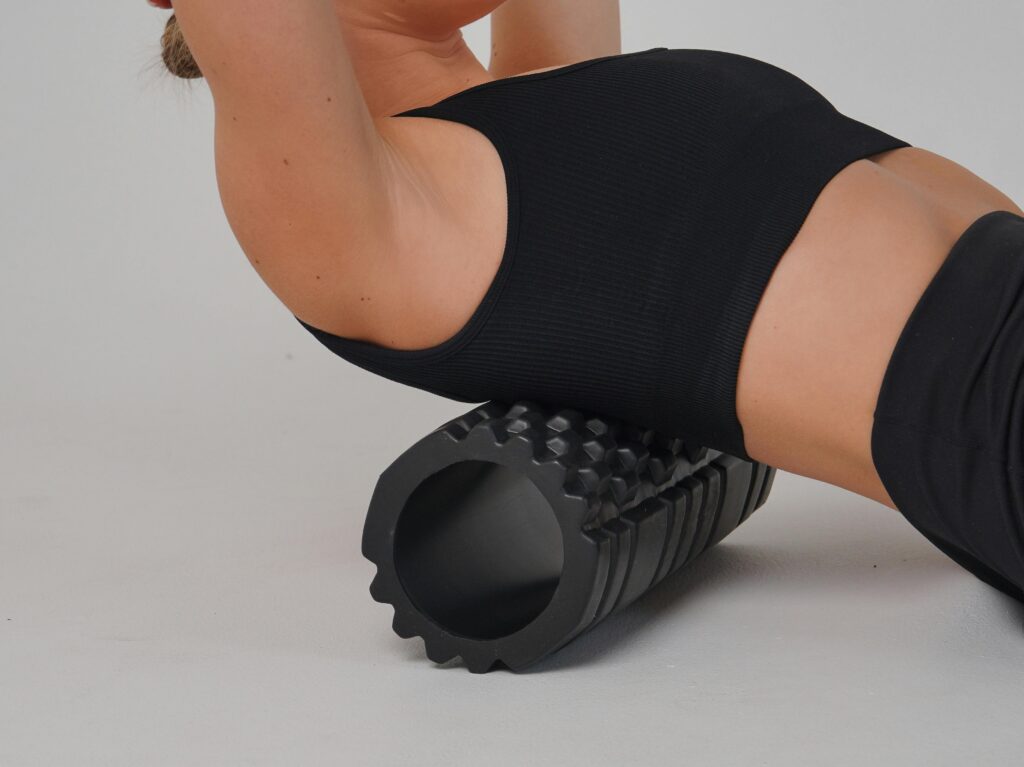
Lower Back (Lower Back Roll)
- Targets: Lower back muscles and lumbar spine
- Hold Time/Reps: Hold for 20-30 seconds; repeat 2-3 times.
- How-To:
- Position the foam roller under your lower back with your feet flat on the ground.
- Use your hands to support your weight and gently roll back and forth to relieve tension.
- Focus on rolling across any tight or sore spots.
Quadriceps (Quad Roll)
- Targets: Quadriceps
- Hold Time/Reps: 30 seconds per leg; repeat 2-3 times.
- How-To:
- Lie face down with the foam roller positioned under your thighs.
- Use your arms to support your body and roll from your hip to your knee.
- Apply extra pressure by placing one leg over the other, focusing on any sore spots.
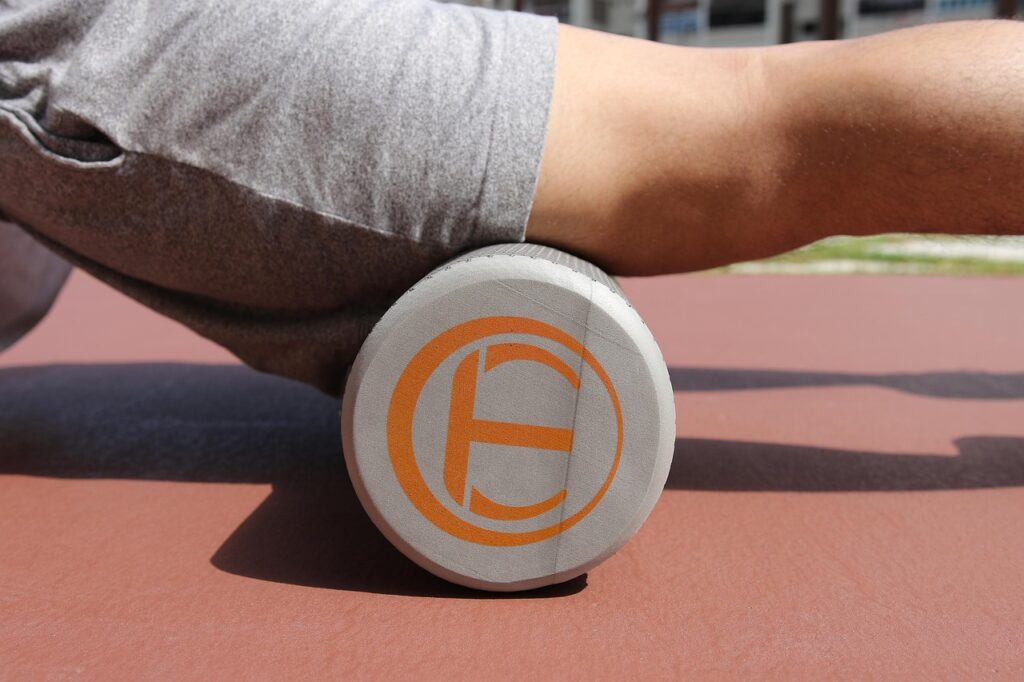
Hamstrings (Hamstring Roll)
- Targets: Hamstrings
- Hold Time/Reps: 30 seconds per leg; repeat 2-3 times.
- How-To:
- Sit with your legs extended and the foam roller positioned under your thighs.
- Lift your hips and roll from the bottom of your glutes to the backs of your knees.
- Apply extra pressure to specific sore areas by rolling more slowly.

Calves (Calf Roll)
- Targets: Calves
- Hold Time/Reps: 30 seconds per leg; repeat 2-3 times.
- How-To:
- Sit with your legs extended and place the foam roller under your calves.
- Lift your hips and roll from the knee down to the ankle.
- For a deeper massage, cross one leg over the other.

Inner Thigh (Adductor Roll)
- Targets: Adductors
- Hold Time/Reps: 30 seconds per side; repeat 2-3 times.
- How-To:
- Lie face down and extend one leg out to the side.
- Position the foam roller under your inner thigh and roll slowly from your hip to your knee.
- Focus on any areas that feel tight or sore.
🗒️ Free Checklist: “Never forget the essentials — grab your free Ultimate Hiking Packing List.”
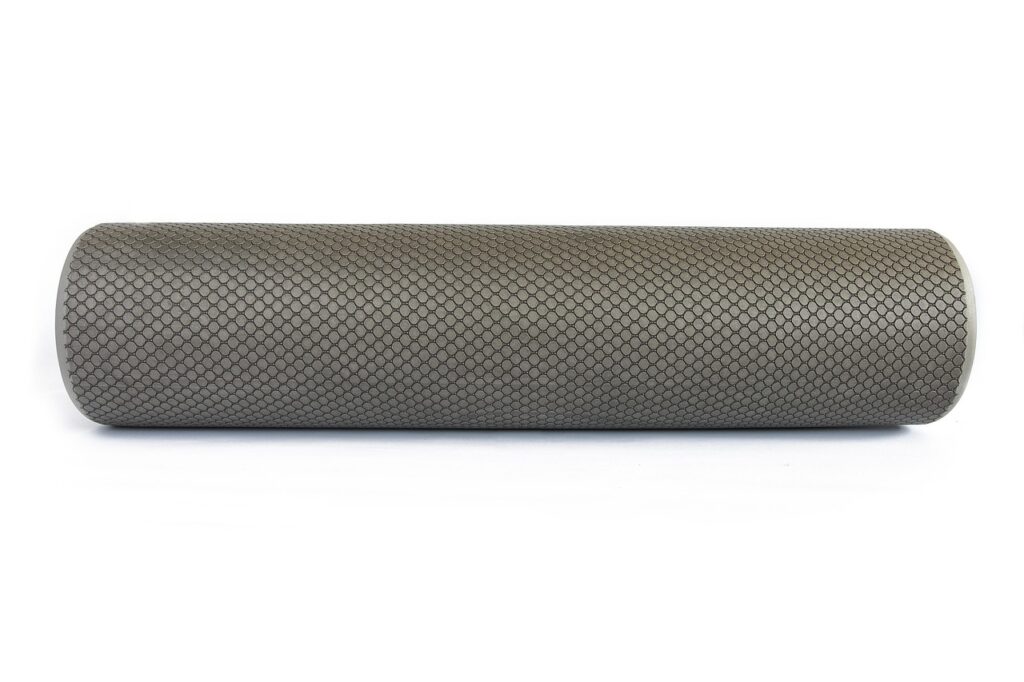
Triceps (Tricep Roll)
Surprisingly, arms are also used in hiking, particularly when carrying equipment. Foam rolling your arms can relieve tension that may affect your posture and upper body comfort.
- Targets: Triceps and shoulder area
- Hold Time/Reps: 20-30 seconds per arm; repeat 2-3 times.
- How-To:
- Lie on your side with the foam roller under your tricep area.
- Slowly roll from your shoulder down to your elbow, focusing on sore spots.
- Use your opposite hand to adjust pressure as needed.
Additional Considerations for Developing Your Own Stretch Routine for Hiking
When building a stretching routine, remember that effective recovery requires targeted exercises and a mindful approach. Select exercises that target essential muscle groups, avoid overtraining, and aim for 75% of your maximum reps to avoid excessive strain.
Be open to experimenting with different stretches and techniques, as some exercises may work better for you than others. Tracking progress can also help you evaluate which exercises are most effective in aiding your recovery and which may need adjustment.
Where to Next?
If recovery is part of your hiking plan, here’s what to build next:
- Dynamic Warm-Ups for Hikers – prepare your muscles before hitting the trail.
- Hiker’s Knee: What It Is and When to Be Worried – understand and prevent common knee pain.
- Best Ways to Prevent Rolled and Sprained Ankles When Hiking – protect your joints on uneven terrain.
- Indoor Hiking Workouts Using a Treadmill – build strength and endurance between adventures.
In Conclusion
Incorporating foam roller exercises into your post-hike recovery can have a significant impact on your physical well-being. This article has covered essential muscle groups, the science behind foam rolling, and a variety of exercises tailored to support hikers in their recovery.
By regularly treating sore muscles with foam rolling, you’ll improve your flexibility, alleviate muscle tension, and enhance overall performance on the trails.
So if you’re looking to optimize your fitness level for the trails, then recovery is just as important as the workout itself. That’s why it’s beneficial to treat sore muscles with foam roller recovery for walking long distances.
With that in mind, give these exercises a shot and see which are the most effective for you, then add those to your fitness routine. Recovery is just one part of performance — if you’re looking to improve hiking stamina, combining smart training with proper recovery is key.


