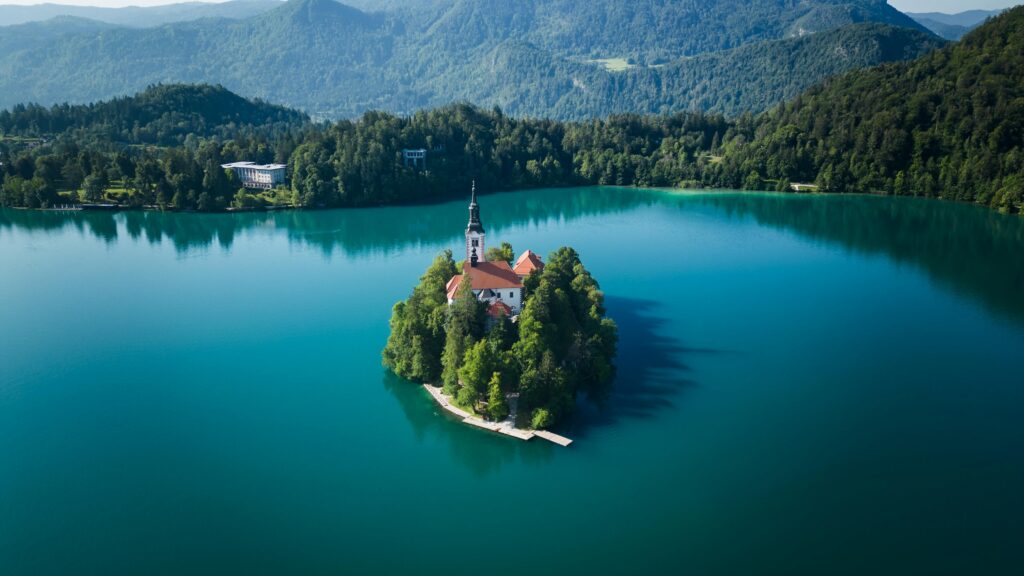
Ljubljana is not a city that appears on lists of Europe’s great outdoor capitals.
It’s too small, too quiet, and too often reduced to “that cute little place between Venice and Vienna” that travellers pass through on their way to Lake Bled.
And yet, for people who actually hike (rather than just photograph themselves near mountains), Ljubljana might be the most practical alpine base city in Central Europe that nobody talks about.
What makes Ljubljana remarkable is not size or fame. It’s proximity. The Julian Alps sit close enough that you can see them from the city centre. Trail networks start where buses stop.
And the hiking culture here runs deep enough that locals don’t just tolerate outdoor access; they’ve built an entire literal infrastructure around it!
Our guide to hiking in Slovenia covers the rest of the country.
- Hiking in Ljubljana at a Glance
- Why Walk and Hike in Ljubljana?
- Where to Walk in and Around Ljubljana
- Exploring Ljubljana on Foot
- Taking a Walking Holiday in Ljubljana
- Where to Stay in Ljubljana as a Walker
- Planning Your Walking Trip to Ljubljana
- Getting Around Ljubljana
- Beyond the Trails in Ljubljana
- FAQs About Walking in Ljubljana
- Why Ljubljana Is Europe's Best-Kept Hiking Secret
- Where to Next?
- Where This Information Comes From
- Planning a walking trip in Slovenia?
Hiking in Ljubljana at a Glance
- Walkability: high; a compact Old Town on both banks of the Ljubljanica
- Terrain: flat centre, forested hills on three sides, wetlands to the south
- Best months: April to June and September to October
- Nearest green escape: Rožnik, a short walk from the centre through Tivoli Park
- Best base: the Old Town for city walking; near the bus station for escapes
- Getting around: city buses with the Urbana card; regional buses to Kamnik and the Alps
Why Walk and Hike in Ljubljana?
Because you can get from a riverside café to a forest summit in under an hour, without a car, and because the locals do exactly that.
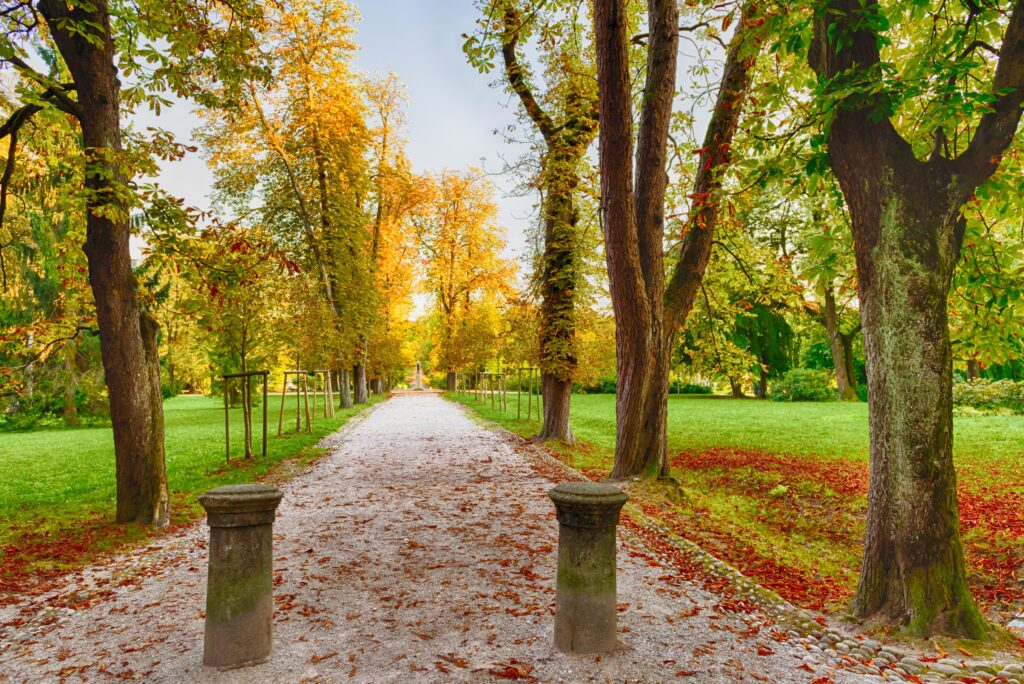
Ljubljana sits where the Alps meet the Dinaric range and the Pannonian Plain, which creates a geographic situation that’s almost absurdly favourable for hikers.
Mountains rise in multiple directions. Forests cover the hills immediately surrounding the city. The Ljubljana Marshes provide flat wetland walking to the south.
And the entire package sits compact enough that you can access any of it within an hour!
Walking in Ljubljana doesn’t feel like something the city does for visitors. Slovenians hike the way other cultures drink coffee; it’s just what you do!
That’s why you’ll see older residents covering serious distances on weekday mornings (proof that it’s never too late to start hiking), families doing proper mountain walks on Sundays, and trail networks that exist because locals demanded them, not because tourism boards promoted them.
This creates hiking infrastructure that actually works rather than infrastructure designed to look good in brochures.
For hikers who enjoy being part of genuine local culture rather than performing for it, this authenticity matters.
You’re not “doing the Ljubljana hiking experience”; you’re just hiking where Slovenians hike, which just so happens to be, well, pretty much everywhere!
Where to Walk in and Around Ljubljana
Inside the city, head for the forested hills and the marshes; outside it, a bus gets you to proper mountains in about an hour.
Ljubljana is surrounded by forested hills that provide immediate hiking access without requiring travel into the mountains.
In the City
Castle Hill and the Old Town
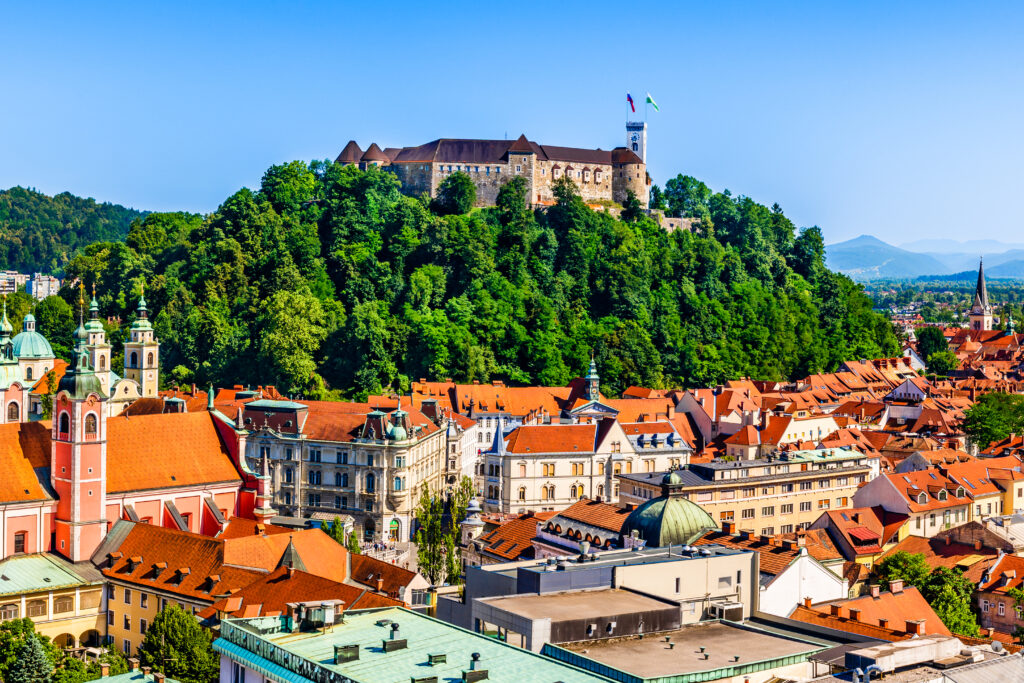
Ljubljana Castle sits on a hill that rises directly from the city centre, and the walks up provide real elevation through forest paths that feel far more interesting than the funicular suggests. Once you’re up, trails extend along the ridge and connect to longer forest routes.
The old town below is small enough to explore thoroughly on foot but interesting enough to justify extended wandering.
The architecture, river, and café culture create urban walking that feels genuinely pleasant rather than obligatory. And some of what you’re walking past is world-class: the work of the architect Jože Plečnik across the city is on UNESCO’s World Heritage list.
Rožnik and Šišenski Hrib
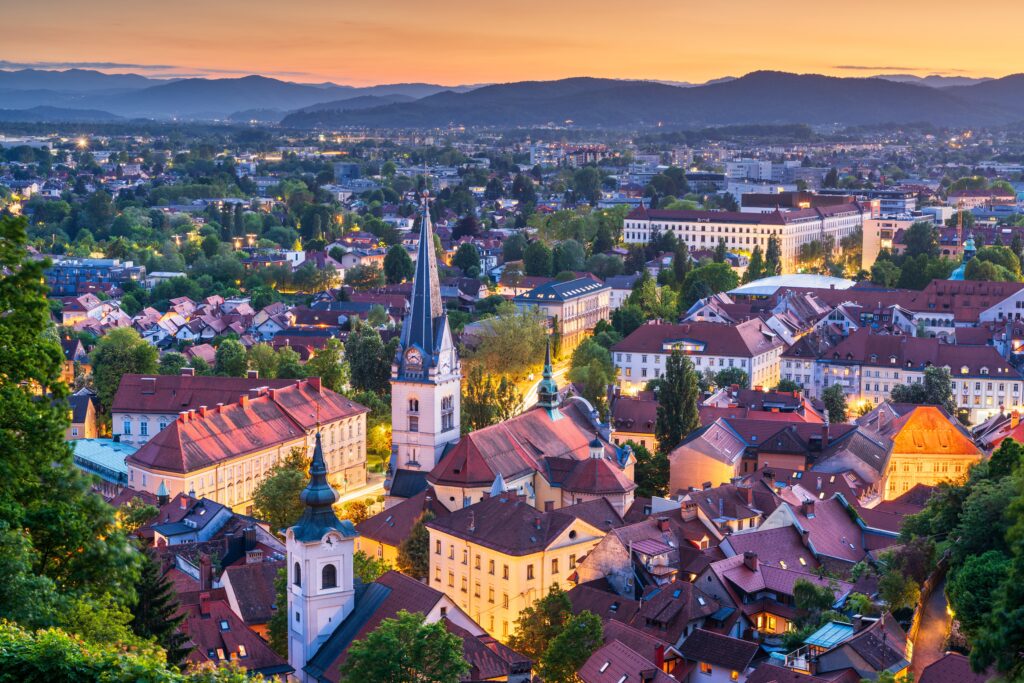
These forested hills rise directly from the city’s western edge, part of the Tivoli, Rožnik and Šiška Hill Nature Park, and offer extensive trail networks that locals use constantly.
The trails wind through beech and oak woods, connect viewpoints, and provide loops that let you walk for hours without repeating terrain.
The forests stay cool in summer and are also accessible in winter, which makes them effective year-round hiking destinations.
The classic loop from Tivoli Park to the top of Rožnik is the easiest proper hike in the city, and Visit Ljubljana’s hiking trails page lists more.
Golovec Hill
East of the centre, Golovec provides similar forest hiking with slightly more rugged terrain.
The hill contains trails that feel more remote despite being technically within city limits.
For hikers who enjoy the psychological shift that happens when forests close in and city sounds disappear, Golovec delivers that transition remarkably quickly.
The Path of Remembrance and Comradeship, the marked walking ring around the whole city, crosses it on sandy forest tracks.
The Ljubljana Marshes
South of the city, the Ljubljana Marshes (Ljubljansko barje) offer something completely different in the form of flat wetland walking through a landscape that feels far more ancient and wild than anything near most European capitals.
The Ljubljana Marshes Nature Park protects the largest area of wet meadows in Slovenia, along with prehistoric pile-dwelling sites on UNESCO’s World Heritage list.
The park’s Path Among the Alders loop starts on the city’s edge, and the hill of Krim rises behind the marshes for a much bigger day.
Ready to pick a route? Our guide to the best hikes in and around Ljubljana has six walks from Rožnik to Kamnik Saddle, with distances, climbs and the buses to get there.
Escapes by Bus and Train
The real hiking around Ljubljana happens when you head north toward the Kamnik–Savinja Alps and the Julian Alps. Ljubljana’s position makes it an exceptional base for day hiking trips that access terrain the city itself can’t provide.
Nearby: for a few days in the mountains rather than a day trip, our guide to hiking in the Julian Alps covers Bled, Bohinj, Kranjska Gora and the Soča Valley.
Kamnik and the Kamnik–Savinja Alps
Kamnik sits about 30 kilometres (18.6 miles) north of Ljubljana and it also happens to serve as the gateway to some of Slovenia’s best hiking.
The town itself is worth exploring, but the mountains behind it provide trail networks that range from forested approaches to proper alpine terrain.
A scheduled bus runs from Ljubljana through Kamnik to Kamniška Bistrica, for the Velika Planina cable car and the climb to Kamnik Saddle.
The Julian Alps
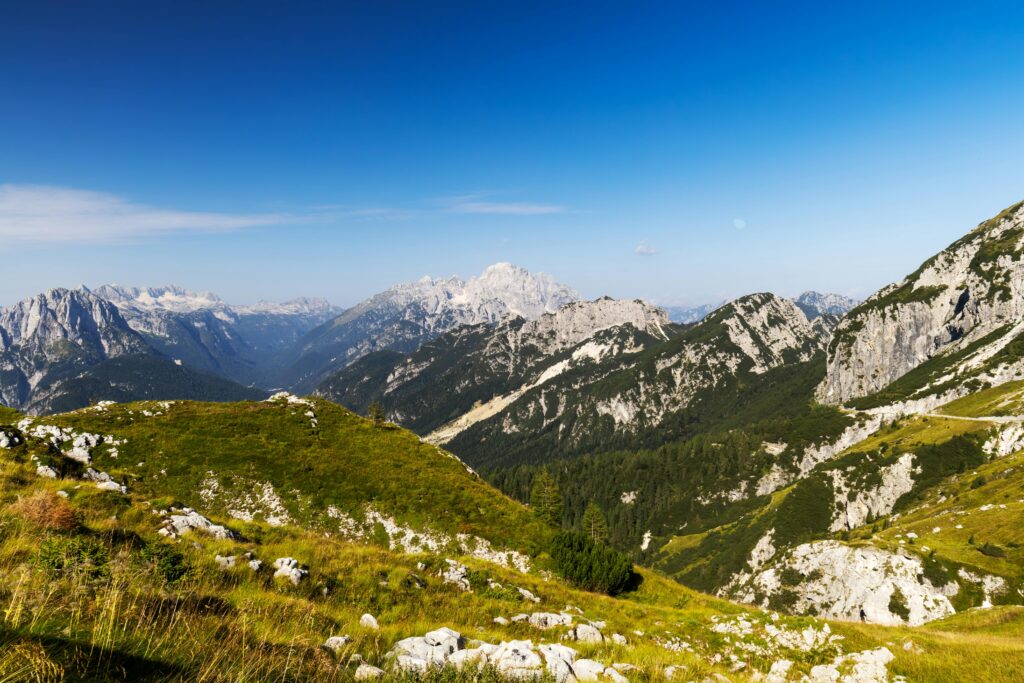
The Julian Alps loom on the northwestern horizon, and while the highest peaks require commitment, the approaches and lower ranges provide outstanding hiking that’s accessible from Ljubljana as a base.
Bled is the easiest day trip. And if a day trip turns into a longer itch, the Juliana Trail loops 270 km around the whole range, with most stages starting at a railway station or bus stop.
The Karst and Logar Valley
South toward the Karst, the landscape shifts to limestone formations, caves, and the kind of dramatic underground systems that Slovenia is famous for, and the trail above the Škocjan Caves makes a gentle day out.
To the north, Logarska Dolina is a glacial valley with some of Slovenia’s most dramatic alpine scenery.
The hiking there is serious (proper mountain routes with real elevation and exposure) but it’s also accessible enough for strong day hikers, though it’s a long day from the capital without a car.
“First time on the trail? Hiking for Beginners has your back.”
Exploring Ljubljana on Foot
Not all hiking around Ljubljana happens in forests or mountains. Some of the best walking happens through the city itself, and the best of it comes down to three things: a hill, a river and a few good viewpoints.
Best Viewpoints in Ljubljana
- Castle Hill: the classic view over the Old Town rooftops, with the Kamnik Alps behind on a clear day.
- Rožnik: the Cankar Monument near the top looks across the city towards the Julian Alps.
- Šmarna Gora: Ljubljana’s people’s mountain, with views north to the Kamnik Alps and Triglav on clear days.
- Krim: the hill behind the marshes that the writer Rudolf Badjura called the “Ljubljana Olympus”, for its view back over the capital.
Best Neighbourhoods for Walking
The Old Town and the riverbanks are the obvious start, but don’t stop there. Beyond the centre, Ljubljana’s newer districts were planned with walking and cycling in mind.
Green corridors connect neighbourhoods, and the overall planning assumes people will move on foot rather than exclusively by car.
The best of them is the Path of Remembrance and Comradeship, which follows the line of the Second World War barbed-wire fence around the city as a marked green ring; you can join it from almost any district.
For hikers who enjoy observing how urban planning shapes walkability, Ljubljana provides excellent examples of what happens when cities actually prioritise pedestrian infrastructure.
Walking Tours in Ljubljana: Guided or Self-Guided?
Self-guided works well here: the centre is small, the river gives you an easy line to follow, and the hills are signposted.
A guided city walk is worth it if you want the stories behind the Plečnik buildings and the castle, or if you’d like someone else to handle the logistics of a day trip to the mountains.
Taking a Walking Holiday in Ljubljana
Ljubljana works exceptionally well as a base for a hiking-focused trip because it combines genuine urban appeal with serious outdoor access.
You can spend one day in alpine terrain, another in the marshes, and another exploring forest networks around the city without ever feeling like you’re forcing variety or repeating scenery.
The city rewards staying put rather than moving around. Everything you need sits within easy reach, and the hiking infrastructure is strong enough that you can be spontaneous rather than rigidly planned.
For a full trip that links Ljubljana with the Alps, see our guide to a walking holiday in Slovenia.
Ljubljana on Foot in 1, 2 or 3 Days
- Day 1: the Old Town and the river in the morning, Castle Hill for the view, then Tivoli Park and Rožnik in the afternoon.
- Day 2: an early bus to Tacen for Šmarna Gora, then the afternoon on the edge of the marshes, or a section of the Path of Remembrance and Comradeship.
- Day 3: an escape. Take the bus to Kamnik for Velika Planina or Kamnik Saddle, or head to Bled for the lake.
“Plan less, walk more.” Pick a route, set your pace, and let Europe unfold under your boots: grab your free Walking Holiday ebook today”
Where to Stay in Ljubljana as a Walker
- The Old Town: best for city walking, with Castle Hill, the river and Tivoli Park all on foot.
- Near the main bus and train stations: best if you’re planning escapes, because the regional buses to Kamnik and the Alps leave from here.
- On the western side, near Tivoli: best for early morning laps of Rožnik.
Planning Your Walking Trip to Ljubljana
When to Walk in Ljubljana (If You Want the Hills, Not the Heat)
Spring and autumn are best; summer works if you start early or head for the mountains.
Spring
Spring is exceptional for hiking around Ljubljana. The alpine foothills wake up early, temperatures stay comfortable for climbing, and everything feels fresh after winter without the summer crowds yet arriving. This is when you get the best combination of conditions and solitude.
Summer
Summer brings heat to the city (July days average around 28 °C) but keeps the nearby mountains perfectly comfortable.
Early starts work best for lower-elevation routes, while higher trails stay pleasant all day.
The Ljubljana Marshes can get oppressively hot and buggy, so forest and mountain routes become more appealing.
If you do walk in the heat, read our tips on hiking in hot weather first.
Autumn
Autumn is peak hiking season here. Cooler air, forest colours, and that particular clarity of light that makes the Alps look impossibly close create ideal conditions for serious walking.
The marshes also become more pleasant once temperatures drop and insects disappear.
Winter
Winter hiking is absolutely possible around Ljubljana, though it requires more planning due to the cold weather (January days average only around 4 °C).
And whatever the season, Ljubljana gets its share of rain, which isn’t all bad: there are some real benefits to hiking in the rain.
What to Bring
- Comfortable walking shoes that can do pavement in the morning and a forest path in the afternoon, plus good hiking socks for the long city days.
- A light day pack for water, a layer and a snack.
- An Urbana card or the Urbana app for the city buses.
- A light waterproof for spring and autumn showers.
- Insect repellent for the marshes in summer.
🗒️ Free Checklist: “Never forget the essentials — grab your free Ultimate Hiking Packing List.”
Getting Around Ljubljana
Public Transport
You don’t need a car in Ljubljana for most hiking. The city’s bus network reaches major trailheads, and everything within the immediate area connects to public transport.
City bus 8 runs to Tacen for Šmarna Gora, bus 19B runs to Jezero for Krim, and bus 6 reaches the Path of Remembrance at Dolgi Most.
City buses are paid with the contactless Urbana card (or the Urbana app), so sort one out on day one; check the LPP website for current fares and routes.
Ljubljana’s bus network is efficient and hiker-friendly. Routes to popular hiking areas run frequently enough that you can plan around them without feeling constrained.
Driving
A car only becomes useful if you want to explore deeper into the Julian Alps or visit multiple remote areas in a single day.
For everything within Ljubljana’s standard hiking range, however, public transport works perfectly well. Tacen has a large paid car park if you do drive to Šmarna Gora.
Trains and Regional Buses
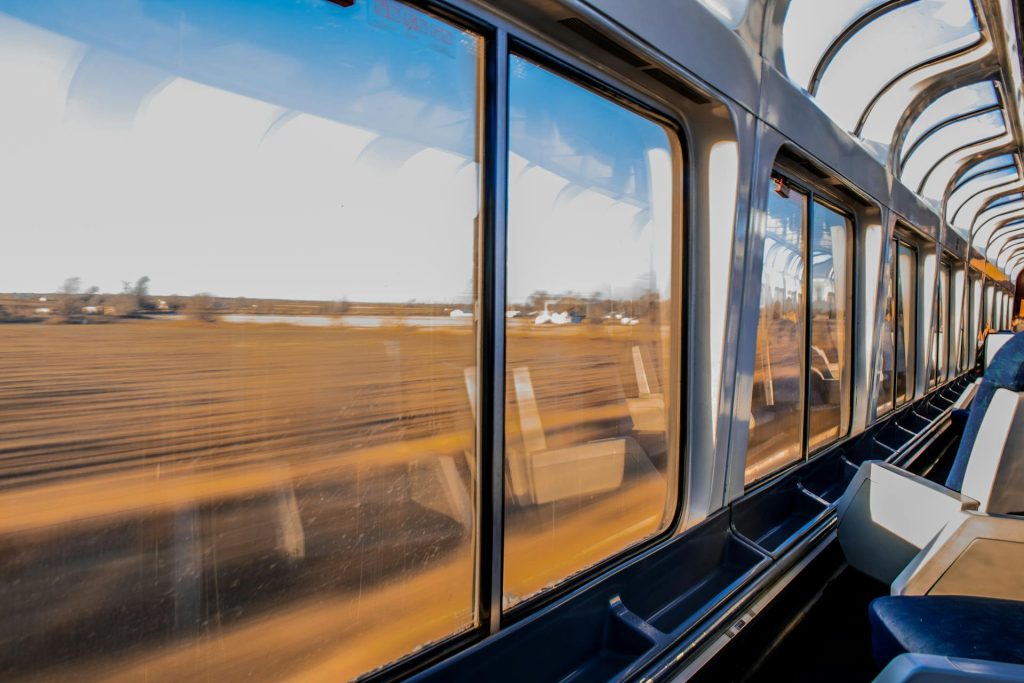
Regional buses and trains connect Ljubljana with the rest of the country: Slovenske železnice runs the railway, and intercity buses, run by operators including Nomago and Arriva, reach Kamnik, Bled and the Alps.
Check current timetables before you set off, especially for early starts.
Legs feeling it after a big day on the hills? Try these foam roller exercises for hikers before tomorrow’s walk.
Beyond the Trails in Ljubljana
What Not to Miss Between Walks
The works of the architect Jože Plečnik, which put Ljubljana on UNESCO’s World Heritage list, are worth an afternoon on their own, and you’ll walk past several of them anyway.
If you want to see the marshes’ prehistoric side, the pile-dwelling sites are part of a UNESCO listing of prehistoric pile dwellings around the Alps.
FAQs About Walking in Ljubljana
Is Ljubljana a walkable city?
Very. The Old Town is compact, the river gives you an easy line to follow, and forested hills start at the edge of the centre, so you can walk from your hotel to a hill summit.
Can you go hiking from Ljubljana without a car?
Yes. City buses reach the trailheads for Šmarna Gora (bus 8 to Tacen) and Krim (bus 19B to Jezero), and a regional bus runs to Kamniška Bistrica for Velika Planina and Kamnik Saddle.
What is the highest hill you can walk up in Ljubljana?
Šmarna Gora, at 669 m, is the city’s favourite climb, with a church and an inn at the top. Rožnik, at 394 m, is the easier option right next to the centre.
Where should you stay in Ljubljana for hiking?
Near the main bus and train stations if you’re planning mountain day trips, because the regional buses leave from there. The Old Town is better if you’ll mostly walk the city and its hills.
Can you walk in the Ljubljana Marshes?
Yes. The Ljubljana Marshes Nature Park has marked trails, including the Path Among the Alders loop on the city’s southern edge. Summer can be hot and buggy, so spring and autumn are better.
How do you pay for buses in Ljubljana?
With the Urbana card or the Urbana mobile app. You can top the card up online before you set off.
How many days do you need in Ljubljana for walking?
Two days covers the city’s hills and river; a third gives you a mountain escape to Kamnik or Bled.
Why Ljubljana Is Europe’s Best-Kept Hiking Secret
Ljubljana doesn’t try to be anything other than what it is: a small and highly functional city that happens to sit at the edge of some of Europe’s best mountains.
For those of you who enjoy places that work rather than places that perform, this authenticity matters more than any dramatic scenery or famous landmarks.
Think of it as a city that accidentally became one of Europe’s best hiking bases simply by being positioned perfectly and staying out of its own way.
Because that’s exactly what happened.
Planning a walking trip in Slovenia?
Whether you’d like a guide, a self-guided route with your luggage moved for you, or to plan it all yourself, our guide to a walking holiday in Slovenia sets out the options, with sample itineraries.
Where to Next?
Got your walking shoes on? Here’s where to go next.
More in Ljubljana and Slovenia
- Best Hikes In and Around Ljubljana: six walks from Rožnik to Kamnik Saddle, with distances, climbs and the buses to get there.
- Ultimate Guide to Hiking in Slovenia: the regions, seasons and huts beyond the capital.
- Walking Holiday in Slovenia: sample itineraries, including four car-free days from Ljubljana.
More City Guides Nearby
- Hiking in Zagreb: Croatia’s capital and its own forested hills, a short trip south.
- Hiking in Vienna: a bigger capital with vineyards and the Vienna Woods on its edge.
Where This Information Comes From
Last checked: 15 October 2026.
- Visit Ljubljana: hiking trails and hiking trails brochure (routes, buses)
- Visit Ljubljana: Path of Remembrance and Comradeship
- Ljubljana Marshes Nature Park (wet meadows, UNESCO pile dwellings, Path Among the Alders)
- LPP: Ljubljana city buses (Urbana card)
- UNESCO World Heritage Centre: Slovenia (Plečnik’s works; prehistoric pile dwellings)
- Government of Slovenia: national rail and bus services