
Hikers need food that’s lightweight, nutrient-dense, non-perishable, and easy to prepare. Dehydrated meals tick all of these boxes — but are they worth the time and effort compared to store-bought options?
This article will explore the pros and cons of dehydrating food for backpacking, including its benefits, the best foods to dehydrate, methods for dehydrating at home, and essential tips for effective food preparation and storage.
What Is Dehydrated Food for Backpacking?
Dehydrated food is a go-to option for backpackers, primarily because it’s easy to carry and doesn’t require refrigeration. By removing the water content from food, dehydrated snacks and meals become lightweight and compact, making them easier to store and transport.
Most hikers bring at least some dehydrated food along, whether it’s dried fruit, beef jerky, or fully dehydrated meals.
While there are numerous dehydrated food products available for purchase, preparing your own dehydrated food offers customization and control over ingredients, which is particularly appealing to those with dietary restrictions or specific taste preferences.
Creating homemade dehydrated meals allows hikers to tailor the food to their liking, ensuring that they have meals that are not only nutritious but also enjoyable.
Pros and Cons of Packing Dehydrated Foods for Hiking
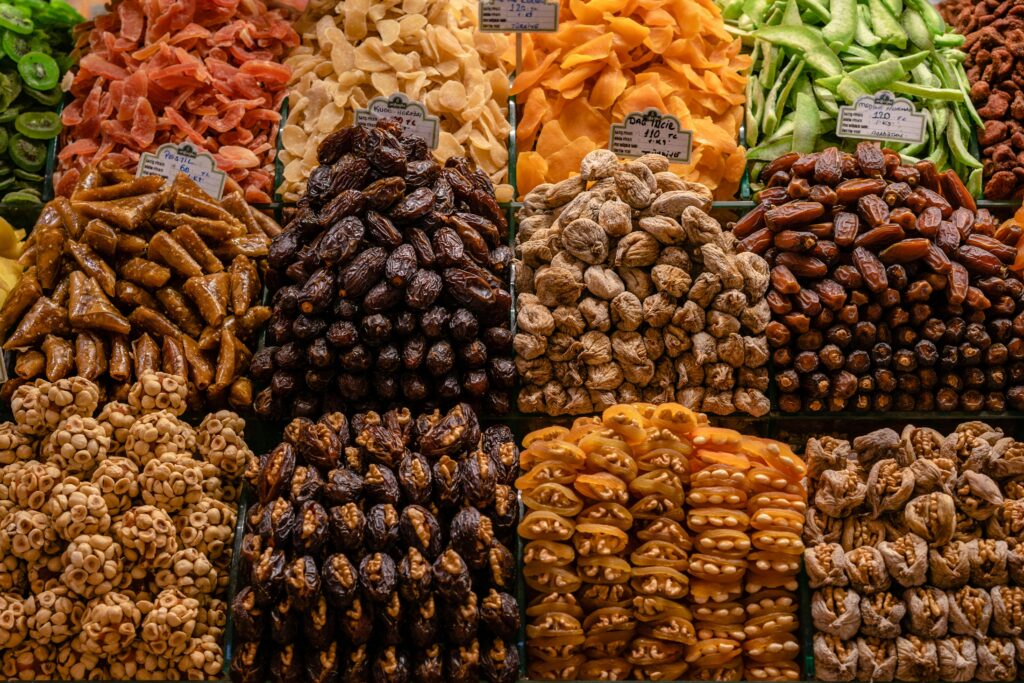
Packing dehydrated foods for hiking offers both advantages and disadvantages, though for most hikers, the benefits tend to outweigh the downsides.
Benefits of Packing Dehydrated Food to Take on a Hike
- Lightweight and Compact: Dehydrated food is significantly lighter than its fresh or canned counterparts, which is crucial when every ounce counts on a hike.
- Long Shelf Life: Dehydrated foods are highly shelf-stable, meaning they can last for weeks, months, or even years if stored properly.
- Nutrient-Dense: Dehydration retains most of the food’s nutrients, allowing hikers to consume calorie-dense and nutritious meals. Proper trail nutrition plays a major role in endurance during long treks. Along with training and preparation, learning how to build endurance for hiking can help ensure you have the energy needed for multi-day backpacking adventures.
- Customizable and Cost-Effective: Dehydrating your own food lets you choose ingredients, control portions, and potentially save money compared to buying pre-packaged meals.
- Easy to Prepare: Most dehydrated foods can be rehydrated with hot water, making for quick and easy meals on the trail.

Drawbacks of Packing Dehydrated Foods for Hiking
- Time-Consuming Preparation: Dehydrating food at home requires planning, preparation, and several hours of drying time.
- Initial Equipment Cost: A quality dehydrator can be a significant upfront investment, though it can pay off in the long run.
- Taste and Texture: Some people find that certain foods lose their flavor or texture during the dehydration process.
To match your food to your effort, you can estimate your energy use with this hiking calorie calculator.
Best Foods to Dehydrate for Hiking
Some foods dehydrate better than others, especially when you’re aiming for both nutrition and convenience. Many of the ingredients used in dehydrated meals are also common trail snacks.
If you’re still planning your food strategy, these snacks hikers often bring on day hikes can help inspire what to bring on shorter trips or incorporate into longer backpacking meals.
Here are some of the best foods to consider:
Fruits
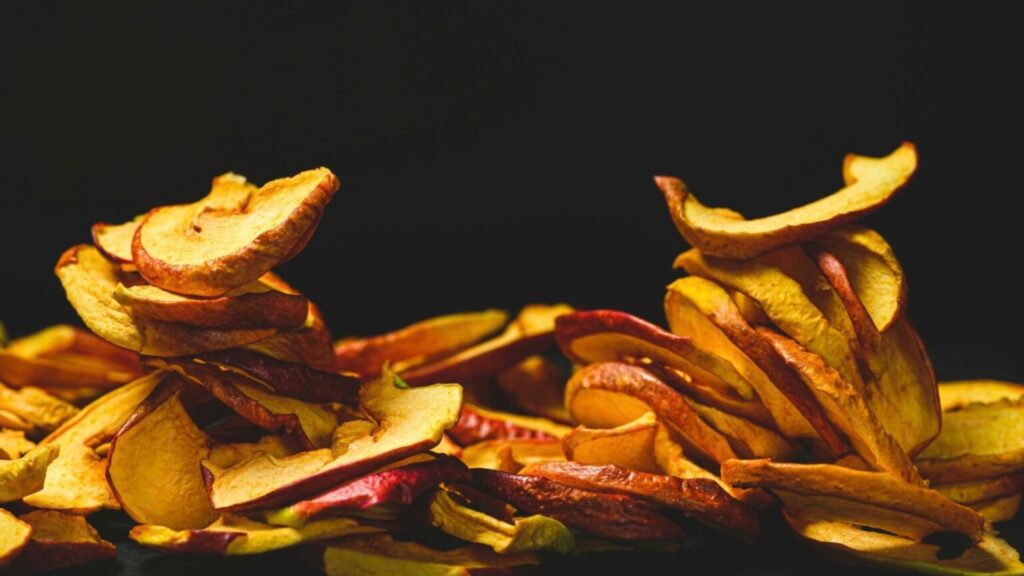
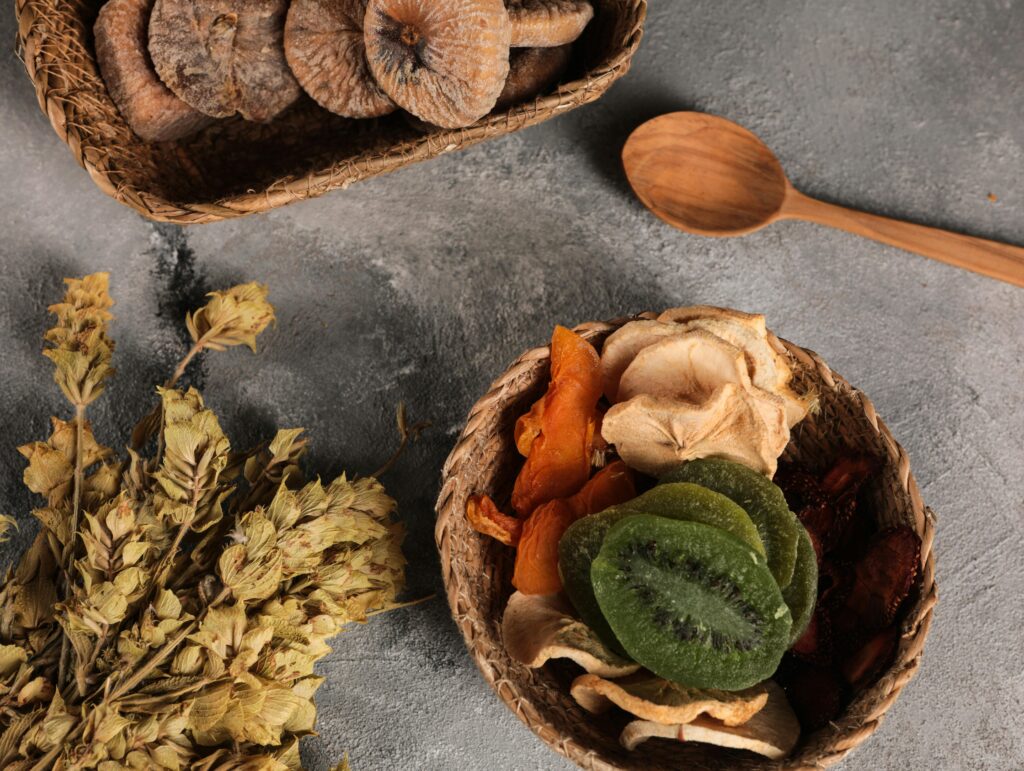
Apples, bananas, strawberries, and mangoes are nutrient-dense and add natural sweetness to meals.
Fruits are an excellent choice for dehydration because they retain their natural sugars, providing a quick energy boost on the trail. Dehydrated fruits like apples, bananas, and berries are lightweight, making them easy to pack for hikes.
They’re also high in fiber, vitamins, and minerals, supporting overall nutrition while adding a sweet flavor to trail snacks and meals. The dehydration process preserves fruits’ nutrients and extends their shelf life, allowing you to enjoy fresh-tasting fruit without worrying about spoilage.
Their versatility lets them be enjoyed alone, in trail mixes, or rehydrated in hot cereals and desserts.
Vegetables
Carrots, bell peppers, tomatoes, and onions dehydrate well and rehydrate quickly in soups or stews.
Dehydrated vegetables like carrots, bell peppers, tomatoes, and onions are nutrient-rich, lightweight, and add flavor and variety to meals on the trail.
They rehydrate quickly and easily in soups, stews, and pasta dishes, providing essential vitamins, fiber, and antioxidants.
These vegetables hold up well during dehydration, preserving their color, taste, and nutritional value. Additionally, their light weight and long shelf life make them ideal for backpacking, as they don’t require refrigeration and are easy to pack.
Dehydrated veggies are a convenient, healthy option for enhancing meals without adding bulk to your gear.
Meats
Lean cuts of beef (for jerky) and cooked ground meats are rich in protein and lightweight.
Lean meats, especially cuts of beef for jerky, are ideal for dehydration because they offer high protein in a lightweight, non-perishable form.
Dehydrating removes moisture, significantly extending shelf life without the need for refrigeration, making jerky perfect for hiking and backpacking.
Lean beef jerky provides sustained energy and aids in muscle repair, crucial for physical endurance. With its savory flavor and chewy texture, it’s a satisfying and practical snack for long treks. Jerky’s compact size, high nutrient density, and resilience to spoilage make it a go-to protein source for outdoor enthusiasts.
Seafood
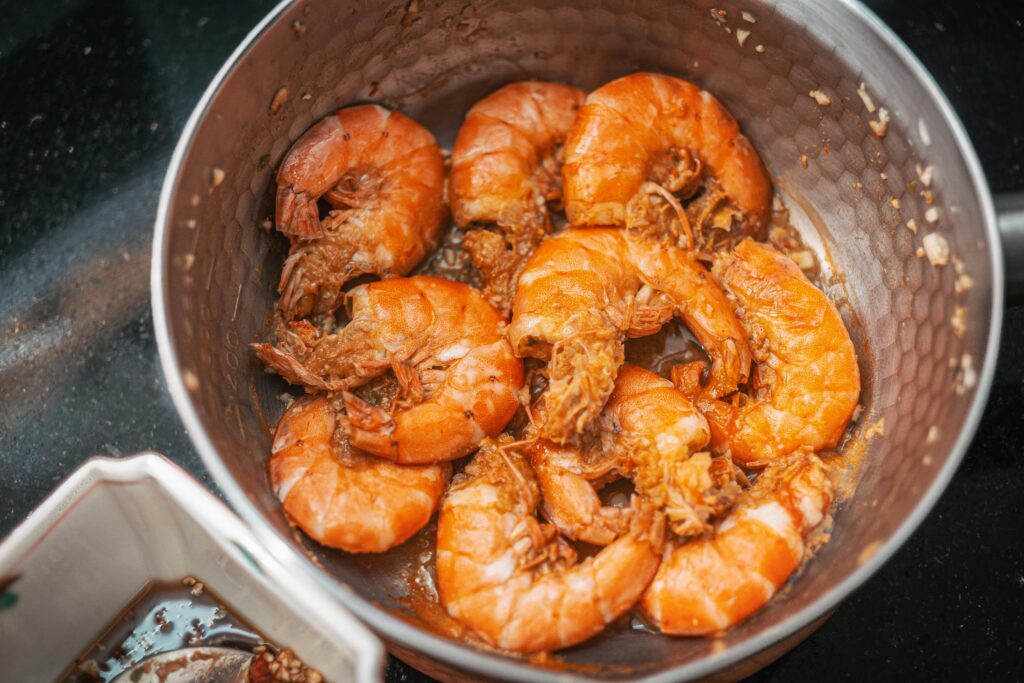
Salmon or shrimp can be dehydrated for a high-protein, lightweight meal addition.
Seafood like salmon and shrimp is an excellent choice for dehydration due to its high protein, omega-3 fatty acids, and essential nutrients.
Dehydrated seafood is lightweight, compact, and long-lasting, making it easy to pack for extended hikes. Salmon and shrimp rehydrate quickly, adding a rich, savory flavor and valuable nutrients to trail meals.
They offer a powerful protein boost in a small package, helping to maintain energy and muscle health on physically demanding treks. As a convenient, shelf-stable option, dehydrated seafood can easily be incorporated into soups, stews, or rice dishes on the trail.
Grains and Legumes
Lentils, rice, and pasta can be pre-cooked and dehydrated, then rehydrated easily on the trail.
Grains and legumes, like rice, lentils, and quinoa, are ideal for dehydration because they provide sustained energy, complex carbohydrates, and essential nutrients.
These foods are easy to cook, dehydrate, and later rehydrate, making them practical for trail meals that need quick preparation. They’re lightweight, compact, and can be combined with vegetables, sauces, or proteins for a balanced meal.
Grains and legumes are rich in fiber and plant-based protein, supporting digestion and muscle recovery, which is crucial during long hikes. Their versatility and nutrient profile make them a go-to for backpackers seeking healthy, filling options.
Sauces and Purees
Spaghetti sauce, chili, and fruit or vegetable “bark” are convenient and add variety to trail meals.
Dehydrating sauces and purees like spaghetti sauce, chili, and fruit or vegetable “bark” is a practical way to add flavor and calories to backpacking meals.
These dehydrated foods rehydrate easily, providing familiar flavors and enhancing the texture of trail dishes. They’re lightweight and compact, minimizing bulk while allowing for variety in meal options.
Dehydrated sauces and barks are versatile: they can be used as bases for pasta or rice dishes or as flavor enhancers for snacks and breakfasts. Their long shelf life and ease of packing make them convenient and nutritious additions to any trek.
Bark (Lightweight Trail Calories)
In dehydrating, “bark” is a lightweight way to prepare starchy foods for the trail.
Bark is typically made from pureed vegetables, fruit, or even starches like potatoes, which are then spread thinly on dehydrator trays and dried into a crispy, paper-like sheet.
Once dehydrated, these sheets can be crumbled into smaller pieces or rehydrated into a mush or sauce. Popular examples include sweet potato bark or pumpkin bark.
Bark is an efficient way to add calories and nutrients to a hiking meal without taking up much space in your pack.
If you’re ready to start building your own trail meals, these simple dehydrator recipes for backpacking trips are a great place to begin.
How to Dehydrate Food at Home
If you’re ready to start dehydrating food at home, here’s a step-by-step guide on how to do it.
Equipment Needed
- Dehydrator: A quality dehydrator with temperature controls and multiple trays is ideal for most foods.
- Parchment Paper or Silicone Mats: Useful for dehydrating sauces, purees, and small items like herbs.
- Sharp Knife and Cutting Board: For chopping fruits, vegetables, and meats.
Step-by-Step Dehydration Process
- Prepare Ingredients: Wash, slice, and, if necessary, blanch fruits and vegetables. Cook meats thoroughly before dehydrating.
- Arrange on Trays: Place food in a single layer on dehydrator trays, leaving space between pieces for airflow.
- Set Temperature: Follow recommended temperatures:
- Fruits: 125°F
- Vegetables: 125°F
- Meats: 160°F
- Seafood: 145°F
- Dehydrate: Check food periodically, as dehydration times vary based on thickness, water content, and type of food.
- Store Properly: Once fully dehydrated, allow food to cool before storing in airtight containers or vacuum-sealed bags.
Methods for Specific Food Types
- Vegetables: Slice thinly, blanch if needed, dehydrate at 125°F until brittle
- Fruit: Slice thinly, dehydrate at 125°F until leathery
- Meat: Use lean, cooked meat, dehydrate at 160°F
- Seafood: Use small cooked pieces, dehydrate at 145°F
Choosing a Dehydrator
When buying a dehydrator, consider these key features:
- Adjustable Temperature Control: Different foods require different temperatures, so a model with precise controls is ideal.
- Airflow and Heating Source: Horizontal airflow models help with even drying, which is important for consistency.
- Capacity and Number of Trays: If you plan to dehydrate large quantities or multiple types of food, choose a model with ample space.
- Ease of Cleaning: Look for models with dishwasher-safe trays and easy-to-clean components.
🗒️ Free Checklist: “Never forget the essentials — grab your free Ultimate Hiking Packing List.”
How to Pack and Store Dehydrated Food
Packing and storing dehydrated food correctly ensures it stays fresh, protected, and easy to prepare once you’re out on the trail.
Packing Dehydrated Food
Proper packing is essential for ensuring your dehydrated food stays fresh and is easy to access.
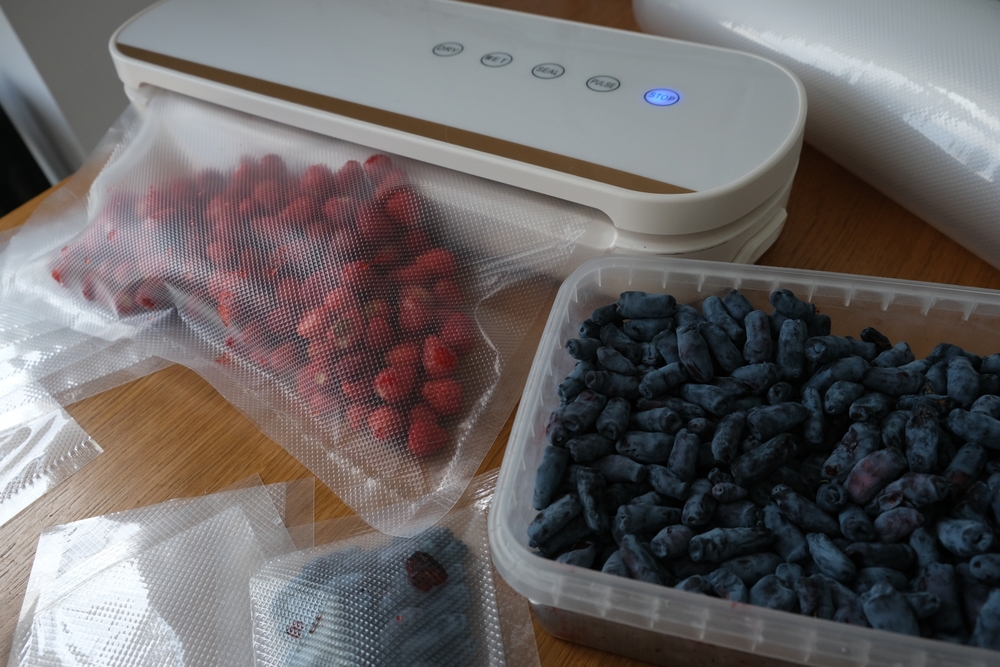
Use vacuum-sealed bags or resealable freezer bags to store individual servings. Label each bag with the contents and date to keep track of freshness. For longer trips, consider using small plastic containers for delicate items to prevent crushing.
Pack foods with similar rehydration times together, so meal prep on the trail is efficient.
Storing Dehydrated Food
Storing dehydrated food correctly extends its shelf life. Keep it in a cool, dark place, away from sunlight and moisture. If you’re storing food for long periods, vacuum-sealed bags or Mylar bags with oxygen absorbers can help prevent spoilage.
Mason jars or airtight containers work well for shorter-term storage. Check stored food regularly for signs of moisture or spoilage, and always rehydrate and taste-test a sample before your hike to ensure quality.
Practical Tips for Dehydrating Food
Here are a few helpful tips for making the most of your dehydrating efforts:
- Slice Food Evenly: Uniform slices help food dehydrate evenly, preventing some pieces from being under- or over-dried.
- Blanch Certain Vegetables: Blanching vegetables like broccoli or carrots preserves color, flavor, and nutrients.
- Use Parchment Paper for Sticky Foods: To prevent foods like purees and fruit leathers from sticking, use parchment paper or silicone mats.
- Season Before Dehydrating: Season foods with spices, marinades, or salt before dehydrating to enhance flavor.
- Cool Food Before Storing: Let dehydrated food cool to room temperature before sealing it in containers to prevent condensation and mold.
In Conclusion
Dehydrating food for backpacking offers a lightweight, nutritious, and cost-effective way to fuel your time on the trail.
While it requires some preparation, the ability to control ingredients, reduce weight, and create meals you actually enjoy makes it worthwhile for many hikers.
By selecting the right foods, storing them properly, and testing your meals before a trip, you’ll be well-equipped to enjoy reliable, trail-ready food on multi-day hikes.
For those who prefer a DIY approach and enjoy experimenting with trail meals, dehydrating food can absolutely be worth the effort.
Where to Next?
Ready to turn your food planning into real trail preparation?
- How to Pack a Hiking Backpack Like a Pro – Learn how to organize your food and gear efficiently for comfort on the trail
- High-Protein Hiking Foods for Long Trails – Discover lightweight, energy-dense options for multi-day treks
- 10 Simple Dehydrator Recipes for Your Next Trek – Start building your own easy, trail-ready meals
- 13 Practical Backpacking Tips for Beginners – Build the habits that make hiking safer and more enjoyable


