
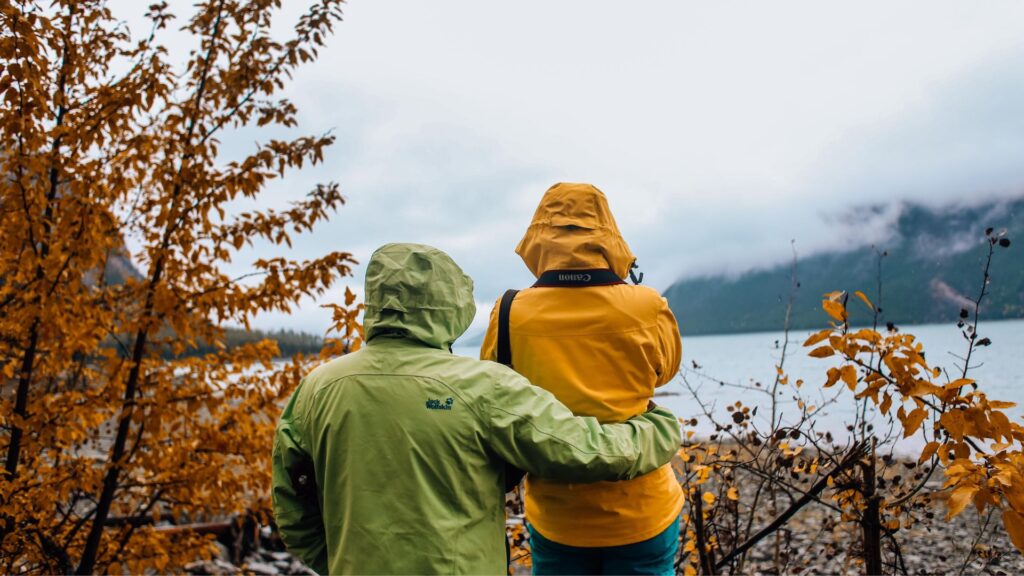
A waterproof jacket is one of those pieces of kit that either earns its place completely or lets you down at the worst possible moment, and the difference usually comes down to whether you chose the right one for how you actually hike.
The difficulty is that a waterproof jacket has to do two contradictory things at once.
Keep the weather out while letting your body heat and sweat escape. Get that balance wrong in either direction and you end up soaked, just from different sources.
Think of it this way: too little breathability and you’re damp from the inside out within an hour of working hard. Too little waterproofing and the rain wins eventually.
That balance matters more in places like the UK and much of Europe where conditions change quickly, often within the same day, and where being underprepared for a weather shift on exposed ground is a genuinely serious problem rather than a minor inconvenience.
In this guide, we’ll work through what actually matters when choosing a waterproof, based on your conditions, your pace, and the kind of trips you’re planning, without getting lost in brand comparisons or technical specs that don’t affect real world performance.
- Quick Guide: Choosing the Right Waterproof Jacket at a Glance
- How to Choose a Waterproof Jacket
- Waterproof Jackets in Real Hiking Conditions
- Common Mistakes to Avoid
- Fit, Comfort & Practical Tips
- How a Waterproof Jacket Fits Into Your Overall Setup
- Care, Maintenance & Lifespan
- Explore Waterproof Jacket Options by Use Case
- FAQs About Waterproof Jackets
- Where to Next?
Quick Guide: Choosing the Right Waterproof Jacket at a Glance
Use these as starting points to match your jacket to your typical hiking conditions.
Wet & Windy Conditions (UK / Coastal Europe)
A fully waterproof jacket with reliable weather protection and durability for sustained rain and exposure.
Warm Weather & Summer Hiking
Lightweight, breathable jackets designed for occasional showers rather than all-day rain.
Multi-Day Walking Holidays
Comfort-focused jackets that balance protection, breathability, and packability over consecutive days
High-Output Hiking & Steep Terrain
Highly breathable jackets that prevent overheating and allow moisture to escape during climbs
Lightweight & Packable Use
Minimalist jackets that pack down small and are easy to carry “just in case.”
How to Choose a Waterproof Jacket
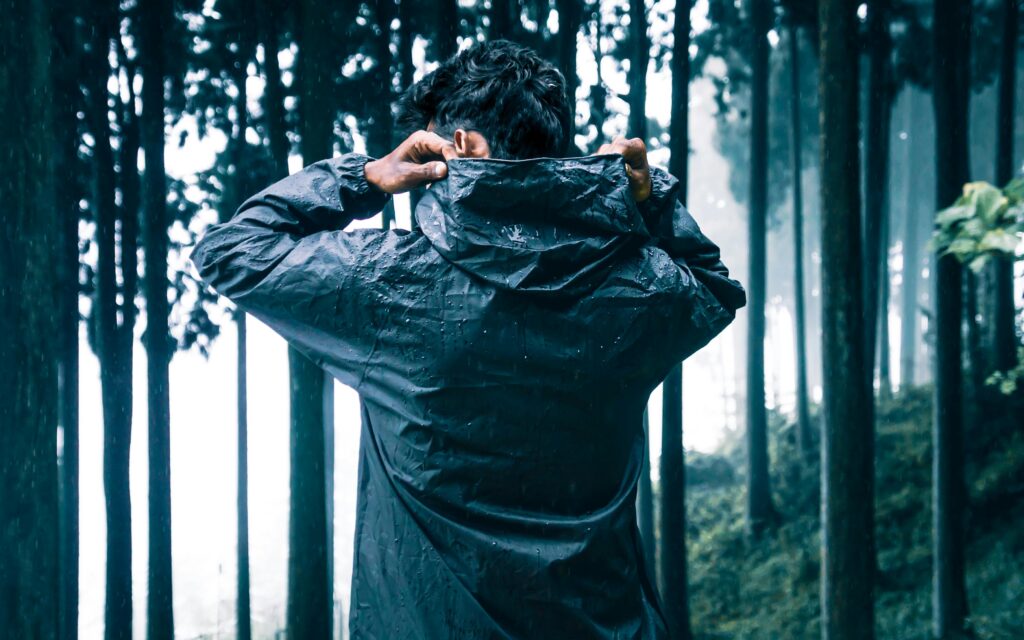
Choosing a waterproof jacket is all about one thing: staying comfortable while moving through different conditions.
Understanding the key trade-offs makes this much easier.
Waterproof vs Water-Resistant: What Actually Matters
Not all rain jackets are the same.
- Waterproof jackets are designed to block sustained rain and wind
- Water-resistant jackets can handle light showers but will eventually soak through
For most hiking and walking holidays (and especially in the UK and northern Europe) a properly waterproof jacket is the safer choice.
Light rain protection works in short bursts, but it’s rarely enough when weather sets in for hours.
“Avoid rookie mistakes. Our free ebook Hiking for Beginners shows you how.”
Breathability: The Most Overlooked Factor
Staying dry isn’t just about rain. It’s also about sweat.
As you hike, your body naturally is going to be producing heat and moisture. And if that moisture can’t escape, it builds up inside your jacket, leaving you damp even when it’s not raining heavily.
This is why breathability matters:
- high breathability → better for climbing and long days
- lower breathability → often more durable but can feel clammy
No jacket is perfectly breathable, so it’s always about finding a balance that suits your pace and conditions.
Weight vs Protection: Finding the Right Balance
Lightweight jackets pack down small, move with you comfortably, and are genuinely pleasant to wear when conditions are mixed but not extreme.
For most hiking in reasonable weather with the occasional shower, they do the job well and the trade off in durability rarely matters.
Push them into sustained heavy rain, exposed ridgelines, or serious wind and their limitations become apparent fairly quickly.
They’re built for versatility, not punishment.
Heavier duty jackets handle prolonged bad weather in a way that lightweight options simply can’t match.
The trade off is bulk, weight, and often reduced breathability, which matters when you’re working hard and generating heat.
Most hikers who spend time in genuinely unpredictable conditions eventually end up owning something in each category.
One for the days when the forecast looks manageable, one for the days when it doesn’t.
🗒️ Free Checklist: “Pack light, pack right — download The Ultimate Hiking Packing List.”
Fit and Comfort on the Trail
A waterproof jacket that fits perfectly over a t-shirt in a shop can feel completely different once you’re wearing a base layer and a midlayer underneath it on a cold wet day.
That’s the fit that actually matters and it’s worth testing properly before you buy.
Too tight across the shoulders and you lose freedom of movement on technical ground or anything involving a bit of a scramble.
Too loose and it catches the wind, flaps around, and starts feeling more like a liability than a layer.
The sweet spot is enough room to layer underneath comfortably without excess fabric getting in the way.
Reach your arms up, move them across your body, bend forward with a pack on. If something feels restricted or awkward in a shop it will feel worse on a hillside in the rain.
Key Features That Actually Matter
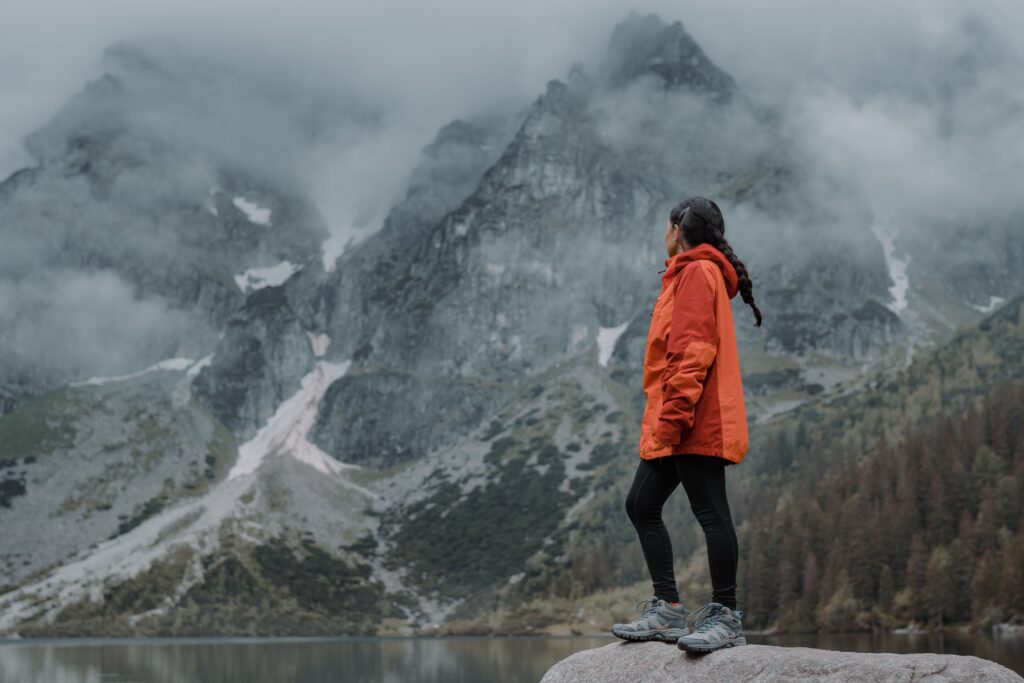
It’s easy to get lost in features, but make no mistake, there are a few that’ll make a real difference:
- Adjustable hood for wind and rain protection
- Ventilation (pit zips or similar) to release heat
- Cuff and hem adjustments to keep weather out
- Pocket placement that works with a backpack
Focus on features that improve comfort and usability, not just specifications.
Waterproof Jackets in Real Hiking Conditions
Jackets often perform very differently in real-world use compared to how they’re described.
Warm Weather & Summer Hiking
Heat is the enemy in summer and a heavy duty waterproof jacket will make you miserable long before the rain gets a chance to.
Overheating on a warm day with a jacket that doesn’t breathe properly is genuinely unpleasant and the irony is you end up just as wet as if you’d left it in the pack.
A lightweight, breathable jacket that you’ll actually put on when the weather shifts is worth far more than a bomber proof option that stays stuffed in your bag because wearing it feels awful.
Full waterproofing still matters, summer showers can be heavy and fast moving, but breathability earns equal billing when the temperature is up.
The best warm weather waterproof is the one that’s comfortable enough to wear while you’re working hard and light enough that carrying it feels like nothing.
In warmer conditions, proper hydration becomes just as important as clothing choice, so it’s worth knowing how much water to take on a hike before setting out.
Wet, Windy & Exposed Terrain
Some conditions genuinely demand more than a lightweight jacket can deliver, especially when hiking in the Alps where weather can change rapidly at higher elevations. and exposed ridgelines in heavy rain and wind is one of them.
A jacket that performs adequately in a light shower starts showing its limits when the weather is sustained, wind driven, and has no intention of passing through quickly.
Stronger materials, fully taped seams, and better sealing around the cuffs and hood make a real difference when conditions are serious.
Not as a luxury but as basic protection that lets you stay out safely and comfortably rather than retreating or grinding through something miserable.
If wet and exposed hiking is a regular part of what you do, cutting corners on the jacket is a false economy.
You will notice exactly where you saved money the first time conditions get properly bad
For hikers who regularly venture out in poor weather, understanding the benefits of hiking in the rain can also help you prepare for wet conditions more confidently.
Multi-Day Walking Holidays
Three days into a walking holiday in Europe, the jacket you’re wearing starts to reveal things a single day out never would.
A breathability problem that felt manageable on a day hike becomes a daily frustration when you’re pulling the same jacket on every morning and working hard in it for hours at a time.
Packability matters more too. Space in a 35 to 50 litre pack is genuinely limited when you’re carrying several days of kit and a jacket that refuses to compress down sensibly will make its presence felt every time you pack and unpack.
Durability earns its place over repeated use in a way that’s hard to appreciate until you’re relying on the same piece of kit day after day in changing conditions.
Whether you’re planning a guided trip or travelling independently, understanding the differences between a guided and self-guided walking holiday in Europe can help determine the type of gear you’ll rely on most.
A jacket that feels slightly overbuilt for a casual day out often turns out to be exactly right when you’re actually depending on it.
“From Alps to coastlines, our free Walking Holiday guide helps you plan smarter.”
Common Mistakes to Avoid
Most issues with waterproof jackets come down to expectations rather than failure. Examples of these issues can include:
- expecting full waterproofing without managing sweat
- choosing the lightest option for consistently wet conditions
- ignoring ventilation features
- wearing a jacket that doesn’t layer properly
- overpacking multiple similar jackets
Understanding the trade-offs helps avoid these problems.
Fit, Comfort & Practical Tips
Some practical tips that you’ll want to keep in mind include:
- Test your jacket over your usual layers
- Move around (i.e. each, bend, and simulate walking)
- Check how the hood performs in wind
- Make sure ventilation is easy to use while moving
Comfort on the trail matters far more than how the jacket feels standing still.
How a Waterproof Jacket Fits Into Your Overall Setup
Your jacket works alongside the rest of your gear.
- Layering system determines how warm and breathable your setup is
- Backpack use affects ventilation and pocket access, which is why understanding how to pack a hiking backpack properly can make a noticeable difference to comfort on the trail.
- Footwear and conditions influence how often you rely on it
A well-balanced system reduces reliance on any one piece of gear, especially when you’ve packed the essential things to bring on a day hike.
Care, Maintenance & Lifespan
- Clean regularly to maintain performance
- Reproof when water stops beading
- Store dry and avoid long-term compression
- Repair small damage early
Waterproof jackets often lose performance gradually, not suddenly. Regular care helps maintain their effectiveness.
Explore Waterproof Jacket Options by Use Case
If you want to narrow things down further, these guides break jackets into more specific scenarios:
Best Waterproof Jackets for UK & Wet Weather Hiking
Reliable protection for sustained rain and exposed conditions.
Best Lightweight Rain Jackets for Summer Hiking
Breathable, packable options for warm weather and occasional showers.
Best Budget Waterproof Jackets
Solid performance without paying for premium features.
Best Waterproof Jackets for Walking Holidays
Balanced options for comfort, durability, and repeated use.
FAQs About Waterproof Jackets
Do I always need a waterproof jacket?
For most hiking in the UK and Europe, it’s a good idea to carry one.
Why do I still feel wet inside a waterproof jacket?
Often due to sweat buildup rather than rain penetration.
Are expensive jackets always better?
Not always; it depends on your conditions and usage.
How long do waterproof jackets last?
Performance gradually declines over time, especially without proper care.
Do I need ventilation features?
They’re very helpful for managing heat during movement.
Where to Next?
To build a complete hiking setup, you may also want to explore topics such as:
- Buyers Guide: Day Packs
- Buyers Guide: Backpacks (35-50L+)
- Buyers Guide: Trekking Poles
Many of our Best Hikes and Walking Holiday guides show how waterproof jackets perform in real-world environments across Europe.


