
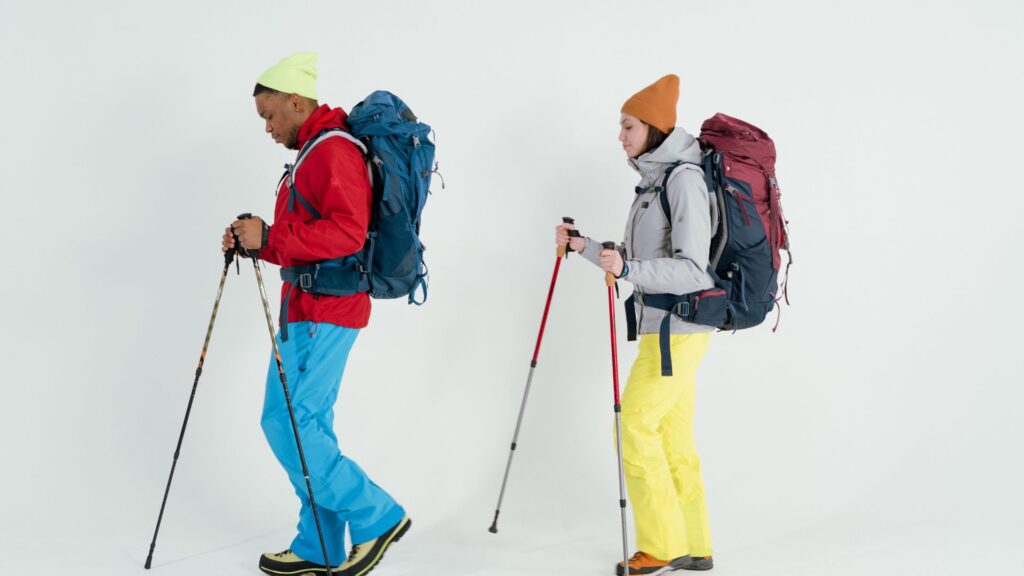
Trekking poles are one of those things you either dismiss completely or wonder how you ever hiked without them.
Most people fall into the first camp right up until they’re grinding down a long descent with burning knees and someone glides past them looking effortless with a pair of poles.
That tends to change the conversation pretty quickly.
The honest answer is that it depends entirely on what you’re doing.
A short walk on a well-groomed trail? You’ll probably be fine without them. A three day route with serious elevation, a heavy pack, and rough terrain underfoot?
That’s where poles stop being optional and start being genuinely useful, taking load off your knees, keeping you stable on loose ground, and making the whole thing feel less punishing by the end of the day.
This guide isn’t going to tell you which model to buy.
It’s going to help you understand how poles actually work, when they’re worth the effort, and how to use them properly so you can figure out whether they belong in your setup or not.
- Quick Guide: Choosing the Right Trekking Poles at a Glance
- How to Choose Trekking Poles
- Trekking Poles in Real Hiking Conditions
- Common Mistakes to Avoid
- Fit, Comfort & Practical Tips
- How Trekking Poles Fit Into Your Overall Setup
- Care, Maintenance & Lifespan
- Explore Trekking Pole Options by Use Case
- FAQs About Trekking Poles
- Where to Next?
Quick Guide: Choosing the Right Trekking Poles at a Glance
Use these as starting points to match trekking poles to your hiking style.
Long Descents & Mountain Terrain
Poles that provide stability and reduce impact on knees during downhill sections.
Multi-Day Walking Holidays
Comfortable, reliable poles that help manage fatigue over consecutive days.
Lightweight & Fast Hiking
Minimal, lightweight poles that are easy to carry and quick to deploy.
Travel & Packability
Compact or foldable poles that fit easily into luggage or backpacks.
Beginner Use
Simple, easy-to-adjust poles that focus on stability rather than technical features.
“Every hiker starts somewhere — grab your free Hiking for Beginners guide.”
How to Choose Trekking Poles
Choosing trekking poles is less about features and more about how and where you hike.
The right setup should feel natural to use and enhance your movement, not complicate it.
Do You Actually Need Trekking Poles?
Strong legs and good balance matter just as much as equipment, which is why many hikers include hiking-specific exercises in their preparation.
Trekking poles are a tool, not a membership card to serious hiking, and plenty of people carry them on trails where they genuinely don’t need them.
On short, flat walks or well maintained paths where your balance is never really tested, they’ll spend most of the time swinging uselessly at your sides.
Where they start earning their place is on the harder stuff.
Long steep descents, technical ground where your footing is never quite certain, a pack that’s heavier than usual, or back to back days where your legs are already carrying yesterday’s effort into today’s miles.
In those situations the difference poles make to how your body holds up is real and noticeable.
So before you buy a pair, think about the hiking you actually do rather than the hiking you imagine doing.
If most of your trails are gentle and well marked, you might not need them at all. If you’re regularly dealing with rough terrain, big days, or multi-day routes, they’re probably worth having.
What Trekking Poles Actually Do
The biggest thing poles do is spread the work more evenly across your whole body instead of letting your legs take everything.
On a long descent that’s the difference between arriving at the bottom feeling okay and arriving with knees that are done for the day.
On uneven or loose ground they give you two extra contact points, which sounds simple but makes a real difference when you’re picking your way across wet rock or a trail that’s more rubble than path.
That extra stability isn’t just about safety, it’s about confidence. When you’re not constantly bracing for a slip you move more freely and you tire less quickly.
Over a full day, and especially over multiple days, that cumulative reduction in effort adds up to something significant.
Your legs do less work, your joints absorb less impact, and you finish the day with something left in the tank.
That’s really what poles are for!
Fixed vs Adjustable vs Folding Poles
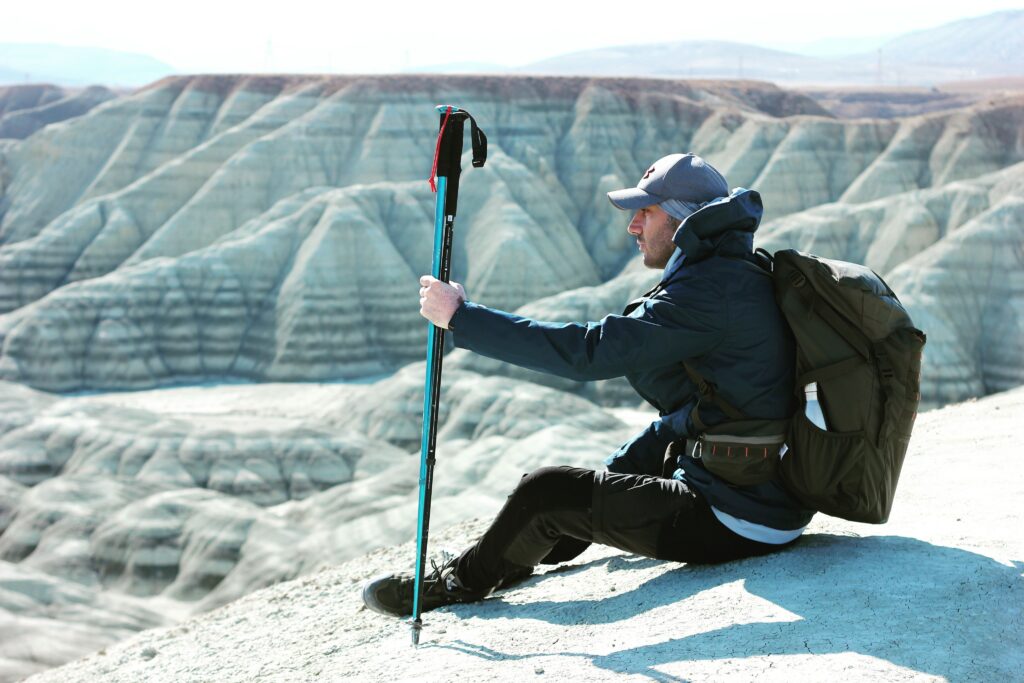
There are a few main types of trekking poles, each of which are suited to different needs.
Adjustable poles are:
- versatile
- allow you to change length depending on terrain
- good for most hikers
Folding poles are:
- compact and easy to pack
- ideal for travel or occasional use
- quick to deploy
Fixed-length poles are:
- simple and lightweight
- less flexible for varied terrain
As a general rule, for most hikers, adjustable or folding poles offer the best balance.
🗒️ Free Checklist: “Pack light, pack right — download The Ultimate Hiking Packing List.”
Weight vs Durability
Like most gear, trekking poles involve trade-offs.
- Lighter poles are:
- easier to carry
- better for long distances
- slightly less durable
- Heavier poles are:
- more robust
- better for rough terrain
- slightly more tiring over time
For most use cases, a balance between the two works best.
Grip and Comfort
Nobody thinks much about grip comfort until they’re four hours into a hike with a hot spot forming on their palm, and by then it’s too late to do anything about it.
The grip is where your hand spends the entire day so it matters more than most people give it credit for when they’re standing in a shop deciding between poles.
Cork grips are generally the most comfortable for long days because they absorb sweat rather than getting slick with it, and they gradually shape themselves to your hand over time.
Foam is softer and works well in the cold. Rubber handles almost everything poorly once your hands are wet or working hard, which in hiking terms is most of the time.
Whatever material you go with, the grip needs to feel natural and secure without you having to think about it.
If it feels slightly off in the shop it will feel significantly worse after several hours on the trail.
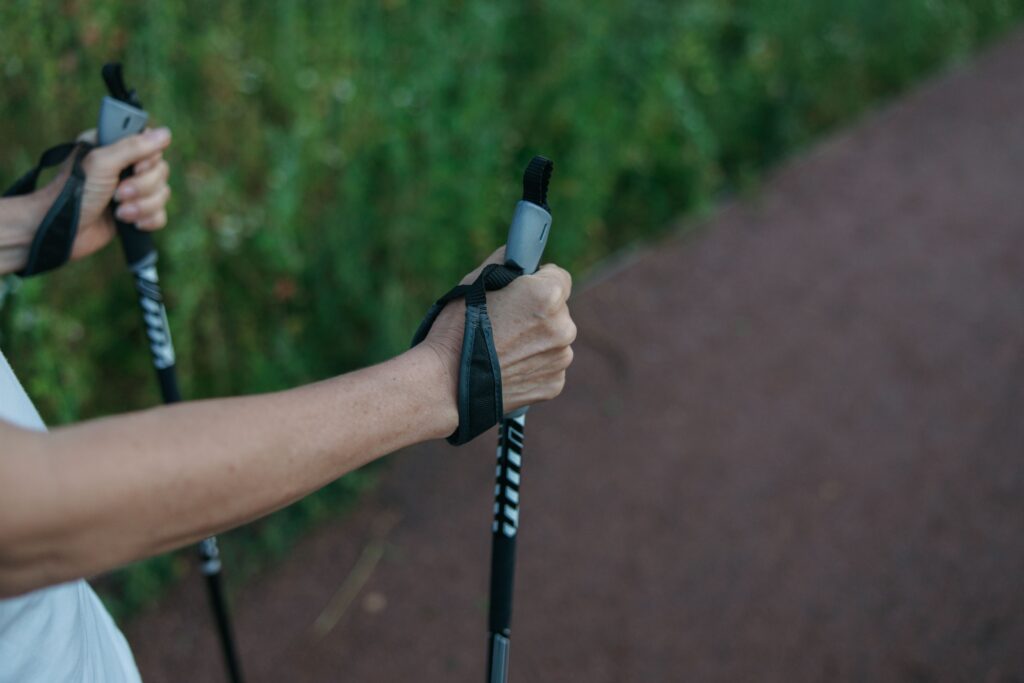
Wrist Straps: Use Them or Not?
Wrist straps are one of those small details that make a bigger difference than they look like they should.
The idea is that instead of gripping the pole tightly the whole time, you push down through the strap and let your hand relax, which reduces fatigue significantly over a long day.
Most people either ignore the straps completely or use them wrong, and in both cases they’re leaving most of the benefits on the table.
That said, there are situations where you’re better off without them.
On technical ground where you might need to drop a pole quickly, or on trails where a fall with your wrist strapped in could cause more harm than good, leaving them loose or skipping them entirely is the smarter call.
Learn to use them properly on straightforward terrain and you’ll notice the difference in how your arms feel by the end of the day.
Just know when to take them off too.
Some hikers rely on them heavily, while others prefer not to use them at all. This often comes down to personal preference, but when used correctly, they can reduce strain over longer distances.
Trekking Poles in Real Hiking Conditions
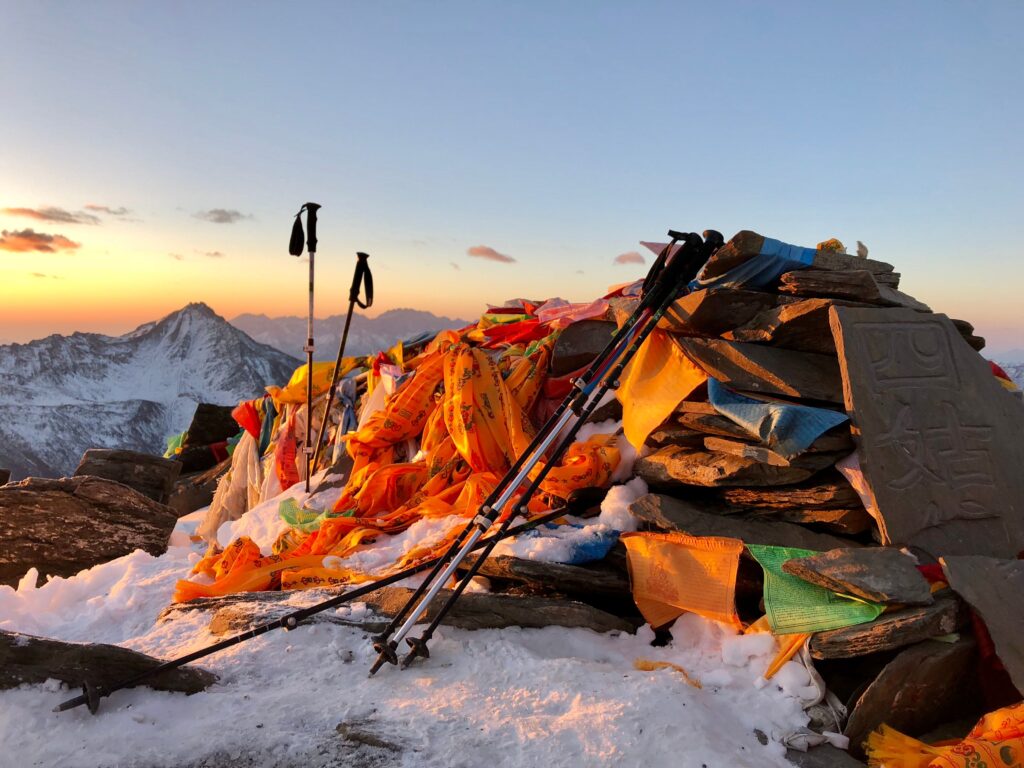
Poles often feel unnecessary until conditions make them valuable.
Steep Descents
If there is one situation that converts pole skeptics faster than any other, it is a long steep descent with tired legs and a loaded pack.
The impact that goes through your knees on the way down a serious hill is substantial, and it compounds with every step over miles and hours.
Poles absorb a meaningful portion of that load and spread it through your arms and shoulders instead, which are far better equipped to handle it without complaining the next morning.
Beyond the physical relief, poles give you something to push against when the ground is loose or the gradient is steep enough that your pace starts to feel out of control.
That sense of being able to regulate your speed and plant yourself confidently on each step changes how the whole descent feels, mentally as much as physically.
Your knees will tell you the difference on the walk back to the car. And if you are doing it again tomorrow, that difference becomes even more important.
Uneven or Technical Terrain
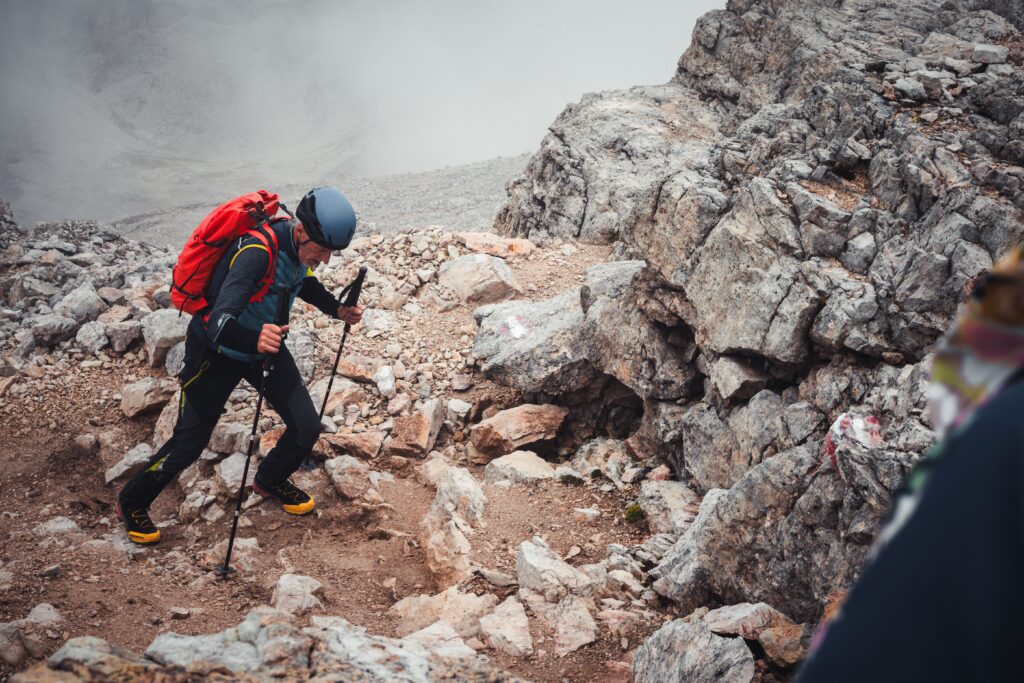
Two extra points of contact with the ground sounds like a small thing until you are picking your way across wet rock or a loose scree slope and you feel exactly how much they change the equation.
Poles keep you stable in the moments where your footing is uncertain, which on technical terrain happens constantly.
That stability builds into something just as valuable as the physical support, genuine confidence on ground that would otherwise slow you down and wear you out. Less slipping, less bracing, less energy spent just staying upright.
Multi-Day Hiking
One day of reduced strain feels like a minor convenience. Three days of it feels like the reason your legs still work properly on the final morning.
Poles might feel optional on day one when everything is fresh. By day two your joints are carrying yesterday’s miles into today’s, and that consistent support starts feeling a lot less optional.
The benefits compound. Less impact, better balance, less energy spent stabilising yourself on rough ground. Over multiple days that adds up to something your body will notice in the best possible way.
If multi-day routes leave you exhausted, focusing on building endurance for hiking can make a noticeable difference.
“From Alps to coastlines, our free Walking Holiday guide helps you plan smarter.”
Flat or Easy Terrain
On easy, well maintained trails poles are not going to change your life. Some people find they help settle into a comfortable rhythm, arms and legs moving together in a way that makes long flat miles feel more natural.
Others find them more hassle than they’re worth when the ground isn’t demanding anything from them.
This is genuinely one of those situations where personal preference wins. Try it both ways and see what feels better!
Common Mistakes to Avoid
In short, the biggest mistakes that you will want to avoid are:
- using poles incorrectly (too short or too long)
- relying on them without adjusting technique
- choosing overly heavy poles unnecessarily
- not practicing before longer hikes
- assuming they’re always needed
Like any tool, effectiveness depends on how they’re used!
Fit, Comfort & Practical Tips
Length matters more than people realise. Too long and you’re pushing yourself off balance, too short and you lose most of the benefit.
Adjust for the terrain as you go, shorter on the way up, longer on the way down.
Before you take them on a serious hike, use them somewhere easy first.
The movement should feel natural and relaxed, arms swinging with your stride rather than working against it. Loosen your grip, let the straps do their job, and stop white-knuckling the handles.
When it clicks it genuinely feels like an extension of how you move rather than something you’re managing on top of everything else.
How Trekking Poles Fit Into Your Overall Setup
Poles don’t work in isolation. A heavy pack shifts your centre of gravity and increases the load on your joints, which is exactly when poles earn their place most.
Footwear that lacks grip or ankle support puts more demand on your balance, and poles compensate for that gap on technical ground.
If you’re carrying extra gear on longer routes, learning how to pack your hiking backpack properly can improve balance and make trekking poles even more effective.
The right backpack also plays a major role in comfort, so it’s worth reviewing our guide to choosing the right hiking backpack before a multi-day trip.
The route matters too. A setup that works perfectly on a straightforward mountain path might need rethinking on loose coastal trails or boggy moorland where the ground behaves completely differently.
Think of poles as one part of a system rather than a standalone fix.
The better the rest of your kit works together, the more effective they become.
Care, Maintenance & Lifespan
Poles are simple kit but they still need basic attention if you want them to last.
Mud and grit work their way into locking mechanisms and adjustment points, so rinse them off after a muddy day and let them dry properly before they go back in the cupboard.
A pole that gets stored wet will show you why that was a mistake soon enough.
Check the locking mechanisms before trips rather than discovering mid-hike that one won’t hold its length.
If an adjustment feels stiff, find out why rather than forcing it. Collapsed sections that get jammed together are a genuinely miserable thing to deal with on a hillside.
Treat them reasonably well and a decent pair of poles will outlast a lot of the other kit in your pack.
Explore Trekking Pole Options by Use Case
If you want to narrow things down further, these guides break trekking poles into more specific scenarios:
- Best Trekking Poles for Hiking
- Well-balanced poles suitable for a wide range of conditions.
- Well-balanced poles suitable for a wide range of conditions.
- Best Lightweight Trekking Poles
- Minimal designs focused on reducing weight and improving efficiency.
- Minimal designs focused on reducing weight and improving efficiency.
- Best Budget Trekking Poles
- Simple, reliable options without unnecessary features.
- Simple, reliable options without unnecessary features.
- Best Trekking Poles for Travel
- Compact designs that are easy to pack and transport.
FAQs About Trekking Poles
Do beginners need trekking poles?
Not always, but they can improve stability and confidence on uneven terrain.
Are trekking poles worth carrying?
For longer or more challenging hikes, they often are.
How many poles should I use?
Most hikers use two, but some prefer one depending on terrain.
Do trekking poles reduce knee strain?
Yes, especially on descents.
Are they useful on flat trails?
Less so, but some hikers use them for rhythm and balance.
Where to Next?
To complete your setup, you may also want to explore:
- Buyers Guide: Headtorches
- Buyers Guide: Layering Systems
- Buyers Guide: Footwear
- Buyers Guide: First Aid
Also keep in mind that many of our Best Hikes and Walking Holiday guides will also reveal to you how trekking poles perform in real-world conditions across Europe.


