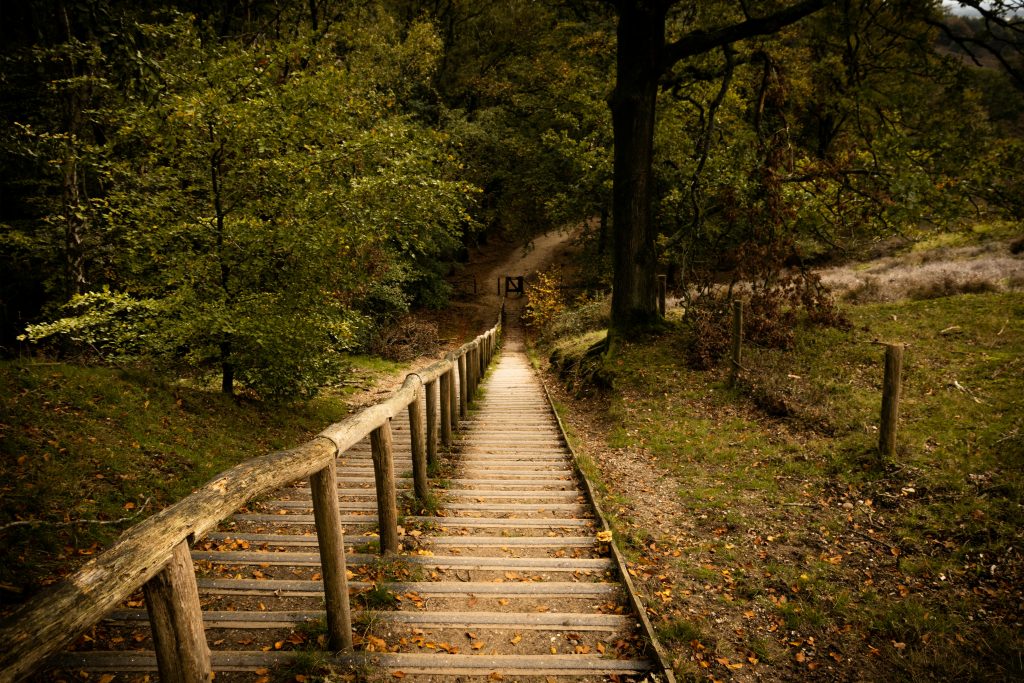
Are you looking for the best hikes in France for a great walking adventure? If so, you’re in the right place!
This article covers some of the most amazing trails that France has to offer, along with helpful tips on common practices and safety precautions.
Regardless of whether you’re a seasoned hiker or just looking to go hiking and explore France’s breathtaking landscapes, you should enjoy reading about the amazing nature lovers’ paradise that France has to offer.
Why Hike in France?
France is a paradise for hikers who value variety. Few countries offer such a broad mix of terrain in a single destination — high Alpine peaks, Mediterranean coastlines, volcanic islands, deep gorges, and quiet countryside all coexist within its borders.
The hiking culture is well established, with clearly marked trails, respected long-distance routes like the GR network, and strong conservation practices in national and regional parks.
Whether you’re walking a historic pilgrimage route, tackling a demanding mountain trail, or enjoying a scenic family-friendly hike, France balances adventure with accessibility.
It’s also a country where hiking pairs naturally with culture — villages, regional food, and local traditions are never far from the trail.
Companion Article: Ultimate Guide to Hiking in France
Planning a hiking trip to France goes beyond picking a few great trails. Our complete guide covers regions, seasons, trail types, safety considerations, and transport logistics.
Check out our Ultimate Guide to Hiking in France for planning, regions, and trail tips.
Best Hikes in France
Here’s a list of incredible trails that will leave you in awe of France’s natural beauty…
Blanc-Martel, Parc Naturel Régional du Verdon (Verdon Regional Nature Park)
One of the best places in France is the Gorges du Verdon, with its turquoise Verdon River, dramatic limestone cliffs, and the sparkling Lac de Sainte-Croix (Lake of Sainte-Croix). Surrounded by lush green forests and towering rock faces, this region is a haven for nature lovers.
If you’re looking for the best hiking trails in France in Parc Naturel Régional des Gorges du Verdon, the Blanc-Martel Trail is the one you don’t want to miss.
This trail offers jaw-dropping views at every turn, as it takes you deep into the gorge and up to breathtaking vantage points. Be sure to put your camera down now and then to fully appreciate the beauty around you.
While the park is gorgeous year-round, it’s best to avoid hiking in the peak summer months of July and August when the temperatures can soar.
The ideal time to visit is between September and May when the weather is cooler (and the trails are less crowded as well).
The Blanc-Martel Trail is 13.7 kilometers long, with an elevation gain of nearly 1,000 meters. It’s a loop trail with steep descents and ascents, which makes it a moderate hike.
You will need to be prepared for some tough sections, but the effort is well worth it for the views of the gorge and the serene forested paths that line the way.
Trail Snapshot
Difficulty: Moderate
Distance: 13.7 km / 8.5 mi
Elevation Gain: ~1,000 m / 3,280 ft
Start / End: Chalet de la Maline → Point Sublime
Highlights: Limestone cliffs, Verdon River, canyon viewpoints
Difficulty / Recommended Fitness Level
Best for hikers with moderate fitness and comfort on uneven terrain.
Distance
13.7 kilometers, typically a full-day hike.
Elevation Gain
Nearly 1,000 meters with sustained climbs and descents.
Start and End Point
The trail runs through the heart of the Gorges du Verdon, between Chalet de la Maline and Point Sublime.
Get to the Trailhead
Most hikers drive to Chalet de la Maline. A shuttle or second vehicle is recommended for the return from Point Sublime.
Highlights & Landmarks
Sheer limestone walls, tunnels carved into rock, and striking turquoise river views.

Lac Blanc via Grand Balcon Sud, Chamonix Mont Blanc
Chamonix Mont Blanc is a world-class ski resort that draws everyone from beginners to seasoned outdoor experts. Known for its stunning alpine peaks and focus on fitness and adventure, this area is a hub for keen hikers in the French Alps.
But Chamonix isn’t just for winter sports. During the summer, the slopes transform into lush, green fields filled with hiking, mountain biking, and climbing opportunities.
One of the must-do hikes in the area is the Lac Blanc via Grand Balcon Sud trail. This route takes you to Lac Blanc, one of the glacial lakes with unbeatable views of the surrounding mountain range and the resort itself.
The hike is located in the Réserve Naturelle des Aiguilles Rouges (Aiguilles Rouges Natural Reserve), and it’s the kind of hike where the scenery keeps getting better the further you go. For another unforgettable hiking destination with spectacular views, discover the beauty of hiking in Monaco.
The trail is an 8.5-kilometer round trip with an elevation gain of 584 meters, offering a moderate challenge that rewards you with breathtaking vistas.
In summer, what was once a bustling ski slope becomes a peaceful meadow, with hiking trails replacing the ski runs.
As you hike, you’ll cross former ski slopes, pass through serene meadows and forests, and take in countless scenic viewpoints.
There are just a few things to keep in mind: avoid stopping in marked avalanche-prone zones, and never linger under large rock faces to minimize the risk of falling debris.
But don’t worry about the occasional ski lift. There are more than enough viewpoints to enjoy the magnificent scenery of Chamonix Mont Blanc, including routes like the Tour du Mont Blanc that start from nearby Les Houches or Courmayeur.
Trail Snapshot
Difficulty: Moderate
Distance: 8.5 km / 5.3 mi (round trip)
Elevation Gain: 584 m / 1,915 ft
Start / End: Flégère → Lac Blanc
Highlights: Mont Blanc views, alpine meadows, glacial lake
Difficulty / Recommended Fitness Level
Moderate fitness recommended.
Distance
8.5 kilometers round trip.
Elevation Gain
584 meters.
Start and End Point
Begins at Flégère above Chamonix and climbs to Lac Blanc.
Get to the Trailhead
Take the cable car from Chamonix to Flégère.
Highlights & Landmarks
Panoramic views of the Mont Blanc massif and one of the Alps’ most photographed lakes.
“Every hiker starts somewhere — grab your free Hiking for Beginners guide.”
Le Sentier des Ocres, Roussillon (The Path of Ochres)
Located north of Marseille and west of Nice, in the Luberon region of Provence, Le Sentier des Ocres (The Path of Ochres) offers a vibrant and colorful hiking experience like no other.
This short but stunning trail takes you through an area where the clay and sand are rich in ochre, which give the rocks their striking yellow and orange hues.
The contrasting lines of color are so vivid that they almost seem painted, which creates a breathtaking rainbow of warm tones, enhanced by nearby lavender fields.
Once a hub for ochre mining, the area is now a popular destination for visitors who want to witness this natural wonder up close.
The landscape is so striking that it feels like stepping into a painting, with the bright ochre cliffs standing out against the greenery of the surrounding countryside.
This family-friendly hike is only 1.5 kilometers long and loops around, which makes it a perfect stop for anyone, regardless of fitness level.
While it’s a short and easy walk, the unique beauty of the ochre formations makes it a must-see for anyone exploring the area. Le Sentier des Ocres is truly a place to admire and soak in the remarkable colors of nature.
Trail Snapshot
Difficulty: Easy
Distance: 1.5 km / 1 mi
Elevation Gain: Minimal
Start / End: Roussillon village loop
Highlights: Ochre cliffs, vivid color bands
Difficulty / Recommended Fitness Level
Suitable for all fitness levels.
Distance
A short 1.5-kilometer loop.
Elevation Gain
Minimal.
Start and End Point
Loop trail starting in Roussillon.
Get to the Trailhead
Roussillon is best reached by car from nearby towns in Provence.
Highlights & Landmarks
Bright yellow and orange ochre formations that feel more like artwork than geology.

The GR20, Corsica
The GR20 in Corsica is nothing short of awe-inspiring, but it’s also known as one of the most challenging long-distance hiking routes in Europe.
Stretching over 180 kilometers, this trail is not for the faint of heart and requires careful planning. But if you’re up for a serious adventure, the GR20 should be high on your list.
Most hikers tackle the GR20 from north to south, and while the full trail can take 11 to 12 days to complete, it’s divided into 16 official stages.
If committing to the entire route feels like too much, you can opt to hike just one half or one part of the trail and still have an incredible experience.
The trail is well-marked, so navigation won’t be an issue. But the terrain is rugged, and the elevation changes can be intense.
Along the way, you’ll find mountain huts where you can grab a bite to eat, which not only adds to the experience but also helps reduce the amount of food you need to carry.
While there are some towns where you can restock supplies, make sure to plan ahead and carry enough food to sustain you between stops.
It’s also a wise idea to bring a water bladder or bottles to refill along the route, as access to water is limited in some areas.
Trail Snapshot
Difficulty: Very Challenging
Distance: ~180 km / 112 mi
Elevation Gain: Significant and sustained
Start / End: Calenzana → Conca
Highlights: Rugged ridgelines, mountain huts, remote terrain
Difficulty / Recommended Fitness Level
Only suitable for experienced, well-prepared hikers.
Distance
Approximately 180 kilometers, split into 16 stages.
Elevation Gain
Constant elevation changes across rugged mountain terrain.
Start and End Point
Crosses Corsica from Calenzana in the north to Conca in the south.
Get to the Trailhead
Calenzana is accessible by road from Calvi. Transport between stages is limited.
Highlights & Landmarks
One of Europe’s toughest long-distance hikes, supported by mountain refuges.

Capo Rosso, Corsica
Located on the island of Corsica, just west of the picturesque town of Piana (which is widely considered one of the most beautiful towns in France) lies the breathtaking Capo Rosso hike.
This trail takes you out towards the ocean, and it offers excellent views of stunningly clear waters and vibrant rock formations known as Calanches.
These dramatic red and orange cliffs, which are paired with the crystal-clear sea, create a surreal landscape. The area is also a UNESCO World Heritage Site, recognized for both its unique rock formations and the rich diversity of marine wildlife found along the coastline.
The trail itself is 8.4 kilometers long with an elevation gain of 460 meters, which makes it a moderate hike with some challenging sections.
Along the way, you’ll be treated to panoramic views of the ocean and mountains stretching endlessly before you. Keep in mind that the trail can be a bit tricky in certain parts, so make sure you wear sturdy and reliable hiking boots.
Trail Snapshot
Difficulty: Moderate
Distance: 8.4 km / 5.2 mi
Elevation Gain: 460 m / 1,510 ft
Start / End: Near Piana → Capo Rosso tower
Highlights: Red cliffs, coastal views, UNESCO landscape
Difficulty / Recommended Fitness Level
Moderate fitness recommended.
Distance
8.4 kilometers out and back.
Elevation Gain
460 meters.
Start and End Point
Begins near Piana.
Get to the Trailhead
Piana is reachable by car from Ajaccio or Calvi.
Highlights & Landmarks
Calanches de Piana rock formations overlooking the Mediterranean.

Le Mont Saint Michel
In the far northwest corner of France, in the region of Normandy, lies the iconic monastery of Le Mont Saint Michel, which is a structure that has stood for over a millennium.
This UNESCO World Heritage Site is not only a symbol of medieval architecture but also a renowned pilgrimage destination.
For a more relaxed adventure, you can take a day hike along the last part of the pilgrim’s trail that leads to the monastery.
While the longer GR22 trail traditionally brings pilgrims to Mont Saint Michel, there’s a shorter 7-kilometer round-trip hike that takes you directly to the island.
The hike is easy, with minimal elevation gain, so it should be accessible for almost anyone.
Starting from the town of Pontorson, the trail takes you away from the city and highway, through scenic beachy landscapes, and onto the island itself.
Once you reach Mont Saint Michel, you’ll have the option to explore the monastery’s interior by purchasing a ticket.
As one of the most important pilgrimage sites in medieval Europe, Mont Saint Michel offers a fascinating glimpse into history.
The island was structured hierarchically, which reflects the social and religious status of those who lived and worked there.
Trail Snapshot
Difficulty: Easy
Distance: 7 km / 4.3 mi (round trip)
Elevation Gain: Minimal
Start / End: Pontorson → Mont-Saint-Michel
Highlights: Tidal flats, medieval monastery
Difficulty / Recommended Fitness Level
Accessible to almost everyone.
Distance
7 kilometers round trip.
Elevation Gain
Minimal.
Start and End Point
From Pontorson to Mont-Saint-Michel.
Get to the Trailhead
Pontorson is accessible by train; shuttle buses also run to the island.
Highlights & Landmarks
One of Europe’s most iconic pilgrimage destinations.
Dune du Pilat, Le Pyla Sur Mer
On France’s west coast lies an impressive natural wonder in the form of Dune du Pilat, the tallest sand dune in Europe that towers 110 meters above sea level.
The trail around the dune offers a unique hiking experience, where you can either follow the footpath around its base or take the stairs (or hike up the sand) to the very top for breathtaking views of the bay and forest.
One fascinating fact about the dune is that it gradually moves inland by a few centimeters each year. While avalanches typically conjure images of snow, Dune du Pilat has been known to cause “sand avalanches” that impact the nearby area.
The trail itself is 7.4 kilometers long, with an elevation gain of 204 meters (not including the climb to the top of the dune).
Trail Snapshot
Difficulty: Easy to Moderate
Distance: 7.4 km / 4.6 mi
Elevation Gain: 204 m / 670 ft
Start / End: Dune du Pilat loop
Highlights: Atlantic views, forests, Europe’s tallest dune
Difficulty / Recommended Fitness Level
Accessible, though climbing sand can be demanding.
Distance
7.4 kilometers.
Elevation Gain
204 meters (excluding dune climb).
Start and End Point
Loop around Dune du Pilat.
Get to the Trailhead
Reachable by car or bus from Arcachon.
Highlights & Landmarks
Sweeping views over the Atlantic Ocean and surrounding pine forests.
What to Bring for Hiking in France
Good footwear is essential, especially on rocky alpine and coastal trails. Lightweight layers work well across most regions, but mountain weather can change quickly, so always carry a warm and waterproof layer.
A comfortable daypack should include water, snacks, sun protection, navigation tools, and a basic first-aid kit. On longer or remote routes, trekking poles and extra food can make a noticeable difference.
🗒️ Free Checklist: Planning your next hiking trip?? Download our printable hiking checklist to make sure you don’t miss the essentials.
Walking Holidays in France
France is exceptionally well suited to walking holidays. Long-distance routes like the GR20 or sections of the GR network allow you to travel point to point, staying in mountain refuges, guesthouses, and villages along the way. Coastal walks, alpine hut routes, and countryside trails offer huge variety without complex logistics.
Reliable transport links make it easy to start and finish in different locations, while regional food and wine turn multi-day hikes into cultural journeys. Whether you prefer challenging mountain routes or gentler scenic walks, France offers walking holidays that balance effort, comfort, and discovery.
If multi-day walking sounds like your style, browse our Walking Holidays in France for full itineraries, accommodation tips, and route maps.
“Plan less, walk more.” Pick a route, set your pace, and let Europe unfold under your boots: grab your free Walking Holiday ebook today”
Conclusion
In summary, France boasts some truly extraordinary natural landscapes that are almost beyond description.
From towering sand dunes to dramatic gorges and historical chemins like the Chemin des Pèlerins to Santiago de Compostela, France is an underrated paradise for hikers and adventurers alike.
There is so much to explore and experience here, from the French Pyrenees to the Luberon’s lavender fields, that it will be hard to ever feel like you’ve seen it all. Whether you’re tackling the Tour du Mont Blanc, the GR10, or the GR34, France’s hiking trails offer something for every nature lover.
Where to Next?
- Walking Holidays in Europe
- European Long-Distance Paths
- Best Hikes in the Balkans
- Best Hikes in Scandinavia