

The Northern Lights — also known as the Aurora Borealis — are one of nature’s most mesmerizing spectacles, lighting up the night sky with waves of green, purple, and red hues. For hikers, seeing the aurora feels even more special: standing still in a dark, remote landscape while the sky moves above you is a moment that’s hard to forget.
While witnessing the Northern Lights is never guaranteed, choosing the right location, season, and timing can dramatically improve your chances. This guide focuses on where and when hikers are most likely to see the aurora in Europe, along with practical planning insights to help you stack the odds in your favour.
What Are the Northern Lights?
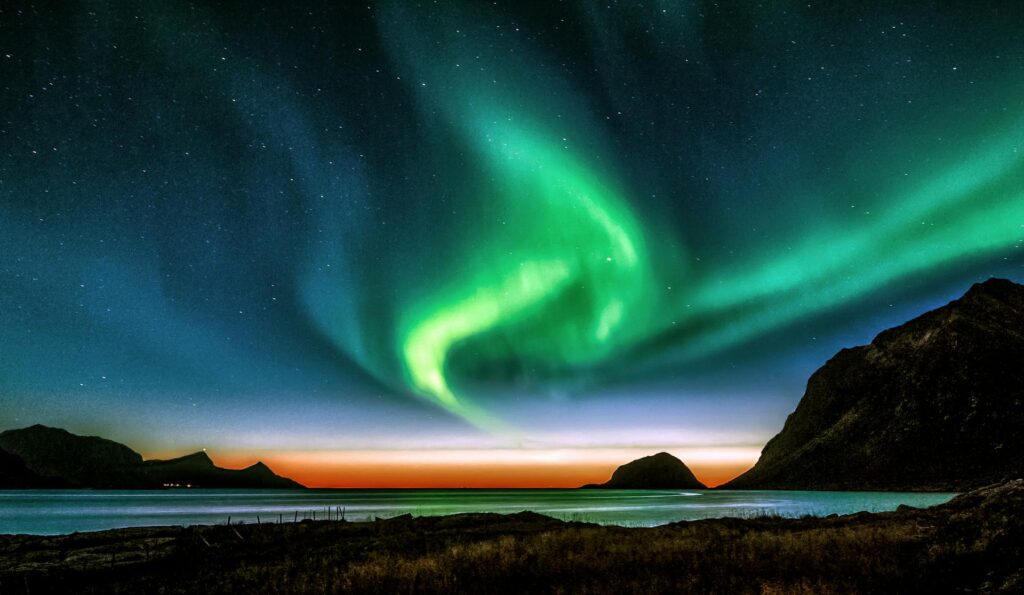
The Northern Lights are a natural light display that occurs in high-latitude regions close to the Arctic Circle. They often appear as glowing curtains or waves of colour — most commonly green, but sometimes purple, pink, or red — dancing across the night sky.
For many travellers and hikers, witnessing the aurora feels almost otherworldly. It’s quiet, unpredictable, and deeply connected to place, which makes seeing it from a remote trail or winter landscape especially memorable.
What Causes the Northern Lights?
The Northern Lights are caused by charged particles released from the sun interacting with Earth’s magnetic field. These particles are carried toward the planet by solar wind and collide with gases such as oxygen and nitrogen in the atmosphere.
These collisions release energy in the form of light. Oxygen typically produces green and red hues, while nitrogen contributes blues and purples. The effect is strongest near the magnetic poles, which is why northern Europe sits perfectly within the aurora viewing zone.
“Every hiker starts somewhere — grab your free Hiking for Beginners guide.”
When Is the Best Time to See the Northern Lights?
Best Time of Day
The best time of night to see the Northern Lights is usually between 10 PM and 2 AM, when skies are at their darkest. Darkness is essential — lingering twilight from dusk or dawn can easily wash out weaker displays.
For hikers camping or staying in remote areas far from towns, this works in your favour. Less light pollution means clearer, more vivid aurora visibility.
Best Time of Year
In Europe, the Northern Lights are best seen between late September and early April. During these months, nights are long enough to provide the sustained darkness needed for aurora activity.
Summer is generally unsuitable due to the midnight sun in northern regions, which prevents true darkness. Late autumn and winter offer the best balance of darkness and visibility, especially for those already planning cold-weather hiking trips.
Does the Year Matter? (Solar Cycles)
Aurora activity follows an approximately 11-year solar cycle, with periods of higher intensity known as solar maximums. During these peaks, displays tend to be stronger, more frequent, and sometimes visible much further south than usual.
The next solar maximum is expected around 2025, which means the coming years may be particularly favourable for aurora viewing. Recent seasons have already produced sightings as far south as the UK during strong solar events.
Best Places to See the Northern Lights in Europe
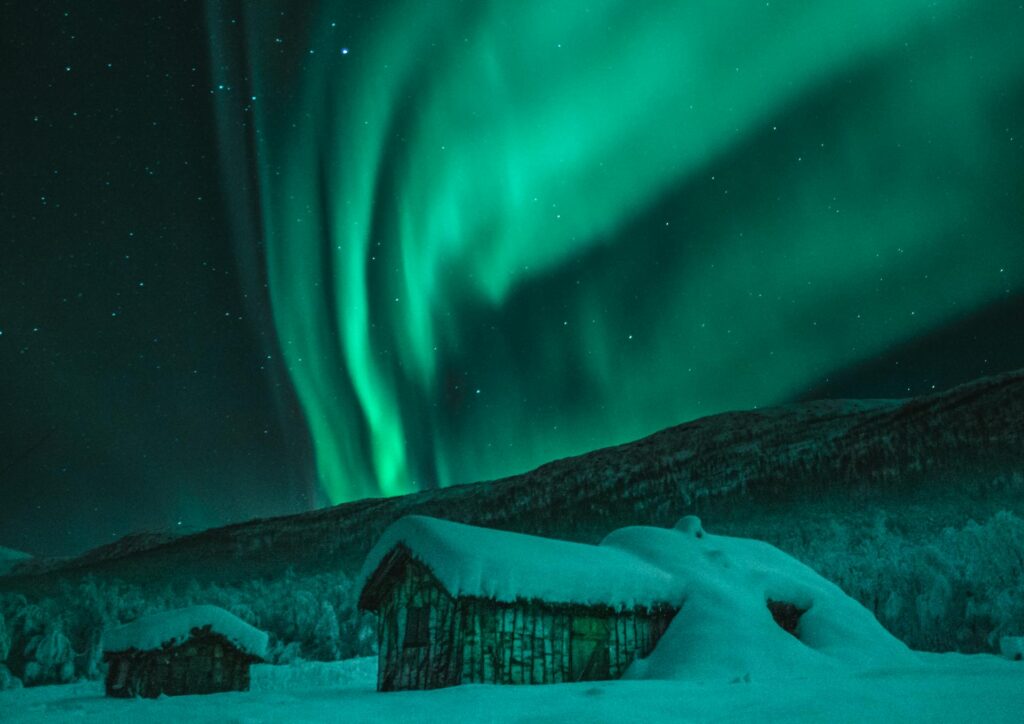
The most reliable aurora sightings occur within the aurora zone, roughly between 65°N and 72°N latitude. For hikers, this also means wide open landscapes, minimal light pollution, and dramatic winter scenery.
Iceland
Iceland is one of the most accessible and rewarding places in Europe to see the Northern Lights. The best viewing period runs from October to March, when nights are longest.
Popular spots include Þingvellir National Park, Jökulsárlón Glacier Lagoon, and remote stretches of the south coast. Iceland’s volcanic landscapes, glaciers, and wide open spaces create dramatic backdrops that pair perfectly with winter hiking and aurora watching.
Norway
Northern Norway is renowned for its aurora visibility, especially around Tromsø and the Lofoten Islands. The best time to visit is late September through March.
Norway offers a unique mix of coastal trails, fjords, and mountains, allowing hikers to combine winter walking with some of the most reliable aurora conditions in Europe. Tromsø, often called the “Gateway to the Arctic,” provides excellent access to dark, remote locations.
Sweden
Swedish Lapland, particularly around Abisko and Kiruna, is another standout region. The prime season runs from December to March.
Abisko National Park is especially famous for its “Blue Hole” — a local microclimate that often produces clearer skies even when surrounding areas are cloudy, increasing the likelihood of a successful sighting.
Finland
In Finland, the northern region of Lapland offers excellent aurora conditions from September through March. Areas around Rovaniemi and Kakslauttanen are popular bases, but hikers will find plenty of quiet forest trails and wilderness areas ideal for night sky viewing.
Finland also offers a slower, more peaceful hiking environment, with vast forests and frozen lakes that feel especially atmospheric under aurora-lit skies.
Can You See the Northern Lights Outside Europe?
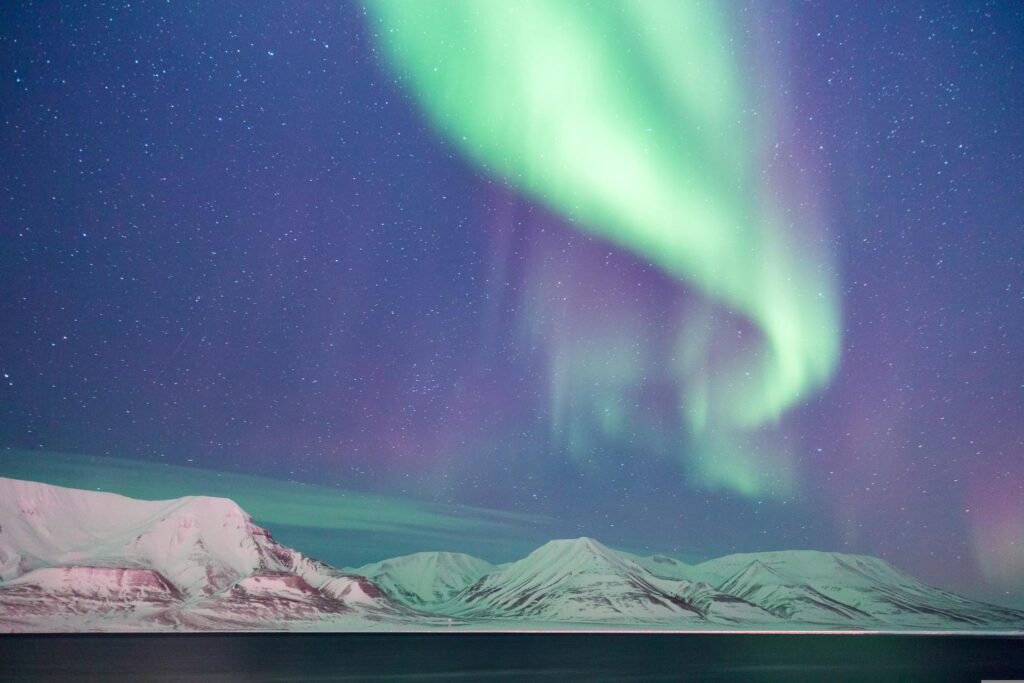
While Europe offers some of the most accessible aurora destinations, the phenomenon can also be seen elsewhere in the northern hemisphere:
- Russia (Kola Peninsula, Murmansk): Best from November to February
- Alaska (Fairbanks): September to April
- Canada’s Northwest Territories (Yellowknife): December to March
These destinations often offer darker skies and stronger displays, but they require longer travel and more extreme winter preparation.
Tips for Seeing the Northern Lights While Hiking
Seeing the aurora often comes down to patience and preparation rather than luck alone:
- Get as far away from towns and artificial light as possible
- Check cloud cover forecasts, not just aurora activity predictions
- Dress for stillness — waiting for hours can feel colder than hiking
- Give yourself multiple nights if possible
- Prioritise safety when hiking or camping in winter conditions
Where to Next?
If planning a Northern Lights trip has sparked ideas for a cold-weather hiking adventure, these guides will help you take the next step — from choosing destinations to finding unforgettable trails:
In Conclusion
Chasing the Northern Lights is equal parts planning, patience, and timing. By choosing the right season, location, and year, you can dramatically improve your chances of witnessing one of nature’s most remarkable displays.
Europe offers some of the best and most accessible aurora viewing locations in the world, especially for hikers willing to embrace winter conditions. From Iceland’s volcanic landscapes to Norway’s fjords and Finland’s forests, seeing the Northern Lights while hiking adds an unforgettable dimension to any cold-weather adventure.
With realistic expectations, the right preparation, and a bit of luck, the experience of watching the sky come alive above a silent landscape is one that stays with you long after the trip ends.


