
Last edited: 13 October 2026.
Hiking in Malta feels like stepping into a living postcard thanks to its rugged limestone cliffs that plunge into the turquoise seas of the Mediterranean, its winding paths through centuries‑old fishing villages, and unexpected pockets of wildflower‑strewn countryside.
Located only a short flight away from countries like Spain, France, and Italy, Malta isn’t a country that you’ll want to ignore if you’re planning an extended hiking excursion into the Mediterranean.
Let’s learn more about what you can expect when you go hiking in Malta!
- Hiking in Malta at a Glance
- What Makes Hiking in Malta So Special?
- Where to Hike in Malta: Islands, Towns and Hotspots
- Signature Hikes in Malta
- Types of Hiking in Malta
- Long-Distance and Multi-Day Walking in Malta
- When Is the Best Time to Go Hiking in Malta?
- Practical Tips for Hiking in Malta
- Flora and Fauna
- FAQs About Hiking in Malta
- Conclusion
- Where to Next?
- Where This Information Comes From
Hiking in Malta at a Glance
| Best for | Sea-cliff walks, history and island-hopping |
| Best time | October to May; summer is hot |
| Top bases | Valletta, Mellieħa, Victoria (Gozo) |
| Need a car? | No: buses and ferries reach most trailheads |
| Easiest signature hike | Comino Coastal Trail |
| Where you sleep | Guesthouses, farmhouses and hotels (no huts) |
| Emergency number | 112 |
What Makes Hiking in Malta So Special?
It’s how much fits into so little space. Malta, Gozo and Comino give you sea cliffs, Stone Age temples, Knights’ watchtowers and island ferries, all within an hour or two of each other.
What makes Malta so special for hikers is how effortlessly you can go from urban cafés to coastal wilderness in under half an hour.
And with well‑marked routes like the scenic Victoria Lines and the off‑the‑radar beaches tucked between rocky headlands, this tiny island packs a huge variety of landscapes into a surprisingly compact footprint.
Where to Hike in Malta: Islands, Towns and Hotspots
Malta has three islands worth walking. The main island has cliffs in the west, a fortified ridge across the middle and quieter coves in the north and south. Gozo is greener and slower, and tiny Comino is a half-day hop by boat.
As with any country in Europe, one of the best ways to explore Malta is to go to a town or city and then check out the hiking trails in the surrounding vicinity:
Valletta and the Grand Harbour
Most visitors start in the capital, and it’s a better walking base than its size suggests. The fortified streets, harbour gardens and ferries to Sliema and the Three Cities make a full day on foot before you’ve even left town.
Our guide to hiking in Valletta covers the city walks, viewpoints and the easiest escapes by bus and ferry.
The North: Mellieħa, Marfa and Majjistral
For those of you who crave sweeping coastal panoramas without leaving Malta’s main island, Mellieħa is your go‑to base.
From the charming village centre you can easily access the Marfa Ridge trail, which is a peaceful route that hugs onto the northern cliffs and then rewards you with unobstructed views of Comino’s sparkling waters below.
You can then finish your hike with a stroll around Mellieħa Bay’s sandy shores and a gelato in the village square.
Just south, the Majjistral Nature and History Park protects the wild north-west coast from Golden Bay northwards. It was Malta’s first natural national park, and it’s free to walk.
The Centre: Mosta and the Victoria Lines
History buffs and hill‑walkers alike will love setting out from Mosta on the Victoria Lines Trail, a path that follows 19th‑century defensive walls across Malta’s verdant midsection.
This trek winds through olive groves, terraced fields, and quiet hamlets. It offers a genuine slice of rural Maltese life alongside sweeping inland vistas, and best of all, it’s all just a short bus ride from Valletta!
The South and West: Dingli, Buskett and the Southern Coast
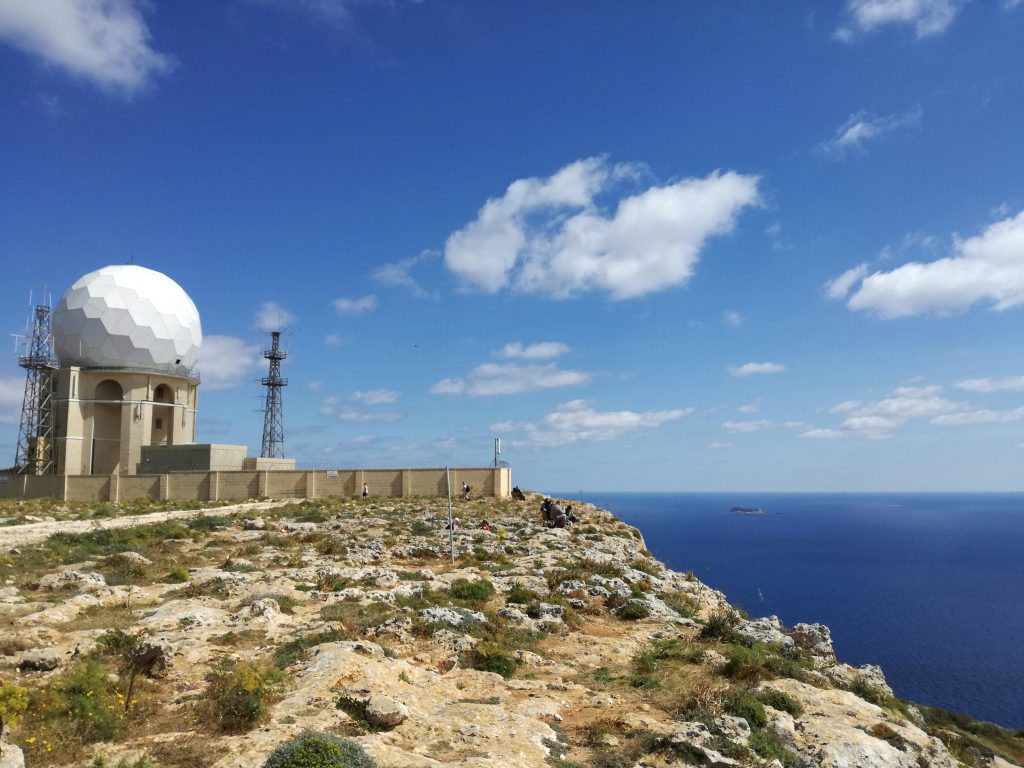
The south-west holds Malta’s highest cliffs at Dingli, the shady Buskett woodland just inland, and the temples and sea caves around Qrendi and Wied iż-Żurrieq.
For a truly off‑the‑beaten‑path experience, you should head south from Marsaxlokk village to Xrobb l-Għaġin Nature Park. This rugged coastal park features winding cliff-top trails with some wild scrublands, and the secluded bays are far from Malta’s tourist crowds.
It’s a perfect spot for spotting seabirds and the sunset and all while feeling like you’ve discovered a hidden corner of the Mediterranean.
Gozo
If you hop the ferry to Gozo and base yourself in Victoria (Rabat Gozo), you’ll be ready for one of the island’s most dramatic hikes. The Ta’ Ċenċ Cliffs trail delivers towering sea cliffs, wind‑swept plateaus, and panoramic views all across the Mediterranean.
You can loop back inland through Ramla Valley (which is lush with wildflowers in spring) before descending to Ramla Bay’s distinctive red sands for a refreshing dip.
Gozo’s gentler side sits around the village of Xagħra, where farm tracks and limestone terraces look out over the island’s rolling hills, and the west coast saves its drama for Dwejra.
Comino
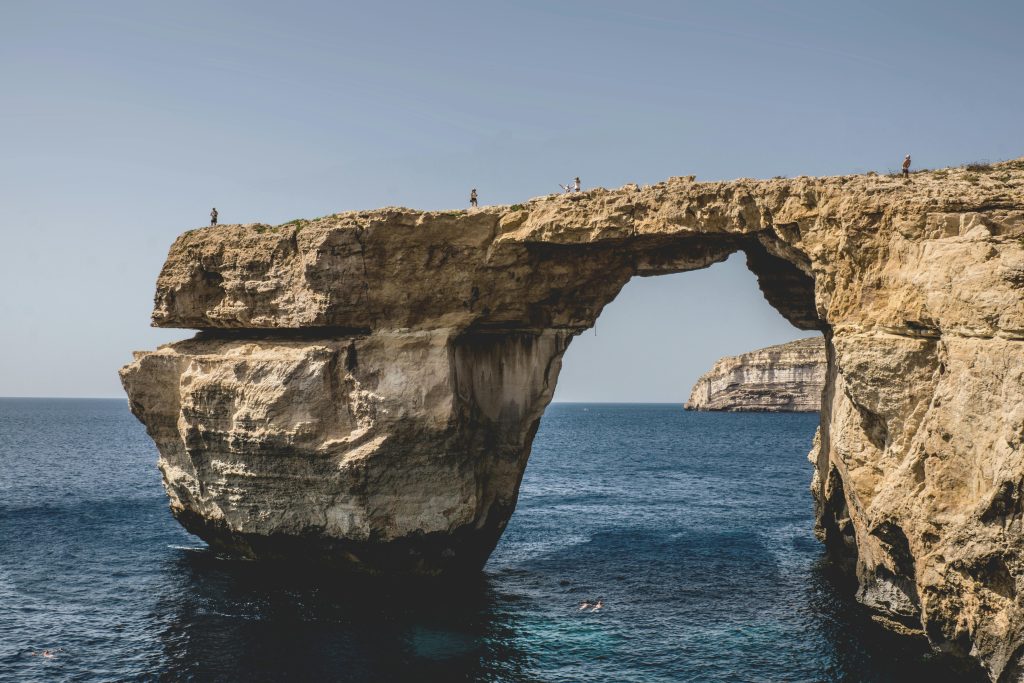
The smallest of the three inhabited islands has no cars, a handful of buildings and a coastal path that loops right around it. Boats run from Malta and Gozo, and the famous Blue Lagoon sits at the landing.
Heading further? Malta sits just south of Sicily, so it pairs nicely with a trip to Ultimate Guide to Hiking in Sicily or our wider guide to hiking in Italy.
Signature Hikes in Malta
Seven day hikes show off the islands better than any others: a car-free island loop, sea caves, the highest cliffs, prehistoric temples, a national park coast, a fortified ridge and Gozo’s wild west. They run here from gentlest to toughest.
For distances, times and how to reach each start, see our guide to the best hikes in Malta.
Comino Coastal Trail
Tiny Comino packs a huge punch when it comes to world‑famous hiking. The island’s circular trail loops past crystalline lagoons and the turquoise Blue Lagoon, which is arguably Malta’s most Instagrammed spot. It’s a breezy trek that feels like wandering through a real‑life postcard.
Blue Grotto Coastal Trail
On Malta’s south coast, the path from Wied iż-Żurrieq looks down on a string of sea caves and arches where the water glows an unreal shade of blue.
Come in the morning light, then hop on one of the little fishing boats to see the caves from sea level.
Dingli Cliffs Coastal Trail
For those of you who live for jaw‑dropping sea views and unforgettable sunsets, the Dingli Cliffs Coastal Trail is your go‑to hike.
This circuit hugs the island’s highest cliffs, and it offers sweeping vistas of the Mediterranean and the tiny islet of Filfla in the distance.
It’s the perfect adventure (ample photo ops, gentle breezes, and enough cliff‑top drama to make you feel like you’re standing at the edge of the world).
Ħaġar Qim and Mnajdra Heritage Walk
Two temples counted among the oldest free-standing monuments in the world sit on a bare clifftop above the south coast, looking out to Filfla.
The walk links them along the cliff edge, so you get Stone Age history and big sea views in the same morning.
Għajn Tuffieħa and Golden Bay Coastal Trail
For those who prefer off‑the‑beaten‑path vibes, Il‑Majjistral Nature Park on Malta’s rugged north-west coast delivers a true wilderness experience.
Its trails snake along deserted cliffs, wildflower meadows, and hidden coves between Golden Bay and Għajn Tuffieħa.
With panoramic ocean views in every direction, this hike feels like discovering a secret side of Malta.
Victoria Lines Trail
Often dubbed “Malta’s Great Wall,” the Victoria Lines Trail stretches across the island’s mid‑section, and it follows a 19th‑century defensive fortification. This iconic route offers sweeping inland panoramas and some glimpses of charming hilltop villages.
Dwejra Walk (Gozo)
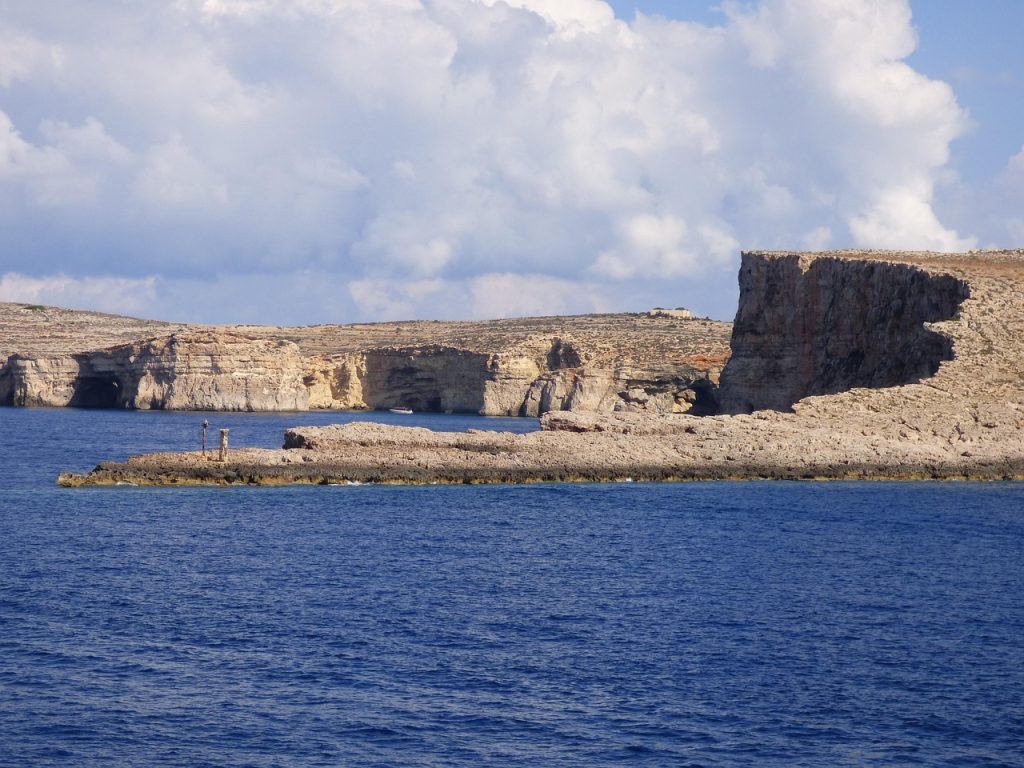
Though the iconic Azure Window may be gone, Dwejra Bay remains one of Malta’s most celebrated hiking destinations.
This scenic route will lead you right past Fungus Rock and dramatic limestone formations that have been carved out by centuries of pounding waves.
It’s an unforgettable hike that showcases the geological beauty that is part of what made Malta famous in the first place.
Types of Hiking in Malta
Malta’s walking falls into four styles: clifftop coast, quiet farmland, history-rich routes and island-hopping.
None of it is mountainous, so the challenge comes from heat, rocky ground and the odd steep path down to a cove.
Here are the primary types of hikes that you can expect to experience when you visit Malta on a hiking trip (and if you’re wondering how these compare with other ways to hit the trail, here are the most popular types of hiking):
Coastal Cliff Walks
For those of you who love salty sea breezes and jaw‑dropping views, Malta’s coastal cliff trails are pure magic. Picture yourself strolling along the rugged Dingli Cliffs at sunrise, the Mediterranean sparkling below, or hiking from Golden Bay to Għajn Tuffieħa Beach as waves crash against the limestone rocks. It really is that beautiful!
“Every hiker starts somewhere — grab your free Hiking for Beginners guide.”
Rural Countryside Trails
If a peaceful escape through rolling fields and hidden valleys sounds more like your speed, Malta’s countryside hikes deliver exactly that. Head inland to Buskett Gardens (which happens to be one of the island’s only woodlands) or alternatively you can wander the quiet lanes around the village of Siġġiewi. It’s a laid‑back way to soak up authentic Maltese rural life.
Historic and Cultural Routes
For those of you who love a side of history with your hike, Malta’s network of ancient paths weaves together temples with fortifications and even some medieval villages.
For instance, you can wander the narrow cobbled streets of Mdina, the Silent City, and discover Bronze Age cart‑ruts near Siġġiewi.
Or you can trace the Victoria Lines, which is a 19th‑century defensive wall that offers panoramic views across the island. Every step feels like stepping back in time.
Island‑Hopping Adventures
Do you want to add a dash of adventure (and turquoise waters) to your hiking? You can jump on a ferry to Gozo or tiny Comino, which is where the coastal footpaths will reveal to you some secluded bays, dramatic sea arches, and the famous Blue Lagoon.
Comino’s clifftop trails give you that “desert island” vibe without ever leaving Maltese waters.
Long-Distance and Multi-Day Walking in Malta
Malta doesn’t have a classic hut-to-hut trek, but you can still walk for days. Most walkers string day hikes together from one or two bases, and the islands’ first national trail is taking shape along the Victoria Lines.
The Victoria Lines
The Lines run for about 12 kilometres across the island, from Fomm ir-Riħ on the west coast to Madliena in the east. Work is under way to turn the old military patrol path into Malta’s first national trail, so expect some sections to be smoother (and better signed) than others for now.
Walking Around Gozo’s Coast
For those of you chasing postcard‑perfect Mediterranean views, Gozo’s coastline is exactly what you’re looking for. Walkers link up its rugged shoreline and centuries‑old watchtowers over several days, and Visit Gozo publishes route sheets for many of the sections.
Regardless of whether you tackle the whole coast or pick a stunning section between Xlendi and Dwejra, you’ll quickly see why hikers from around the world flock here.
Village-to-Village Trips
Because the islands are so compact, a multi-day trip here is really a string of great day walks. You pick a base (or two, if you want a few nights on Gozo), then head out each morning by bus or ferry to a different stretch of coast.
It’s the classic centre-based walking holiday, and Malta does it brilliantly.
Our guide to a walking holiday in Malta has sample itineraries, the best bases and what to expect from the food and places to stay.
“Turn your dream trek into a plan — get your free Plan Your Own European Walking Holiday ebook ”
When Is the Best Time to Go Hiking in Malta?
October to May. The islands are at their greenest from about mid-November to mid-May, and spring and autumn bring the most comfortable walking temperatures. Summer is possible, but only early or late in the day.
When planning a day hike in Malta, remember you’re dealing with a classic Mediterranean climate. That means mild and rainy winters and hot and dry summers.
Spring (March to May)
In spring on this island, the daytime highs usually sit between 65–75°F (18–24°C), which makes for absolutely perfect hiking weather. It’s also wildflower season, when the countryside is at its greenest and the cliffs are bright with colour.
Summer (June to August)
Summertime in Malta is all about sunshine and warmth, with the daytime temperatures routinely climbing into the high 80s°F (30–32°C).
If you’re hiking coastal cliffs or exposed ridges, the sun can be relentless, so pack plenty of water and slap on some high‑SPF sunscreen, and wear a wide‑brimmed hat while you’re at it.
Start at first light, finish before lunch, and read up on hiking in hot weather before you go.
Autumn (September to November)
Autumn brings the same 65–75°F (18–24°C) sweet spot as spring, especially from October, with the bonus of a warm sea for a swim at the end of a walk. September can still feel like summer, so treat it the same way.
Winter (December to February)
Winter brings cooler, wetter days, with the highs around 60°F (15°C) and lows near 50°F (10°C). The trails can definitely get muddy after heavy rain, so prepare yourself accordingly! On dry days, though, the air is clear and the paths are quiet.
Practical Tips for Hiking in Malta
You won’t need a car, a hut booking or a grasp of Maltese (English is an official language). What you will need is a plan for the heat, an eye on private land and hunting season, and a healthy respect for crumbly cliff edges.
Do You Need a Car to Hike in Malta?
No. Malta Public Transport runs buses across Malta and Gozo, with the main terminus just outside Valletta’s city gate, and its journey planner is the easiest way to find the stop nearest a trailhead. Harbour ferries link Valletta with Sliema and the Three Cities.
To reach Gozo, Gozo Channel ferries cross from Ċirkewwa, at Malta’s northern tip, to Mġarr harbour. Small passenger boats run to Comino from Ċirkewwa and Marfa on Malta, and from Mġarr on Gozo. A hire car is handy for a dawn start or a remote cove, but it’s never essential.
Trail Signs and Route Guides
There’s no national waymarking or grading system, so don’t expect painted stripes on every rock. Some routes are signposted (parts of the Victoria Lines and the trails in Majjistral park, for example), while others follow farm tracks and coastal paths.
The tourism boards fill the gap: Visit Malta’s walking route brochures and Visit Gozo’s route sheets map out the main walks. An offline map on your phone is still a good idea.
Staying Safe
In an emergency, call 112. The Civil Protection Department, which handles rescue across the islands and their waters, responds through that number.
The main hazards are heat and cliffs. Shade and water are scarce on most coastal walks, so carry more than you think you’ll need. Cliff edges are fragile and can collapse, so stay well back, especially in strong winds or rough seas. After heavy rain, avoid walking in the valleys (known locally as wied), which can flood quickly.
Rocky limestone and loose gravel are made for rolled ankles. Our guide to preventing and treating sprained ankles is worth a read before you go.
Etiquette, Access and Hunting
Many country paths pass farmland and private plots. Signs reading “RTO” (reserved to owner) mark private land, so respect them, stick to paths and leave crops and walls alone. Fossils are protected by law, so admire them but don’t take them home.
Bird hunting is legal in set seasons: a long autumn season, which runs from September to January, and a short spring season, usually in April. You’ll often pass small stone hunting huts. On a weekend morning in season it’s worth sticking to well-used paths and the protected parks. BirdLife Malta publishes each year’s season dates.
On the trail, the usual courtesies apply: greet other walkers, give way on narrow cliff paths and take your rubbish home. Our hiking etiquette guide covers the rest.
What to Bring for Hiking in Malta
Malta’s main challenge is sun exposure rather than terrain, so pack for the heat first.
- Lightweight walking shoes with good grip for limestone slabs and loose gravel.
- A compact day pack with room for at least 2 litres of water.
- A wide-brimmed hat, sunglasses and SPF 30+ sunscreen, even in spring.
- An offline map or navigation app, as phone signal can be patchy on the coast.
- A small first aid kit and a quick-dry towel for unplanned swims.
- Choosing gear? See all of our buyer’s guides.”
🗒️ Free Checklist: Planning your next hiking trip?? Download our printable hiking checklist to make sure you don’t miss the essentials.
Flora and Fauna
Spring is the star: the cliffs and fields fill with wildflowers, some found nowhere else, and more than 170 bird species regularly pass through the islands on migration.
Walking Malta’s trails is like flipping through a living botanical scrapbook that’s tiny but mighty. In spring, the rocky outcrops will burst into colour with carpets of Maltese centaury (an endemic wildflower), delicate orchids, and cheerful yellow Maltese fleabane.
Even in the heat of summer, you’ll spot sea daffodils nodding beside coastal paths and hardy shrubs like thyme and rosemary perfuming the air. Look down often, because the limestone pavements are dotted with low‑growing succulents and mosses that somehow thrive in the island’s sun‑baked crevices.
For wildlife, keep an eye out for the speedy Maltese wall lizard basking on sunlit rocks and listen for the chatter of Spanish sparrows in the village trees.
Malta’s position on a major migratory flyway means spring and autumn hikes often include spectacular birdwatching, so think raptors like the Eleonora’s falcon soaring overhead and the odd flamingo wading in a coastal nature reserve.

FAQs About Hiking in Malta
Is Malta good for hiking for beginners?
Yes. There are no mountains, most walks are short, and buses reach nearly every start. The tricky parts are heat and uneven limestone, so begin with a gentle coastal loop such as the one around Comino.
What is the best month for hiking in Malta?
April and October are hard to beat: cool enough to walk all day and warm enough for a swim afterwards. March, May and November work well too, while July and August only suit early-morning walks.
Can you hike in Malta without a car?
Yes. Buses cover Malta and Gozo, and ferries link the islands. Buses also make one-way walks easy, because you can ride back from the far end instead of retracing your steps.
Is it safe to walk in the countryside during hunting season?
Generally yes, if you stay on established paths. Hunting is legal from September to January and for a few weeks in spring, when it stops at noon. On a weekend morning in season, the protected nature parks are the calmest choice.
Do you need to speak Maltese to hike in Malta?
No. English is an official language alongside Maltese, so bus information and route guides come in English. Place names are Maltese, though, so it helps to match spellings like Ħaġar Qim or Mġarr carefully when checking a map against a bus stop.
Is Gozo or Malta better for hiking?
Gozo suits walkers who want quieter, greener countryside and long coastal days. Malta has more variety close to Valletta, including the highest cliffs and the Victoria Lines. With a ferry between them, most walkers do both.
Conclusion
Malta may be small, but its hiking trails pack a surprisingly big punch from cliff‑top strolls with endless sea views to secret woodland paths bursting with wildflowers and wildlife. This island has a laid back and yet fun spirit that you won’t want to miss out on.
Where to Next?
Still got the walking bug? Here’s where to head after Malta.
More in Malta
- Best Hikes in Malta: the seven signature routes with distances, times and how to reach each start.
- Walking Holiday in Malta: sample itineraries, the best bases, and what to expect from the food and places to stay.
- Hiking in Valletta: A City Guide for Walkers: walking the capital, its viewpoints and the easiest escapes by bus and ferry.
More Ultimate Guides Nearby
- Ultimate Guide to Hiking in Italy: from the Dolomites to the Amalfi Coast, just across the water.
- Ultimate Guide to Hiking in Sicily: Malta’s nearest neighbour, with volcano trails and sea cliffs.
- Ultimate Guide to Hiking in Greece: more Mediterranean island and coastal walking.
Further Afield
- Ultimate Guide to Hiking in Cyprus: another small, sunny island nation that’s made for walking.
Where This Information Comes From
Last checked: 13 October 2026.
- Visit Malta (Malta Tourism Authority): walking route brochures
- Visit Gozo: Dwejra Walk and Comino Walk route sheets, and Gozo walking routes
- Malta Tourism Authority: Blue Lagoon visitor booking system
- Majjistral Nature and History Park
- University of Malta, OAR: The Victoria Lines trail
- Malta Public Transport
- Gozo Channel
- Ministry for Home Affairs: Civil Protection Department
- BirdLife Malta: hunting seasons and bird migration


