
Cornwall is where rugged cliffs meet rolling seas, where tiny fishing villages cling to coves, and where walking is as much about soaking up history and culture as it is about clocking up miles.
For hikers, this southwestern tip of England is pure paradise.
With more than 400 miles of coastline and countless inland trails — as well as scenery that switches from wild moorland to golden sand in a matter of steps — Cornwall is practically tailor-made for walkers.
This guide brings together everything you need to know about hiking in Cornwall.
- Cornwall Hiking at a Glance
- Why Hike in Cornwall?
- Best Hiking Areas in Cornwall
- Taking a Walking Holiday in Cornwall
- Exploring Cornwall
- Planning a Hiking Trip to Cornwall
- Getting Around Cornwall and Trail Access
- Where to Stay for Hiking in Cornwall
- Beyond the Trails
- FAQs About Hiking in Cornwall
- Hiking in Cornwall
- Where to Next?
Cornwall Hiking at a Glance
- Best for: Coastal walking, fishing villages, beaches, historic mining landscapes and wild moorland
- Main hiking areas: Land’s End, St Ives, Lizard Peninsula, Roseland Peninsula, Bodmin Moor, Tintagel and the South West Coast Path
- Best time to visit: Spring to early autumn for most walking
- Car needed: Helpful for remote trailheads, but not essential for every trip
- Getting around: Car, train, bus and coastal ferry
- Suggested stay: 4–7 days for several day hikes; longer for a Coast Path walking holiday
- Typical terrain: Clifftop trails, beaches, rocky headlands, moorland, woodland, farmland and village paths
- Good for beginners: Yes, although coastal gradients and exposed sections vary considerably
- Best-known trail: South West Coast Path
- Best for dramatic coast: Far west and north coast
- Best for gentler coastal walking: South coast and Roseland Peninsula
- Best inland walking: Bodmin Moor
- Best for quieter routes: Roseland Peninsula and parts of the far west
- Main challenge: Changeable weather, exposed cliffs, steep coastal gradients and tides affecting some routes
Looking for individual routes? Be sure to check out our guide to the Best Hikes in Cornwall for more detailed information on where to go.
Why Hike in Cornwall?
Cornwall gives walkers something very different from England’s mountain regions.
The coast dominates, but the walking is far more varied than one long line of cliffs and beaches.
You can spend the morning above turquoise coves, pass through a fishing village at lunchtime, follow an old mining trail in the afternoon and finish somewhere that feels completely different from where you started.
Landscape and Scenery
The coastline is the obvious star.
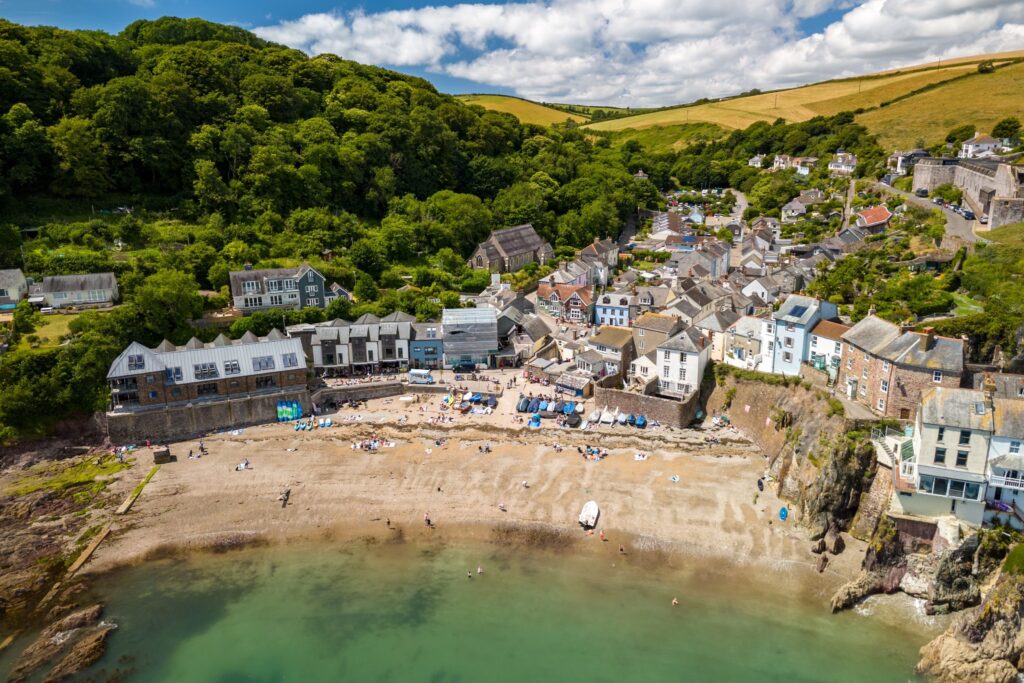
Cliffs plunge into the Atlantic, sandy beaches appear between headlands, and sheltered coves break up long stretches of exposed coast.
But inland Cornwall has its own character too.
Bodmin Moor brings granite tors and open moorland, while wooded valleys such as those around the Helford River offer quieter trails and hidden creeks.
History and Character
Cornwall is famous for more than just beaches.
Landmarks such as St Michael’s Mount, Tintagel Castle and Land’s End all sit within landscapes that can be explored on foot.
The historic mining areas around St Agnes and Botallack add another layer, combining industrial heritage with sweeping coastal scenery.
Then there are the towns and villages.
Padstow, St Ives, Falmouth, Mousehole, Port Isaac and countless smaller settlements make the human side of the landscape just as memorable as the cliffs.

Best Hiking Areas in Cornwall
Cornwall covers enough coastline and countryside that choosing an area matters.
The north coast, south coast, far west and inland moors all offer noticeably different walking.
St Ives and the Far West
St Ives makes a strong base for some of Cornwall’s wildest coastal scenery.
West of the town, the coast becomes progressively rougher and more exposed as you head towards Zennor, Cape Cornwall and Land’s End.
This is the Cornwall of dramatic cliffs, old mining landscapes and Atlantic views.
For walkers who want the coast at its most rugged, the far west is difficult to beat.
“Cornwall is one of those places where the walk is only half the story — the coves, villages, cliffs and old mining landscapes make every stretch of coast feel different.”
The Lizard Peninsula
The Lizard Peninsula, the southernmost point of mainland Britain, offers some of the most striking coastal walking in Cornwall.
Kynance Cove is the obvious highlight, with turquoise water and dramatic rock formations, but the wider peninsula offers plenty of quieter stretches as well.
It’s a particularly strong area if you want spectacular coastal scenery without concentrating entirely on the busiest northern towns.
Padstow and the North Coast
Padstow works well as a base for north-coast walking, with coastal routes leaving directly from the surrounding area.
The wider north coast is generally rugged and exposed, with beaches, cliffs and headlands creating constant changes in scenery.
Tintagel farther east adds one of Cornwall’s strongest combinations of history and coastal drama.
Falmouth, Helford and the Roseland Peninsula
The south coast has a softer feel.
Falmouth works particularly well as a base, with ferries linking nearby villages and coastal routes.
The Helford River brings wooded trails and hidden creeks, while the Roseland Peninsula offers a quieter alternative to some of Cornwall’s busiest walking areas.
Bodmin Moor
Cornwall isn’t only about coastal hiking.
Bodmin Moor offers granite tors, ancient sites and wide-open landscapes that can feel worlds away from the seaside towns.
Rough Tor is one of the best-known viewpoints, with expansive views across the moor and towards the coast.
“First time on the trail? Hiking for Beginners has your back.”
Taking a Walking Holiday in Cornwall
Cornwall is one of the UK’s strongest destinations for a walking holiday.
The South West Coast Path is the obvious backbone, allowing walkers to link villages, beaches, headlands and coastal towns across multiple days.
Many companies offer self-guided packages along sections of the route, with accommodation and luggage transfers arranged.
That makes this style of point-to-point walking holiday particularly practical for hikers who want to cover longer stretches of the coast without returning to the same base each day.
For a more DIY approach, choose a base such as Falmouth, Penzance, Padstow or St Ives and plan day hikes in different directions.
Cornwall doesn’t have mountain huts like you’ll find in the Alps, but it has plenty of walker-friendly accommodation.
B&Bs and inns along the South West Coast Path frequently cater to long-distance walkers, while campsites provide another option around much of the coast.
This flexibility is a big part of Cornwall’s appeal: you can organise anything from a relaxed three-day base trip to a much longer point-to-point journey.
“Plan less, walk more.” Pick a route, set your pace, and let Europe unfold under your boots: grab your free Walking Holiday ebook today”
Exploring Cornwall
Not every memorable day in Cornwall needs to revolve around a major hike.
Some of the best days combine short walks, viewpoints, historic sites, beaches and fishing villages.
Best Viewpoints in Cornwall
Cornwall is blessed with jaw-dropping views around nearly every corner, but a few stand out in particular.
Bedruthan Steps on the north coast offers one of the most recognisable panoramas, with giant sea stacks rising from the sand.
From Cape Cornwall, you get a westerly view that feels like the edge of the world.
On the south coast, Kynance Cove is a jewel of turquoise water and dramatic rock formations.
Inland, Rough Tor on Bodmin Moor delivers expansive views across the moorland towards the sea.
“Some of Cornwall’s best walking days are the ones where the trail keeps getting interrupted — by a harbour, a castle, a hidden cove or a view that makes you stop anyway.”
Historic and Natural Landmarks
St Michael’s Mount, Tintagel Castle and Cornwall’s old mining landscapes add plenty of history to a walking trip.
The Eden Project makes a completely different kind of stop away from the trails.
Malham-style single landmarks aren’t really Cornwall’s thing; instead, its appeal comes from how beaches, headlands, ruins, fishing villages and historic sites continuously appear along a route.
What Not to Miss
Even if you came for hiking, Cornwall has other experiences worth weaving into the trip.
Try a traditional Cornish pasty, sample clotted cream on scones — cream first, jam second, Cornish style — and spend some time exploring fishing harbours such as Mousehole or Port Isaac.
Art lovers will want to stop at Tate St Ives, while history buffs can follow the Arthurian associations around Tintagel.

Planning a Hiking Trip to Cornwall
Best Time to Visit Cornwall for Hiking
Cornwall has a relatively mild climate compared with much of England.
Spring, particularly April to June, is one of the best periods for walking.
Wildflowers blanket the cliffs, the days become long enough for full-day hikes, and crowds are generally more manageable than during the main summer period.
Summer brings warmer weather and long daylight hours, but also much busier trails and seaside towns.
If you don’t mind company, July and August provide plenty of time for long coastal days.
Autumn is quieter, with moody skies and stronger winds adding drama to the landscape.
Winter is the wild card.
Conditions can become rough along the coast, storms may make exposed clifftop routes unsafe, and some lower sections can be affected by water or difficult conditions.
If you enjoy atmospheric walking and empty paths, winter can still be rewarding — but route choice and weather checking become much more important.
What to Bring
Cornish weather changes quickly, and exposed sections of coastline can feel considerably colder and windier than sheltered towns.
Wear sturdy footwear because coastal trails can be muddy, rocky or slippery.
Carry layers, including a waterproof outer layer, and use a sensible hiking layering system so you can adapt as conditions change.
Water is also important on longer coastal stretches, particularly where shops and villages are widely spaced.
Our guide to how much water to take on a hike can help with planning.
For navigation, Ordnance Survey mapping or a reliable offline route is useful, particularly on less obvious inland trails.
If you’re unsure what else belongs in your pack, our guide to what to bring on a day hike covers the essentials.
Where to Get Gear and Supplies
For last-minute kit, Truro has some of Cornwall’s larger outdoor shops.
Towns such as St Ives and Penzance also have independent shops selling maps and walking essentials.
If you’re following the South West Coast Path, many villages along the route have small stores where you can restock basics such as food, water and simple supplies.
🗒️ Free Checklist: “Never forget the essentials — grab your free Ultimate Hiking Packing List.”
Trail Conditions and Safety
Always check the tides.
Some routes dip towards beaches or coves that can become difficult or impossible to use safely at certain states of the tide.
Exposed cliff sections deserve particular care in strong wind, heavy rain or poor visibility.
Coastal paths also involve more climbing than the map might initially suggest because routes constantly drop into coves and climb back onto headlands.
Don’t assume that a relatively short coastal distance automatically means an easy day.
Getting Around Cornwall and Trail Access
To explore Cornwall’s more remote trails freely, a car is the easiest option.
Many trailheads sit in small villages or rural areas where public transport can be limited.
That said, plenty of Cornwall can still be explored without driving.
Public Transport
Trains connect larger towns including Truro, Penzance and St Ives.
Local buses cover many other towns and villages and can be particularly useful for walkers tackling linear sections of the coast.
Because many routes don’t finish where they started, planning your return transport before setting off is important.
Ferries
Ferries are part of the Cornwall walking experience.
Around places such as Falmouth, they can link villages and coastal sections while saving substantial road journeys.
They can also turn transport itself into part of the day rather than simply a means of getting back to your accommodation.
Driving
A car provides the most flexibility for places such as Bodmin Moor, quieter coves and remote coastal trailheads.
It is especially useful if you want to combine several shorter walks or attractions in a single day.
For popular coastal locations, though, parking can become busy during peak periods.

Where to Stay for Hiking in Cornwall
Choosing the right base depends heavily on what kind of walking you want.
Cornwall is long enough that one town is unlikely to be equally convenient for every part of the county.
St Ives
St Ives is one of the strongest choices for dramatic north and west coast walking.
You have routes leaving the area directly, plenty of accommodation and restaurants for rest days, and good access towards Zennor and the far west.
It also works particularly well for travellers who want hiking mixed with art, beaches and a lively town base.
Penzance
Penzance is one of the most practical bases for western Cornwall.
Land’s End, St Michael’s Mount and parts of the far-west coast are all within the wider area, while rail connections make it useful for travellers arriving without a car.
If you want to concentrate on the western end of Cornwall rather than constantly move accommodation, it’s a strong all-round choice.
Falmouth
Falmouth works well for exploring the south coast.
Ferries provide useful connections to nearby villages and walking areas, while the town itself offers plenty to do between hiking days.
It is particularly suitable for exploring the Helford River, Roseland Peninsula and gentler southern coastal scenery.
Padstow
Padstow suits walkers who want to concentrate on Cornwall’s north coast.
The surrounding coastline offers dramatic views and established walking routes, while the town has enough accommodation and services to work comfortably as a multi-day base.
Coverack or Boscastle
For something quieter, villages such as Coverack or Boscastle offer a much smaller-scale stay.
You sacrifice some transport convenience and choice of services, but gain easier access to quieter surroundings and a slower pace.
“The best Cornwall base isn’t necessarily the most central one — it’s the place that puts the section of coast you actually want to walk outside your door.”
Beyond the Trails
Cornwall rewards slower travel.
The food, villages, history and coastal culture are part of what turns a collection of hikes into a proper trip.
Food and Local Specialities
Cornish pasties are almost designed for walkers: portable, filling and easy to pick up before a day outside.
Cream teas are another local institution, along with fresh seafood and bakery food throughout the coastal towns.
Art and History
Tate St Ives gives art lovers a reason to stay longer in the town, while Tintagel adds centuries of history and legend to the north coast.
Cornwall’s mining heritage is equally important, particularly around St Agnes, Botallack and the far west.
Quieter Corners
If you want to escape the busiest routes, head beyond the best-known resorts and landmarks.
The Roseland Peninsula provides a peaceful alternative on the south coast.
Parts of the far west beyond Land’s End also become noticeably quieter away from the most popular stops.
Around Tintagel, wooded trails provide yet another contrast to Cornwall’s exposed coastline.
FAQs About Hiking in Cornwall
What is the hardest hiking in Cornwall?
Some of the tougher sections of the South West Coast Path involve repeated steep climbs and descents, exposed cliff terrain and rough ground.
Sections around the far west and other rugged coastal areas can be much harder than their distance alone suggests.
Which part of Cornwall is most beautiful?
That depends on what you want.
The Lizard Peninsula is known for dramatic coves and colourful water, while the far west around St Ives and Land’s End offers a wilder combination of cliffs, beaches and old mining landscapes.
Is the north or south coast of Cornwall better for walking?
The north coast generally feels more rugged and exposed.
The south coast tends to offer more sheltered coves, creeks and gentler landscapes.
Both provide excellent walking, so the better choice depends on whether you want dramatic Atlantic scenery or a softer coastal experience.
What are the highlights of Cornwall’s south coast?
Kynance Cove, the Lizard Peninsula, Falmouth, the Helford River and Roseland Peninsula are among the major highlights.
The southern coast also works particularly well for walkers looking for quieter coves and sheltered routes.
What are the highlights of Cornwall’s north coast?
Tintagel, St Ives, the far-west cliffs and several major beaches are among the best-known attractions.
The wider coast also contains some of Cornwall’s more exposed and dramatic walking.
Can you hike in Cornwall without a car?
Yes.
Rail, bus and ferry connections allow plenty of walking to be organised without driving, especially if you choose a well-connected base such as St Ives, Penzance or Falmouth.
A car becomes more useful for isolated trailheads and trips involving several different areas.
How many days do you need for a Cornwall walking trip?
Four or five days gives you enough time to combine several areas without rushing.
A week allows for a more varied trip involving the north coast, south coast and inland scenery.
For longer sections of the South West Coast Path, the trip can easily extend well beyond a week.
Hiking in Cornwall
Hiking in Cornwall is about more than just the miles.
It’s more about the salt in the air from sea spray, the cries of seabirds wheeling overhead, and the crunch of gravel on old mining trails.
It’s the fishing villages appearing around corners, the coves hidden below the cliffs and the constant feeling that the landscape is pulling you towards whatever lies beyond the next headland.
For walkers, that’s exactly what makes Cornwall so difficult to rush.
Where to Next?
Once you’ve explored Cornwall, these guides make the natural next step:
- Best Hikes in Cornwall – Individual routes, distances, difficulty, highlights and practical trail details.
- Ultimate Guide to Hiking in England – Explore England’s wider hiking regions and landscapes.
- Best Hikes in England – Find standout coastal, countryside and mountain walks across the country.
- Walking Holiday in England – Plan a longer walking trip across England.
- South West Coast Path – Plan one of Britain’s major long-distance coastal trails.
- Hiking in the Yorkshire Dales – Swap Cornwall’s Atlantic coastline for limestone valleys, waterfalls and traditional villages.


