The Yorkshire Dales are where time seems to slow down.
Here, dry stone walls crisscross green valleys, sheep graze unbothered on hillsides, and villages look as though they’ve barely changed in centuries.
For those of you who enjoy hiking through landscapes that blend history, nature, and peace…well, let’s just say it: the Dales are pure magic.
They’re also a standout destination among the best hikes in England for walkers looking for a mix of dramatic scenery, historic villages, and varied trails.
They are not just a destination.
They’re a mood, and that mood is pastoral, grounded, and quietly spectacular.
Walking in the Dales is about contrasts.
One moment you’re under a cathedral-like canopy of limestone cliffs, and the next you’re following a bubbling stream through a wooded gorge. By afternoon, you might be up on a moor with the wind in your face and views stretching for miles.
The beauty here is timeless but never boring.
It is rugged enough to challenge serious hikers, yet gentle enough to welcome families, casual walkers, and anyone who simply wants to wander.
- Yorkshire Dales Hiking at a Glance
- Why Hike in the Yorkshire Dales?
- Best Hiking Areas in the Yorkshire Dales
- Taking a Walking Holiday in the Yorkshire Dales
- Exploring the Yorkshire Dales
- Planning a Hiking Trip to the Yorkshire Dales
- Getting Around and Trail Access
- Where to Stay for Hiking in the Yorkshire Dales
- Beyond the Trails
- FAQs About Hiking in the Yorkshire Dales
- Why the Dales Stay With You
- Where to Next?
Yorkshire Dales Hiking at a Glance
- Best for: Limestone scenery, waterfalls, traditional villages, valley walks, moorland, and long-distance trails
- Main hiking areas: Malham, Wensleydale, Swaledale, Wharfedale, Ribblesdale, and the Yorkshire Three Peaks
- Best time to visit: Spring to autumn for most walking, with spring wildflowers and autumn colour particularly good
- Car needed: Helpful but not essential for every trip
- Getting around: Car, DalesBus services, local buses, and the Settle–Carlisle railway
- Suggested stay: 3–5 days for several day hikes, or longer for a walking holiday
- Typical terrain: Limestone paths, farmland, riverside trails, moorland, woodland, muddy tracks, and steeper hill routes
- Good for beginners: Yes, with plenty of short valley walks and easier circular routes
- Best-known landmark: Malham Cove
- Best waterfall area: Wensleydale
- Best for quieter walking: Swaledale
- Best for bigger hiking days: Ribblesdale and the Yorkshire Three Peaks
- Best long-distance option: Dales Way or sections of the Pennine Way
- Main challenge: Changeable weather, muddy paths, patchy mobile reception, and limited transport to some rural trailheads
“Avoid rookie mistakes. Our free ebook Hiking for Beginners shows you how.”
Why Hike in the Yorkshire Dales?
The Yorkshire Dales offer a style of hiking that feels very different from a high mountain destination.
You’ll find limestone cliffs, waterfalls, valleys, moorland, farmland, stone villages, riverside paths, and long-distance trails, often all within relatively short distances of one another.
That variety means the Dales work just as well for an easy village-to-village ramble as they do for a demanding full-day hike.
Landscape and Scenery
Each dale has its own character.
Wensleydale is known for waterfalls, Wharfedale for broad valley scenery, Swaledale for wildflower meadows, and Ribblesdale for its famous Three Peaks.
Limestone is one of the defining features of the region, with places such as Malham Cove and Gordale Scar creating some of the most distinctive landscapes in northern England.
The scenery can feel gentle one moment and surprisingly dramatic the next.
Villages, History and Character
The villages are a large part of the experience too.
Grassington and Hawes are popular bases, both filled with old stone buildings and easy access to the surrounding countryside.
Richmond, with its castle overlooking the River Swale, adds another layer of history, while smaller villages such as Reeth and Kettlewell offer a quieter pace.
This is one of those walking regions where the places between the trails matter almost as much as the trails themselves.
Looking for individual routes? See our guide to the Best Hikes in the Yorkshire Dales for route-by-route distances, difficulty, highlights and practical trail details.

Best Hiking Areas in the Yorkshire Dales
The Dales cover a large area, and different parts of the national park offer noticeably different styles of walking.
Malham and the Limestone Country
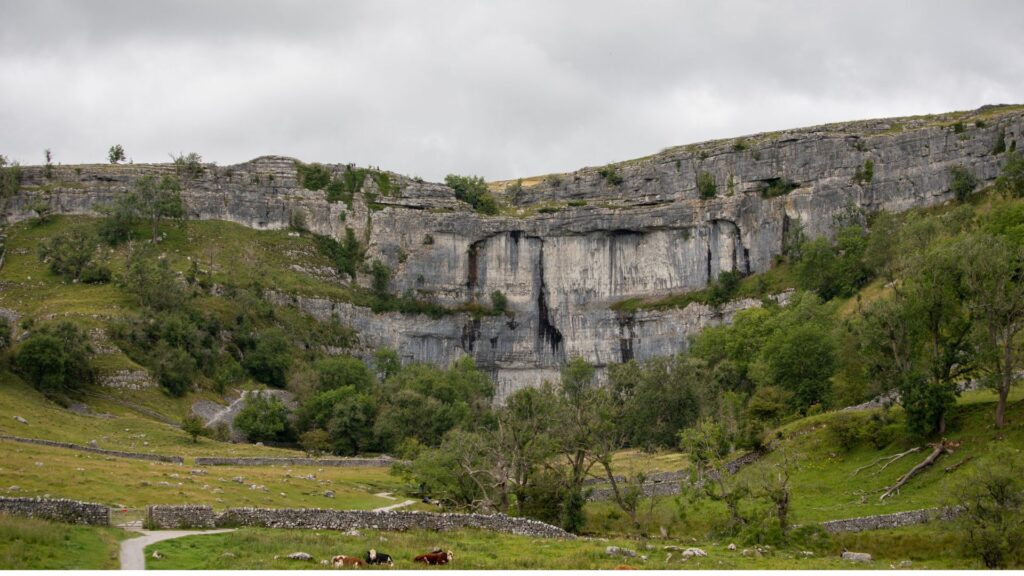
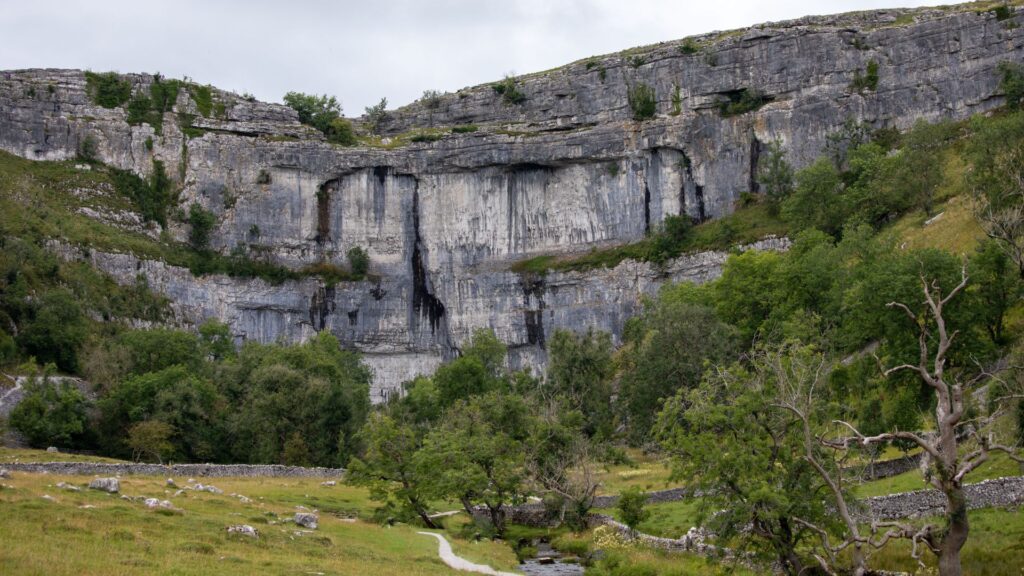
Malham Cove is a natural wonder.
It’s a giant limestone amphitheatre whose cliff face looks like something out of a fantasy film.
The limestone pavement above the cove is equally distinctive, with strange weathered rock formations and wide views across the dale.
Nearby Gordale Scar adds another dramatic landscape thanks to its narrow gorge and waterfall.
For walkers wanting some of the Yorkshire Dales’ most recognisable scenery in one area, Malham is hard to overlook.
Wensleydale
Wensleydale is particularly good for walkers who like combining villages, waterfalls, and gentler valley scenery.
Aysgarth Falls and Hardraw Force are two of the region’s best-known waterfalls, while Hawes makes a convenient base in the heart of the dale.
Bolton Castle also provides beautiful views across Wensleydale for those who want scenery with a little history mixed in.
“From limestone cliffs and waterfalls to wildflower valleys and open moorland, every corner of the Dales seems to offer a different kind of walk.”
Swaledale
Swaledale offers a quieter and more pastoral side of the Dales.
Wildflower meadows, stone villages, open countryside, and less-travelled paths make this a particularly good choice for walkers who want to step away from the busiest landmarks.
Reeth is one of the most useful bases for exploring this part of the park.
Ribblesdale and the Yorkshire Three Peaks
Ribblesdale is closely associated with the Yorkshire Three Peaks.
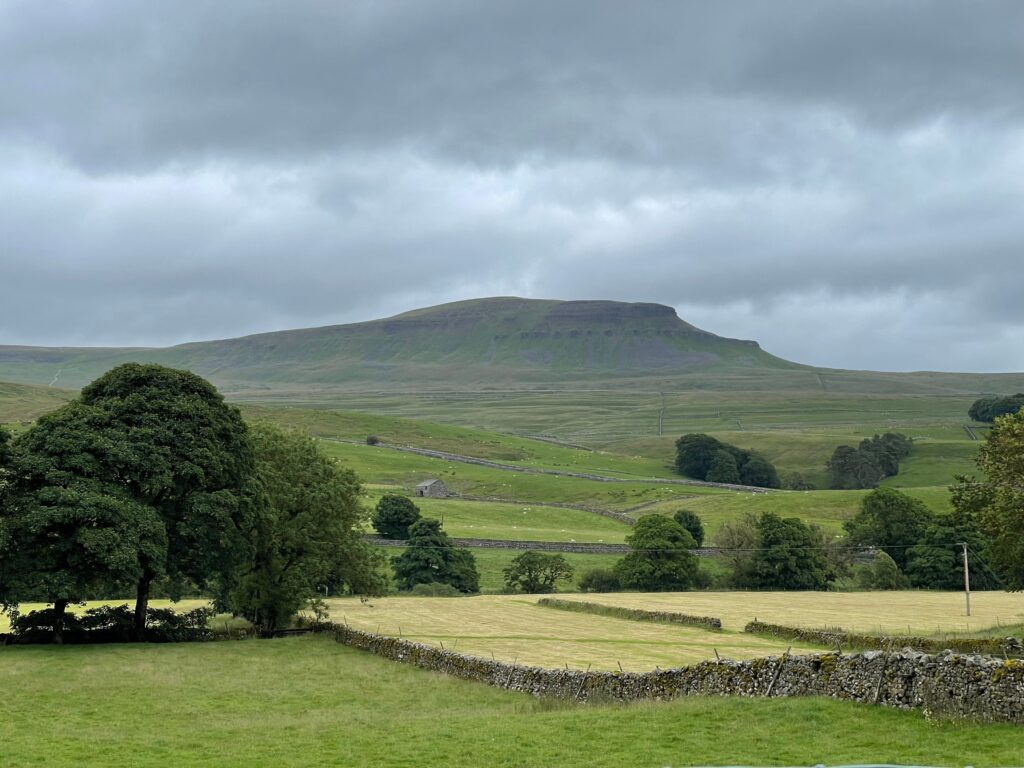
Pen-y-ghent, Whernside, and Ingleborough provide some of the region’s better-known summit walking and make this one of the stronger areas for hikers looking for a more demanding day.
The Three Peaks Challenge combines all three in a single outing, although spreading the walking over more than one day gives you considerably more time to actually enjoy the landscape.
Wharfedale
Wharfedale is another strong option for classic Dales scenery.
The valley combines riverside walking, villages, rolling countryside, and access to quieter routes farther from the biggest attractions.
Kettlewell and Grassington both make useful starting points for walkers who want a traditional village base.
Taking a Walking Holiday in the Yorkshire Dales
It should already be obvious, but the Dales are perfect for a walking holiday thanks to the impressive network of trails connecting villages, inns, and scenic highlights.
You can choose one village as a base and head out on different circular walks each day, or move between villages as part of a longer point-to-point trip.
Inn-to-inn itineraries along the Dales Way are particularly popular because they combine manageable daily walks with evenings in traditional villages and accommodation along the route.
This style of trip is similar to a point-to-point walking holiday, where you walk between destinations rather than returning to the same base each day.
Long-distance walkers also have routes such as the Pennine Way, which cuts through the Dales as part of its much longer journey north.
For something easier to manage, a few nights in Grassington, Hawes, Ingleton, or another well-connected village can give you several very different walks without needing to move accommodation every day.
The Yorkshire Dales can also form part of a broader walking holiday in England, particularly if you’re combining the national park with other northern walking regions.
“Turn your dream trek into a plan — get your free Plan Your Own European Walking Holiday ebook ”
Exploring the Yorkshire Dales
Not everything worth seeing needs to be treated as a standalone hike.
Some of the best days in the Dales combine villages, viewpoints, waterfalls, historic sites, and shorter sections of trail.
Best Viewpoints
The limestone pavement above Malham Cove is a classic.
The strange and weathered rock formations make you feel like you’re walking on another planet, while the view across the dale is one of the finest in the region.
Buttermere Scar also offers wide panoramas across Swaledale, while Pen-y-ghent delivers sweeping views after a relatively short but steep climb.
For those of you who prefer an easier option, the views from Bolton Castle across Wensleydale are both beautiful and historic.
“Some of the best days here aren’t about chasing mileage — they’re about linking villages, viewpoints, waterfalls, and centuries of history on foot.”
Waterfalls and Natural Landmarks
Don’t leave without exploring Malham Cove, Gordale Scar, and Aysgarth Falls.
Hardraw Force is another of the best-known waterfalls in the region, while the quieter waterfalls around West Burton can be a good option for those looking to avoid some of the busiest places.
Villages and Historic Stops
Grassington, Hawes, Reeth, Kettlewell, and Richmond all offer different reasons to slow down between walks.
For history, Bolton Abbey and Fountains Abbey sit within impressive landscapes and can easily become part of a slower walking day.
The Settle to Carlisle Railway is another highlight, particularly for travellers who want to see more of the region without spending every hour on foot.
Planning a Hiking Trip to the Yorkshire Dales
Best Time to Visit
The Dales are beautiful year-round, but the experience changes with the seasons.
Spring brings lambs in the fields, wildflowers in the meadows, and longer days that are perfect for gentle strolls.
Summer is the busiest, because this is when visitors flock to the national park, the weather is at its warmest, and the meadows glow in shades of green and gold.
Autumn is moody but rich, with mist rising from valleys and woodlands glowing amber and russet.
Winter has its own quiet charm, with frost dusting the hills, colder conditions, and fewer people on the trails.
What to Bring
Bring a waterproof jacket, no matter the season, since the weather is famously changeable.
Paths can be muddy after rain, so good footwear is always smart.
Carry a paper map or download an offline version, as phone signals can be patchy in many valleys.
Water, food, spare layers, and a small daypack are sensible for most longer walks, while more demanding routes may require additional equipment depending on the conditions.
If you’re unsure what you’ll need for a shorter route, our guide to what to bring on a day hike covers the essentials worth having in your pack.
If you need boots, waterproofs, or even just a sturdy map after arriving, towns such as Settle, Skipton, and Ingleton have outdoor shops catering to walkers.
Larger centres outside the national park also provide more extensive outdoor retail options.
🗒️ Free Checklist: “Pack light, pack right — download The Ultimate Hiking Packing List.”
Trail Conditions and Hiking Tips
Many trails pass through working farmland, so expect to share the landscape with sheep and cattle, close gates behind you, and follow basic hiking etiquette on shared paths.
Routes can become muddy after rain, and conditions on higher or more exposed ground can feel considerably different from those in the valleys.
Offline navigation is useful, particularly where mobile coverage is inconsistent.
If you’re planning a more demanding day such as the Three Peaks, building your hiking stamina beforehand can make the longer climbs considerably more manageable.
Getting Around and Trail Access
A car helps in the Yorkshire Dales, particularly if you want to access quieter dales or trailheads away from the main transport routes.
But it isn’t essential for every trip.
Public Transport
The DalesBus network links a number of popular villages and attractions, while the Settle to Carlisle railway connects several useful locations across and around the national park.
If you’re staying in a larger base such as Skipton, Ingleton, or Grassington, you can often organise at least part of your trip without driving.
Driving
A car gives you considerably more flexibility, especially for early starts, quieter valleys, and walks that begin away from the main villages.
It also makes it easier to combine several sights or shorter walks within the same day.
For travellers concentrating on a small number of well-connected locations, though, public transport plus walking can still work well.
Choosing a Base
Grassington is a wonderful choice thanks to its accommodation, pubs, and direct access to trails.
Hawes, in the heart of Wensleydale, makes it easy to combine walking with waterfalls and other local sights.
Ingleton is particularly useful if the Waterfalls Trail and Three Peaks area are priorities.
For a quieter stay, villages such as Reeth or Kettlewell offer plenty of charm and a slower pace.
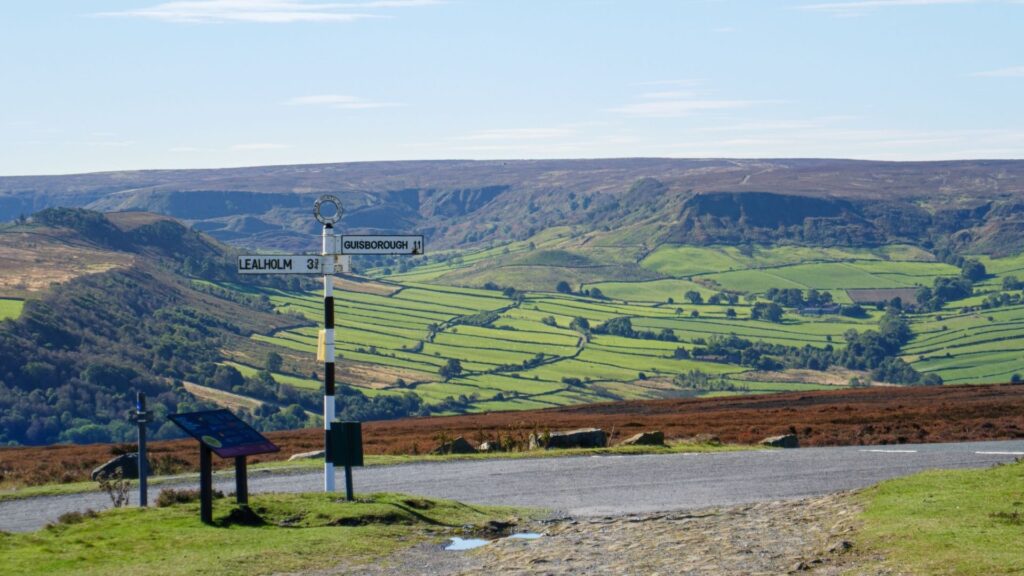
Where to Stay for Hiking in the Yorkshire Dales
Choosing the right base can make a big difference in the Yorkshire Dales, especially if you’re relying on public transport or want several walks to begin close to your accommodation.
The best option depends on whether you want famous landmarks, waterfalls, the Three Peaks, quieter countryside, or easy access to several different dales.
Grassington
Grassington is one of the best all-round bases in the Yorkshire Dales.
There is a good choice of accommodation, pubs, cafés, and shops, while walking routes begin directly from or close to the village.
Its position in Wharfedale also makes it a strong choice for travellers who want classic Dales scenery without building the whole trip around tougher mountain routes.
Hawes
Hawes sits in the heart of Wensleydale and works particularly well for walkers interested in waterfalls, valley scenery, and traditional village life.
Aysgarth Falls, Hardraw Force, and other Wensleydale highlights are within the wider area, while the town itself has enough facilities to work well for a multi-day stay.
It is also a good choice for travellers who want their hiking mixed with some of the Dales’ best-known food and cultural stops.
“Choose your base well and the Dales become much easier to explore, with some of the best walks beginning almost straight from the village door.”
Ingleton
Ingleton is the obvious choice if the Waterfalls Trail or Yorkshire Three Peaks are major priorities.
Its location gives you relatively easy access towards Whernside and Ingleborough as well as several well-known walking routes around the western Dales.
For hikers planning more demanding days, it is one of the most practical bases in the region.
Reeth
Reeth is a strong option for walkers looking for a quieter stay.
Sitting in Swaledale, it gives you access to open countryside, traditional stone villages, and routes that generally feel less crowded than the biggest visitor areas around Malham or the Three Peaks.
It suits travellers who prefer peaceful walking and slower village evenings.
Kettlewell
Kettlewell is another good choice for a quieter walking holiday.
Its location in Wharfedale gives you direct access to valley routes and surrounding hills, while the village retains the small-scale atmosphere many travellers associate with the Yorkshire Dales.
It works particularly well if you want to walk directly from your accommodation rather than drive to a new trailhead every morning.
Skipton
Skipton sits outside the heart of the national park but can be a useful base if transport and services matter more than staying in a tiny village.
It has better rail and bus connections, more shops and accommodation, and straightforward access towards the southern Dales.
For travellers visiting without a car, that practicality can outweigh the appeal of staying somewhere more rural.
For most first-time visitors, Grassington is one of the strongest all-round bases, while Hawes suits Wensleydale, Ingleton works well for the Three Peaks, and Reeth is a better choice for quieter walking.
Beyond the Trails
The Yorkshire Dales aren’t only about collecting summits and trail mileage.
The villages, historic sites, local food, rail journeys, and slower days between hikes are part of what makes a longer stay worthwhile.
Food and Local Specialities
Hawes is closely associated with Wensleydale cheese, while traditional pubs and cafés throughout the region provide easy stopping points during or after a walk.
Yorkshire pudding and other hearty local dishes fit naturally into a destination where long days outside tend to build an appetite.
History and Heritage
Bolton Abbey, Fountains Abbey, Richmond Castle, and the region’s stone villages add plenty of historical interest to a walking trip.
Even when you are not following a formal trail, exploring these places on foot keeps the wider trip closely connected to the landscape.
Quieter Corners
If you want to avoid crowds, explore Swaledale’s wildflower meadows or quieter sections of Wharfedale.
The waterfalls around West Burton receive less attention than the biggest landmarks, while the Dales Way passes through plenty of less-trodden countryside.
These areas are useful reminders that you don’t need to visit only the famous names to experience the character of the Dales.
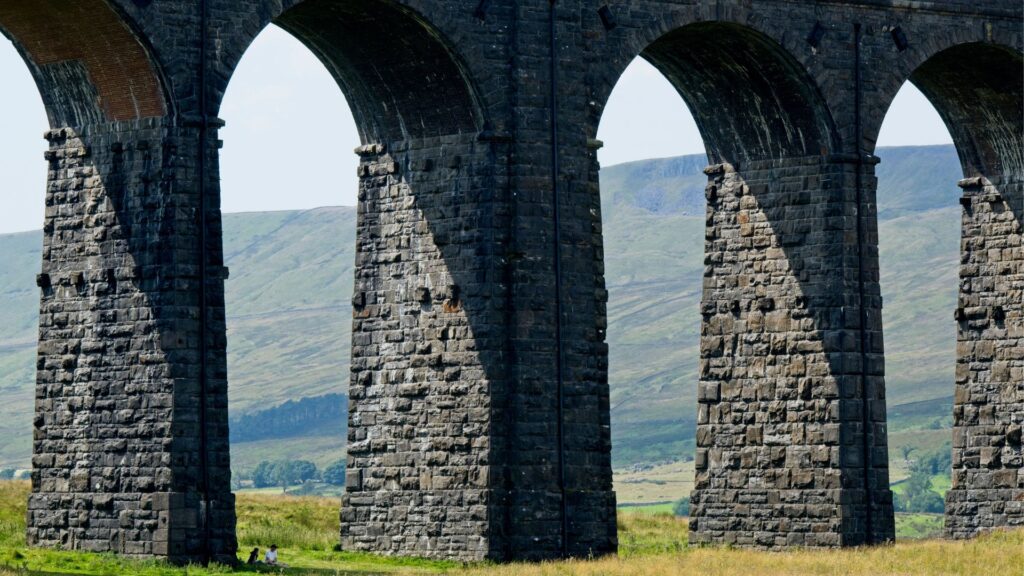
FAQs About Hiking in the Yorkshire Dales
What is the most beautiful waterfall in the Yorkshire Dales?
Aysgarth Falls is the best known, while Hardraw Force is one of the more dramatic waterfall settings in the region.
Which is the best Yorkshire Dale?
Different dales suit different trips.
Wensleydale is particularly well known for waterfalls, while Swaledale appeals to walkers looking for quieter landscapes and traditional countryside.
Where is the best place to walk in the Yorkshire Dales?
Malham Cove and Gordale Scar are among the best-known options because they combine dramatic limestone scenery within a relatively compact area.
The best location ultimately depends on whether you prefer waterfalls, villages, valleys, or higher summit walking.
What is the most scenic place in the Yorkshire Dales?
The limestone pavement above Malham Cove is difficult to beat for sheer drama, although areas such as Swaledale and the Three Peaks offer very different types of scenery.
Can you walk anywhere in the Yorkshire Dales?
No.
Walkers have extensive access through public rights of way and some areas of access land, but that does not mean every piece of farmland or private land is open for unrestricted walking.
Follow signed routes, access rules, and the Countryside Code.
Can you visit the Yorkshire Dales without a car?
Yes, although a car gives you more flexibility.
Buses serve a number of villages and attractions, while the Settle–Carlisle railway provides useful access through parts of the region.
Choosing a well-connected base such as Skipton, Ingleton, or Grassington can make a car-free trip considerably easier.
How many days do you need in the Yorkshire Dales?
Three days is enough for a first taste of the region and a few different walks.
Four or five days gives you more flexibility to combine areas such as Malham, Wensleydale, Wharfedale, or the Three Peaks without rushing.
A week or longer makes more sense for an inn-to-inn trip, a long-distance trail, or a slower walking holiday spread across several dales.
Why the Dales Stay With You
The Yorkshire Dales aren’t just about hiking.
They’re about immersion in a landscape that feels timeless.
For those of you who enjoy walks that balance beauty and history with a little bit of warmth, this is the place.
Every dale has its own character, every village its own welcome, and every trail its own reward.
Where to Next?
Planning more walking around Yorkshire and England? These guides will help:
- Best Hikes in the Yorkshire Dales – Explore the individual routes, distances, difficulty, highlights, and practical trail information.
- Best Hikes in England – Discover standout mountain, coastal, countryside, and national-park routes around the country.
- Walking Holiday in England – Plan a longer walking trip combining villages, countryside, national parks, and long-distance trails.
- Best Walks in Yorkshire – Explore more walking opportunities across the wider county.
- Best Circular Walks in Yorkshire – Find routes that return to the same starting point.
- Yorkshire Three Peaks – Plan for one of the region’s best-known mountain challenges.