The Tour du Mont Blanc is by far one of the most well-known and iconic multi-day hikes that people come from all around the world to take on. The route loops around the Mont Blanc massif (a compact group of mountains) and covers around 170 kilometers, passing through France, Italy, and Switzerland.
This trail is defined by grand, sweeping mountain vistas that make up the world-renowned Alps. There are very few hikes around the globe that can compare to the Tour du Mont Blanc, and once you see the trail itself, it’s easy to know why.
This makes the Tour itself a highly popular route for every hiker around the world. While it can get busy at times, you’ll still find the peace and quiet of small charming villages, remote refuges, and empty mountain landscapes.
- A Brief Overview of the Tour du Mont Blanc
- The Need-to-Know for Hiking the Tour du Mont Blanc
- Making Your Itinerary for Hiking the Tour du Mont Blanc
- Tour du Mont Blanc: 11-Day Refuge Itinerary
- Choosing a Guide for Hiking the Tour du Mont Blanc
- What to Pack to Hike Tour du Mont Blanc
- When to Hike Tour du Mont Blanc
- Getting to Tour du Mont Blanc
- Where to Stay Along Tour du Mont Blanc
- FAQ
- Making Tour du Mont Blanc Your Next Big Trip
A Brief Overview of the Tour du Mont Blanc
Many hikers use Chamonix, France as the start and end point for their 170-kilometer trek on the Tour du Mont Blanc. For most, it takes around 10 days to hike the trail as it is considered quite challenging with a significant level of daily elevation gain and loss.
While challenging, many beginner hikers can still take on this trail with a strong will and high level of determination. The accommodations scattered along the trail and easy-to-find logistical support make this easily accessible for almost anyone with the right level of fitness. These hiking routes in France highlight the variety and beauty that make the country a top destination for outdoor enthusiasts.
There are several different ways to hike the Tour du Mont Blanc, and some adjustments need to be made when you’re choosing how to hike. For example, if you are taking a dog along with you, you will need to camp along the way. If you are hiking along, you can stay in the refuges. If you want to create more of a backpacking experience, your route may look different.
The trail can be made into a unique experience for you, depending on how you want to hike it. The most important thing is to understand the regulations for hiking in the Alps, as the level of protection and enforcement can be quite high in certain areas.
In this guide, we’ll hit on all of the different options for itineraries, as well as the other necessary information to get you ready to head out on one of the best long-distance walks in France and all of Europe.
The Need-to-Know for Hiking the Tour du Mont Blanc
Overall Difficulty
The Tour du Mont Blanc is a physically demanding but non-technical trek, making it an overall challenging route that is still accessible to those without a high level of backpacking experience.
On a daily basis, you can expect to climb around 1,200 meters on average. Some days, such as those when you cross major passes such as Col du Bonhomme or Grand Col Ferret, you may see those numbers rise, and feel the accommodating burn in your legs. On the other hand, you will have days hiking through valleys and villages where you may not have to climb nearly as much.
Over the 170 kilometers, you’ll experience an elevation gain and loss of around 10,000 meters. While this is about the equivalent of hiking to the peak of Everest from sea level, it’s spread out over multiple days.
The Tour du Mont Blanc is non-technical, but it demands consistent daily climbing and long hours on your feet.
Trail Markers on the Tour du Mont Blanc
Since this is one of the best walks in Europe, it’s extremely well marked and easy to follow without much experience in navigation. There is a combination of painted blazes, signposts, and rock cairns to indicate which way you should be walking. Depending on the time of year you hike it, you’ll often run into other hikers and be able to navigate together with ease.
In France, the trail is marked with red and white stripes while Switzerland often uses yellow diamonds, and Italy has various markers. While it switches up often, the trail is still easy to follow.
It’s still recommended that you carry a paper map or use a GPS for navigation in the areas where the trail may be more challenging to follow. This often acts as a great baseline rule for hiking any long-distance trail in Europe or the rest of the world.

Terrain of the Mont Blanc Massif
The terrain along the Tour du Mont Blanc will be a mix of rocky trails, alpine meadows, forested paths, and snowfields in the early season.
The trails will take you up steep mountain passes on the daily, but also have a rewarding descent waiting for you on the other side. These steep climbs and descents can be slightly technical, but it’s nothing that a beginner can’t accomplish with a bit of preparation.
Wildlife on the Tour du Mont Blanc
One of the things that makes the Tour du Mont Blanc classified as the best hiking in Europe is that there are almost no animals that you need to worry about while walking.
Common wildlife that you’ll likely encounter on the trail includes ibex, marmots, red deer, chamois (a goat-antelope species), mountain hares, and various birds of prey. Throughout the alpine pastures, you’ll often find cattle and sheep grazing and bringing the famous sound of cowbells echoing around the valleys.
“Every hiker starts somewhere — grab your free Hiking for Beginners guide.”
Making Your Itinerary for Hiking the Tour du Mont Blanc
There are a countless number of ways to hike the Tour du Mont Blanc. People hike it with fully-loaded backpacks, with their dogs, with their babies, with an ultralight pack and an effort to break a speed record, or just with a moderate backpack to hike at a decent pace.
That’s what’s so great about it. You can make this trip your own.
The classic way to hike the loop is an 11-day trek, for which we’ve included a suggested itinerary below. But, that definitely doesn’t mean you need to hike the trail this way. You can go out at a faster pace by skipping the less scenic sections with public transport and cut it down to 7 days, or you can hike it segment by segment over the next decade.
There’s no single “right” way to hike the Tour du Mont Blanc — itineraries can be shortened, extended, or adapted to suit your pace.
Many outfitters offer supported trips that range from 6-12 days in length, making this another great option for those who may want a bit more support.
Like we said, we’ve included an 11-day itinerary for those looking to take on the trail in a classic manner. Remember, this is only a suggestion, and you can make this hike your own in a lot of different ways.
Tour du Mont Blanc: 11-Day Refuge Itinerary
The following itinerary reflects a classic, refuge-based approach suitable for first-time hikers tackling the full circuit.
| 11-Day Tour du Mont Blanc Route Overview | ||
| Section | Average Walking Time | Distance |
| Day One: Les Houches – Les Contamines | 6 hours | 18 kilometers |
| Day Two: Les Contamines – Refuge de la Croix du Bonhomme | 6-7 hours | 14 kilometers |
| Day Three: Refuge de la Croix du Bonhomme – Les Chapieux | 2-3 hours | 6 kilometers |
| Day Four: Les Chapieux – Rifugio Elisabetta | 6 hours | 15 kilometers |
| Day Five: Rifugio Elisabetta – Courmayeur | 6-7 hours | 18 kilometers |
| Day Six: Courmayeur – Rifugio Bertone | 2-3 hours | 5 kilometers |
| Day Seven: Rifugio Bertone – La Fouly (via Rifugio Bonatti) | 7-8 hours | 20 kilometers |
| Day Eight: La Fouly – Champex-Lac | 5 hours | 15 kilometers |
| Day Nine: Champex-Lac – Trient | 7 hours | 17 kilometers |
| Day Ten: Trient – Argentière | 6 hours | 13 kilometers |
| Day Eleven: Argentière – Les Houches (via La Flégère) | 7 hours | 18 kilometers |
Day One: Les Houches to Les Contamines
A scenic opening day that eases you into the Tour du Mont Blanc with forest paths, alpine pastures, and your first sweeping views of the Chamonix Valley.
Average time: 6 hours
Distance: 18 km
Altitude Loss/Gain: -900m / +700m
The alpine village of Les Houches sits nearby Chamonix and acts as the start and end point for the majority of people hiking the Tour du Mont Blanc. This small but charming village is an idyllic place to spend the night before you head out on the trail and is easily accessible from its larger neighbor Chamonix.
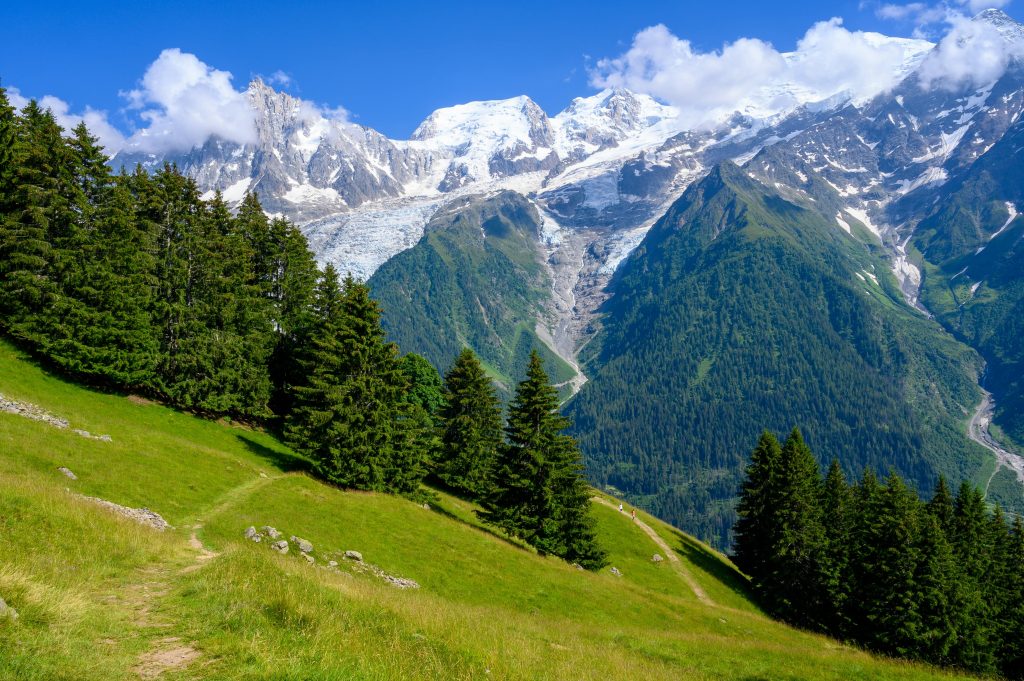
The initial climb takes you out of the village through lush forests and pastures to pass through the Col de Voza, an easy mountain pass at 1,653 meters. Here, you’ll take in sweeping scenic vistas over the Chamonix Valley and Mont Blanc where you’ll see a lot of the terrain you’re about to hike.
The trail moves on to pass through the hamlet of Bionnassay, home to a giant suspension bridge traversing a glacial river. From here, you descend into Les Contamines, a small town known for the 18th-century Baroque church, Notre Dame de la Gorge.
End your day with a comfortable night at a hotel in town, stay in the Refuge Nant Borrant a bit further up the trail, or opt for camping at Camping Le Pontet.
Day Two: Les Contamines to Refuge de la Croix du Bonhomme
A demanding climb day that introduces the physical challenge of the Tour, rewarded with dramatic high-pass scenery and a classic alpine refuge stay.
Average time: 6-7 hours
Distance: 14 km
Altitude Loss/Gain: -100m / +1,300m
Today, the path follows an ancient Roman road toward the Notre Dame de la Gorge church in Les Contamines before starting a day filled with climbing.
Rocky switchbacks lead you up toward Col du Bonhomme at 2,329 meters. Here is a historic trading and herding route connecting the two valleys, but your climbing isn’t yet over. After imagining what it might be like to have ferried supplies through at this high altitude, you’ll climb another 150 meters to get to Col de la Croix du Bonhomme.
This wild pass is surrounded by rugged mountains and is home to a refuge, the best option to stay for the night. Camping is allowed nearby, so long as you set up after 7 PM and are out by 9 AM the next day. Regardless of where you sleep, the sunsets that pass through the surrounding peaks are unlike any you’ve seen before.
“Turn your dream trek into a plan — get your free Plan Your Own European Walking Holiday ebook ”
Day Three: Refuge de la Croix du Bonhomme to Les Chapieux
A short, recovery-friendly stage with gentle descents into a remote pastoral valley, perfect for resting tired legs.
Average time: 2-3 hours
Distance: 6 km
Altitude Loss/Gain: -450m / +50m
After a long day of intense climbing, the Tour du Mont Blanc gives you a slight rest today with some gentle downhill and a short way to go. If you’re a beginner hiker, this is a great day for your legs to recover and heal up for the climbing that’s still ahead of you.
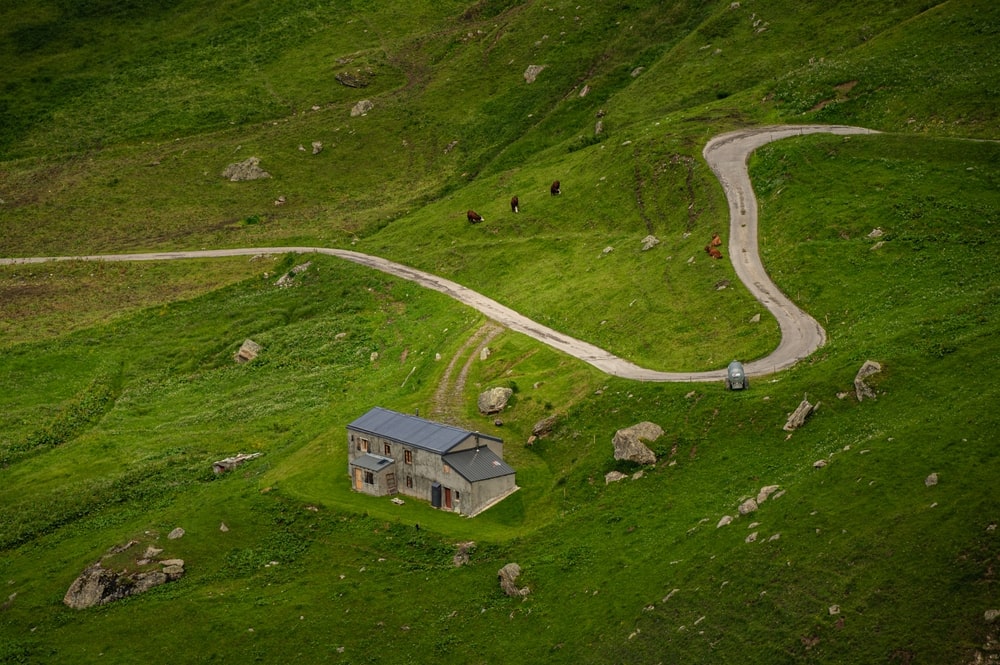
From the refuge, you drop down into the remote hamlet of Les Chapieux. This village is known as a historic grazing area for sheep and cows, and provides a lot of the cowbell sounds that you’ll hear along the hike.
In the village you can sample local cheeses and simply enjoy a day of rest and recovery to prepare for tomorrow. There are a few options for the night where you can stay at a small inn called Auberge de la Nova, or opt for camping nearby (just ask the locals about where is appropriate).
Day Four: Les Chapieux to Rifugio Elisabetta (Italy)
A historic border-crossing day that delivers expansive views of Mont Blanc’s southern face and a dramatic descent into Italy’s Val Veny.
Average time: 6 hours
Distance: 15 km
Altitude Loss/Gain: -100m / +900m
The fourth day of the trek takes you across country borders for the first time on the trip. With your backpacks and bellies weighed down with local cheese, you hike out of Les Chapieux and begin to climb the Col de la Seigne, the border between France and Italy.
This broad saddle has been used for centuries to bring shepherds, soldiers, and goods of all sorts across the border. Try to imagine the immense number of people moving through this area before it was an option to hop in the car and drive for a few short hours.
At the top of the pass you can take in views of Mont Blanc’s southern face before descending into the Val Veny, a dramatic valley sculpted by glaciers thousands of years ago.
Right beneath the Glacier de la Lex Blanche, you’ll find Rifugio Elisabetta. This is a great spot to sleep for the night, or ask for permission to potentially camp nearby.
Many hikers find the middle section of the Tour the most physically demanding, even though the scenery continues to improve.
Day Five: Rifugio Elisabetta to Courmayeur
One of the most visually striking days of the trek, featuring balcony trails, glaciers, wildflower meadows, and a lively alpine town finish.
Average time: 6-7 hours
Distance: 18 km
Altitude Loss/Gain: -1,000m / +400m
Your fifth day of hiking starts off following the famous Val Veny balcony trail, which is debatably one of the most visually stunning sections of the entire trek. You have continuous views of icefalls and sheer mountain faces on the Mont Blanc massif while you descend slowly through forests and wildflower meadows.
At the bottom of the trail you’ll drop into the town of Courmayeur, one that’s full of life. This small town is well known for its cobblestone streets and rich alpine history, not to mention the excellent espresso they have all around.
There are plenty of hotels to choose from in this alpine hub, as well as Camping Grande Jorasses, a spot just 5 kilometers outside of town where you can pitch a tent for the night.
Day Six: Courmayeur to Rifugio Bertone
A short but steep climb that offers panoramic views over Val Ferret and a well-timed opportunity for rest before longer stages ahead.
Average time: 2-3 hours
Distance: 5 km
Altitude Loss/Gain: -100m / +800m
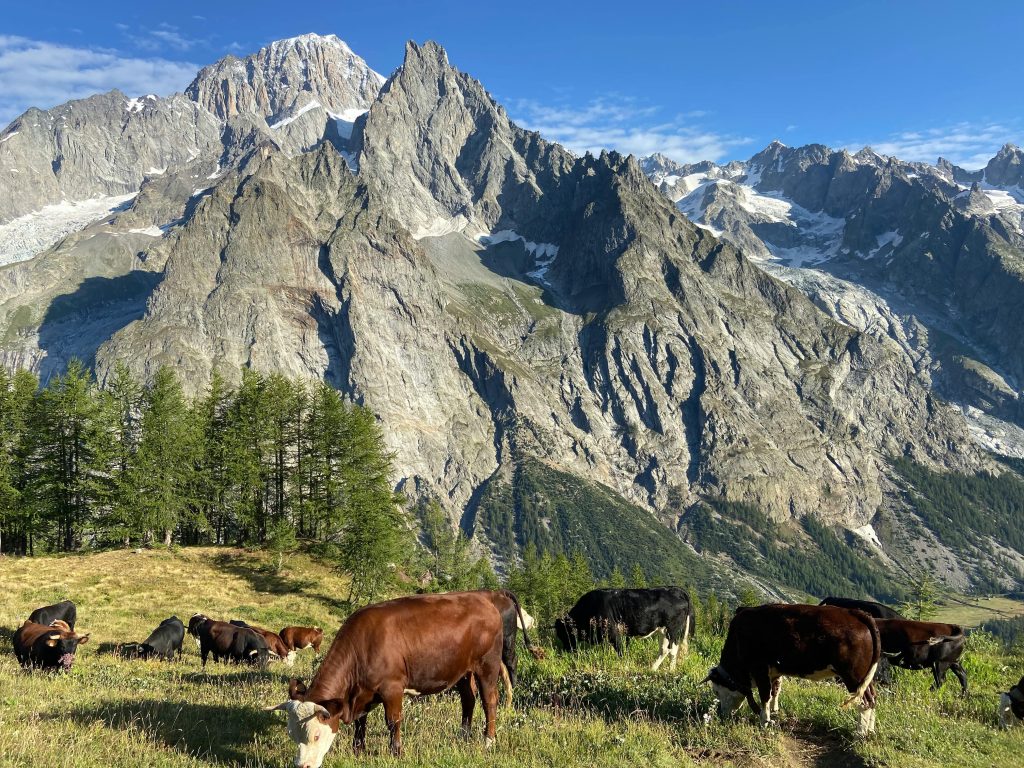
Hiking out of Courmayeur may not be a long hike, but it is quite steep. The trail heads through larch forests toward Rifugio Bertone where you get stunning panoramic views of the Val Ferret and the immense peaks of the Grandes Jorasses.
At just over halfway through the hike, this is another great day to try and get some rest. The rest of the hike is full of longer days with a lot of up and down to be done, so give your legs the break they deserve before heading on!
Rifugio Bertone is a great spot to rest up for the night. If you’re planning on camping, there are some unofficial spots nearby and it’s best to ask at the refuge what is appropriate.
Day Seven: Rifugio Bertone to La Fouly (Switzerland)
A long, high-alpine day packed with classic scenery, glacier views, and a major border crossing into Switzerland.
Average time: 7-8 hours
Distance: 20 km
Altitude Loss/Gain: -1,100m / +900m
Today is long, with a fair amount of up and down, but the scenic views that come along with it are considered some of the best on the hike.
A classic high alpine balcony trail passes the Rifugio Bonatti with massive glaciers sitting high above along the cliffs. From here, you’ll climb to Grand Col Ferret at 2,537 meters, which is where you cross over into Switzerland. This is a high pass that offers some incredibly extensive views to see Mont Dolent, the meeting point of France, Italy, and Switzerland.
From here, you’ll descend into La Fouly, a small Swiss village nestled in a peaceful valley. There are a few accommodation options such as Hotel Edelweiss, a small but cozy hotel, or you can camp at Camping des Glaciers, a clean and beautiful riverside campsite.
Day Eight: La Fouly to Champex-Lac
A gentler stage through traditional Swiss villages and countryside, offering a welcome physical and mental reset.
Average time: 5 hours
Distance: 15 km
Altitude Loss/Gain: -600m / +400m
The journey from La Fouly to Champex-Lac is a gentle one with only some slight incline and decline, which will be a welcome respite after the previous hike.
The Swiss countryside welcomes you here with wooden chalets, grazing cows, and ancient alpine villages like Praz-de-Fort and Issert. This is a great day to soak up all of the beautiful and quaint scenery in the Swiss Alps while also letting your legs rest and prepare for the next few days.
The day ends at Champex-Lac, a small lake village nicknamed “Little Canada” for its striking resemblance to the serene pine forests and clear lake that you can find back across the Atlantic. This is a wonderful spot to relax and sleep for the night.
Camping Les Rocailles is the spot for those pitching a tent, and there are several hotel accommodations in town for those looking for a bed for the night.
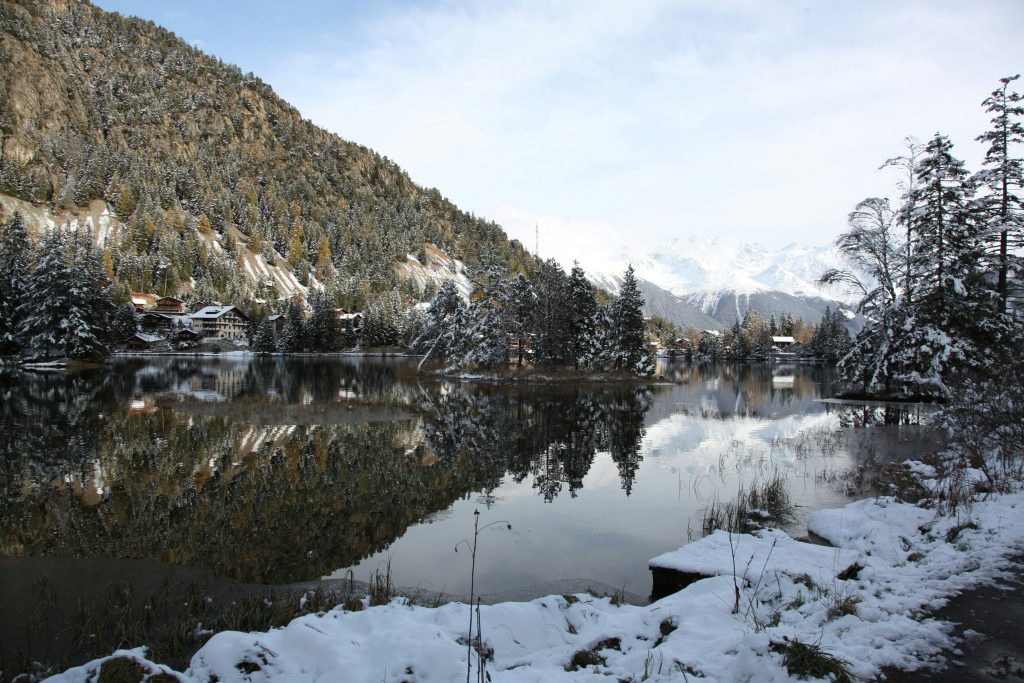
Day Nine: Champex-Lac to Trient
A challenging and varied day with a classic pasture route or a demanding alpine alternative for experienced hikers seeking wilder terrain.
Average time: 7 hours
Distance: 17 km
Altitude Loss/Gain: -950m / +750m
From Champex-Lac there is a steady climb through the forest up to the Bovine Route, a classic alpine trail that takes you through rich pastures that were once used for cattle herding.
There is an alternate route that many experienced hikers take on this secession which heads up the challenging Fenêtre d’Arpette, a narrow rocky path between glaciers. While this is a great way to see more wild and remote scenery, it is also quite challenging as the path heads up to 2,665 meters and certainly adds some climbing to your day.
Trient marks the end of this day with a vibrant pink church as a well-known marker for hikers to know that their day is coming to a close. Here you can find camping at Camping du Peuty, or stay in Auberge du Mont Blanc, a hostel with hearty meals to reward yourself after a long day of hiking.
Day Ten: Trient to Argentière
A historic mountain crossing back into France with expansive valley views and a descent into a charming alpine village.
Average time: 6 hours
Distance: 13 km
Altitude Loss/Gain: -700m / +900m
Today’s route takes you back across the border into France via the historic Col de Balme. This pass sits at 2,191 meters and has been used by traders and smugglers for centuries between the two countries. Today, you’ll find exceptional views over the full expanse of the Chamonix Valley and Mont Blanc’s majestic presence.
After a relatively large climb, you’ll descend into Argentière, a charming village that has a rich history of mountaineering that’s still widely visible today.
Here is the popular Camping du Glacier d’Argentière where you can easily set up your tent for the night, or you can head into the village and choose the more historic Hotel de la Couronne for a different experience.
Day Eleven: Argentière to Les Houches (via La Flégère)
A spectacular finale featuring iconic balcony trails, turquoise alpine lakes, and unforgettable close-up views of Mont Blanc.
Average time: 7 hours
Distance: 18 km
Altitude Loss/Gain: -1,200m / +800m
The final day on the Tour is a spectacular one that will work your already exhausted legs to a point where you’ll be ready to sleep for a few days once you’ve finished.
The day starts with an ascent to Lac Blanc, an iconic turquoise blue lake with a backdrop of snow capped peaks. This lake is a short detour, but one that’s well worth the quick journey off the main trail.
From here, you’ll continue along the La Flégère balcony trail, a route that gives you nonstop close-up views of Mont Blanc, Aiguille du Midi, and the Mer de Glace glacier. There’s no better way to wrap up a long chunk of hiking than to surround yourself with views that will create a lasting impression.
The trail descends from here to Les Houches. While the majority of the climbing is over, the descent will still put a lot of strain on your knees and quads, so take your time and know that the beautiful village waits for your grand return!
Choosing a Guide for Hiking the Tour du Mont Blanc
Guided tours can be a great option for any beginners that aren’t experienced handling the logistics of a larger trip like the Tour du Mont Blanc. Guiding companies will help shuttle luggage, plan your itinerary, but also give peace of mind with extra safety and navigation assistance along the way.
On the Tour du Mont Blanc you can find anything from luxury guided tours to a more rustic group experience, so if you’re looking to hire a guide for the trek, there’s something out there to fit your style.
What to Pack to Hike Tour du Mont Blanc
Packing for the Tour du Mont Blanc is pretty similar to a lot of packing lists for other long-distance treks in Europe. With the ease of access to villages and supplies along the route, you often don’t need to carry nearly as much as you would on a more remote trek.
This list is not complete, but we felt it necessary to hit on these main packing essentials to help you be prepared for anything, especially the parts of the Tour that make it stand out amongst other long-distance treks.
🗒️ Free Checklist: “Pack light, pack right — download The Ultimate Hiking Packing List.”
Hiking shoes
A solid pair of hiking shoes will be your best and most important companion along the trail. With the varying terrain and intense climbs and descents, having a pair of hiking shoes or boots that you’re comfortable in is the key to a good hiking experience.
The debate between sturdy hiking boots and trail runners is common amongst hikers nowadays, but it truly comes down to you knowing what works best for your feet and ankles.
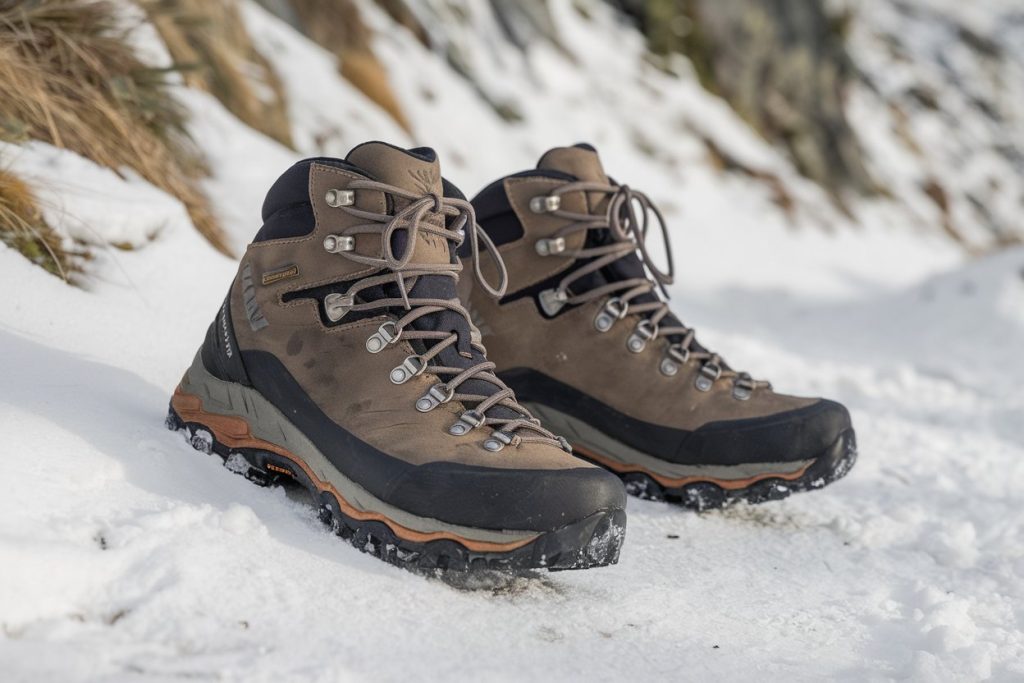
The Tour du Mont Blanc has a lot of rocky paths that can be dangerous for those susceptible to a rolled ankle, which makes hiking boots with good ankle support a great choice. But the Tour also has a lot of pasture walking and uphill that can make having a lightweight, breathable trail runner be the better option for some.
What’s the most important is making sure your shoes fit well and have been broken in. Preventing serious blistering of any kind is what we’re hoping for by breaking in our shoes before hitting the trail, which will save you days of misery while out there.
Trekking poles
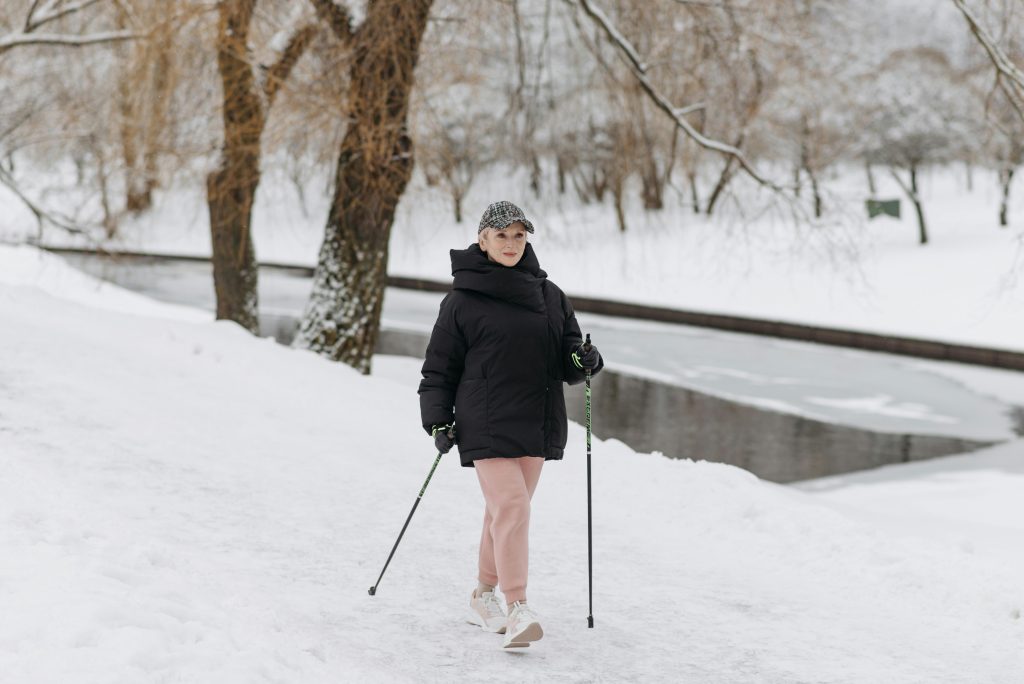
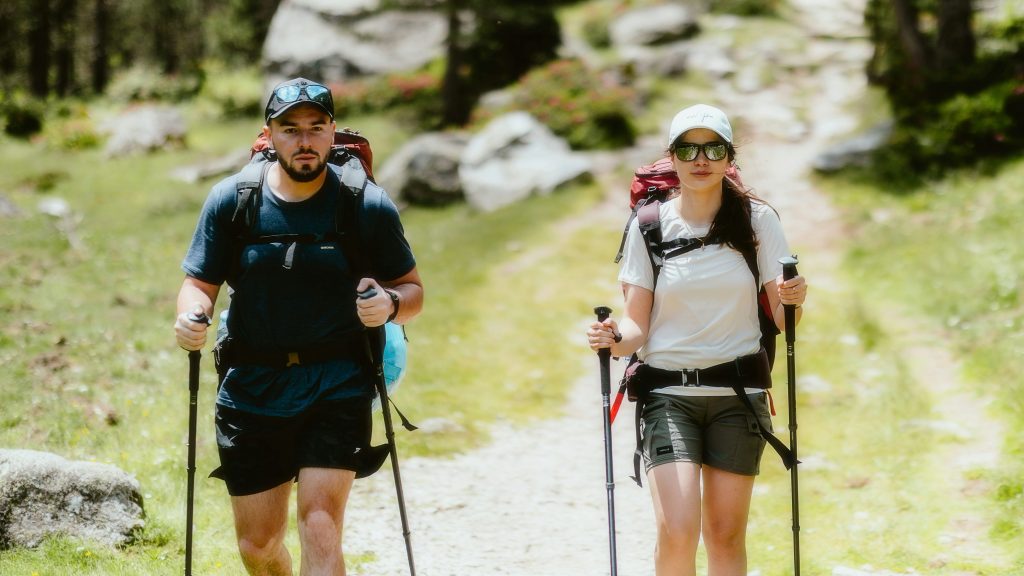
The extreme elevation gain and loss of the Tour du Mont Blanc make trekking poles a great addition to your gear. Trekking poles can help you support yourself over long distances, especially when climbing upwards or heading downhill.
For anyone who’s ever had a slight knee issue, you might know that trekking poles are a lifesaver. They help provide better balance and can take some of the pressure off your legs over a long descent.
Layers
In the Alps, there are often rapid weather changes that you barely see coming. So even though you may be sleeping at a hotel each night, it’s best to carry extra layers for the moments when the weather turns.
A fleece or wool midweight layer along with a lightweight jacket is often enough to keep you warm when the storms hit, as well as an extra pair of socks for the times that you get caught in a rainstorm and end up with soaked feet.
Waterproof layers
Summer storms in the mountains are common, and it’s important to be prepared for them so you don’t end up wet in the mountains without much to do about it. A quality set of Gore Tex rain gear can help you stay dry while also keeping everything breathable for the warm summer days that still threaten rain.
This is one of those items of gear that can often be worth splurging a little bit on because it can make such a big difference for your comfort as well as safety in the mountains. Getting wet isn’t an option when you’re hiking in alpine environments, so it’s best to keep dry.
Weather conditions can change rapidly in the Alps, even in summer — flexibility and preparation matter more than speed.
Backpack
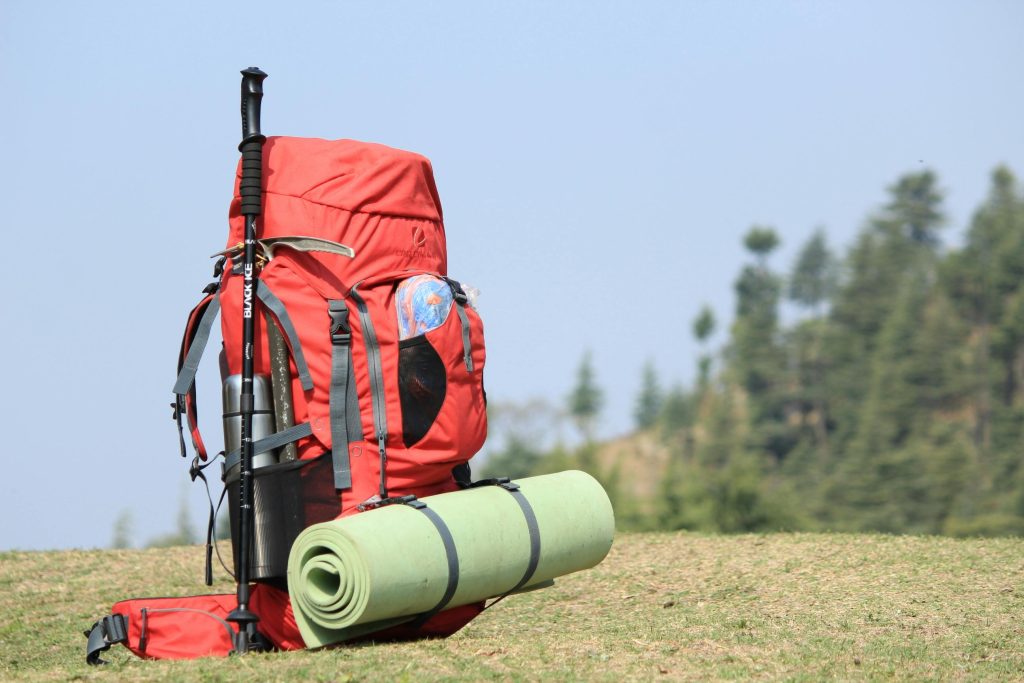
On most long-distance hikes, you need a huge 50-60 liter backpack to carry all of your clothes, food, shelter, and hydration. On the Tour du Mont Blanc, you’re relying more on the refuges and villages to provide you with both food and accommodation, which makes it possible to carry a smaller backpack that will hold only what you need for the daytime hiking.
For anyone that’s staying under a roof each night, a 30-liter backpack should be more than enough to fit your extra layers, snacks for the day, and whatever hydration system you go with. If you’re getting your gear shuttled from village to village, you may be able to get by with a smaller pack, but that’s up to your own personal preference.
Hydration system
Hiking in higher elevations can be deceiving for a lot of people who don’t do it often. The altitude can make it colder, which makes you less likely to feel thirsty, but the altitude will also dehydrate you faster. That’s why it’s incredibly important to bring a solid hydration system along on the Tour.
Carrying around two liters of water at a time should be more than enough as you will pass several water sources almost every day. It’s best to carry a water treatment system as well, either a small squeeze filter or chlorine drops to make sure the water you get while on the trail isn’t going to make you sick. In an environment with so many grazing animals, it’s best to not drink straight from the streams.
Sun protection
The sun can get intense high in the mountains, so you’ll want to take care in order to not get sunburnt and make the rest of your hike incredibly miserable.
Bring a solid sun hat, sunscreen, and sunglasses that are polarized to help protect yourself from the sun.
While hiking in a t-shirt is often more comfortable, many people will choose a lightweight long sleeve shirt that provides sun protection without too much more warmth for the hot sunny days.
Food
Food is something that’s readily available along most of the Tour du Mont Blanc, but snacks are always a necessary item to carry with you. High calorie and protein rich snacks will help you get through the harder parts of the trail when dinner is still a couple hours of hiking away.
It can also be a good idea to carry some lightweight meals in case you get stuck out on the trail for any reason at all. Food can help you heal up physically, but also gives a huge mental relief to not go through tough times while also hungry.
When to Hike Tour du Mont Blanc
Due to the large amounts of snowpack in the Alps, the window to hike the Tour du Mont Blanc is relatively small. The ideal time is between mid-June and mid-September, although early June and late September are possible, they may bring snow at higher elevations.
July and August are the most popular times for people to come and hike the trail, which can make it quite crowded and more difficult to find accommodation without a lot of advanced preparation. June and September will offer fewer crowds, but more unpredictable weather.
Getting to Tour du Mont Blanc
The best route to get to the Tour du Mont Blanc from wherever you are in the world is to fly into Geneva, Switzerland. From there you can either take a direct shuttle (companies like Alpybus and Mountain Drop-offs are popular), or use public transit to get to Chamonix, France.
Chamonix is the most common start and end point for those hiking the Tour du Mont Blanc, although you could technically start anywhere along the trail. Chamonix is a hub for outdoor adventurers and is a great spot to get any information you may need, as well as meet up with folks you run into on the trail for a celebratory drink or meal at the end.
You can easily get to Les Houches to start the trail via bus or train out of Chamonix. If you want to add an extra 2-3 hours of walking, you can take it on by foot!
Where to Stay Along Tour du Mont Blanc
There are three accommodation styles available to anyone hiking the Tour du Mont Blanc; mountain refuges, hotels/hostels, and designated campsites.
Mountain refuges are simple, dormitory style rooms that usually have a basic meal included in the costs. These are a lot of fun to stay in as you will meet plenty of other hikers to swap stories of the trail with along the way.
Hotels and hostels are available in most villages that you pass through on the hike, but will be the more expensive option out of everything. This can be great for anyone that feels they need a solid rest between each day of hiking so they wake up ready to keep going every morning.
Booking refuges well in advance is essential during peak season, especially in July and August.
Camping is possible, but is restricted in certain areas (especially Switzerland). All that means is that you need to plan in advance in order to know where you’re able to pitch a tent and where you might struggle to find a spot.
For any of these options, hiking in the peak season will require booking in advance. That can mean multiple months ahead of time to ensure that you have a place to sleep, otherwise you may end up needing to hike a lot more in a day just to make it to an available option.
FAQ
How long does it take to hike the Tour du Mont Blanc?
Hiking the Tour du Mont Blanc can take you anywhere from 7-11 days, depending on your pace and experience. Most hikers will plan a ten or eleven day trip to complete the circuit.
Can a beginner do the Tour du Mont Blanc?
The Tour du Mon Blanc is considered a moderately challenging route, but is a non-technical route, making it accessible for beginners. This will require good preparation, solid fitness, and a high level of determination. Beginners are often recommended to hike with a guided tour or plan a longer itinerary to incorporate rest days.
How long does it take to hike up Mont Blanc?
To summit Mont Blanc, one needs a solid level of technical mountaineering experience and actually is not a part of the Tour du Mont Blanc. The Tour is a circuit going around the massif, but never going up. With the right experience and guide, you can summit Mont Blanc in 2-3 days.
How hard is the Tour du Mont Blanc?
The route is considered moderately difficult. There is no technical climbing, but there is a significant amount of daily elevation gain and loss which demands a higher level of fitness as well as mental resilience to complete the trail.
What level of fitness is needed for the Tour du Mont Blanc?
Anyone looking to complete the Tour du Mont Blanc should be able to hike between 6 and 8 hours each day with 600 to 1,000 meters of climbing. The hike is very physically demanding, especially for those trying to hike it with a heavier backpack.
Is Mont Blanc good for beginners?
The Tour du Mont Blanc is an excellent choice for beginners looking for a grand adventure. The hike provides a significant challenge of physical fitness and mental resilience, but is achievable for most beginners that have done the right amount of preparation.
Making Tour du Mont Blanc Your Next Big Trip
For anyone looking for a once-in-a-lifetime trek through majestic alpine scenery, small mountain villages, with rugged mountainous backdrops, the Tour du Mont Blanc is a great option. The trek offers a balance of challenge and beauty with the culture of small, quaint mountain life for anyone looking to take it on.
The adventurous beginner and experienced mountaineer both are able to find something that can challenge them and reward them along the Tour du Mont Blanc, making it a great choice for any outdoor explorer around the world.