
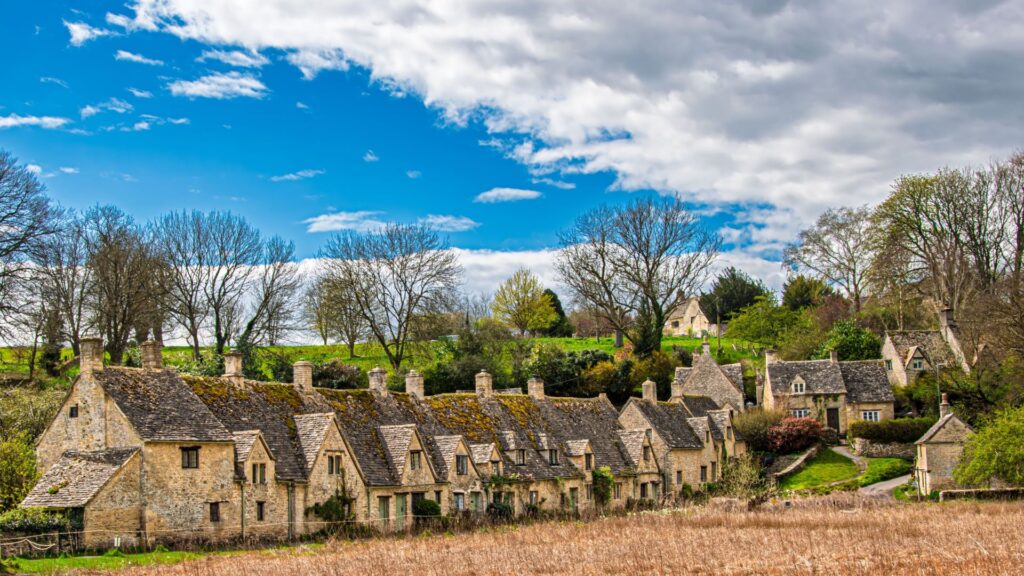
The Cotswolds are the England people dream about.
Think rolling green hills, honey-coloured stone cottages, medieval churches, and market squares where time seems to move slower.
Walking here feels less like exercise and more like stepping into a living postcard!
It also doesn’t matter whether you’re winding your way through sheep-dotted meadows or ducking into a centuries-old village pub after a day on the trails, because the Cotswolds blend comfort with charm in a way few places can match.
For hikers, this area is a treat.
The Cotswolds cover nearly 800 square miles across six counties, with a dense network of trails connecting villages, valleys, and viewpoints.
It’s no wonder the region has become one of the UK’s most popular destinations for walking holidays.
- Cotswolds Hiking at a Glance
- Why Hike in the Cotswolds?
- Best Hiking Areas in the Cotswolds
- Taking a Walking Holiday in the Cotswolds
- Exploring the Cotswolds
- Planning a Hiking Trip to the Cotswolds
- Getting Around the Cotswolds and Trail Access
- Where to Stay for Hiking in the Cotswolds
- Beyond the Trails
- FAQs About Hiking in the Cotswolds
- Hiking in the Cotswolds
- Where to Next?
Cotswolds Hiking at a Glance
- Best for: Village-to-village walking, rolling countryside, gentle hills, historic towns and inn-to-inn trips
- Main hiking areas: Chipping Campden, Broadway, Winchcombe, Bourton-on-the-Water, Stow-on-the-Wold, Painswick and the Cotswold Way
- Best time to visit: Spring and autumn for comfortable walking and fewer crowds
- Car needed: Helpful but not essential for every itinerary
- Getting around: Car, train, local bus and walking between villages
- Suggested stay: 3–5 days for several day hikes; longer for an inn-to-inn walking holiday
- Typical terrain: Rolling farmland, woodland, riverside paths, open hills, village lanes and muddy fields
- Good for beginners: Yes, with plenty of gentle day walks and shorter village routes
- Best-known trail: Cotswold Way
- Best for classic villages: Northern Cotswolds
- Best for quieter walking: Southern Cotswolds and lesser-known villages
- Best for a walking-holiday base: Broadway, Chipping Campden, Bourton-on-the-Water or Winchcombe
- Main challenge: Mud after rain, busy tourist villages in summer and limited public transport between smaller settlements
Looking for individual routes? See our guide to the Best Hikes in the Cotswolds for detailed walks, distances, difficulty, highlights, and trail information.
Why Hike in the Cotswolds?
The Cotswolds are as much about the villages as the trails.
You’re rarely walking towards one dramatic summit or single landmark.
Instead, the pleasure comes from linking stone villages, open fields, woodland, rivers and low hills into a day that constantly changes without ever becoming extreme.
Landscape and Scenery
The Cotswolds may not have towering peaks, but its hills offer plenty of viewpoints.
Cleeve Hill, the highest point in the Cotswolds, looks across Cheltenham and towards the Malvern Hills.
Leckhampton Hill is another local favourite for wide-open views.
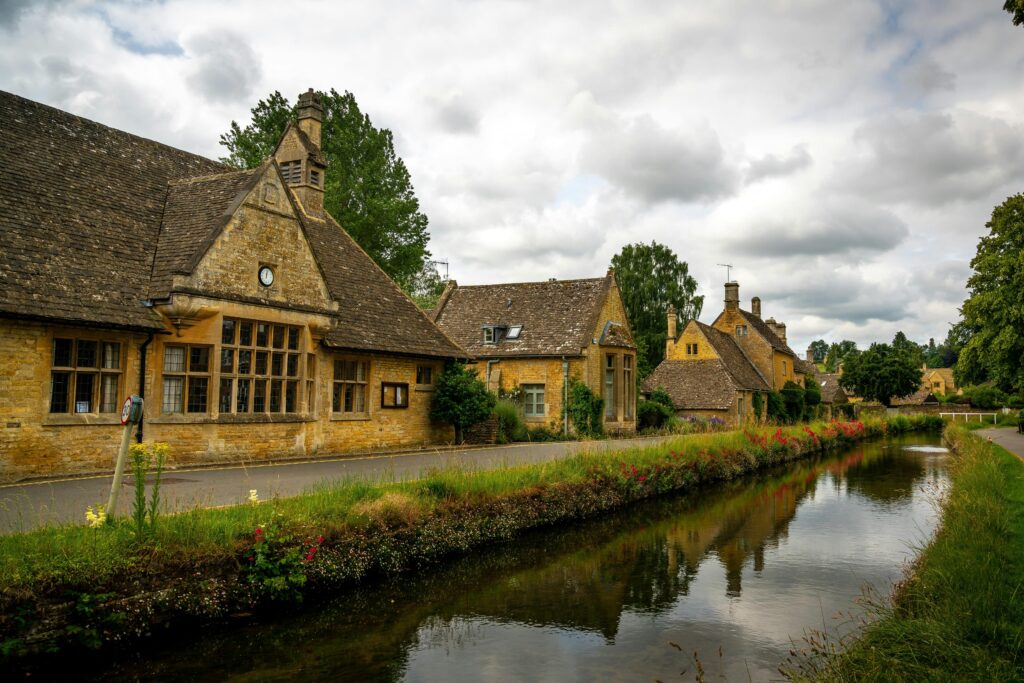
For something gentler, the River Windrush through Bourton-on-the-Water and the village green in Lower Slaughter show off a softer side of the landscape.
Villages, History and Character
Bibury is one of the region’s best-known villages, with Arlington Row providing one of the Cotswolds’ most recognisable scenes.
Bourton-on-the-Water is known for its little stone bridges, while Stow-on-the-Wold reflects the area’s long wool-trading history.
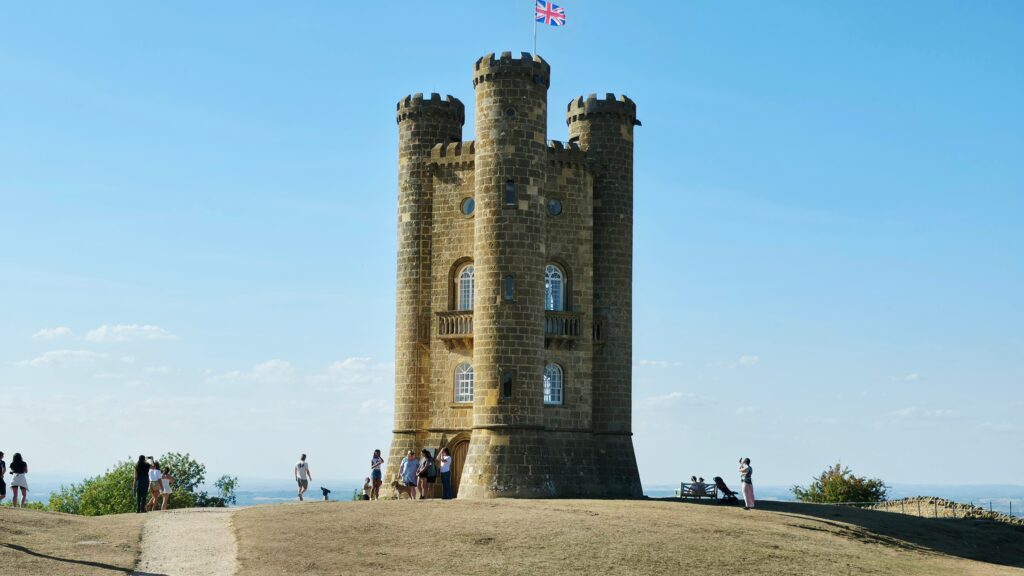
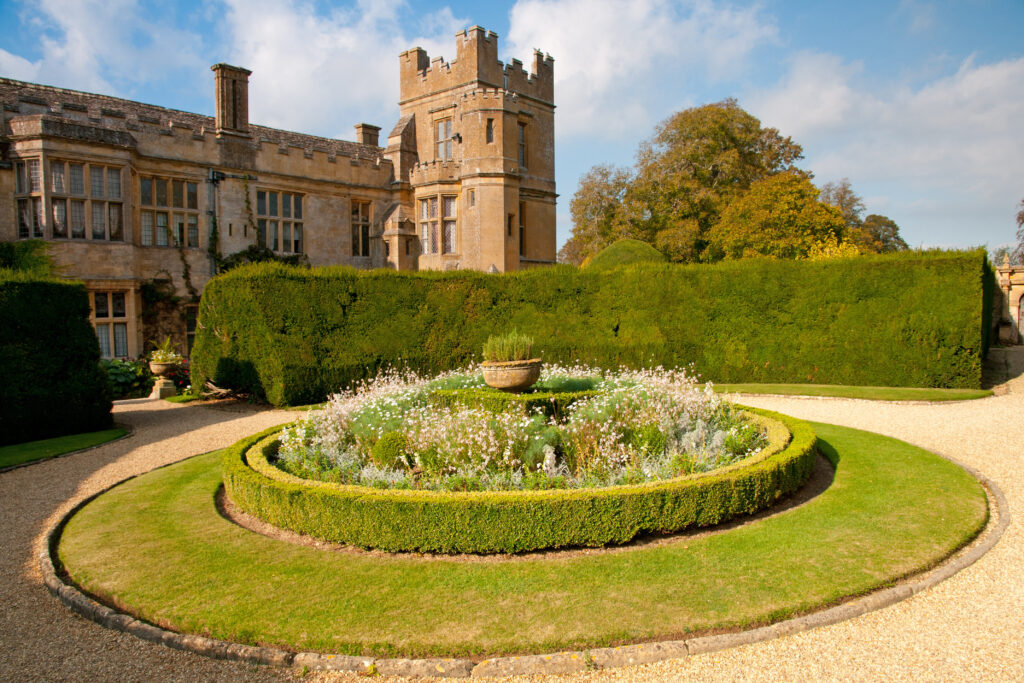
Broadway Tower stands on one of the region’s highest points, while Sudeley Castle near Winchcombe adds history and gardens to the walking experience.
The broader Cotswolds protected landscape is what ties all of this together: even stretches of countryside without a famous landmark can feel distinctly Cotswold.
Best Hiking Areas in the Cotswolds
Different parts of the Cotswolds suit different styles of trip.
The north generally has the best-known villages and easier access to the Cotswold Way, while the south often feels quieter and less heavily visited.
Chipping Campden and Broadway
Chipping Campden and Broadway are two of the strongest bases for the northern Cotswolds.
Both provide straightforward access to the Cotswold Way, village-to-village routes and classic countryside scenery.
Broadway Tower is one of the major landmarks in the area and gives this part of the region one of its most recognisable viewpoints.
Winchcombe and Cleeve Hill
Winchcombe works particularly well for walkers.
It has direct access to multiple trails, sits close to Cleeve Hill and Sudeley Castle, and has long promoted itself as a walking-focused town.
This is a useful area for travellers who want easy access to both countryside and historical stops.
“The Cotswolds aren’t about one huge summit — they’re about linking villages, hills, fields and viewpoints until the whole day feels like one long walk through the countryside.”
Bourton-on-the-Water and the Slaughters
Bourton-on-the-Water is one of the Cotswolds’ busiest villages, but it works well as a base for easier walking.
Nearby Upper and Lower Slaughter are linked by a short riverside route and offer a quieter contrast to Bourton.
This part of the region is particularly good for walkers prioritising villages and gentler countryside rather than bigger hill days.
Stow-on-the-Wold
Stow-on-the-Wold sits conveniently in the central Cotswolds and gives walkers access to several surrounding villages and paths.
Its central location makes it practical for a multi-day base, especially if you want to mix walking with exploring historic market towns.
Painswick and the Southern Cotswolds
Painswick, sometimes called the “Queen of the Cotswolds”, offers beautiful walking with fewer visitors than some of the northern hotspots.
The southern Cotswolds generally feel quieter, making this area useful for walkers who want the same rolling countryside and stone villages without concentrating entirely on the busiest places.
The Cotswold Way
The Cotswold Way is the region’s flagship long-distance trail.
It runs for around 102 miles between Chipping Campden and Bath and is especially well suited to an inn-to-inn walking holiday.
For travellers who want to experience a cross-section of the region rather than stay in one village, it is the obvious backbone for a longer trip.
“Every hiker starts somewhere — grab your free Hiking for Beginners guide.”
Taking a Walking Holiday in the Cotswolds
The Cotswolds are one of the UK’s premier walking-holiday destinations.
Inn-to-inn trips are particularly popular because each day can end in another village, with luggage transfers allowing you to walk with only a daypack.
The Cotswold Way is the obvious long-distance option, but shorter itineraries can link villages without committing to the entire trail.
For those who prefer a fixed base, staying in places such as Broadway, Bourton-on-the-Water, Chipping Campden or Winchcombe and exploring different day hikes also works beautifully.
This flexibility is one of the region’s biggest strengths.
You can organise a relaxed few days of shorter walks or turn the trip into a much longer point-to-point journey.
Forget Alpine huts or Scottish bothies.
The Cotswolds are all about B&Bs, country hotels, pubs with rooms and small inns, which suit the gentler character of the landscape particularly well.
“Turn your dream trek into a plan — get your free Plan Your Own European Walking Holiday ebook ”
Exploring the Cotswolds
Some of the best days here aren’t about chasing distance.
They’re about walking between villages, pausing at viewpoints, exploring old churches or market squares, and letting the route take longer than expected.
Best Viewpoints in the Cotswolds
Broadway Tower delivers broad views across the surrounding countryside.
Cleeve Hill, the highest point in the Cotswolds, overlooks Cheltenham and the Malvern Hills.
Leckhampton Hill is another favourite for wide-open scenery.
For something gentler, the River Windrush through Bourton-on-the-Water or the village green in Lower Slaughter provide some of the region’s most photogenic lowland scenes.
“Some of the best Cotswolds walks are the ones where the trail keeps getting interrupted by a stone village, a viewpoint or somewhere that makes you slow down for a while.”
Villages and Landmarks
Bibury, Broadway, Stow-on-the-Wold, Bourton-on-the-Water and Chipping Campden are among the region’s best-known villages and towns.
Sudeley Castle adds historical interest near Winchcombe, while Blenheim Palace sits just outside the Cotswolds boundary and can work well as part of a wider trip.
Quieter Places to Explore
If you want to avoid the busiest villages, Upper and Lower Slaughter make an easy alternative.
Painswick receives fewer visitors than some northern hotspots, while routes such as the Windrush Way and Diamond Way tend to attract less foot traffic than the Cotswold Way.

Planning a Hiking Trip to the Cotswolds
Best Time to Visit the Cotswolds for Hiking
Spring and autumn are the sweet spots for Cotswolds walks.
In spring, the meadows burst into bloom, lambs appear in the fields, and the villages feel fresh and lively.
Autumn brings crisp air and trees turning shades of copper and gold, which is perfect for rambling through woodlands.
Summer is the busiest season.
Hotspots such as Bourton-on-the-Water and Bibury can become crowded, although long daylight hours make the season suitable for longer walks.
Winter has its own charm, with frost-dusted villages and quieter paths, although trails can become muddy and public transport can be less convenient.
What to Bring
Wear waterproof boots or walking shoes with reliable grip.
Fields and meadows can become muddy, especially after rain.
A waterproof layer is useful throughout the year, along with a small daypack, water, food and an extra layer.
Bring a good map or reliable offline navigation too.
Although many trails are marked, the dense network of public footpaths means it is easy to follow the wrong branch without noticing.
Where to Get Gear and Supplies
Cheltenham and Cirencester are two of the better places to find a wider selection of outdoor equipment.
Smaller villages may only have basic shops for food and water, so stock up before heading out on longer walks.
Local bookshops and outdoor retailers often sell Ordnance Survey maps covering the region.
🗒️ Free Checklist: Planning your next hiking trip?? Download our printable hiking checklist to make sure you don’t miss the essentials.
Trail Etiquette and Conditions
Much of the Cotswolds is working farmland.
Always close gates behind you, keep to public rights of way and respect livestock and private property.
Take time to explore villages rather than rushing through them.
In summer, starting earlier can also help you avoid the busiest periods in popular places.
Getting Around the Cotswolds and Trail Access
Public transport exists, but this is one region where having a car can significantly increase your flexibility.
Public Transport
Trains serve larger towns and gateways such as Moreton-in-Marsh and Cheltenham.
Local buses connect some villages, although services can be limited and may not align neatly with hiking schedules.
If you are planning an inn-to-inn trip, public transport combined with luggage-transfer services can work well.
Driving
For maximum flexibility, a car is the easiest option.
It is particularly useful for reaching smaller villages, quieter trailheads and combinations of walks that would otherwise require awkward public transport.
If you are staying in one village and walking directly from your accommodation, however, you may use the car far less than expected.
Walking Between Villages
One of the Cotswolds’ biggest advantages is that many villages are linked directly by public footpaths.
That makes it possible to structure days around walking rather than driving, especially in the northern and central parts of the region.

Where to Stay for Hiking in the Cotswolds
Choosing the right base depends on whether you want famous villages, direct Cotswold Way access, quieter countryside or better transport.
Broadway
Broadway is one of the strongest all-round bases in the northern Cotswolds.
It has direct access to surrounding trails, easy links towards Broadway Tower and enough accommodation and services for a multi-day stay.
Chipping Campden
Chipping Campden is another excellent northern base and is especially appealing for walkers planning to use the Cotswold Way.
The historic centre also means you have plenty to explore even on a shorter walking day.
Bourton-on-the-Water
Bourton-on-the-Water provides a central base with easy access to nearby villages and walking routes.
It is busier than many alternatives, particularly during summer, but its location and range of accommodation make it convenient.
“The best Cotswolds base is the one that lets you start walking from the door — not necessarily the village with the biggest name.”
Stow-on-the-Wold
Stow-on-the-Wold is another useful central option.
Its position works well for exploring several nearby villages and building a trip around shorter circular walks.
Winchcombe
Winchcombe is particularly good for walkers.
It offers excellent trail access, proximity to Cleeve Hill and Sudeley Castle, and a quieter feel than some of the region’s most famous villages.
Cirencester
Cirencester works well for exploring the southern Cotswolds.
It is larger than many of the villages above, which means more accommodation, shops and services.
For walkers concentrating on the south rather than the classic northern villages, it can be a very practical base.
Beyond the Trails
A Cotswolds walking trip is about more than the trails.
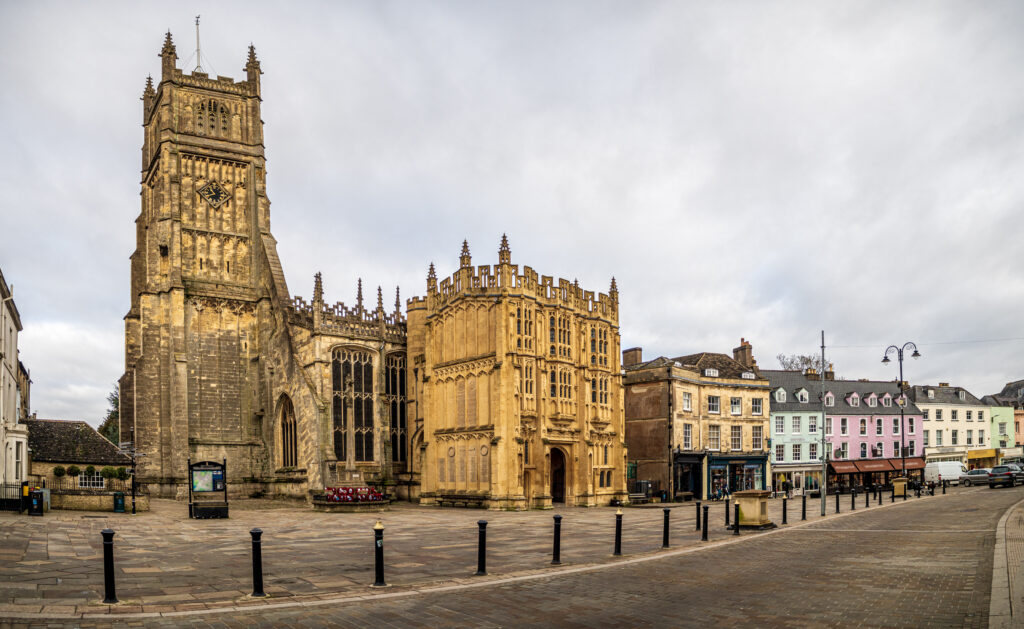
The villages, historic buildings, food, markets and countryside stops are part of what makes the region work so well for slower travel.
Food and Local Specialities
Cream teas, bakery food, local produce and traditional country cooking are all part of the Cotswolds experience.
Market days in towns such as Moreton-in-Marsh or Stroud are good opportunities to explore local produce and crafts.
History and Heritage
The wool trade shaped many of the region’s towns and villages.
Old churches, market squares, manor houses and historic cottages give even relatively short walks a strong sense of place.
Sudeley Castle and nearby Blenheim Palace provide larger historical attractions for rest days or shorter walking days.
Slower Days
The Cotswolds reward taking your time.
A shorter route that links two or three villages can be just as satisfying as a longer mileage day, especially if it allows time to explore the places you pass through rather than treating them simply as checkpoints.
FAQs About Hiking in the Cotswolds
Are the Cotswolds good for hiking?
Yes.
The combination of gentle hills, historic villages and a dense network of public footpaths makes the Cotswolds suitable for a wide range of walkers.
Is the North or South Cotswolds better?
The north is known for classic villages such as Stow-on-the-Wold, Broadway and Chipping Campden.
The south generally feels quieter and less heavily visited.
Both are excellent, so the better choice depends on whether you prioritise famous villages or quieter countryside.
What is the walking capital of the Cotswolds?
Winchcombe is widely associated with this title and has particularly good access to surrounding trails.
Can you walk from village to village in the Cotswolds?
Yes.
Village-to-village walking is one of the main reasons to visit, with many settlements linked by public footpaths.
How many days are enough for the Cotswolds?
Three to five days is enough for a first visit with several walks.
A week or longer works better for a slower walking holiday or a longer section of the Cotswold Way.
Where is the best place to base yourself in the Cotswolds?
Broadway, Chipping Campden, Bourton-on-the-Water and Winchcombe are all strong choices.
The best base depends on which part of the region you want to explore and whether you are travelling with a car.
What are the Cotswolds famous for?
The region is best known for honey-coloured stone villages, rolling countryside, historic market towns and its wool-trade heritage.
Where is the best walking in the Cotswolds?
The Cotswold Way is the region’s flagship trail.
For shorter trips, village-to-village walks, Cleeve Hill, Broadway, Winchcombe and quieter routes such as the Windrush Way also provide excellent options.
Hiking in the Cotswolds
Every path in the Cotswolds seems to lead to a village with stone cottages and flower-filled gardens.
Every hill offers a view worth pausing for, and every settlement gives you another excuse to slow down.
Regardless of whether you come for a weekend stroll or a full walking holiday, the Cotswolds have a habit of charming you from first step to last.
Where to Next?
Once you’ve explored the Cotswolds, these are the natural next guides:
- Best Hikes in the Cotswolds – Individual routes, distances, difficulty, highlights and trail information.
- Circular Walks in the Cotswolds – Routes that return to the same starting point.
- Accessible Walks in the Cotswolds – Routes suitable for travellers looking for gentler or more accessible options.
- Cotswold Way – Plan the region’s flagship long-distance trail.
- Ultimate Guide to Hiking in England – Explore England’s wider hiking regions.
“Turn your dream trek into a plan — get your free Plan Your Own European Walking Holiday ebook ”


