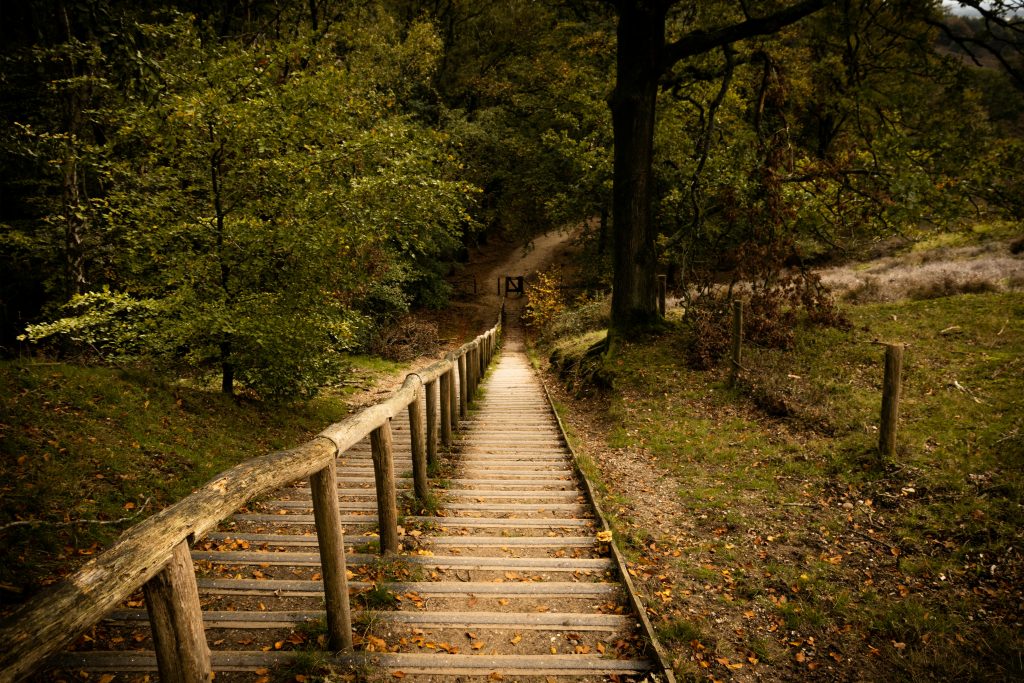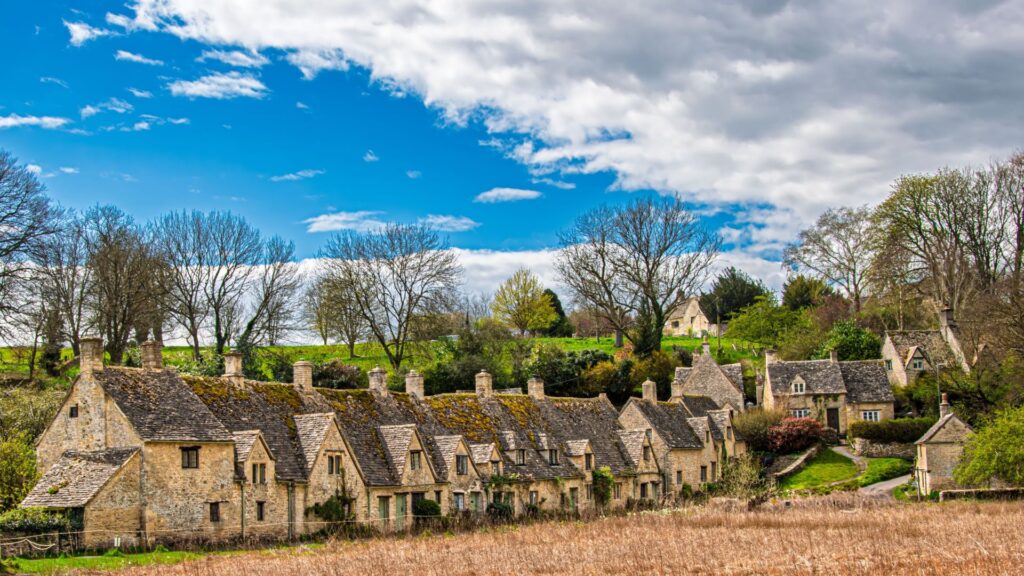
The Cotswolds are made for walking, with gentle countryside paths, hilltop viewpoints, historic villages and routes linking some of England’s best-known landmarks.
These five walks range from easy village circuits to longer hill walks, taking in Broadway Tower, the Slaughters, Cleeve Hill, Sudeley Castle and the prehistoric Rollright Stones.
- Why Hike in the Cotswolds
- 1. Best Walk from Broadway: Broadway Tower Circular
- 2. Best Village Walk: Bourton-on-the-Water and the Slaughters
- 3. Best Hill Walk: Cleeve Hill Common Circular
- 4. Best Historic Short Walk: Winchcombe to Sudeley Castle
- 5. Best Ancient Landmark Walk: Long Compton to the Rollright Stones
- The Cotswold Way
- When Is the Best Time to Walk in the Cotswolds?
- What to Bring for Walking in the Cotswolds
- Checking Out the Cotswolds
- More Walking in the Cotswolds
Why Hike in the Cotswolds
The Cotswolds is the kind of place that looks like it was designed for long and lazy walks.
Rolling green hills along with golden-stone villages, meadows that hum with bees, and pubs that seem perfectly placed at the end of every trail are what define the Cotswolds.
For those of you who enjoy hikes that are less about scrambling up cliffs and more about soaking in scenery, this corner of England really does deliver in spades.
It doesn’t matter whether you are after a quick stroll, a family-friendly wander, or a full-day adventure, because there’s a lot to do here.
Here are five of the best hikes in the Cotswolds.
“First time on the trail? Hiking for Beginners has your back.”
1. Best Walk from Broadway: Broadway Tower Circular
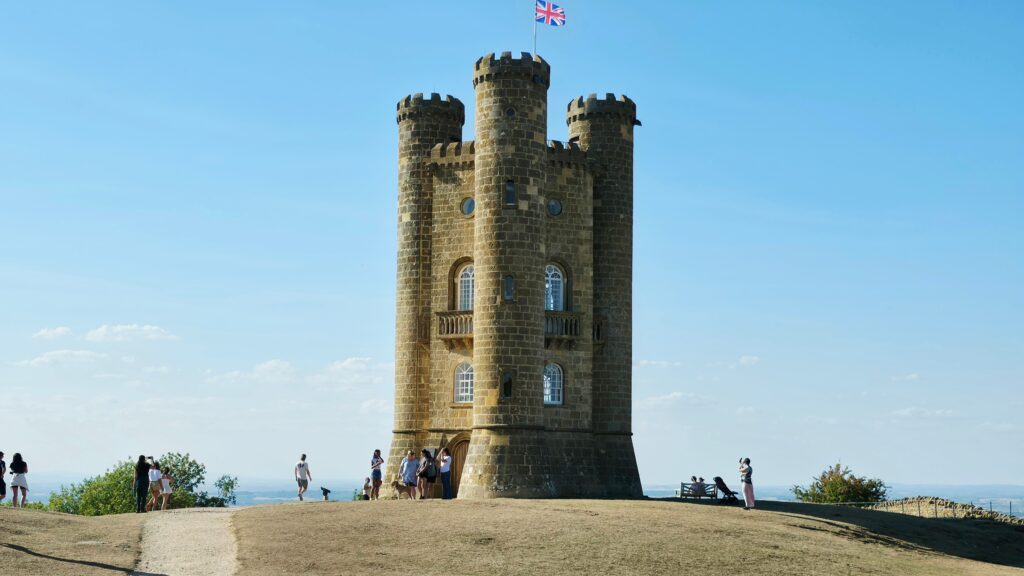
This short but rewarding walk loops around Broadway Tower, which is one of the most iconic landmarks in the Cotswolds.
Set on the second-highest point in the region, the tower offers panoramic views that stretch across 16 counties on a clear day.
The route is gentle and it’s also perfect for beginners or families, with plenty of open space for kids to run and dogs to roam.
The village of Broadway nearby is known as the “Jewel of the Cotswolds,” so you can pair your hike with tea rooms and antique browsing.
Broadway Tower Circular Details
- Difficulty: Easy to moderate
- Average time: Approx. 2.5–3.5 hours
- Distance: 6.4 km / 4 miles
- Elevation gain: Approx. 200 m / 656 ft
- Elevation loss: Approx. 200 m / 656 ft
- Route type: Circular
- Start/end: Broadway
- Best for: Classic Cotswold scenery, views and a shorter half-day walk
- Highlights: Broadway village, Cotswold Way and Broadway Tower
- Trail highlight: The climb above Broadway opens up wide views across the Vale of Evesham before reaching the tower.
2. Best Village Walk: Bourton-on-the-Water and the Slaughters
If you picture the quintessential English village, you can probably picture Bourton-on-the-Water.
Known as the “Venice of the Cotswolds” thanks to its charming low bridges, this walk follows the River Windrush out of town and meanders gently to the equally picturesque village of Lower Slaughter.
The path is mostly gentle, which makes it a good option for families or anyone after an easier day.
From Lower Slaughter, you can continue through the countryside to Upper Slaughter before looping back towards Bourton-on-the-Water, turning a simple village-to-village walk into a proper circular.
Bourton-on-the-Water and the Slaughters Details
- Difficulty: Easy
- Average time: Approx. 2–3 hours
- Distance: Approx. 6.4 km / 4 miles
- Elevation gain: Approx. 60 m / 197 ft
- Elevation loss: Approx. 60 m / 197 ft
- Route type: Circular
- Start/end: Bourton-on-the-Water
- Best for: Families, villages and an easier Cotswold walk
- Highlights: River Windrush, Lower Slaughter, Upper Slaughter and classic Cotswold villages
- Trail highlight: Walking between the honey-stone villages of Bourton and the Slaughters feels about as typically Cotswolds as a walk gets.
3. Best Hill Walk: Cleeve Hill Common Circular
Cleeve Hill is the highest point in the Cotswolds, which means this walk comes with some fairly serious views for a landscape better known for rolling hills than mountain summits.
The circular route crosses Cleeve Common, following open grassland, woodland and sections of the Cotswold Way with long views across the Severn Vale towards the Malvern Hills.
It’s longer and hillier than the village walks in this list, but still manageable as a half-day outing for reasonably fit walkers.
Cleeve Hill Common Circular Details
- Difficulty: Moderate
- Average time: Approx. 3.5–4.5 hours
- Distance: 9.7 km / 6 miles
- Elevation gain: Approx. 300 m / 984 ft
- Elevation loss: Approx. 300 m / 984 ft
- Route type: Circular
- Start/end: Cleeve Hill Common
- Highest point: Cleeve Hill, approx. 330 m / 1,083 ft
- Best for: Hill walking and panoramic Cotswold views
- Highlights: Cleeve Common, Cotswold Way, limestone grassland and Severn Vale views
- Trail highlight: Crossing the highest ground in the Cotswolds gives you views that stretch far beyond the gentler countryside below.
With five to six hours on the trail, you’ll also want to plan some food and snacks. These day hiking food ideas can help you stay fueled throughout a longer walk.
4. Best Historic Short Walk: Winchcombe to Sudeley Castle
Winchcombe is a charming market town that makes a perfect base for walkers.
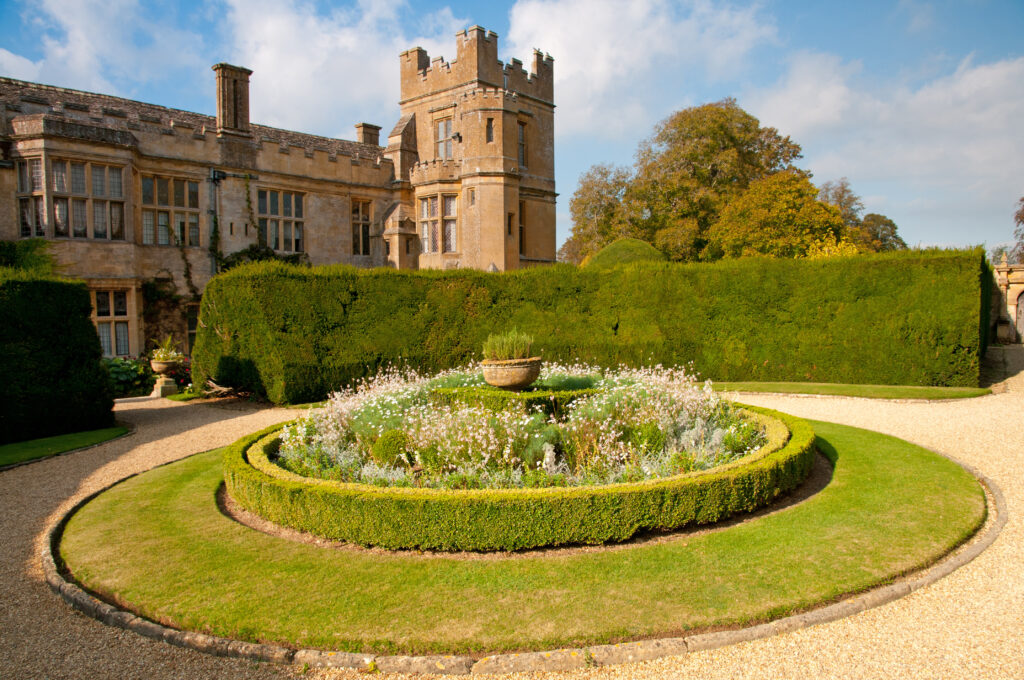
This short route links Winchcombe with Sudeley Castle, which is a historic estate once home to Katherine Parr, who was the last wife of Henry VIII.
The trail is scenic but also manageable, and it passes through sheep-dotted fields and gently rolling hills.
It’s one of those walks where history and nature blend beautifully, which makes it a rewarding choice even if you only have a couple of hours to spare.
Winchcombe to Sudeley Castle Details
- Difficulty: Easy
- Average time: Approx. 1–1.5 hours
- Distance: 3.2 km / 2 miles
- Elevation gain: Approx. 60 m / 197 ft
- Elevation loss: Approx. 60 m / 197 ft
- Route type: Circular
- Start/end: Winchcombe
- Best for: History and a shorter Cotswold walk
- Highlights: Winchcombe, Sudeley Castle, riverside paths and surrounding countryside
- Trail highlight: Sudeley Castle appearing beyond the fields gives this short walk a much grander feel than its distance suggests.
5. Best Ancient Landmark Walk: Long Compton to the Rollright Stones
For those of you who enjoy a bit of mystery with your walk, this route takes you right to the Rollright Stones, which is a group of Neolithic and Bronze Age monuments.
The circular trail starts near Long Compton and it weaves through farmland and quiet lanes before arriving at the stones, which include the King’s Men stone circle, the Whispering Knights, and the King Stone.
All in all, this is a moderately challenging route, but it has plenty of open stretches that are ideal for dogs too.
Long Compton to the Rollright Stones Details
- Difficulty: Moderate
- Average time: Approx. 3–4 hours
- Distance: Approx. 9.5–10 km / 6 miles
- Elevation gain: Approx. 190 m / 623 ft
- Elevation loss: Approx. 190 m / 623 ft
- Route type: Circular
- Start/end: Long Compton
- Best for: Ancient history, folklore and quieter countryside walking
- Highlights: King’s Men stone circle, Whispering Knights, King Stone and rolling countryside
- Trail highlight: Reaching the Rollright Stones on foot feels much more atmospheric than simply driving up to them.
The Cotswold Way
If these shorter walks leave you wanting something bigger, the Cotswold Way is the obvious next step.
The long-distance trail runs for more than 100 miles through the region, linking hilltops, historic villages, woodland and some of the best-known Cotswold scenery along the way. It’s a completely different experience from a half-day circular, but it gives you a much deeper feel for the landscape as you move through it day by day.
You can tackle the trail in stages or turn it into a full walking holiday, depending on how much time you have.
Planning the full route? Our Cotswold Way guide covers the trek in more detail, including stages, planning and what to expect along the trail.
When Is the Best Time to Walk in the Cotswolds?
Spring through early autumn offers the easiest conditions for walking in the Cotswolds, although the lower hills and village routes make this one of England’s more year-round walking destinations.
April to June is particularly good. The countryside is green, wildflowers begin appearing along the paths and temperatures are usually comfortable enough for longer walks.
July and August bring long days and warm weather, but popular villages such as Bourton-on-the-Water and Broadway can become very busy. Starting earlier lets you enjoy the paths before the biggest crowds arrive.
September and October are another excellent choice, with cooler walking weather and autumn colour appearing across the woods and valleys.
Winter can still work well for shorter routes, but expect mud, wet fields and shorter daylight hours. The higher ground around Cleeve Hill can also feel far more exposed when wind and poor weather roll in.
There isn’t really a bad season for walking here — just different versions of the Cotswolds.

What to Bring for Walking in the Cotswolds
The Cotswolds aren’t mountain country, but muddy fields, uneven tracks and the occasional steep climb mean it’s still worth turning up with something more practical than your Sunday-best shoes.
For most walks, consider bringing:
- Walking shoes or hiking boots with decent grip for muddy fields, tracks and uneven paths
- A waterproof jacket because English countryside weather likes to keep its options open
- A simple layering system for cooler mornings and exposed hilltops
- A comfortable daypack for food, water and spare clothing
- Offline maps or reliable navigation on longer countryside routes
- Enough water for your walk, particularly during warmer summer days
- Trekking poles if you like some extra support on steeper or muddier sections
And yes, leaving a little room in the day for a pub stop is entirely reasonable here.
🗒️ Free Checklist: “Never forget the essentials — grab your free Ultimate Hiking Packing List.”
Checking Out the Cotswolds
I’d expand the writer’s existing conclusion rather than replace it:
The Cotswolds may not have towering peaks or dramatic cliffs, but what it does have is character.
These five walks show just how much variety is hidden inside those rolling hills. You can climb from Broadway to one of the region’s best viewpoints, wander between postcard-pretty villages, cross the open ground of Cleeve Common or spend an afternoon following paths towards castles and prehistoric stone circles.
That’s really the appeal of walking here. The routes don’t need to be extreme to feel worthwhile, because there always seems to be something waiting around the next bend — another village, an old church, a stretch of open countryside or, if you’ve planned things properly, a pub.
For those of you who prefer hikes with a side of charm and history, the Cotswolds are just about as good as it gets.
And with everything from easy two-mile loops to longer hill walks, it’s also the sort of destination where you can simply pick a route to match the day rather than building the whole trip around one major hike.
More Walking in the Cotswolds
Planning more time in the region? These guides are the natural next step:
- Hiking in the Cotswolds — explore the wider region, walking bases and practical planning information.
- Cotswold Way Guide — take on the region’s best-known long-distance trail.
- Best Circular Walks in the Cotswolds — find more routes that start and finish in the same village or town.
- Walking Holiday in the Cotswolds — turn individual walks into a longer countryside trip.