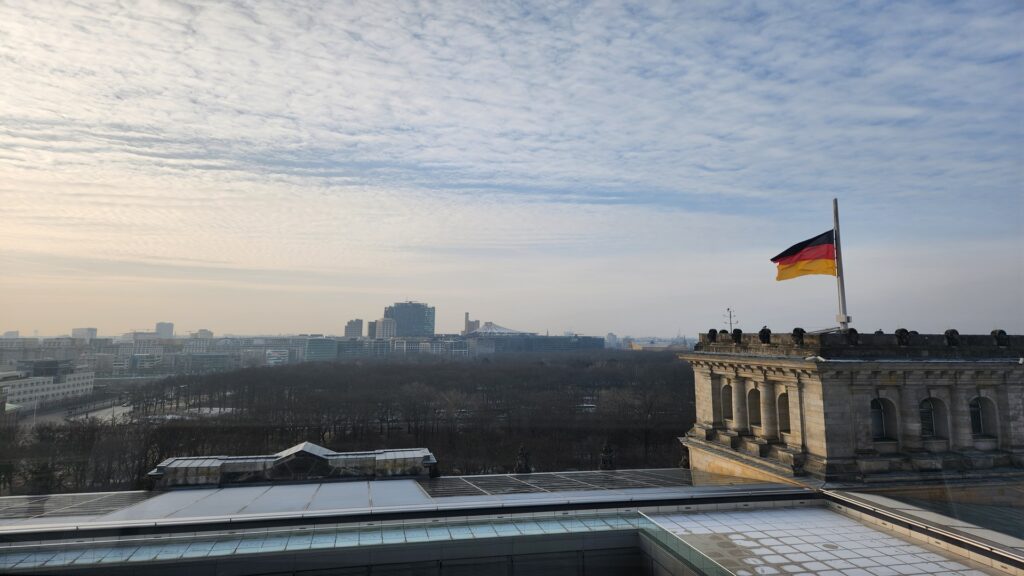
Berlin may have a reputation for late nights and techno beats (and also more history than a shelf of textbooks), but let’s be honest when we say that it’s also one of the greenest and walk-friendliest capitals in Europe.
Don’t believe that?
Well, a third of the city is draped in forest, rivers, and lakes, and the trails here don’t require you to pack crampons or oxygen tanks either.
All that you really need is a good pair of shoes, a transport ticket, and a sense of adventure.
Berlin isn’t just a city to visit.
It’s a city to wander.
- Berlin Hiking at a Glance
- Why Hike in Berlin?
- Best Hiking Areas in and Around Berlin
- Taking a Walking Holiday in Berlin
- Exploring Berlin on Foot
- Planning a Hiking Trip to Berlin
- Getting Around and Trail Access
- Where to Stay for Walking and Hiking in Berlin
- Beyond the Trails – More Than Walking
- One City, Endless Trails
- FAQs About Walking and Hiking in Berlin
- Where to Next?
Berlin Hiking at a Glance
- Best for: Combining urban walking, forests, lakes, history, and easy day trips into Brandenburg
- Main hiking areas: Grunewald, Müggelberge, Müggelsee, Wannsee, Pfaueninsel, and Spreewald
- Best time to visit: Spring to autumn, with autumn especially good for forest colour
- Car needed: No for most Berlin walks; useful for more remote parts of Brandenburg
- Getting around: Walking, S-Bahn, U-Bahn, tram, bus, ferry, regional train, and rental car
- Suggested stay: 3–5 days for Berlin plus one or two longer nature outings
- Typical terrain: Sandy forest tracks, paved paths, lakeside trails, riverside routes, parks, and low hills
- Good for beginners: Yes, with plenty of flat and low-gradient walks
- Best forest escape: Grunewald
- Best lake walking: Wannsee or Müggelsee
- Best viewpoint: Teufelsberg or Müggelturm
- Best unusual landscape: Spreewald
- Best history-and-nature combination: Teufelsberg, Glienicke Bridge, or Tempelhofer Feld
- Main challenge: Berlin’s size — choosing the right transport connection can matter more than the difficulty of the walk
“Avoid rookie mistakes. Our free ebook Hiking for Beginners shows you how.”
Why Hike in Berlin?
Here’s the thing about Berlin: it’s not just one city.
It’s more like a patchwork quilt of neighbourhoods stitched together with rivers, canals, and green spaces.
One block you’re staring at graffiti-covered concrete, and then the next you’re knee-deep in pine-scented forest.
For hikers, this is paradise.
The trails begin where the tram stops, and the city seems determined to make sure you can escape into the woods without even leaving its limits.
Berlin’s hiking charm is less about scaling dramatic summits and more about stumbling into surprises.
You might crest an artificial hill built from WWII rubble only to find Cold War listening domes looming over you.
You might also circle a lake and find yourself surrounded by swimmers, sunbathers, and maybe even a saxophonist.
Berlin isn’t about conquering nature, after all.
It’s really about discovering how closely nature and history snuggle up together here!
Looking for individual routes? See our Best Hikes in and Around Berlin guide for distances, highlights, and detailed walking routes.
Cultural & Historical Appeal
Walking in Berlin doubles as a crash course in world history.
The trails don’t just lead to trees.
They lead through stories.
You’ll find yourself climbing Teufelsberg, a hill cobbled together from the rubble of a bombed-out city and now crowned with Cold War relics and covered in street art.
Or maybe you’ll wander along the Havel and cross Glienicke Bridge, where spies once swapped secrets.
Not in the mood for politics?
That’s okay too because you can try Pfaueninsel, where peacocks strut around like they own the place and 19th-century palaces peek out from the woods.
Even city parks tell stories.
Tempelhofer Feld was once an airfield and later played a major role during the Cold War. Now it’s where Berliners fly kites, cycle, walk, and jog laps.
Around here, the ground beneath your feet is never just dirt.
It’s history.
Landscape & Scenery
Berlin’s terrain won’t exactly leave your calves screaming, but it’s anything but boring!
Pine forests stretch in all directions, lakes shine like polished mirrors, and sandy trails crunch softly underfoot.
The Müggelberge hills on the eastern edge are modest in size, but they serve up sweeping views that feel like they go on forever.
The Havel River offers bluffs and beaches in equal measure, and Brandenburg’s flatlands unfurl just beyond the city like an open invitation.
Best Hiking Areas in and Around Berlin
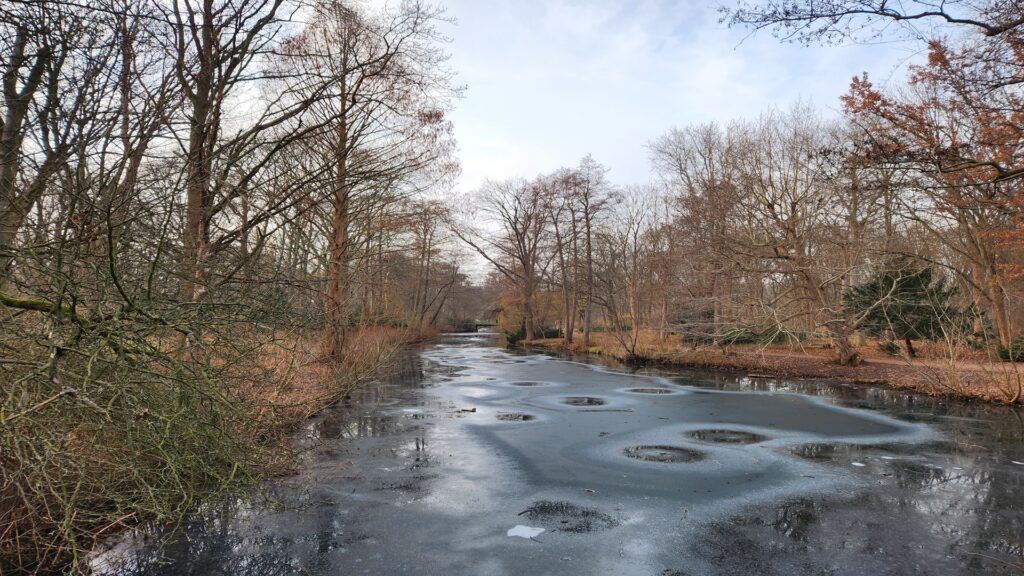
Berlin’s best walking areas range from large urban forests and lakes to sandy hills, riverside paths, islands, and nature reserves farther beyond the city.
Grunewald
Grunewald is the big player.
This is Berlin’s wild west of forests, lakes, and sandy paths.
It’s where you can wander for hours and still find new corners, from Schlachtensee’s swimmable waters to the quiet banks of the Havel.
For those of you looking for a proper forest walk without travelling far beyond the city, Grunewald is one of the most obvious places to start.
For more route ideas, VisitBerlin’s official hiking guide covers several marked walks through Berlin and the surrounding countryside.
Müggelberge and Müggelsee
Head east and you’ll find the Müggelberge, Berlin’s “mountains”, wrapped around the sprawling Müggelsee.
The hills are hardly Alpine, but the combination of forest, water, sandy trails, and viewpoints gives eastern Berlin a very different feel from the city centre.
The Müggelturm above Müggelsee also serves up one of the area’s standout views, especially when autumn paints the trees below.
Wannsee and Pfaueninsel
Wannsee steals the spotlight with its villa-lined shores and walking routes that lead towards Potsdam’s palace landscapes.
Nearby Pfaueninsel offers something completely different again, with woodland, historic buildings, and its famously confident peacocks.
This part of western Berlin works particularly well for walkers who like their nature mixed with history and riverside scenery.
Spreewald
If you’ve got a day to spare, you can always hop a train to Spreewald, where canals turn the landscape into something that feels like a fairy tale, complete with punts, pickles, and storks.
It sits beyond Berlin itself, but it makes a natural extension for travellers who want to experience a very different side of Brandenburg.
Taking a Walking Holiday in Berlin
Berlin works particularly well for a walking holiday because you don’t need to choose between sightseeing and nature.
One day can be spent following historic streets, canals, neighbourhoods, and large city parks, while the next can take you deep into Grunewald, around Müggelsee, or along the Havel.
Public transport makes this style of trip especially easy.
You can stay in one part of the city, use the S-Bahn, U-Bahn, tram, bus, or ferry to reach different walking areas, and return to the same accommodation each evening.
With more time, places such as Potsdam, Spreewald, and the wider Brandenburg countryside can turn Berlin into the starting point for a broader walking trip through Germany.
Berlin can also fit naturally into a longer walking holiday in Germany, particularly if you plan to combine city-based walking with forests, lakes, mountain regions, or smaller towns elsewhere in the country.
“Plan less, walk more.” Pick a route, set your pace, and let Europe unfold under your boots: grab your free Walking Holiday ebook today”
Exploring Berlin on Foot
Berlin’s green spaces are only part of the appeal.
The city itself rewards long walks, with historic neighbourhoods, large parks, rivers, canals, former industrial areas, and unusual viewpoints scattered across a huge urban area.
Best Viewpoints in Berlin
Berlin has no Alps, but it does know how to serve up a view nonetheless!
Teufelsberg, the infamous rubble hill, gives you a forest panorama with the skyline shimmering in the distance.
The Müggelturm tower above Müggelsee offers another jaw-dropper, especially when autumn paints the trees below.
Even Viktoriapark in Kreuzberg pulls its weight with a modest hill that somehow feels heroic when you stand at the top.
If you’re exploring the western side of the city, the official Grunewald visitor information is also useful for planning walks around the forest, Havel and Teufelsberg.
History and Green Space on Foot
Some of Berlin’s most interesting walking comes from places where history and open space overlap.
Tempelhofer Feld is one of the clearest examples, with the former airfield now providing an enormous open space for walking, cycling, and simply watching Berlin go by.
The Havel and Glienicke Bridge combine riverside scenery with Cold War history, while Berlin’s canals and neighbourhood parks make it easy to build much longer urban walks without following a formal trail.
Planning a Hiking Trip to Berlin
Best Time to Visit
Spring is gentle and green in Berlin, with blossoms exploding across parks and trails.
It’s the season when Berliners get to stretch their legs after long winters, and the trails feel like they’re waking up with you.
Summer is the time to lace up, but also pack a swimsuit, because every other trail seems to circle a lake begging you to jump in.
Autumn is pure magic.
The forests burn gold, red, and copper, and the air turns crisp enough to make your coffee taste like heaven after a long ramble.
Winter might be chilly, yes, but don’t underestimate it.
Snowy paths in Grunewald can have a hushed, fairy-tale quality, although winter conditions and shorter daylight hours mean routes need a little more planning.
What to Bring
Berlin doesn’t demand technical mountain gear for most walks, but comfortable footwear is still worth having when your day involves sandy forest tracks, city pavements, lakeside paths, and long distances on foot.
A small daypack, water, snacks, a lightweight waterproof layer, and an extra layer for cooler weather will cover most city and forest walks.
In summer, sun protection is useful and swimwear can be worth carrying if your route includes one of Berlin’s designated swimming areas.
For longer walks beyond the city, offline navigation or a downloaded route is also worth having.
Forgot your boots, or just realised your rain jacket isn’t as waterproof as you hoped?
No worries, because Berlin has plenty of places to replace missing gear.
Globetrotter is one of the larger outdoor retailers in the city, while Decathlon covers plenty of budget-friendly basics for spontaneous walkers.
And don’t forget trail snacks.
Lakeside kiosks make it easy to pick up food and cold drinks, while Spreewald has its own local speciality in the form of the region’s famous pickles.
Call it tradition, or just call it delicious — or both!
🗒️ Free Checklist: “Never forget the essentials — grab your free Ultimate Hiking Packing List.”
Getting Around and Trail Access
Berlin’s transport network makes getting from neighbourhood streets to forests and lakes unusually easy.
Public Transport
Berlin’s S-Bahn and U-Bahn are basically hiking taxis.
Grunewald Station puts you right at the edge of the forest, Wannsee Station gets you lakeside in minutes, and Friedrichshagen drops you near Müggelsee.
Ferries provide access to places such as Pfaueninsel, while buses fill in the gaps.
For walkers, public transport is one of Berlin’s biggest strengths.
Ready to venture beyond Berlin? Our 7 Best Hikes in Germany offer a taste of the forests, mountains and long-distance trails found across the country.
Driving and Parking
Renting a car can be handy if you’re exploring deeper into Brandenburg, but otherwise Berlin’s trains, trams, and buses have most of the city covered.
Parking near popular lakes can become difficult on warm weekends, so public transport is often the easier option for local walks.
Airport and Regional Links
Berlin Brandenburg Airport is well connected to the city by public transport.
Regional trains spread out from Berlin in almost every direction, making places throughout Brandenburg relatively easy to combine with a city stay.
Longer onward trips also open up hiking regions elsewhere in Germany, including areas with much more substantial mountain and sandstone terrain.
Where to Stay for Walking and Hiking in Berlin
Berlin is huge, so where you stay can make a noticeable difference to how much time you spend walking versus sitting on public transport.
For most hikers, the best base will come down to whether you want easy access to central sights, western forests and lakes, eastern walking areas, or straightforward rail connections for day trips farther into Brandenburg.
Mitte
Mitte is the most convenient option for a first visit.
You’ll be close to many of Berlin’s best-known landmarks, museums, river walks, and transport connections, which makes it easy to combine sightseeing with longer days outside the centre.
It works particularly well for travellers who want to explore the city on foot but still keep the S-Bahn and U-Bahn within easy reach for trips to places such as Grunewald, Wannsee, or Müggelsee.
Charlottenburg and the West
Charlottenburg is a strong choice if Grunewald, Wannsee, or the Havel are high on your list.
You’ll be better positioned for western Berlin’s forests and lakes while still having good transport links back towards the centre.
It also gives you easy access to Charlottenburg Palace and a quieter side of the city than the busiest central districts.
Friedrichshain and the East
Friedrichshain suits walkers who want easier access towards Müggelsee, Friedrichshagen, and eastern Berlin.
The neighbourhood itself is lively and well connected, while the S-Bahn makes it practical for heading farther east towards forest and lakeside routes.
For those of you planning several walks around Müggelberge and Müggelsee, an eastern base can save a fair amount of cross-city travel.
Kreuzberg
Kreuzberg is a good option for travellers who want a more local neighbourhood feel while staying close to canals, parks, and central Berlin.
Viktoriapark, the Landwehr Canal, and easy transport connections make it a natural choice for walkers who want city exploration to be a major part of the trip.
Near Hauptbahnhof
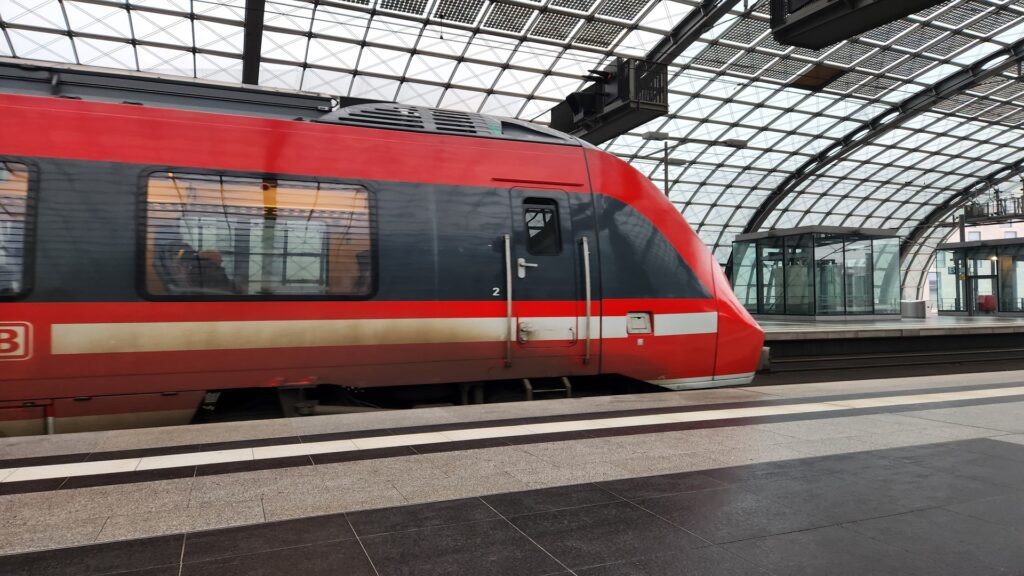
Staying near Berlin Hauptbahnhof is less about atmosphere and more about practicality.
It works especially well if you’re planning several regional day trips into Brandenburg or farther across Germany.
The trade-off is that it feels less like a neighbourhood base than Kreuzberg, Mitte, or Charlottenburg, but the transport convenience is hard to beat.
For most first-time visitors, Mitte or Kreuzberg offers the best balance of sightseeing, walkability, and transport, while Charlottenburg is particularly useful for western forests and lakes.
Beyond the Trails – More Than Walking
Berlin makes a brilliant base for a walking holiday because the trails are just half the fun.
The other half?
You get culture, food, and side trips that keep the days off-trail just as satisfying.
Cultural Highlights
Museums here are world-class, and Berlin’s history extends far beyond what you encounter on the trails.
Brandenburg Gate, sections of the former Berlin Wall, and many Cold War sites can all be incorporated naturally into a day spent exploring on foot.
Charlottenburg Palace and Sanssouci in nearby Potsdam offer a completely different side of the region, with formal gardens, grand architecture, and plenty of space to wander.
Food and Local Specialities
Berlin knows how to feed its walkers.
Currywurst stands dot the city, döner kebabs are practically a food group, and lakeside kiosks and cafés make easy stopping points after a long walk.
Coffee, Apfelstrudel, cheesecake, and other bakery stops also give you plenty of excuses to break up a day exploring neighbourhoods or forests.
And in Spreewald, those famous pickles are practically part of the landscape.
For a completely different German landscape, our guide to Hiking in Germany’s Black Forest explores one of the country’s best-known walking regions.
Day Trips
Got the energy for more?
Potsdam is practically an extension of Berlin, with gardens and palaces that look straight out of a painting.
Brandenburg’s villages offer sleepy charm, open fields, lakes, and forests.
Spreewald gives you canals, wetland landscapes, and a completely different walking environment.
Farther afield, Germany opens up into much more dramatic hiking country for travellers turning Berlin into the first stop on a longer trip.
One City, Endless Trails
Berlin isn’t about conquering peaks.
It’s about discovering a unique kind of capital where nature and history walk hand in hand.
It’s pine forests that seem endless, lakes that beg you to stop beside them, and ruins that remind you every trail has a story.
It’s the kind of place that keeps surprising you, whether you’re chasing peacocks, climbing rubble hills, or wandering palace gardens.
So lace up, grab a snack, and let Berlin show you just how wild a city can be.
FAQs About Walking and Hiking in Berlin
Is Berlin a good city for walking?
Yes.
Berlin is very well suited to walking because large parks, canals, rivers, neighbourhood streets, forests, and lakes are spread throughout the city.
Its size means you may use public transport between areas, but once you arrive, many districts and green spaces are easy to explore on foot.
Is Berlin a good base for hiking?
Yes.
Berlin works well as a hiking base because you can reach forests, lakes, riverside paths, wetlands, and countryside without needing to change accommodation.
Grunewald, Müggelsee, Wannsee, Potsdam, and Spreewald all add different types of walking to a city stay.
Can you hike around Berlin without a car?
Yes.
Most of Berlin’s main walking areas are straightforward to reach using the S-Bahn, U-Bahn, buses, trams, ferries, and regional trains.
A car is mainly useful if you want to explore more remote parts of Brandenburg or several countryside areas in one day.
What is the best time to hike around Berlin?
Spring through autumn offers the easiest conditions for walking.
Spring brings fresh greenery, summer is ideal for lake walks, and autumn is particularly good for the forests around Grunewald and Müggelsee.
Winter walking is possible too, but shorter daylight hours and colder conditions require more planning.
Is Berlin suitable for beginner hikers?
Yes.
Berlin’s terrain is mostly gentle, with plenty of flat or low-gradient forest, lakeside, river, and park routes.
Beginners can start with shorter walks around Grunewald, Wannsee, or Tempelhofer Feld before trying longer days farther into Brandenburg.
Is Spreewald a realistic day trip from Berlin?
Yes.
Spreewald can work well as a day trip from Berlin and offers a very different landscape of canals, wetlands, villages, and flat walking routes.
It is especially appealing if you want to add a quieter countryside day to a city-based trip.
Is Berlin suitable for a walking holiday?
Yes.
Berlin is particularly good for travellers who want a mix of city exploration and nature rather than one major hiking route.
You can combine neighbourhood walks, forests, lakes, historic sites, and day trips into Brandenburg while staying in the same base.
It can also form part of a broader walking holiday in Germany.
Where to Next?
Berlin is a solid hiking city, but it’s also the perfect springboard.
Once you’ve circled the lakes, climbed the hills, and spotted a peacock or two, you may be ready to stretch your legs farther.
- Best Hikes in and Around Berlin – Explore the individual routes, distances, highlights, and trail access around the German capital.
- Ultimate Guide to Hiking in Germany – Get a broader overview of Germany’s major walking and hiking regions.
- Best Hikes in Germany – Discover more forests, mountains, national parks, and long-distance trails around the country.
- Walking Holiday in Germany – Plan a longer trip combining cities, countryside, forests, and hiking regions.
- Munich for Hikers: A City Guide – Continue with another German city surrounded by strong walking and hiking options.
- Best Hikes in and Around Munich – Explore individual routes around Munich and the nearby Alpine region.