
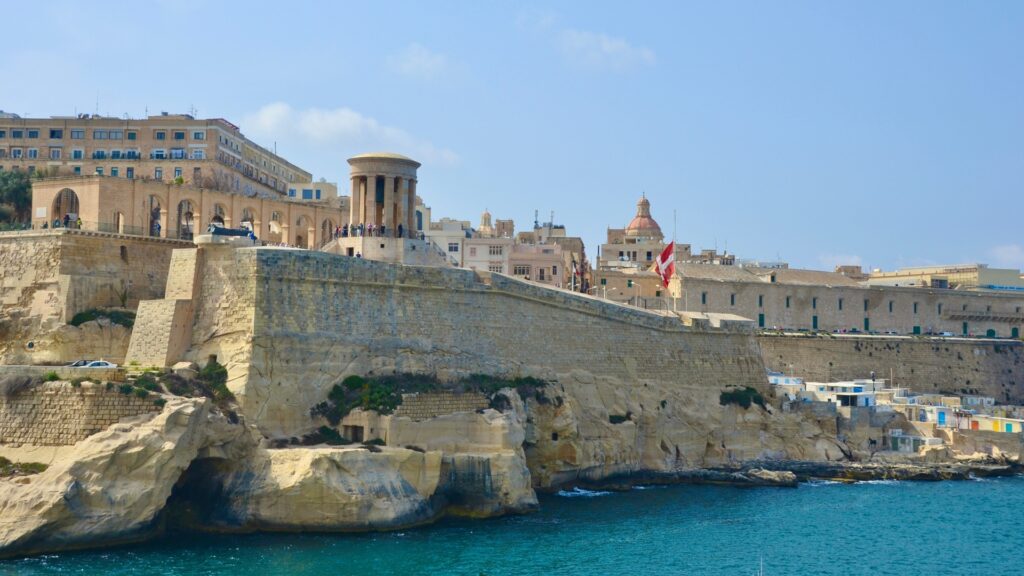
Valletta may be small on a map, but it sure has a way of feeling larger than life when you explore it on foot!
Every street seems to lead to a staircase bathed in sunlight, every corner reveals a dome or a carved balcony, and the sea is so close you can smell it drifting between the alleys.
Those of you who enjoy cities that blend history with character and a compact layout will find Valletta almost custom built for walking.
What makes the city even more appealing is how quickly Malta’s wilder landscapes unfold beyond it.
Valletta sits like a central hub and it sends buses, ferries, and walking routes toward cliffs, coves, countryside chapels, and coastal paths.
You can start your morning among elegant stone fortifications, and then by the afternoon you’re standing at the edge of a limestone cliff watching waves smash below!
- Valletta at a Glance
- Why Walk and Hike in Valletta?
- Where to Walk in and Around Valletta
- Exploring Valletta on Foot
- Taking a Walking Holiday in Valletta
- Where to Stay in Valletta as a Walker
- Planning Your Walking Trip to Valletta
- Getting Around Valletta
- Beyond the Trails in Valletta
- FAQs About Walking in Valletta
- Don't Let Valletta's Small Size Fool You
- Where to Next?
- Where This Information Comes From
- Planning Your Malta Walking Trip?
Valletta at a Glance
| Walkability | Excellent: compact, with a mostly pedestrian centre |
| Terrain | Steep, stepped streets and bastion walls |
| Best months | October to May |
| Nearest green escape | Buskett woodland, by bus |
| Best base | Inside the walls, or Sliema across the harbour |
| Getting out | Buses from the City Gate terminus; harbour ferries |
Why Walk and Hike in Valletta?
Because you can see a whole capital on foot in a day, then use it as a launch pad for the rest of the island.
Valletta is a UNESCO World Heritage city wrapped in walls and sea, and nearly every bus route and harbour ferry starts at its gates.
Malta may not have mountains, but it certainly has variety. The terrain around the island makes walking feel more diverse than visitors expect.
Urban and heritage routes weave through fortifications, harbours and old stone lanes, while just outside the city you’ll find cliffside trails, quiet countryside and rural chapels.
Those of you who enjoy mixing landscape styles will find Malta’s walking options surprisingly broad. For the island-wide picture (seasons, safety and every corner of Malta, Gozo and Comino), see our guide to hiking in Malta.
Where to Walk in and Around Valletta
Start inside the walls, loop the bastions, then take a ferry across the harbour. When you’re ready for cliffs and countryside, buses from the City Gate terminus reach most of the island.
In the City
Urban walking in Valletta feels layered, historic, and full of character. Several routes offer the best blend of scenery and ease.
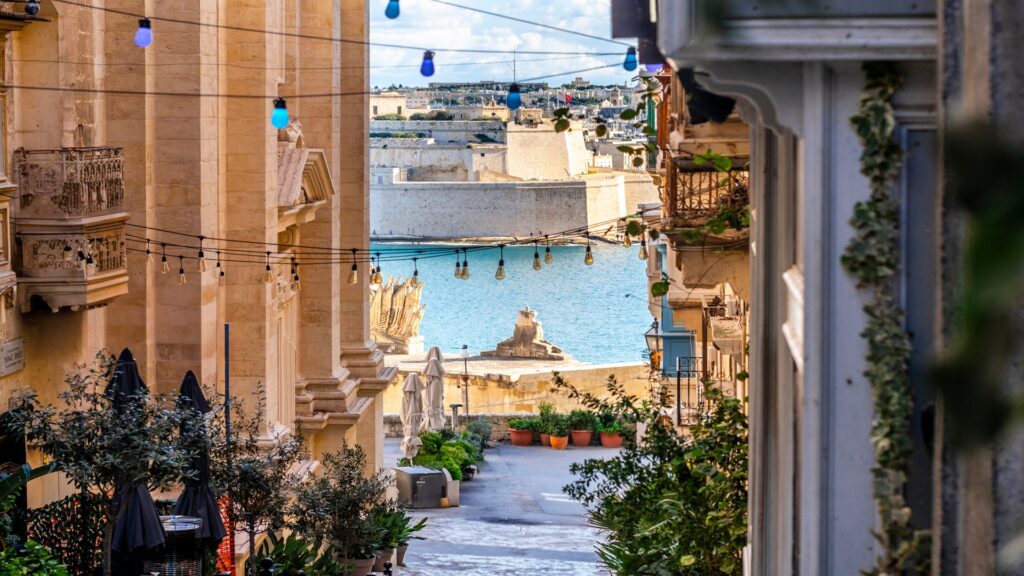
The Fortification Circuit, for instance, loops around the defensive walls and reveals dramatic seafront views. Inside them, Republic Street and Merchant Street form the city’s lively pedestrian backbone, with side streets dropping steeply towards the water on both sides.
Valletta to Floriana makes for a gentle extension into leafy gardens and quieter streets. Down on the Grand Harbour side, the Valletta Waterfront allows you to stroll along colourful historic storehouses beside the water. Those of you who prefer slow cultural walks will feel spoiled by the choices!
The ferries are where it gets fun. Valletta to the Three Cities offers a scenic shoreline walk combined with a quick ferry ride across the Grand Harbour to Cospicua, and the Valletta to Sliema ferry loop combines boats, promenades, and harbour scenery, which makes it a simple but satisfying half day walk.
Short on time? Our guide to the best hikes near Valletta picks five easy walks you can reach by bus or ferry from the city, from the Sliema seafront to the Buskett woodland.
Escapes by Bus and Ferry
Using Valletta as your base makes exploring the island convenient. Dingli Cliffs is accessible via a straightforward bus ride and offers the highest and most dramatic coastal scenery in Malta, and it’s one of our best hikes in Malta, along with Golden Bay to Għajn Tuffieħa, a classic seaside walk with warm and steady views and soft sandy stops along the way.
The northwest beaches near Mellieħa connect you to rolling dune paths and cliffside routes. Marsaxlokk and St Peter’s Pool create wonderful walking territory along sun-baked limestone shelves and fishing harbours too. Those of you who enjoy coastal walking will find these areas especially rewarding.
Further afield, a bus to Ċirkewwa and the ferry to Gozo opens up a whole second island of walking.
“Every hiker starts somewhere — grab your free Hiking for Beginners guide.”
Exploring Valletta on Foot
The best of Valletta is on its edges: the bastion gardens, the harbour views and the steep streets that tumble down to the water. A city this dramatic deserves viewpoints, and Valletta delivers them without requiring long climbs or strenuous detours.
Best Viewpoints in Valletta
Upper Barrakka Gardens offers leafy walkways with historic arches and a front row view of Grand Harbour. It gives one of the most sweeping perspectives across the harbour and the historic fortifications across the water, and it’s a calm space that invites wandering rather than rushing.
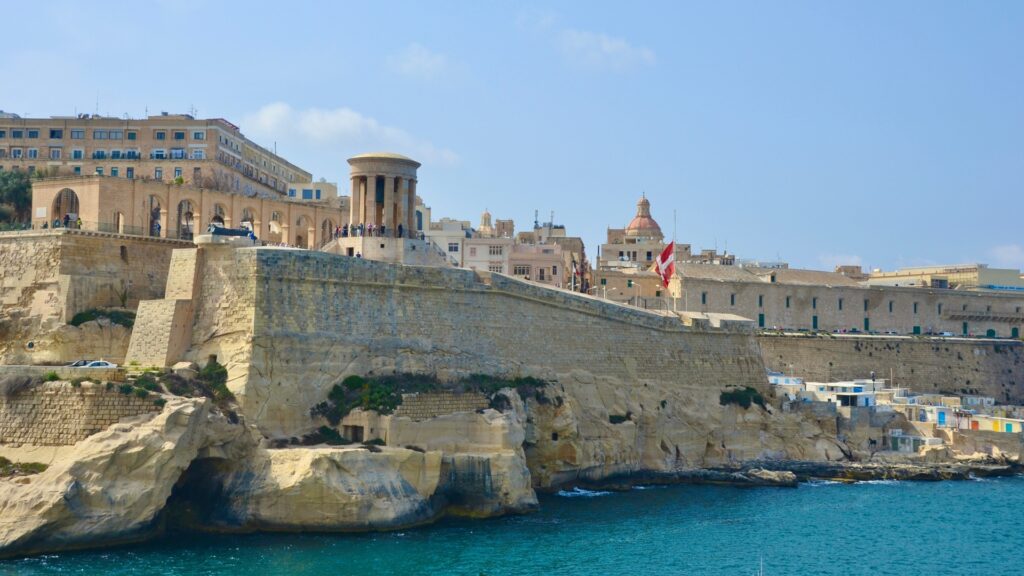
Lower Barrakka Gardens offers a gentler and quieter vantage point with open views toward the breakwater and the sea. For a more atmospheric moment, the Siege Bell Memorial overlooks the harbour entrance and is especially striking at sunrise.
Those of you who enjoy pairing a good viewpoint with peaceful surroundings will find these three perfect starting spots.
Best Neighbourhoods for Walking in Valletta
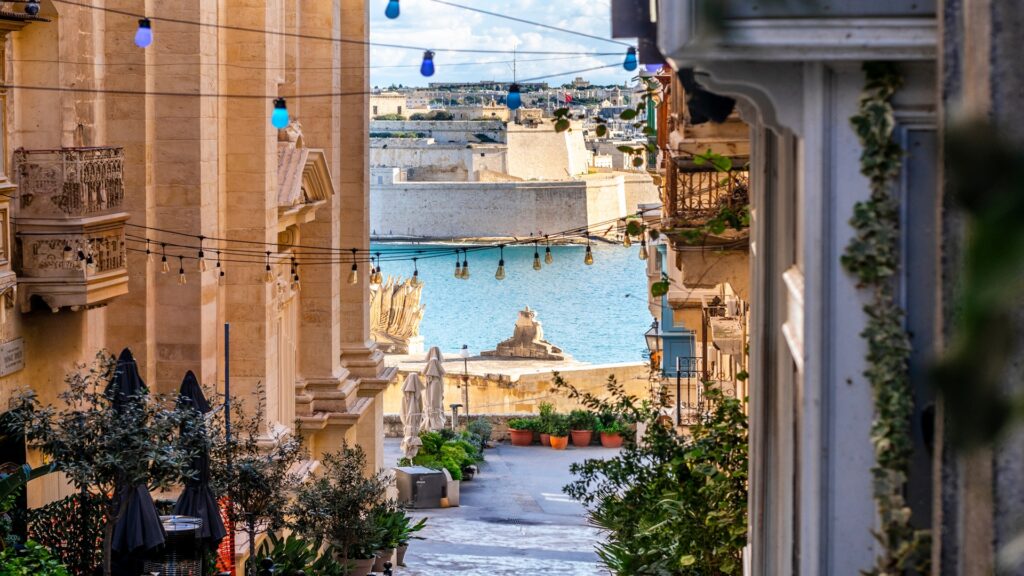
Valletta sits on a narrow ridge, so almost every side street drops steeply to the water, often as a flight of steps. Walk the length of the ridge along Republic Street, then pick a side street down to the harbour on either side.
The Barrakka Lift links Upper Barrakka Gardens with the Grand Harbour waterfront, which saves your legs on the way back up from the Three Cities ferry.
Floriana, just outside City Gate, is flatter and greener, while the Three Cities across the harbour (Birgu, Senglea and Cospicua) are quieter, with waterfront promenades and their own walls to explore.
All those stairs add up, especially on the way down. If your knees grumble, here’s what to know about hiker’s knee.
Walking Tours in Valletta: Guided or Self-Guided?
Both work. Valletta is small enough to explore with a map, but a guided walking tour brings the Knights, the Great Siege and the wartime history to life in a way the stones alone can’t. Most tours stick to the city centre and last a couple of hours; some combine Valletta with the Three Cities by ferry.
Taking a Walking Holiday in Valletta
Yes, it works as a base. A walking holiday in Valletta blends sunlit city days with island wide adventure.
Base yourself inside the fortified capital and you can explore narrow streets and viewpoints in the morning before heading out to cliffs, bays, and countryside trails in the afternoon.
Its transport network, compact layout, and constant sea views are exactly what make the city a natural fit for walkers who want variety without long transfers.
For a full itinerary that adds Gozo and Comino, see our guide to a walking holiday in Malta.
Valletta on Foot in 1 or 2 Days
Day 1: Walk in through City Gate and down Republic Street, call in at St John’s Co-Cathedral, then head to Upper Barrakka for the harbour view.
Take the Barrakka Lift down to the waterfront, catch the ferry to the Three Cities, and walk the Birgu and Senglea waterfronts before crossing back.
Day 2: Loop the bastions in the cool of the morning, finishing at Lower Barrakka and the Siege Bell.
In the afternoon, take the ferry to Sliema for the seafront walk, or a bus out to one of the best hikes near Valletta.
“Turn your dream trek into a plan — get your free Plan Your Own European Walking Holiday ebook ”
Where to Stay in Valletta as a Walker
Stay inside the walls if you want to walk out of your door into the history, or in Sliema if you’d rather have a seafront promenade and a short ferry ride into town. Floriana, just outside City Gate, puts you a few minutes from the bus terminus for early starts.
Planning Your Walking Trip to Valletta
When to Walk in Valletta
October to May is the comfortable window, and spring is the pick.
Before planning your routes, it really helps to understand how Malta’s Mediterranean climate shapes hiking conditions.
You see, each season has its own personality, and some are more walker friendly than others.
Spring brings a rush of wildflowers and cooler breezes that stretch deep into the afternoon. Those of you who prefer mild temperatures will love this window. Autumn offers similarly comfortable days, but only with rich gold light over the sea and quieter paths.
Summer is bright and energetic, and it’s also often very hot! Walking is still possible, but early mornings and late evenings are still your best friends. Even short trails feel longer in midday heat, so timing is everything!
Winter is surprisingly lovely. This is because it is the season when the island feels its freshest, with crisp air, clear views, and some of the best long distance walking conditions all year (just expect muddy paths after heavy rain).
What to Bring for Walking in Valletta
Good shoes matter more than anything here: Valletta’s limestone paving and steps get slippery, and the coast paths beyond are rocky.
- Comfortable walking shoes with grip for worn stone steps
- A small day pack for water, sunscreen and a layer for the ferry
- A hat, sunglasses and a refillable bottle
- A light scarf or layer to cover your shoulders for church visits
- Swimwear, if you’re heading to the coast
For a fuller list, here are the things to bring on a day hike.
Before setting off beyond Valletta, you may want to grab a few essentials. While the city is not full of gear shops, the most dependable options sit just a short ride away.
Decathlon is the go to spot for affordable and reliable hiking gear. From hats and socks to daypacks and hydration bottles, it has everything a walker might need.
Sliema, which is just a ferry ride from Valletta, has several general sports stores that carry basic clothing and trail accessories.
Let’s put it this way, for snacks, water, and quick supplies, Valletta’s markets and grocery shops make preparation very easy!
🗒️ Free Checklist: Planning your next hiking trip?? Download our printable hiking checklist to make sure you don’t miss the essentials.
Getting Around Valletta
On foot inside the walls, and by bus or ferry for everything else. Most walkers do not need a car when basing themselves in Valletta.
Public Transport
Malta Public Transport runs the island’s buses, and the main terminus sits just outside City Gate. Malta’s bus network is extensive and inexpensive, and it also connects the capital to nearly every popular hiking area.
The Valletta ferries cross Marsamxett Harbour to Sliema and the Grand Harbour to Cospicua in the Three Cities, and they accept the tallinja card used on the buses. Services can pause in rough seas, so check before you rely on one to get back.
Driving
Those of you who want to explore the most remote countryside might rent a car for a single day, but it is not essential for most itineraries. Parking inside Valletta’s walls is limited, so leave the car outside the city if you do hire one.
Airport and Regional Links
Malta International Airport sits close enough to Valletta that transfers are quick and straightforward. Buses offer direct routes into the city, and taxis or rideshares are easy to arrange. Arriving from a long-haul flight?
Once in Valletta, the bus terminal becomes your gateway to the island’s hiking regions. Ferries add additional connections and scenic shortcuts around the harbour. For Gozo, take a bus to Ċirkewwa for the Gozo Channel ferry.
Get ahead of travel fatigue and learn about managing jet lag before your first walk with this article.
Beyond the Trails in Valletta
What Not to Miss Between Walks
Even the most determined hikers should pause long enough to soak in a few essentials. The golden stone architecture at sunset, the grand fortifications that wrap around the peninsula, and the tucked away streets of Strait Street all carry the city’s unique charm.
As you walk through the narrow streets, you’ll encounter stunning Baroque architecture, majestic palaces, and grand churches, including the magnificent St. John’s Co-Cathedral. Its interior is one of the island’s great artistic treasures, so cover your shoulders and knees before you go in.
The Manoel Theatre, the National Museum of Archaeology, and the lively restaurant scene add cultural depth to any walking day.
FAQs About Walking in Valletta
Is Valletta a walkable city?
Very. The old city is compact, much of the centre is pedestrianised, and everything inside the walls is within easy walking distance.
Is Valletta hilly?
Yes. The city sits on a ridge, so side streets drop steeply to the harbours, often as steps. The Barrakka Lift between Upper Barrakka Gardens and the waterfront saves the steepest climb.
How do you get from Valletta to the Three Cities?
Take the ferry across the Grand Harbour to Cospicua. It leaves from the waterfront below Upper Barrakka, so ride the Barrakka Lift down, and you can walk between Birgu, Senglea and Cospicua once you’re across.
Can you walk from Valletta to Sliema?
You can, but it’s a long way round Marsamxett Harbour on busy roads. Most walkers take the ferry over and walk back along the Sliema seafront, or the other way round.
Is Valletta too hot to walk in summer?
In the middle of the day, often yes. Walk early or late, stick to the shady streets and the bastion gardens, and save the open coast for spring or autumn.
How many days do you need in Valletta?
One full day covers the city on foot, and two lets you add the Three Cities and Sliema by ferry. After that, use Valletta as a base for walks further out.
Don’t Let Valletta’s Small Size Fool You
Valletta may be small, but it carries more walking potential than cities many times its size. Its narrow lanes, sweeping fortifications, and constant connection to the sea pair beautifully with the island’s surrounding trails!
Planning Your Malta Walking Trip?
Whether you’re here for one clifftop walk or a whole week on Malta and Gozo, the best trips start with a bit of local know-how. Pick your season, pack for the sun, and you’ll be ready to lace up!
Where to Next?
All walked out in the capital? Here’s where to head next.
More in Malta
- Best Hikes Near Valletta: five easy walks a bus or ferry ride from the city, with distances and how to get there.
- Ultimate Guide to Hiking in Malta: seasons, safety and every corner of Malta, Gozo and Comino.
- Walking Holiday in Malta: a six-day Malta and Gozo itinerary with Valletta as your first base.
More City Guides Nearby
- City Guide to Rome: another capital you can walk end to end, with escapes into the Roman countryside.
- City Guide to Palermo: Sicily’s capital, just across the water from Malta.
Where This Information Comes From
Last checked: 13 October 2026.
- Malta Public Transport: buses and journey planner
- Malta Public Transport: Valletta ferry (Sliema and Cospicua)
- Visit Malta (Malta Tourism Authority)


