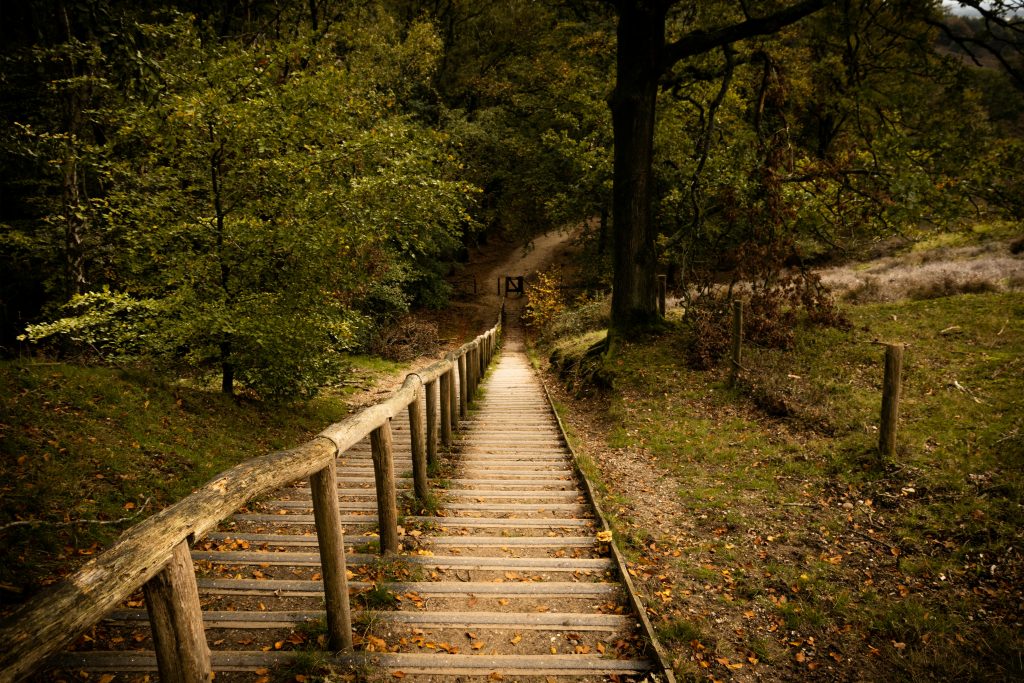
Denmark might be known for its charming cities and picturesque coastlines, but it’s also a fantastic destination for hiking enthusiasts.
Regardless of whether you’re a seasoned trekker or just looking to enjoy a leisurely walk in nature, Denmark offers a variety of trails that range from the rolling hills of Mols Bjerge to the stunning cliffs of Møn.
What makes hiking in Denmark special is the blend of natural beauty and cultural charm. Many trails wind through historic landscapes, and in the process of doing so they pass through ancient castles, quaint villages, and vibrant meadows that come bursting with wildflowers during the springtime.
Plus, Denmark’s well-maintained paths and easy accessibility make it simple to explore the great outdoors without venturing too far from modern comforts.
Why Hike in Denmark?
Hiking in Denmark is about accessibility, variety, and atmosphere. The country’s landscapes may be gentle compared to alpine regions, but they are rich in character. Coastal cliffs, heathlands, forests, and dune systems offer constant visual interest without extreme elevation.
Denmark is also perfect for hikers who enjoy combining nature with culture. Many trails pass historic landmarks, lighthouses, border routes, and traditional villages.
With well-marked paths, flat-to-moderate terrain, and excellent public transport links, Denmark is an ideal destination for both beginner hikers and seasoned walkers looking for scenic, low-stress routes.
Companion Article: Ultimate Guide to Hiking in Denmark
If you’re planning a hiking trip to Denmark, it helps to understand the country’s regions, seasons, and trail styles before choosing where to go.
Our Ultimate Guide to Hiking in Denmark covers practical planning tips, regional highlights, and what to expect on the trail — the perfect companion to the hikes below.
The Best Hikes in Denmark
These trails highlight the very best hiking experiences across Denmark.
1. Møns Klint Cliffs Trail
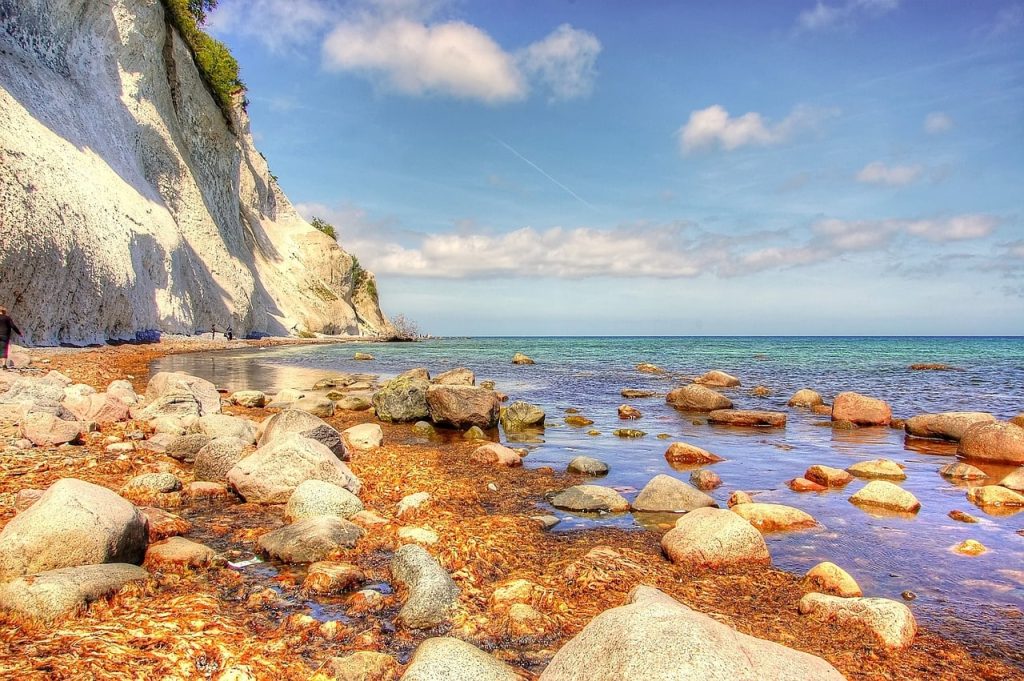
Møns Klint is one of Denmark’s most breathtaking natural landmarks. It features towering white chalk cliffs that plunge dramatically into the Baltic Sea.
The Cliffs Trail offers hikers like you stunning panoramic views and unique geological formations.
Trail Snapshot
• Difficulty: Moderate
• Distance: 10 km (6.2 mi) round trip
• Elevation Gain: ~200 m (656 ft)
• Start / End: Møns Klint Visitor Center
• Highlights: Chalk cliffs, Baltic Sea views, fossils
Difficulty/Recommended Fitness Level
This hike is moderate, which makes it suitable for most fitness levels. The trail includes some steep sections as you climb the cliffs, but the well-marked paths make navigation easy. It’s perfect for hikers who enjoy a bit of a challenge while also still being accessible to families and casual walkers.
Distance
The Møns Klint Cliffs Trail stretches approximately 10 kilometers (6.2 miles) round trip. It’s a great option for a full-day hike.
Elevation Gain
There is a significant elevation gain of about 200 meters (656 feet) as you ascend the cliffs. The climb offers rewarding vistas at various points, which makes the effort well worth it. Be prepared for some steep sections, especially near the top of the cliffs.
Start and End Point
The hike begins and ends at the Møns Klint Visitor Center, which provides parking, restrooms, and informational displays about the area’s geology and history. From the visitor center, you can follow the clearly marked trail that winds up the cliffs and back down through the surrounding forests.
Get to the Trailhead
Accessible by car; parking and facilities available.
Highlights & Landmarks
Towering white chalk cliffs, fossil-rich paths, and panoramic Baltic Sea views.
2. Himmelbjerget Hill Trail
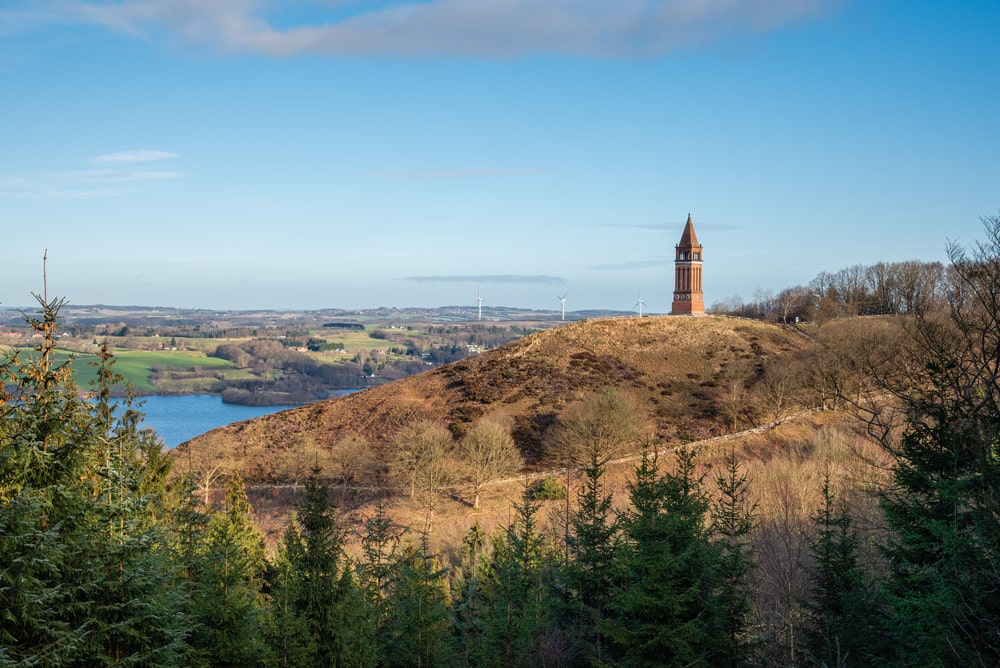
Himmelbjerget, which is often referred to as “The Sky Mountain,” is easily one of Denmark’s most iconic and picturesque hiking destinations.
Nestled in the heart of Jutland, this trail takes you to one of the country’s highest points, and it offers sweeping vistas of rolling hills, serene lakes, and charming countryside.
The Himmelbjerget Hill Trail is perfect for those of you who are seeking both natural beauty and a touch of Danish folklore.
Trail Snapshot
• Difficulty: Easy–Moderate
• Distance: 8 km (5 mi) round trip
• Elevation Gain: ~150 m (492 ft)
• Start / End: Himmelbjerget Visitor Center
• Highlights: Hilltop views, lakes, observation tower
Difficulty/Recommended Fitness Level
This hike is easy to moderate, which makes it accessible to hikers of various fitness levels. The well-maintained paths gently ascend to the summit, with only a few steeper sections that could maybe provide a mild challenge.
Distance
The Himmelbjerget Hill Trail covers approximately 8 kilometers (5 miles) round trip. The manageable distance allows for a comfortable hike that can be completed in half a day.
Elevation Gain
With an elevation gain of around 150 meters (492 feet), the trail offers a gradual ascent that will reward you with stunning panoramic views from the top. The climb is steady but not overly demanding.
Start and End Point
The hike begins and concludes at the Himmelbjerget Visitor Center, which is conveniently located near the base of the hill. The visitor center provides ample parking, restrooms, and informational exhibits about the region’s natural and cultural history. From here, you can follow the clearly marked trail signs that lead you through lush forests and open meadows all the way up to the hilltop.
Get to the Trailhead
Easy car access with parking.
Highlights & Landmarks
Himmelbjerget Tower, lakeside scenery, classic Danish countryside.
3. Gendarmstien Border Path
Gendarmstien, which is also known as the “Great Gander Trail,” is a captivating hiking route that stretches along the historic Danish-German border.
As you traverse Gendarmstien, you’ll encounter picturesque landscapes, villages, and poignant reminders of the region’s complex history.
Trail Snapshot
• Difficulty: Moderate
• Distance: 200 km (124 mi) total
• Elevation Gain: ~300 m (984 ft) overall
• Start / End: Padborg → Skovby
• Highlights: Coastlines, border history, villages
Difficulty/Recommended Fitness Level
Gendarmstien is considered moderate in difficulty, and it is suitable for hikers with a reasonable level of fitness. The trail features a mix of flat sections and gentle inclines, with some uneven terrain that requires careful footing.
Distance
The entire Gendarmstien Border Path spans approximately 200 kilometers (124 miles), which makes it one of Denmark’s longest and most comprehensive hiking trails.
Elevation Gain
Gendarmstien boasts a relatively gentle elevation profile, with an overall elevation gain of around 300 meters (984 feet) throughout the entire trail.
Start and End Point
Gendarmstien can be accessed from multiple points along the Danish-German border, and it offers lots of flexibility for hikers.
A common starting point is the town of Padborg in Southern Jutland, where you can find parking, accommodations, and essential amenities. From Padborg, the trail winds its way north towards the German border.
Get to the Trailhead
Accessible via public transport and road.
Highlights & Landmarks
Historic border posts, coastal scenery, WWII landmarks, traditional villages.
“First time on the trail? Hiking for Beginners has your back.”
4. Skagen Odde Coastal Trail
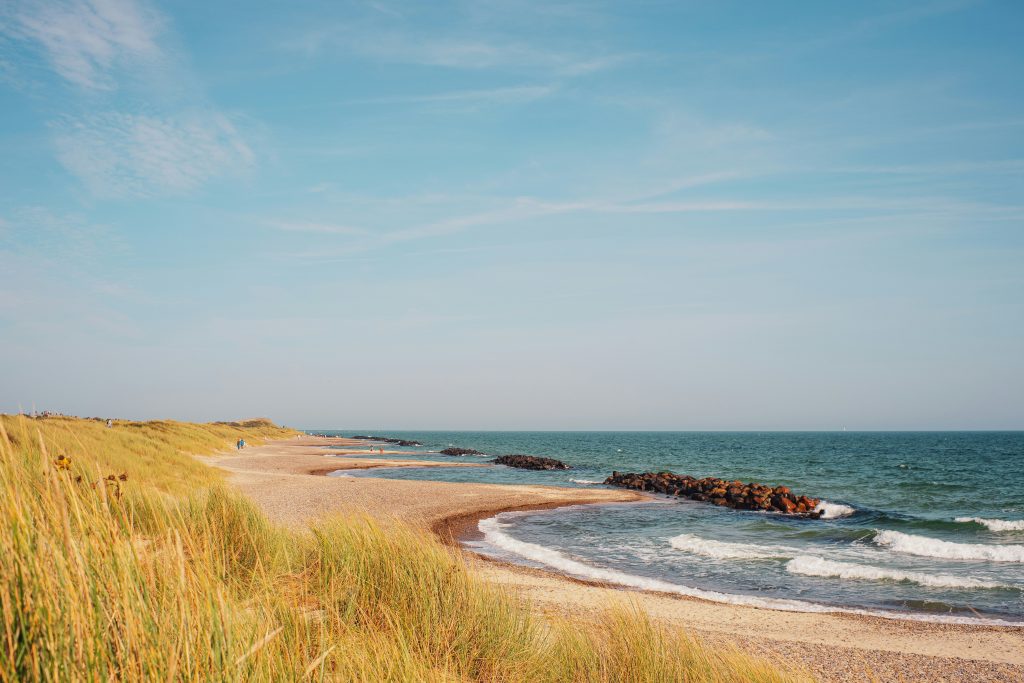
Skagen Odde, which is located at Denmark’s northernmost tip, is a stunning coastal trail that offers hikers the unique experience of walking along the meeting point of the North Sea and the Baltic Sea.
Trail Snapshot
• Difficulty: Easy–Moderate
• Distance: 12 km (7.5 mi) one way
• Elevation Gain: ~50 m (164 ft)
• Start / End: Grenen → Skagen
• Highlights: Two seas meeting, dunes, lighthouses
Difficulty/Recommended Fitness Level
The Skagen Odde Coastal Trail is rated as easy to moderate, suitable for hikers of various fitness levels. The path is generally well-maintained and mostly flat, with some sandy and uneven sections.
Distance
The Skagen Odde Coastal Trail spans approximately 12 kilometers (7.5 miles) one way, which allows you to explore the diverse landscapes at a comfortable pace.
Elevation Gain
With minimal elevation gain, the trail offers an easy ascent that total around 50 meters (164 feet) throughout the entire hike.
Start and End Point
The hike begins at Grenen, the northernmost point of Denmark, where the North Sea and Baltic Sea converge. Grenen is easily accessible by car or public transport and offers parking, restrooms, and visitor facilities.
Get to the Trailhead
Accessible by car or bus from Skagen.
Highlights & Landmarks
North Sea and Baltic Sea convergence, migrating dunes, coastal wildlife.
5. Rold Skov and Rebild Bakker Trail
Located in North Jutland, this trail weaves through dense woodlands in Denmark’s largest forest. It’s perfect for those who appreciate both serene forest paths and expansive hilltop views, which makes it one of Denmark’s most beloved hiking destinations.
Trail Snapshot
• Difficulty: Easy–Moderate
• Distance: 15 km (9.3 mi) loop
• Elevation Gain: ~100 m (328 ft)
• Start / End: Rebild area
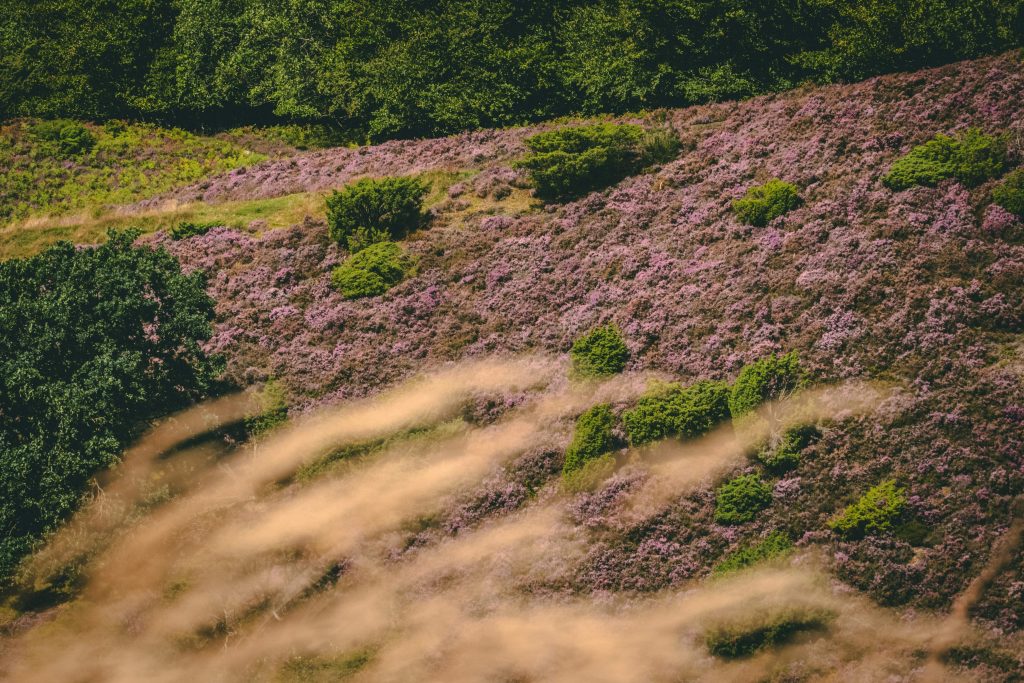
• Highlights: Forests, heathlands, viewpoints
Difficulty/Recommended Fitness Level
The Rold Skov and Rebild Bakker Trail is rated as easy to moderate, which makes it suitable for hikers of all fitness levels. The trail features well-maintained paths with gentle slopes and some moderate inclines.
Distance
This trail covers approximately 15 kilometers (9.3 miles) round trip, which offers a substantial hike that can be comfortably completed in a day.
Elevation Gain
The Rold Skov and Rebild Bakker Trail features a moderate elevation gain of around 100 meters (328 feet). The gradual ascent through the forest and up the hills of Rebild Bakker provides rewarding views at various points without being overly strenuous.
Start and End Point
The hike begins and ends at the Rebild Camping and Retreat Center, which offers ample parking, restrooms, and visitor facilities. Located at the edge of Rold Skov, the starting point provides easy access to the trailhead.
Get to the Trailhead
Accessible by car; parking available.
Highlights & Landmarks
Denmark’s largest forest, heather-covered hills, scenic overlooks.
6. Hammeren Coastal Trail
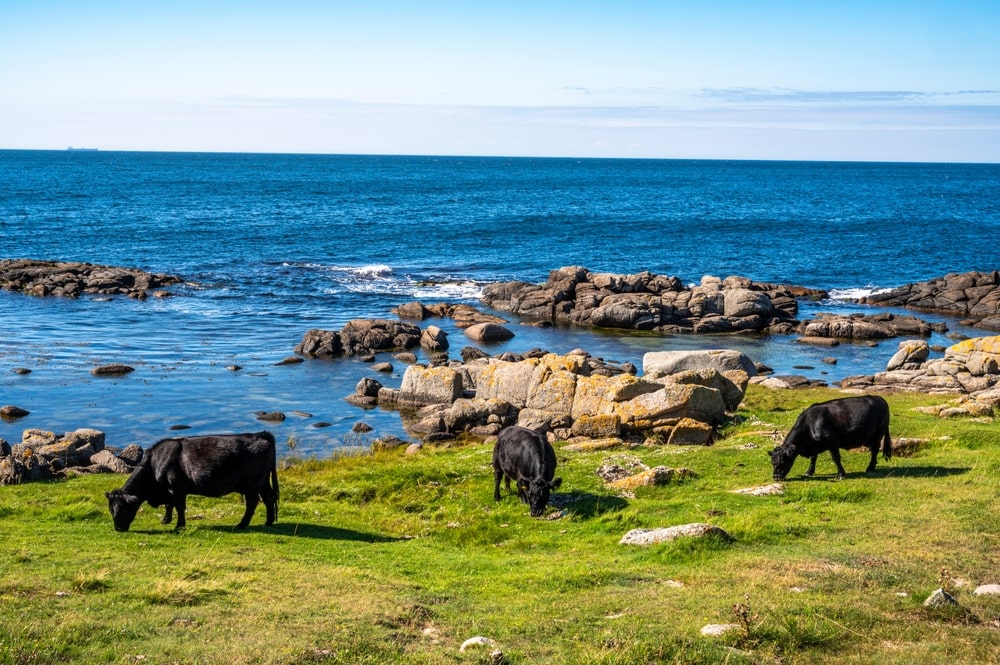
Hammeren, which is located on the northern tip of Bornholm, is a striking peninsula that is renowned for its rugged coastline, dramatic cliffs, and maritime heritage.
The Hammeren Coastal Trail will offer you an unforgettable journey along the edge of the Baltic Sea, where you can explore unique geological formations and some historical landmarks.
Trail Snapshot
• Difficulty: Moderate
• Distance: 8 km (5 mi) round trip
• Elevation Gain: ~100 m (328 ft)
• Start / End: Hammeren Car Park
• Highlights: Cliffs, lighthouse, rugged coast
Difficulty/Recommended Fitness Level
The Hammeren Coastal Trail is moderate in difficulty, which makes it suitable for those of you with a fair level of fitness.
Distance
The Hammeren Coastal Trail spans approximately 8 kilometers (5 miles) round trip, which provides a substantial hike that can be comfortably completed in a half-day.
Elevation Gain
With an elevation gain of around 100 meters (328 feet), the trail features a gradual ascent that offers rewarding views from elevated vantage points.
Start and End Point
The hike begins at the Hammeren Car Park, which is conveniently located near the Hammeren Lighthouse and visitor facilities. From the starting point, you’ll need to follow the clearly marked trail that winds along the coastline looping back to the car park.
Get to the Trailhead
Reachable by car on Bornholm.
Highlights & Landmarks
Hammeren Lighthouse, basalt cliffs, dramatic Baltic Sea views.
What to Bring for Hiking in Denmark
Here’s what you’ll want to remember to pack when you go hiking in Denmark:
- Footwear
- A reliable pair of hiking shoes or boots is really important for the Danish trails, which can range from sandy beaches to muddy forest paths. Waterproof footwear is a smart choice, and especially if you’re going to be exploring areas like the wetlands of Mols Bjerge or the rocky shores of Møn.
- A reliable pair of hiking shoes or boots is really important for the Danish trails, which can range from sandy beaches to muddy forest paths. Waterproof footwear is a smart choice, and especially if you’re going to be exploring areas like the wetlands of Mols Bjerge or the rocky shores of Møn.
- Clothing
- Denmark’s weather can be quite changeable, so layering is important to staying dry and comfortable on the trails. In the colder months you’ll want to start out with a moisture-wicking base layer to keep sweat away, and then add a warm mid-layer like a fleece for insulation, and top it off with a lightweight, waterproof jacket to protect against rain and wind. In the summer, breathable fabrics and a hat will help keep you cool.
- Denmark’s weather can be quite changeable, so layering is important to staying dry and comfortable on the trails. In the colder months you’ll want to start out with a moisture-wicking base layer to keep sweat away, and then add a warm mid-layer like a fleece for insulation, and top it off with a lightweight, waterproof jacket to protect against rain and wind. In the summer, breathable fabrics and a hat will help keep you cool.
- Backpack Essentials
- A comfortable backpack is an absolute must for carrying your essentials. Make sure to pack plenty of water to stay hydrated, especially on longer hikes. Snacks like energy bars, nuts, and fruit will keep your energy levels up. It’s also a good idea to bring a small first-aid kit, a map or GPS device, and a multi-tool for any unexpected needs that could pop up.
- A comfortable backpack is an absolute must for carrying your essentials. Make sure to pack plenty of water to stay hydrated, especially on longer hikes. Snacks like energy bars, nuts, and fruit will keep your energy levels up. It’s also a good idea to bring a small first-aid kit, a map or GPS device, and a multi-tool for any unexpected needs that could pop up.
- Other Essentials
- Don’t forget the little things that can make your hike smoother and more enjoyable. Sunglasses and sunscreen are important for protecting against the sun, even on cloudy days. Insect repellent can be a lifesaver in the summer months, and especially in forested or marshy areas.
🗒️ Free Checklist: “Never forget the essentials — grab your free Ultimate Hiking Packing List.”
Walking Holidays in Denmark
Denmark is ideal for walking holidays thanks to its gentle terrain, extensive trail network, and excellent infrastructure. Coastal paths like Gendarmstien and Skagen Odde are perfect for multi-day walks, while forest routes in Jutland and Bornholm allow for relaxed village-to-village travel.
Accommodation is widely available along major routes, and public transport makes point-to-point walking easy. Denmark is especially appealing for walkers who enjoy slow travel, cultural stops, and scenic coastal days without technical challenges.
“Plan less, walk more.” Pick a route, set your pace, and let Europe unfold under your boots: grab your free Walking Holiday ebook today”
Conclusion
In short, Denmark’s hiking trails offer a perfect blend of natural beauty, cultural richness, and accessible adventure. From the towering cliffs of Møns Klint to the serene forests of Bornholm, each trail provides a unique way to explore the country’s landscapes.
Where to Next?
If Denmark’s coastal paths, island walking, and easygoing trails have set the tone, there are plenty of nearby and further-afield destinations that build naturally on the same relaxed, scenery-first hiking style.
Nearby Countries & City Inspiration
Denmark’s flat terrain and strong walking infrastructure pair well with neighbouring countries that balance nature, culture, and easy logistics.
- Copenhagen – A City Guide for Walkers: Harbour loops, green parks, and coastal paths that turn city breaks into walkable adventures.
- Germany – Coastal trails, river paths, and well-marked long-distance routes just south of the Danish border.
- Sweden – Forest walks, archipelagos, and open-access trails that feel like a natural step up from Denmark.
Wider Hiking Inspiration
If you’re ready to expand beyond gentle terrain into longer routes or more varied landscapes, these make excellent next choices.
- South West Coast Path – A classic coastal walk with villages, sea views, and flexible sections.
- Netherlands – Flat, cycle-and-walk friendly routes through dunes, countryside, and historic towns.
- Scotland – For walkers ready to trade gentle coastlines for wilder landscapes and iconic long-distance trails.