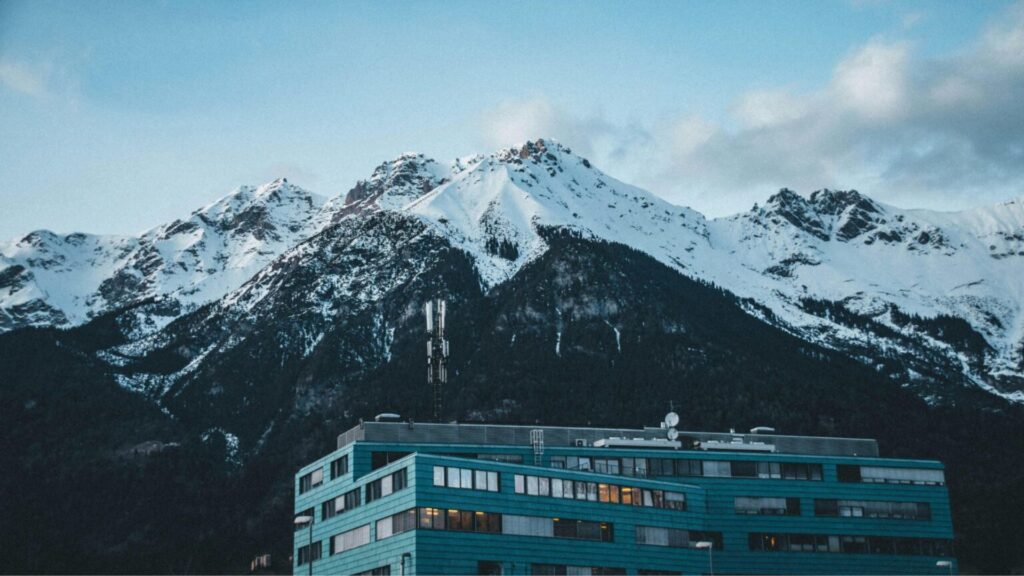
Munich is where cobblestones meet mountain trails, offering hikers easy access to riverside walks, alpine peaks, and lakeside rambles just beyond the city.
Munich isn’t just about beer steins and brass bands and Oktoberfest parades. It’s also one of the best jumping-off points for hiking in all of Europe!
The city sits right where the Bavarian Alps roll north into meadows and lakes, so regardless of whether you’re in the mood for a gentle riverside walk or a sweaty climb with cowbells echoing in the valley, you’ll find it here.
This guide will lay out precisely why Munich makes such a perfect home base for hikers, where to go for the best trails and views, how to get around without losing your way, where to grab gear or snacks, and what to do when your boots finally come off!
Looking for individual routes? See our Best Hikes in and Around Munich guide for distances, route information, highlights, and access details.
- Munich Hiking at a Glance
- Why Hike in Munich?
- Best Hiking Areas in and Around Munich
- Taking a Walking Holiday in Munich
- Exploring Munich on Foot
- Planning a Hiking Trip to Munich
- Getting Around and Trail Access
- Where to Stay for Walking and Hiking in Munich
- Beyond the Trails – More Than Walking
- One City with Endless Trails
- FAQs About Walking and Hiking in Munich
- Where to Next?
Munich Hiking at a Glance
- Best for: Combining city walking, lakes, Alpine day trips and easy public-transport access to the mountains
- Main hiking areas: Isar River, Starnberger See, Ammersee, Tegernsee and the Bavarian Alps
- Best time to visit: Late spring to autumn for most walking, with mountain conditions varying by elevation
- Car needed: No for many popular walks and day trips; useful for smaller valleys and less accessible trailheads
- Getting around: Walking, U-Bahn, S-Bahn, tram, bus, regional train and rental car
- Suggested stay: 3–5 days for Munich plus one or two longer day hikes
- Typical terrain: City paths, riverside tracks, lakeside trails, forest paths, Alpine meadows and mountain routes
- Good for beginners: Yes, with plenty of city, river and lake walking before moving into steeper Alpine terrain
- Best city walk: Isar River and Englischer Garten
- Best lake escape: Tegernsee or Starnberger See
- Best easy-access mountains: Bavarian Alps south of Munich
- Best city viewpoint: Olympiaberg
- Best for a bigger hiking day: Herzogstand, Wendelstein or Kampenwand
- Main challenge: Mountain conditions can be very different from the weather in Munich, so route choice needs to match the season and elevation
“Avoid rookie mistakes. Our free ebook Hiking for Beginners shows you how.”
Why Hike in Munich?
Munich is the kind of place that spoils walkers.
In the morning you could be sipping coffee in Marienplatz and listening to the Glockenspiel, and then by lunchtime you’re going to be on a mountain ridge with the Alps stretching out in every direction.
That’s the beauty of it: city life and alpine life practically shake hands here.
You don’t have to choose between the two. You can have both in the same day!
And it’s not just the Alps.
The Isar River slices right through town with pebbled banks and miles of paths that make you forget you’re in a major city. Then there are the lakes, which run clear, deep, and ringed with trails.
It’s easy to see why Munich is such a strong playground for walkers and hikers.
If Munich is part of a longer trip, our Ultimate Guide to Hiking in Germany covers the country’s main hiking regions, landscapes and practical planning information.
Cultural & Historical Appeal
Munich’s hiking isn’t just about the trails.
It’s about the stories along the way.
Wander the Englischer Garten and you’ll pass surfers riding the Eisbach wave before stumbling across large open lawns, paths, and traditional gathering places beneath old chestnut trees.
Take the Isar trail south and you’ll cross bridges that have been part of the city’s lifeblood for centuries.
Even palace gardens like Nymphenburg or Schleissheim double as walking routes, blending nature with history in a way that feels uniquely Bavarian.
Landscape & Scenery
The scenery around Munich has range.
To the north and west it’s rolling meadows and lakes, with places like Starnberger See and Ammersee sparkling in the sun.
To the south, the land suddenly crumples into proper mountains: rugged peaks, alpine meadows, and trails where cows outnumber hikers some days.
Right through the middle runs the Isar, a river so clear and wild it feels like an escape all its own.
Wherever you wander, you’ll find postcard views waiting around the corner.
Best Hiking Areas in and Around Munich
Munich is ringed with hiking regions like beads on a necklace.
From easy river walks and lake loops to much steeper Alpine days, there’s enough variety here to build several completely different trips from the same city base.
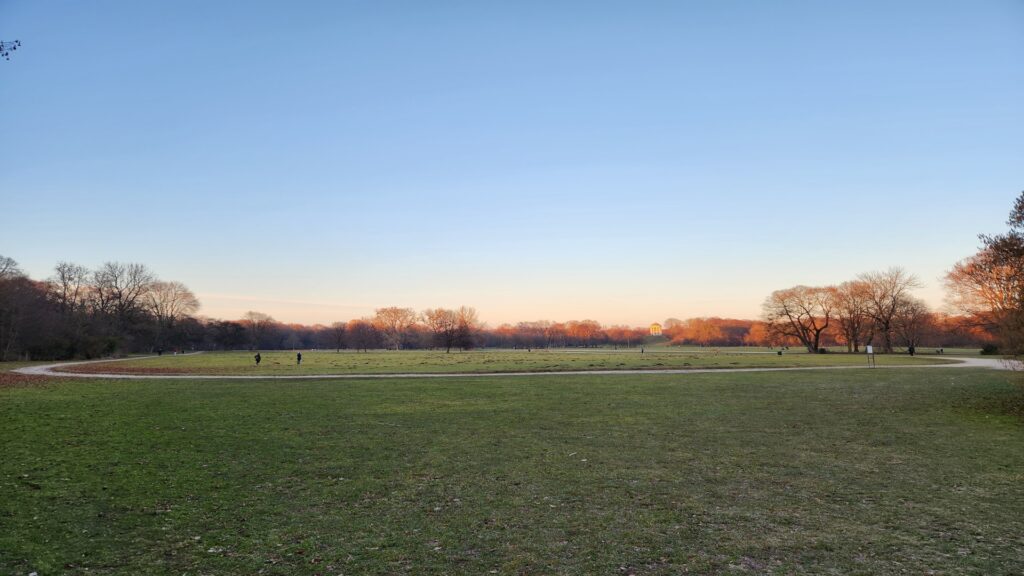
The Isar
The Isar trails are easy, local, and perfect for a sunny afternoon.
You can follow riverside paths through and beyond the city without needing to organise a full hiking day, making this one of the easiest ways to add some proper walking to a Munich city break.
It’s also a useful option when you want to keep things simple between bigger mountain days.
Starnberger See and Ammersee
If lakeside loops call your name, Starnberger See and Ammersee both deliver breezy trails with Alpine backdrops.
The landscape is gentler than the mountain regions farther south, which makes the lakes particularly useful for easier walking days.
Tegernsee
Tegernsee bridges the gap nicely between lakeside walking and proper mountain terrain.
You can keep things relatively relaxed around the lake or use the area as a starting point for hillier routes above the water.
For walkers who want that classic combination of lake, villages, and Alpine scenery, it’s one of the strongest day-trip options from Munich.
If you’re planning a day here, the official Tegernsee hiking guide has current information and additional walking routes around the lake and surrounding mountains.
The Bavarian Alps
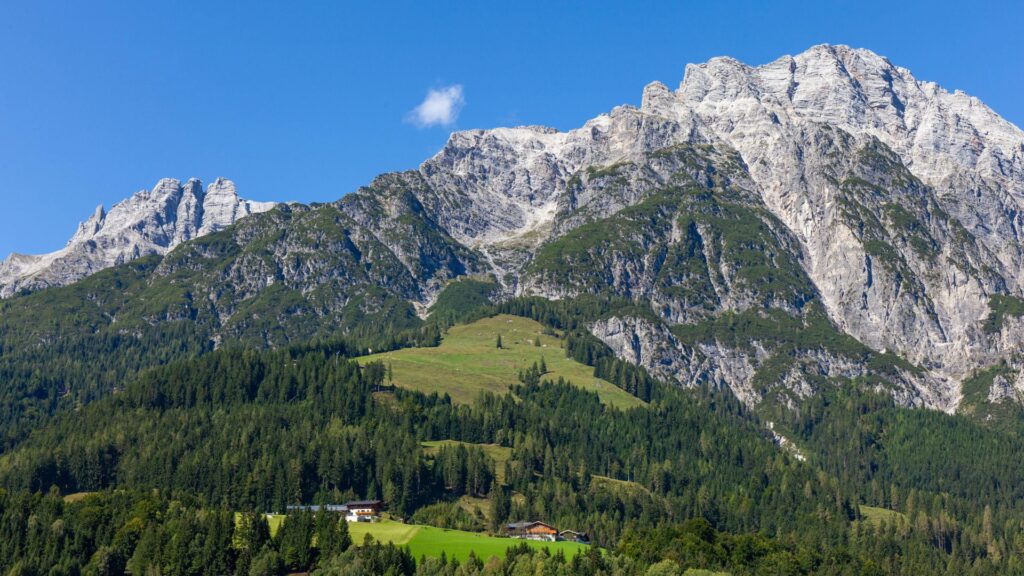
For more dramatic hikes, hop a train south into the Bavarian Alps.
Herzogstand, Wendelstein, and Kampenwand are local legends, with much bigger elevation, mountain scenery, and a completely different experience from walking the Isar or city parks.
Each area has its own flavour, but they’re all close enough that Munich ultimately feels like the hub of it all.
For additional city walks and day-hike ideas, the official Munich hiking guide covers routes both within Munich and throughout the surrounding region.
Taking a Walking Holiday in Munich
Munich works particularly well for a walking holiday because you can keep the city as your base while changing the type of walking almost every day.
One day might involve the Isar, Englischer Garten, and a long wander through central Munich, while the next takes you around a lake or directly into the Bavarian Alps.
Public transport makes this style of trip particularly practical.
You can stay in Munich, use regional trains and the S-Bahn for many day trips, and return to the same accommodation each evening rather than constantly moving bags between towns.
With more time, Munich also works naturally as part of a broader walking holiday in Germany. You can combine Bavaria with other hiking regions elsewhere in the country, or use the city as a stepping stone towards neighbouring Austria.
For walkers who enjoy mixing culture, lakes, city exploration, and mountain days, Munich gives you an unusually wide range of options from one base.
“From Alps to coastlines, our free Walking Holiday guide helps you plan smarter.”
Exploring Munich on Foot
Not every good walk around Munich requires a train towards the mountains.
The city itself offers riverside paths, historic squares, large parks, palace gardens, and enough quieter neighbourhood walking to fill a day without following a formal trail.
Best Viewpoints in Munich
If you want a quick reward without leaving town, climb Olympiaberg in Olympiapark.
It’s a rubble hill left over from WWII, but from the top you get a sweeping view of the city and, on a clear day, the Alps shimmering on the horizon.
Another favourite is the tower at St. Peter’s Church.
Sure, the stair climb will make your legs complain, but the red-tiled rooftops and snow-tipped mountains beyond are worth every step.
The Isar and Englischer Garten
The Isar gives Munich one of its most obvious natural walking corridors.
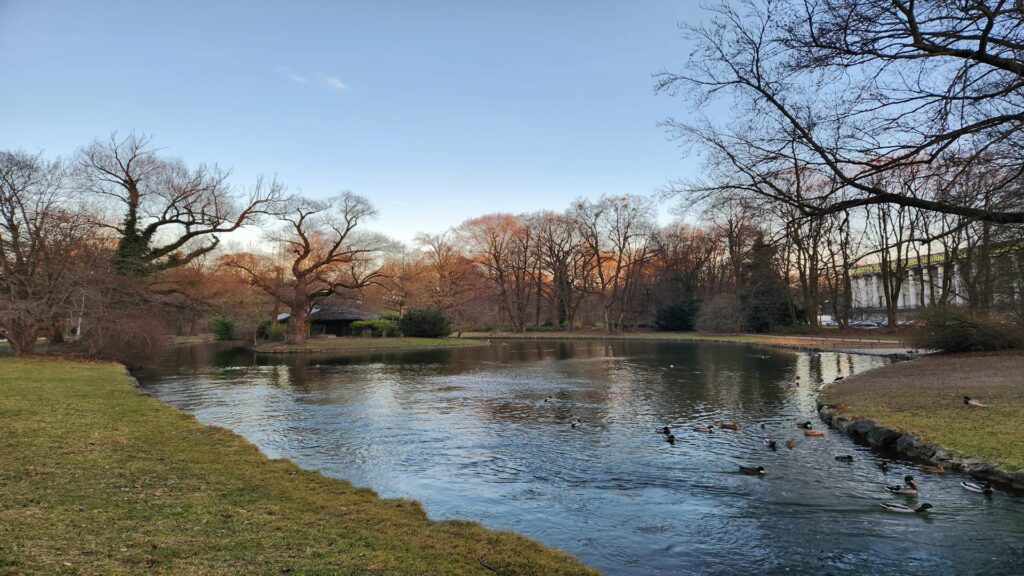
Its riverside paths can be combined with the huge Englischer Garten, where open lawns, wooded paths, waterways, and city life all overlap.
Together, they give you an easy way to spend several hours walking without ever needing to leave Munich.
Palace Gardens and Historic Munich
Nymphenburg and Schleissheim show a different side of city walking.
Their palace grounds, formal gardens, waterways, and surrounding paths combine history with open space, while central Munich itself rewards slow wandering around Marienplatz, the Altstadt, and nearby markets.
Planning a Hiking Trip to Munich
Best Time to Visit
Spring is fresh and green, and you’ll find flowers along the river and snowy mountains still peeking out in the distance.
Summer brings long daylight hours and lake hikes that always seem to end with a swim.
Autumn is hard to beat too thanks to the golden forests, crisp air, and the changing colours around the lakes and lower hills.
Winter?
Sure, it’s chilly, but it also opens up a very different side of Bavaria, with snowy walks and winter activities in the mountain regions.
For higher Alpine routes, conditions can remain wintry well beyond the city’s spring season, so mountain plans should always match the conditions rather than the weather in central Munich.
Planning to explore beyond Bavaria? Our 7 Best Hikes in Germany are a good starting point for finding bigger walking adventures around the country.
What to Bring
What you need in Munich depends heavily on whether you’re spending the day along the Isar or heading into the Alps.
Comfortable walking shoes are plenty for most city routes, parks, palace grounds, and easier riverside walks.
For mountain routes, proper hiking footwear with reliable grip becomes much more important, along with a small daypack, water, snacks, sun protection, and a lightweight waterproof layer.
An extra warm layer is worth carrying in the mountains even when Munich itself feels comfortable, as conditions can change considerably with elevation.
For longer hikes, offline navigation or a downloaded route is also useful.
Left your boots behind or realised you’ll need a rain jacket?
Munich has plenty of options for replacing missing equipment.
The original guide highlights Globetrotter and SportScheck as useful places for outdoor gear, while bakeries around the city make it easy to pick up practical food for the trail.
🗒️ Free Checklist: “Never forget the essentials — grab your free Ultimate Hiking Packing List.”
Getting Around and Trail Access
Munich makes it ridiculously easy to reach trails without a car.
Public Transport
The S-Bahn takes you towards lakes, while regional trains head south towards the Alps.
From some stations, you can step off the train and be close to walking routes remarkably quickly.
That convenience is one of Munich’s strongest advantages as a hiking base.
Public transport also makes it possible to build a trip around several completely different areas without renting a vehicle for the entire stay.
Driving and Parking
Having a car opens up smaller valleys and less-crowded peaks, especially if you’re looking for places not served conveniently by rail.
But on weekends, popular lake and mountain parking areas can fill early.
If you’re set on driving, think like a hiker: start early.
Airport and Regional Links
Munich International Airport makes the city a useful gateway not just to Bavaria but to a wider Central European walking trip.
Rail connections open up onward travel towards other parts of Germany as well as nearby Austrian destinations.
Salzburg and Innsbruck can both fit naturally into a longer itinerary for walkers who want to keep heading towards the Alps.
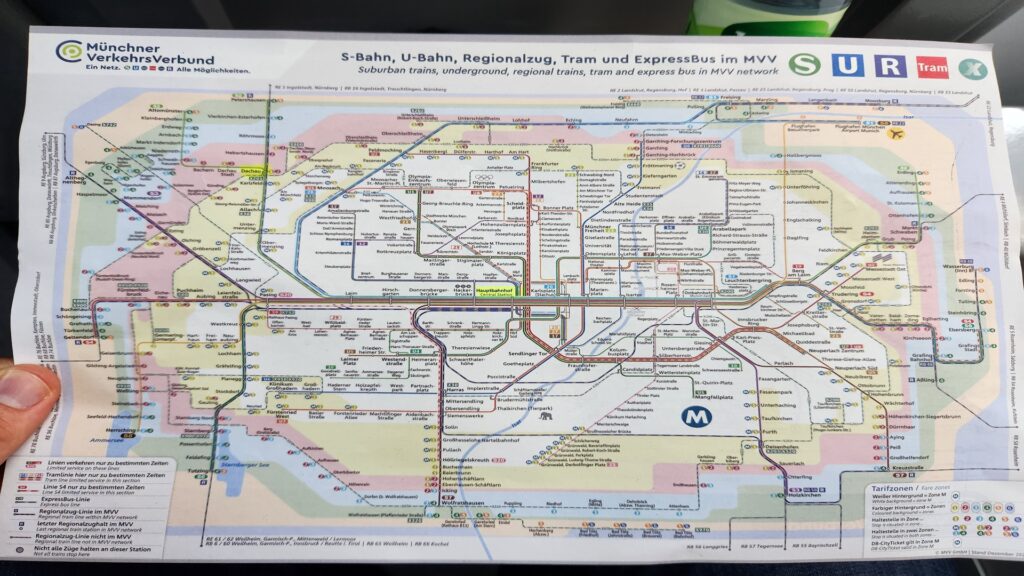
Take a few moments to familiarize with the Munich transport network – as it can seem quote overwhelming at first glance!
Where to Stay for Walking and Hiking in Munich
Munich is well connected enough that you do not need to stay beside a trailhead to make the most of the city and surrounding hiking areas.
For most walkers, the best base will depend on whether you want historic sightseeing outside your door, easy access to the Isar and parks, or quicker rail connections for days heading south towards lakes and the Alps.
Altstadt and the City Centre
Staying in or close to Munich’s Altstadt is the easiest option for a first visit.
You’ll be within walking distance of Marienplatz, Viktualienmarkt, the Englischer Garten and many of the city’s main sights, while public transport makes it straightforward to head towards lakes and mountain areas.
It works particularly well if you want to split your trip fairly evenly between sightseeing and hiking.
Maxvorstadt
Maxvorstadt is a useful central option with good transport links and easy access to museums, parks and the northern side of the city centre.
It suits travellers who want to stay close to Munich’s cultural attractions without being directly in the busiest part of the Altstadt.
You can still reach the Isar, Englischer Garten and main rail connections without much effort.
Haidhausen
Haidhausen works well for walkers who want a slightly more local neighbourhood feel while staying close to the centre.
Its position east of the Isar makes river walking easy, while transport links keep the rest of Munich and regional rail connections within reach.
It is a good compromise between atmosphere, walkability and practical access.
Near München Hauptbahnhof
Staying near the main railway station is more practical than scenic, but it can make a lot of sense if you are planning several day trips.
You’ll have straightforward access to trains heading towards lakes, Alpine towns and other Bavarian destinations while remaining close to central Munich.
For walkers treating Munich mainly as a base for regional hiking, that transport convenience can outweigh the lack of neighbourhood charm.
For most first-time visitors, the Altstadt or Haidhausen offers the best balance of walkability, atmosphere and transport, while the area around Hauptbahnhof is particularly useful for frequent hiking day trips.
Beyond the Trails – More Than Walking
Munich shines as a walking holiday base because when your legs need a break, the city keeps the trip interesting.
Cultural Highlights
The museums here are no joke.
The Deutsches Museum could swallow a whole day, with exhibits ranging from old planes to modern space technology.
Art lovers will find the Pinakothek galleries packed with European masterpieces, while history buffs can wander the Residenz Palace or Nymphenburg’s sprawling gardens.
And then there’s Viktualienmarkt, where local life plays out between food stalls and flower vendors.
Food and Local Specialities
Every hiker knows the joy of a proper meal after a long day, and Munich has no shortage of local food to try.
Traditional Bavarian menus include dishes such as Weisswurst, schnitzel, roast pork, dumplings, pretzels, and plenty of bakery food that travels well on easier walking days.
Markets and traditional gathering places around the city also make food part of the wider Munich experience rather than something completely separate from the walking.
Day Trips
Munich is a launchpad to some of Bavaria’s greatest hits.
Neuschwanstein Castle is within reach, with walking opportunities around the surrounding landscape.
Tegernsee is perfect for a lake-and-mountain combination day trip.
Farther afield, Salzburg and Innsbruck sit across the Austrian border and provide another major dose of Alpine culture and hiking.
You’ll struggle to run out of options.

One City with Endless Trails
Munich isn’t just a city of traditional Bavarian culture and baroque palaces.
It’s also a city that practically hands you a pair of boots and points you towards the mountains.
Here, you can start the day with coffee in the Altstadt and hike a ridge by afternoon.
It’s a rare mix of city charm and Alpine adventure that keeps hikers coming back.
So lace up, grab something for the trail, and let Munich show you just how varied a walking holiday can be.
The only real dilemma?
Choosing which trail to take first!
FAQs About Walking and Hiking in Munich
Is Munich a good city for walking?
Yes.
Munich is easy to explore on foot, with historic streets, large parks, palace gardens and long riverside paths along the Isar.
The city itself provides plenty of easier walking before you even start thinking about lakes or the Alps.
Is Munich a good base for hiking?
Yes.
Munich is one of Germany’s strongest city bases for hiking because lakes, foothills and Alpine destinations can all be reached as day trips.
You can stay in the city and combine urban walking with very different mountain and countryside experiences throughout the same trip.
Can you hike around Munich without a car?
Yes.
Many popular hiking areas can be reached using the S-Bahn or regional trains, including several lakes and Alpine towns south of Munich.
A car is mainly useful for smaller valleys, less accessible trailheads or places where public transport is limited.
What is the best time to hike around Munich?
Late spring through autumn is generally the most practical period for hiking around Munich.
Lower routes and lakeside walks become accessible earlier, while higher Alpine trails may still hold snow well into the warmer months.
Always check mountain conditions separately from the weather forecast for central Munich.
Is Munich suitable for beginner hikers?
Yes.
The Isar, Englischer Garten, palace grounds and lakeside routes provide plenty of gentler walking options.
Beginners can build up from these easier days before choosing steeper mountain routes in the Bavarian Alps.
Is Tegernsee a realistic day trip from Munich?
Yes.
Tegernsee is one of the most practical hiking and walking day trips from Munich.
It combines lake scenery, villages and access to hillier routes, making it suitable for anything from a relaxed walking day to a more substantial hike above the lake.
Is Munich suitable for a walking holiday?
Yes.
Munich works especially well for travellers who want variety.
You can combine city walking, riverside paths, lake days and Alpine hiking while staying in one main base, and the city also fits naturally into a broader walking holiday in Germany.
Where to Next?
Once Munich has worked its charm, there are plenty more walking and hiking opportunities nearby.
- Best Hikes in and Around Munich – Explore detailed routes, distances, highlights, and practical access information around the city.
- Ultimate Guide to Hiking in Germany – Get a broader overview of Germany’s main hiking regions and landscapes.
- Best Hikes in Germany – Discover standout mountain, forest, lake, and countryside routes across the country.
- Walking Holiday in Germany – Plan a longer trip through Bavaria, the Black Forest, and other walking regions.
- Hiking in Innsbruck: A City Guide for Walkers – Explore another Alpine city built around easy access to the mountains.