
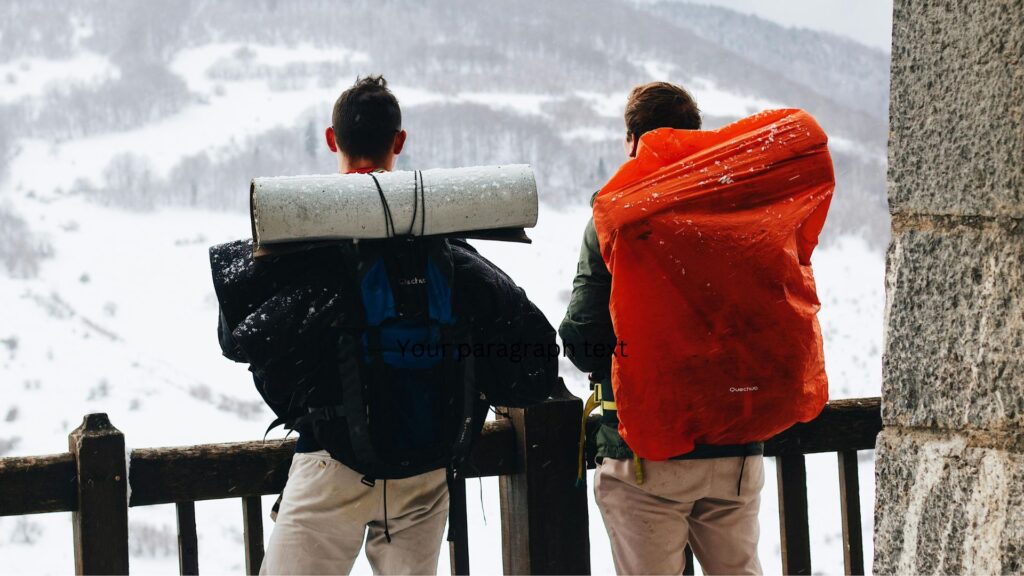
Getting the wrong backpack is one of those mistakes you don’t fully appreciate until you’re three days into a trip with a pack that sits badly, digs in at the hips, and makes every uphill feel harder than it should.
By that point there’s honestly not much you can do about it!
For most multi-day hiking and walking holidays, something in the 35 to 50 litre range is where the majority of people land.
It’s enough space to carry what you actually need without giving you enough rope to overpack, which is a trap worth avoiding.
Go longer, go colder, or take on a route where you’re carrying everything yourself with no resupply, and the calculation changes.
Bigger packs start making sense when the kit list genuinely demands them, not before.
This guide works through how to make that decision based on how you actually hike rather than pointing you at specific brands.
The right pack is the one that fits your body, suits your style, and handles the routes you’re planning without making you miserable in the process.
- Quick Guide: Choosing the Right Backpack at a Glance
- How to Choose a Backpack (35–70L)
- Backpacks in Real Hiking Conditions
- Common Mistakes to Avoid
- Fit, Comfort & Practical Tips
- How a Backpack Fits Into Your Overall Setup
- Care, Maintenance & Lifespan
- Best Backpacks for Hiking (by Use Case)
- FAQs About Hiking Backpacks
- Where to Next?
Quick Guide: Choosing the Right Backpack at a Glance
Use these as starting points to match your pack to your hiking style.
Walking Holidays & Inn-to-Inn Routes (35–45L)
Balanced packs that carry essentials comfortably without excess bulk.
Multi-Day Hiking (3–5 Days) (40–50L)
Slightly larger capacity for extra clothing, food, and flexibility.
Long-Distance Treks & Remote Routes (50–70L)
Larger packs designed to carry more gear, food, and potentially camping equipment.
Lightweight & Fast-Paced Hiking
More compact, streamlined packs that prioritise mobility and reduced weight.
Cold Weather or Variable Conditions
Packs with enough space to handle bulkier clothing and changing conditions.
“Every hiker starts somewhere — grab your free Hiking for Beginners guide.”
How to Choose a Backpack (35–70L)
Backpacks aren’t just about size.
They’re also about how weight is carried, how stable the pack feels, and how comfortable it remains after hours (or days) on the trail.
Why 35–50L Is the Core Range
Most hikers who spend any time figuring out their kit eventually land in this range, and for good reason.
It’s enough space to carry everything you genuinely need for several days on the trail without becoming a structural engineering problem every time you try to lift it off the ground.
For inn to inn walking holidays, hut to hut routes, and most well supported multi-day hiking in the UK and Europe, this range handles the job comfortably.
For inn to inn walking holidays, hut to hut routes, and most well supported multi-day hiking in the UK and Europe, this range handles the job comfortably.
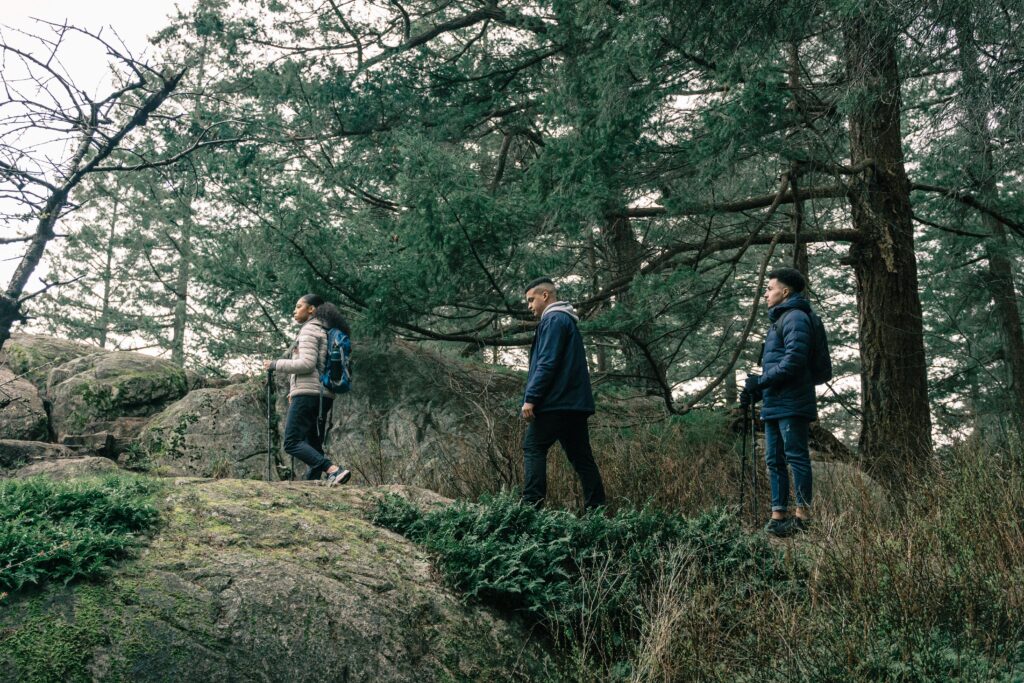
Different types of walking holidays place different demands on your pack size and gear requirements
You’re not cramming kit in or strapping things to the outside because nothing fits, but you’re also not wandering around with a half empty pack that moves around on your back because you brought forty litres for a three day trip.
For a lot of hikers this is genuinely the only size they will ever need.
If the routes you’re planning are supported, the conditions are reasonable, and you’re not carrying camping gear, there’s a strong argument for never going bigger.
When You Should Consider 50L+ Packs
Larger packs exist for a reason but that reason is not “I want more room for stuff I might need.”
If you’re pulling a bigger pack off the shelf, there should be a genuine justification for it.
Camping gear is the most common one. Tent, sleeping mat, and a sleeping bag that isn’t compressible take up real space and a 45 litre pack will tell you about it quickly.
Cold weather kit is bulkier than people expect, several days of food adds up fast, and remote unsupported routes where you’re carrying everything between resupply points all push you toward needing more capacity.
In short, the trade-off is simple:
- More capacity = more weight + more bulk
- Less capacity = less flexibility but easier movement
The goal is not to maximise space; it’s to carry only what you need comfortably.
Fit and Comfort: The Most Important Factor
A backpack can have all the features in the world, but if it doesn’t fit properly, it won’t work.
A backpack can have all the features in the world, but if it doesn’t fit properly, it won’t work. Comfort also depends on your footwear system, including choosing the right hiking socks for long days on the trail.
Look for the following features:
- a secure fit around your torso
- shoulder straps that sit comfortably without pulling
- weight that transfers effectively through the pack
Unlike daypacks, larger backpacks rely heavily on fit and structure, not just simplicity.
🗒️ Free Checklist: Planning your next hiking trip?? Download our printable hiking checklist to make sure you don’t miss the essentials.
Weight Distribution and Load Carrying
As pack size increases, weight management becomes more important.
Good backpacks will do the following:
- distribute weight evenly
- stay stable while walking
- don’t shift excessively on uneven terrain
Poor weight distribution, however, leads to:
- shoulder fatigue
- lower back strain
- instability on descents
This becomes especially noticeable on multi-day hikes.This becomes especially noticeable on multi-day hikes.
Building strength through dedicated hiking exercises can make carrying heavier loads far more manageable.
Structure vs Weight
Lightweight packs are genuinely excellent right up until you put serious weight in them, at which point they start to feel like carrying a heavy shopping bag rather than a piece of hiking kit.
Without enough structure the load shifts, the back panel offers little support, and what felt comfortable becomes uncomfortable fast once it’s loaded up properly.
More structured packs with internal frames and stiffer back panels handle weight in a completely different way.
The load sits against your back properly, transfers through the hipbelt, and stays put over long distances instead of moving around with every step.
The trade off is that they’re heavier before you’ve put anything in them.
For most people in the 35 to 50 litre range a middle ground works best, enough structure to carry a few days of kit comfortably without unnecessary weight built into the pack itself.
Once you move into 50 litres and beyond, structure stops being optional. The loads you’re carrying at that point demand it.
Organisation and Accessibility
The best organisation system is one you stop noticing because everything is exactly where you expect it to be.
The worst is the one where finding your waterproof jacket means pulling half the pack apart in the rain while the weather gets worse.
A clean main compartment that fits your kit without a fight, a couple of pockets you can reach without taking the pack off, and somewhere sensible to put the things you need regularly during the day. That’s really all it takes.
Where packs go wrong is overcomplication. Lots of pouches, dividers, and compartments that seemed useful in the shop but in practice just mean more places to lose things and more zips to check before you leave.
Simple, logical, and accessible beats elaborate every time!
Backpacks in Real Hiking Conditions
Where and how you hike changes what works best. With that in mind, you can reference the following:
Walking Holidays & Hut-to-Hut Routes
- lighter loads
- more consistent daily use
- comfort over time is key
A well-balanced 35–45L pack is usually ideal here.A well-balanced 35–45L pack is usually ideal here.
If you’re planning longer European routes, our guide to walking holidays in Europe can help you understand the types of trips where this pack size performs best.
Multi-Day Hiking (3–5 Days)
- slightly more gear
- extra food and layers
- more variation in conditions
A 40–50L pack offers flexibility without becoming bulky.
Long-Distance Treks & Remote Routes (50L+)
- higher gear demands
- less access to resupply
- greater need for self-sufficiency
Here, larger packs make sense — but only when required.Here, larger packs make sense — but only when required.
Proper trek planning helps determine how much gear, food, and water you’ll actually need to carry.
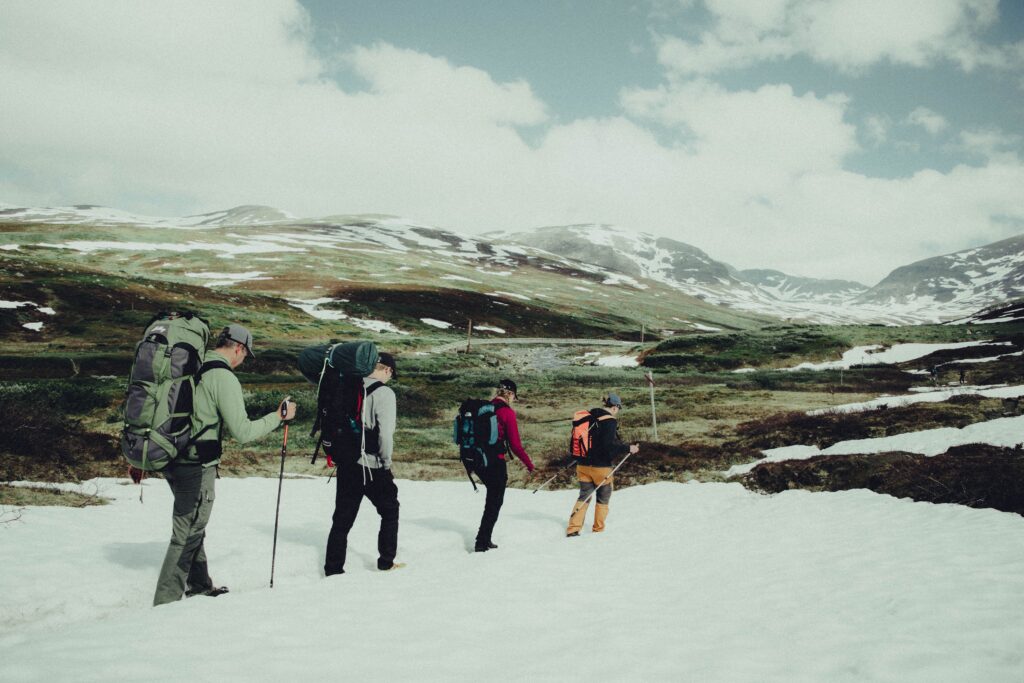
Cold Weather Hiking
- bulkier clothing
- additional layers
- more space required
This is another scenario where larger packs become useful.
Common Mistakes to Avoid
The most common mistakes that you’ll want to avoid are:
- choosing a pack that’s too large “just in case”
- overpacking because space allows it
- ignoring fit in favour of features
- assuming all packs carry weight equally
- underestimating how weight feels over time
The right pack is the one that carries what you need, and not everything you might need.
Fit, Comfort & Practical Tips
Testing a pack empty in a shop tells you almost nothing useful.
It needs weight in it, ideally something close to what you actually plan to carry, before you get any honest feedback about how it fits and behaves.
Once it’s loaded, take the time to adjust it properly. Hipbelt sitting on the hip bones, shoulder straps following the curve of your shoulders, load lifters pulled to bring the weight in close.
Then walk around, move your arms, bend forward, simulate something resembling actual movement. A pack that feels fine standing still in a shop can feel completely different after an hour on uneven ground.
Comfort is something that reveals itself over time, not in the first five minutes. If something feels slightly off during a brief test, it will feel significantly worse after a full day on the trail.
How a Backpack Fits Into Your Overall Setup
Your pack doesn’t exist independently of everything else you’re carrying, and the choices you make elsewhere in your kit have a direct impact on what size you need and how comfortable it is to carry.
A bulky layering system takes up real space.
Waterproofs that compress down small are a completely different packing proposition to stiff shell jackets that refuse to fit anywhere sensibly.
How you handle food and water, are often the heaviest consumable items you carry
The hikers who end up with the most comfortable setups are usually the ones who thought about everything together rather than making decisions in isolation.
A well matched system where each piece of kit earns its place and nothing is redundant makes the whole thing lighter, more manageable, and a lot more enjoyable to carry across several days.
See our full range of Buyers Guides to help you build out your setup
Care, Maintenance & Lifespan
A decent backpack will last years if you treat it reasonably well, and fall apart faster than it should if you don’t.
Consistently overloading it puts stress on the stitching, the framesheet, and the hipbelt foam that adds up quietly over time until something gives when you’d really rather it didn’t.
Keep it clean, especially after muddy or wet trips where dirt works its way into zips and fabric.
Let it dry out properly before storage rather than stuffing it damp into a cupboard.
Check the straps and stitching occasionally, particularly around the hipbelt and shoulder attachment points where the load concentrates.
The part that tends to go first on heavily used packs is the hipbelt padding, which compresses over time and stops transferring load the way it should.
By the time you notice it your back has probably been telling you about it for a while.
Best Backpacks for Hiking (by Use Case)
If you want to refine your choice further, these guides break things down into more specific scenarios:
Best Backpacks for Walking Holidays
Balanced packs designed for comfort over consecutive days.
Best Lightweight Multi-Day Hiking Backpacks
Streamlined options that reduce fatigue over longer distances.
Best Backpacks Under 50L
Versatile packs for most multi-day hiking scenarios.
Best All-Weather Hiking Backpacks
Durable options suited to wet and variable conditions.
Best Large Backpacks (50L–70L) for Long Treks
Packs designed for carrying heavier loads on extended or unsupported routes.
FAQs About Hiking Backpacks
Is 35L enough for multi-day hiking?
For lighter setups or walking holidays, yes. For heavier or colder conditions, you may need more.
Should I go bigger just in case?
Usually not; larger packs often lead to overpacking.
When do I need a 50L+ pack?
When carrying camping gear, extra food, or bulkier equipment.
Are heavier packs more comfortable?
Not necessarily; good fit matters more than weight alone.
How long should a backpack last?
With proper care, many last for years of regular use.
Where to Next?
- Ultimate Guides – your gateway to hiking across Europe
- Hikes & Trails – curated lists of the best hikes and local gems
- Walking Holidays – extended journeys for when a single day just isn’t enough
- General Blog – all the extras: gear reviews, planning tips, and personal stories


