Most people arrive in Fort William with their eyes on one thing: the summit of Ben Nevis.
The surprising truth?
The most memorable days are often found on the trails less travelled, deep in the glens and across the ridges most visitors completely overlook.
It’s the secret whispered between seasoned hikers: the real magic isn’t just about the highest peak, but the sheer variety of world-class walking at its base.
Fort William sits among some of Scotland’s most dramatic mountain scenery and makes an excellent base for combining big mountain days with scenic walks and longer-distance routes.
For anyone planning a longer walking holiday in Scotland, it’s one of the most obvious places to start.
- Fort William Hiking at a Glance
- Why Hike in Fort William?
- Best Hiking Areas Around Fort William
- Signature Hikes Around Fort William
- Taking a Walking Holiday in Fort William
- Planning a Hiking Trip to Fort William
- Getting Around and Trail Access
- Highland Walking Culture
- Putting It Into Practice
- FAQs About Hiking in Fort William
- Fort William: More Than Ben Nevis
- Where to Next?
Fort William Hiking at a Glance
- Best for: Mountain hiking, Munros, ridge walking, Highland scenery and longer-distance routes
- Main hiking areas: Ben Nevis, Glen Nevis, the Nevis Range and the Mamores
- Best time: Late spring or early autumn for a balance of daylight and conditions
- Terrain: Mountain tracks, rocky trails, glens, steep climbs and exposed ridges
- Good for beginners: Lower-level walks are available, but many mountain routes require experience and preparation
- Most famous hike: Ben Nevis
- Best lower-level experience: Steall Falls and Nevis Gorge
- Best for experienced ridge walkers: The Mamores and Ring of Steall
- Long-distance connection: West Highland Way
- Main challenges: Fast-changing mountain weather, navigation, midges and significant elevation on many routes
Looking specifically for individual routes? Our Best Hikes in and Around Fort William guide covers the walks themselves in more detail.
Why Hike in Fort William?
Fort William is often called Scotland’s outdoor capital, and it doesn’t take long to understand why.
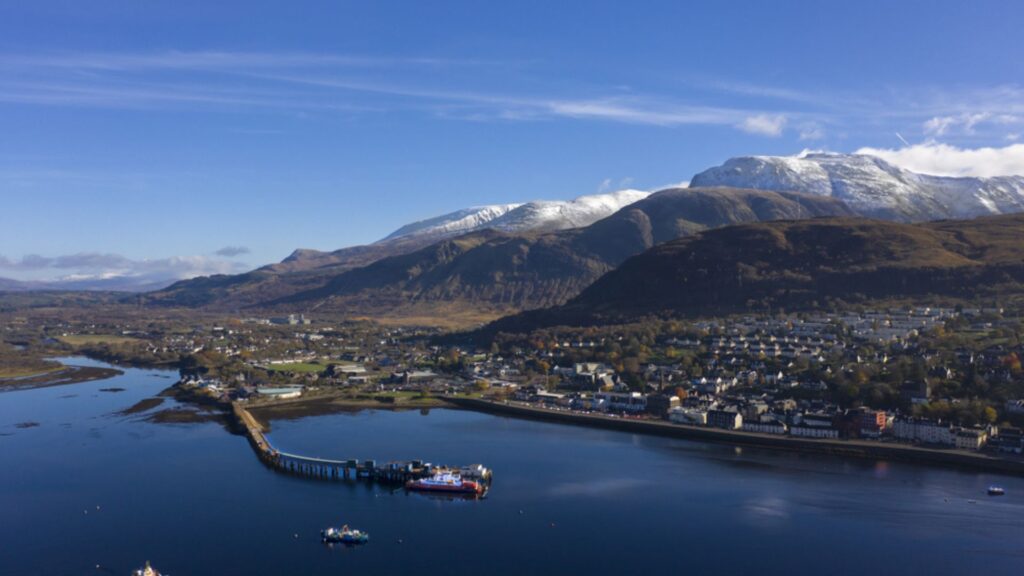
The town sits at the head of Loch Linnhe, squeezed between mountains and sea.
This geography creates a dramatic landscape and, crucially for hikers, its own weather.
What you see from your accommodation window in the morning can be wildly different from conditions thousands of feet higher in the mountains.
The variety is what makes Fort William particularly useful as a hiking base.
You can aim for the highest mountain in Britain one day, walk deep into Glen Nevis the next, and then spend another day exploring ridges that feel a world away from the crowds.
The Nevis Range
The Nevis Range is home to Ben Nevis, the UK’s highest mountain, and formidable neighbours such as Càrn Mòr Dearg.
These are big, serious mountains that demand respect.
This is where many visitors naturally focus their attention, particularly if climbing Ben Nevis is one of the main reasons for coming to Fort William.
“The best hike around Fort William isn’t always the highest one — some of the most memorable moments are found deep in the glens and on the quieter ridges.”
The Mamores
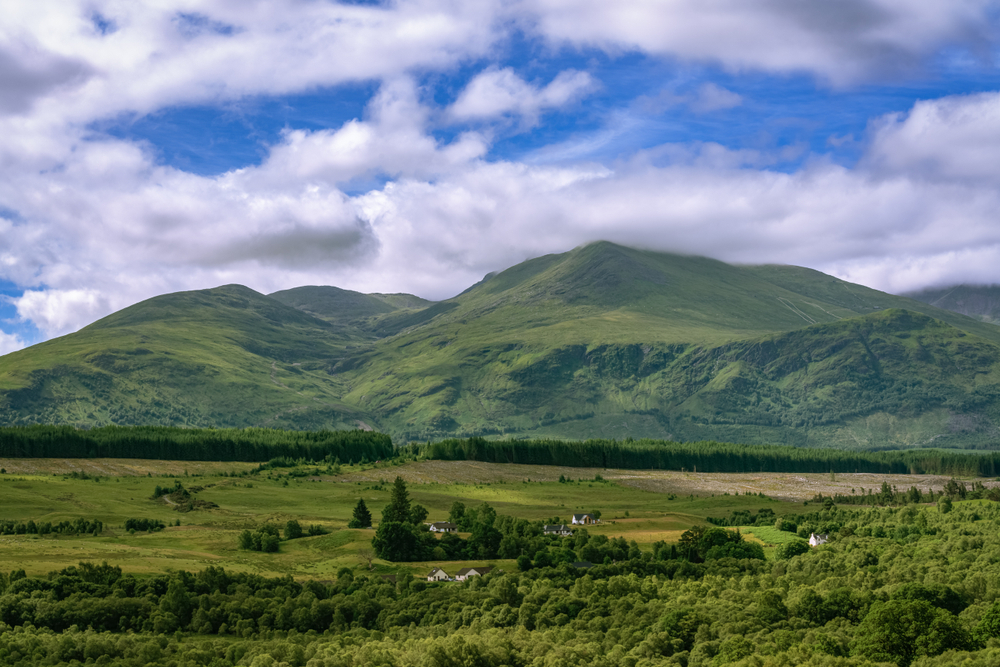
The Mamores provide a different mountain experience.
This range of ten Munros forms a long ridge south of Glen Nevis and offers some of the strongest ridge walking in the area.
For experienced hillwalkers, the Mamores can be every bit as memorable as Ben Nevis — and often noticeably quieter.
Glen Nevis
Between those mountains sits Glen Nevis.
This is where Fort William shows that a memorable walking day doesn’t necessarily need to involve standing on a summit.
Waterfalls, woodland, rocky mountains and the dramatic gorge provide a lower-level alternative to the bigger Munro days.
Best Hiking Areas Around Fort William
Fort William’s hiking can broadly be divided between its major mountain ranges and the lower ground surrounding them.
You don’t need to experience every area on one visit, but understanding the geography makes choosing your walks considerably easier.
Ben Nevis and the Nevis Range
Ben Nevis dominates Fort William both physically and psychologically.
For many hikers it is the goal, and the surrounding Nevis Range provides plenty of serious mountain country beyond the standard summit route.
This is the part of Fort William to concentrate on if mountain days and major summits are your priority.
The Mamores
South of Glen Nevis, the Mamores offer extensive ridge walking and a collection of Munros.
The terrain here is better suited to experienced mountain hikers, particularly on longer routes involving several summits.
For walkers looking beyond Ben Nevis, this is where Fort William really starts to show its depth.
Glen Nevis
Glen Nevis is a strong choice for walkers wanting Highland scenery without committing to one of the major summits.
The landscape combines woodland, waterfalls, river scenery and steep mountainsides, with walking ranging from relatively straightforward outings to routes heading deeper into the surrounding mountains.
Loch Linnhe and Lower-Level Walking
Not every day needs to be a major mountain day.
Fort William’s location beside Loch Linnhe gives the wider area a very different character from the ridges above town and provides a useful contrast when the mountains aren’t the right choice.
That mix of high and low terrain is part of what makes Fort William work particularly well as a multi-day hiking base.
“Avoid rookie mistakes. Our free ebook Hiking for Beginners shows you how.”
Signature Hikes Around Fort William
These aren’t intended to be an exhaustive list.
Think of them as three walks that show just how different hiking around Fort William can be.
For distances, elevation, difficulty, route information and a larger selection, see our Best Hikes in and Around Fort William guide.
Ben Nevis via the Mountain Track
Let’s be clear: ticking off the UK’s highest peak is a worthy goal.
The Mountain Track, sometimes called the tourist path, is the most straightforward route.
But don’t mistake “straightforward” for “easy.”
It is a long and relentless mountain day over rocky terrain.
On a clear day, the views are immense.
In poor conditions, however, the summit plateau can become difficult to navigate, which is why preparation, suitable equipment and proper navigation skills matter.
Go prepared, start early, and it’s an achievement you’ll never forget.
Ring of Steall
For experienced hikers looking for something very different, the Ring of Steall showcases the Mamores at their most dramatic.
The route takes in multiple Munros, exposed ridge terrain and scrambling.
It is a serious undertaking for hikers who already have the appropriate mountain experience, but the reward is a huge feeling of space and views across Glen Nevis.
Steall Falls and the Nevis Gorge
Looking for epic Highland scenery without the epic ascent?
The walk towards Steall Falls could be your answer.
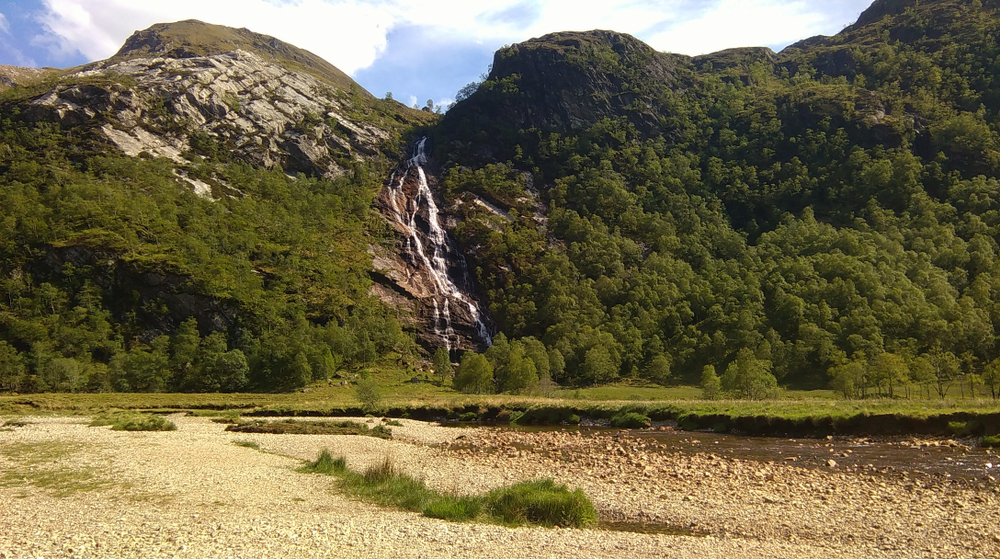
It is a much lower-level experience, following a rocky trail through the dramatic Nevis Gorge towards one of Scotland’s best-known waterfalls.
The route can still be rough and slippery in places, but it provides a huge sense of wilderness for considerably less climbing than the major mountain days.
Taking a Walking Holiday in Fort William
Fort William makes a particularly strong fixed base for a walking holiday because you don’t need to change accommodation every day to experience very different landscapes.
One day might involve a serious mountain route in the Nevis Range.
The next could mean a quieter walk through Glen Nevis.
Another could take you onto the Mamores or simply give your legs a break from the bigger climbs.
Fort William is also an important destination on the West Highland Way, making it a natural connection point between local hiking and a much longer Scottish walking journey.
That gives you two very different ways to structure a trip.
You can base yourself in Fort William and tackle separate day hikes, or incorporate the town into a longer point-to-point walking holiday through the Highlands.
For anyone planning a wider walking holiday in Scotland, that flexibility is one of Fort William’s biggest strengths.
“Plan less, walk more.” Pick a route, set your pace, and let Europe unfold under your boots: grab your free Walking Holiday ebook today”
Planning a Hiking Trip to Fort William
This is one destination where preparation matters.
The mountains around Fort William are serious environments, and comfortable conditions in town tell you surprisingly little about what you might encounter higher up.
Best Time to Hike in Fort William
Late spring and early autumn can offer a useful balance of longer daylight hours, hiking conditions and fewer midges than the height of summer.
Summer gives you long days but also brings peak midge season.
Winter hiking is an entirely different proposition and requires appropriate winter mountain experience, equipment and judgement.
Whatever the season, conditions on the mountains should be considered separately from what the weather looks like in Fort William itself.
Weather
Respect the weather, not just the mountain.
The environment is often the real challenge here.
A sunny start is not a guarantee of a sunny mountain day.
Cloud, wind, rain and temperature can change significantly with elevation, so plans need to remain flexible.
Sometimes the sensible choice is a lower-level route rather than the summit you originally planned.
Midges
From late spring into early autumn, midges can become one of the less glamorous realities of Highland walking.
They tend to be particularly troublesome during still and damp conditions, especially around lower and wetter ground.
A head net and suitable insect repellent take up almost no room and can make an enormous difference to your comfort.
What to Bring
In Scotland, waterproof gear isn’t an optional extra for mountain walking.
A reliable waterproof jacket and trousers should be part of your kit even if conditions look good when you leave Fort William.
A practical hiking layering system also helps you adapt to major changes in temperature and weather during the day.
Before setting off, make sure you have the essential items for a day hike, including enough food and water, spare layers and appropriate navigation equipment.
🗒️ Free Checklist: “Never forget the essentials — grab your free Ultimate Hiking Packing List.”
Navigation
Your phone’s GPS is useful, but it shouldn’t be the only navigation option you depend on in mountain terrain.
Batteries fail, phones can become damaged and mobile coverage is unreliable in many glens.
A map and compass provide an important backup, but they only help if you know how to use them.
Ben Nevis deserves particular respect because poor visibility on the summit plateau can make navigation considerably more difficult.
Your most important gear is ultimately knowledge: knowing how to navigate, when to turn around and what conditions you are prepared for.
Getting Around and Trail Access
Fort William works well as a hiking base because many of the area’s best-known walking landscapes are concentrated around the town, Glen Nevis, and the surrounding mountains. Pasted markdown
That said, not every trailhead is equally easy to reach, so it’s worth deciding which walks you want to tackle before working out your transport.
Walking and Local Trail Access
Some lower-level walks and routes around Fort William can be reached relatively easily from town, while mountain days often begin farther into Glen Nevis or at dedicated trailheads.
If you’re staying centrally, you may be able to manage some walking days without using a car at all.
Public Transport
Fort William has rail and bus connections that make it possible to visit without driving, and public transport can work well for travellers combining the town with a wider Highlands trip.
For individual hikes, though, always check whether the service actually reaches your trailhead and whether the timetable works with the length of your planned walk.
Driving and Parking
A car gives you considerably more flexibility, particularly if you want early starts, access to more remote trailheads, or the freedom to change your plans around the weather.
That flexibility can be especially useful in the Highlands, where a planned mountain day may need to become a lower-level walk if conditions change.
Fort William is compact enough to work without a car for some trips, but having your own transport opens up far more of the surrounding Highlands.
Highland Walking Culture
The hike doesn’t necessarily feel finished the moment you reach the car park.
Fort William has long been shaped by walkers, climbers and travellers passing through the Highlands, and that outdoors culture is part of the destination.
After a long day outside, local cafés, restaurants and traditional Highland pubs provide somewhere to recover, compare trail stories and plan whatever comes next.
For those looking to experience another side of Highland walking culture, Highland bothies offer an interesting glimpse into Scotland’s mountain traditions.
Fort William is also a useful place to connect a hiking trip with wider Scottish routes, destinations and mountain regions.
Putting It Into Practice
As you plan your trip, keep a few principles in mind.
They’re the difference between simply choosing a famous route and actually understanding the landscape you’re walking through.
- Respect the weather, not just the mountain. A promising forecast is useful information, not a guarantee.
- The best hike isn’t always the highest. Some of the strongest experiences around Fort William are found in the glens and on lower routes.
- Prepare for midges. A tiny piece of equipment can make a very big difference.
- Carry the right equipment, but build the right knowledge too. Navigation and knowing when to change plans matter more than expensive gadgets.
- Match the route to your experience. Fort William contains everything from lower-level scenic walks to serious exposed mountain terrain.
If Fort William forms part of a larger walking adventure, our trek-planning guide can help with routes, logistics and preparation.
“Fort William rewards ambition, but it rewards good judgement even more. There will always be another mountain day.”
FAQs About Hiking in Fort William
When is the best time of year to hike in Fort William?
Late spring and early autumn can offer a good combination of daylight, conditions and reduced midge activity compared with midsummer.
Conditions vary considerably between lower ground and the mountains, however, so current forecasts and route conditions should always shape the final plan.
Can beginners go hiking in Fort William?
Yes.
Fort William has lower-level walking as well as serious mountain routes.
Beginners do not need to start with Ben Nevis or a major ridge traverse to enjoy the landscape.
Choose routes that match your current experience and gradually build towards more demanding mountain days.
Can a beginner hike Ben Nevis?
A fit beginner may be capable of the Mountain Track in suitable conditions, but it should still be treated as a long and strenuous mountain day rather than an easy tourist walk.
Appropriate footwear, waterproof clothing, spare layers, food, water, navigation preparation and enough daylight all matter.
If you’re new to hiking, our Hiking for Beginners guide can help build a stronger foundation first.
Do I really need a map and compass?
For serious mountain walking, you should not rely entirely on a phone.
Digital navigation is extremely useful, but batteries fail and mountain conditions can make navigation more complicated.
Carry appropriate backup navigation and, importantly, know how to use it.
Is Ben Nevis the best hike around Fort William?
It is the most famous.
That doesn’t necessarily make it the best route for every walker.
Experienced hikers may prefer the Mamores and ridge routes, while others may get far more enjoyment from Glen Nevis and Steall Falls.
Is Fort William good for a walking holiday?
Yes.
Its combination of major mountains, glens, lower-level walks and links with the West Highland Way makes it particularly suitable as either a fixed hiking base or part of a longer Scottish itinerary.
How many days should I spend hiking around Fort William?
There isn’t one ideal number.
A few days gives you enough time to experience different types of walking, while a longer stay gives you more flexibility around Highland weather and allows you to mix bigger mountain days with easier routes.
Fort William: More Than Ben Nevis
Ben Nevis may be what brings many hikers to Fort William.
It doesn’t have to be what defines the trip.
The real appeal is the choice.
Big mountains rise directly above deep glens. Long ridges sit surprisingly close to lower-level waterfalls and woodland walks. The West Highland Way arrives almost at the doorstep.
Some days will be about summits.
Others will simply be about moving through a Highland landscape that feels bigger and wilder than the mileage on the map suggests.
That variety is what makes Fort William far more than somewhere you visit just to tick off Britain’s highest mountain.
Where to Next?
- Best Hikes in and Around Fort William – Compare individual routes, difficulty, distance, elevation and trail access.
- Ben Nevis Hiking Guide – Plan the area’s most famous mountain day.
- West Highland Way – Continue Fort William into one of Scotland’s major long-distance walks.
- Highland Bothies – Learn more about another side of Scotland’s mountain culture.
- Best Hikes in Scotland – Explore standout routes elsewhere in the country.
- Hiking in Scotland – Plan a wider trip around Scotland’s major walking regions.