
Salzburg State is one of Austria’s most rewarding hiking regions, blending alpine scenery, lakeside trails, glacier viewpoints, and historic towns into one surprisingly accessible destination.
From easy walks above Salzburg City to multi-day hut-to-hut adventures in the Hohe Tauern and Dachstein ranges, the region offers something for every type of hiker.
Whether you’re planning a walking holiday through the Austrian Alps, searching for scenic day hikes around Zell am See and Hallstatt, or simply hoping to combine mountain trails with culture and food, Salzburg delivers an excellent balance of adventure and comfort.
With strong public transport, well-marked trails, and classic mountain huts scattered throughout the region, it’s one of the best places in Austria to explore on foot.
- Why Hike in Salzburg State?
- Hiking in and Around Salzburg City
- Best Hiking Regions in Salzburg State
- 5 Best Hikes in Salzburg State
- Getting Around Salzburg for Hikers
- What to Pack for Hiking in Salzburg State
- Weather and Winter Hiking in Salzburg
- FAQs About Hiking in Salzburg State
- Where to Next?
- Why Salzburg Belongs on Every Hiker’s Map
Why Hike in Salzburg State?
Let’s get one thing straight. Salzburg isn’t just a postcard-perfect city. It’s also the gateway to some of Austria’s most diverse and spectacular hiking.
One of the best things about hiking in this region is just how accessible it is. The public transport is top-notch, and many trails are reachable from town centers so you’ll never be too far from a mountain hut or a cozy guesthouse.
So regardless of whether you’re a family with strollers, a solo traveler who’s just looking for a little bit of solitude, a trail-hungry peak bagger, or someone who prefers a scenic wander with plenty of snack breaks, you’ll find your stride here.
So yes, is there good hiking in Salzburg? You bet there is. In fact, it’s one of the best places in Austria to plan a walking holiday!
Hiking in and Around Salzburg City
Can you hike in Salzburg itself? Believe it or not, you don’t even have to leave the city to find great trails!
Salzburg is actually one of the best places in Europe to squeeze in a hike between museum visits and café stops.
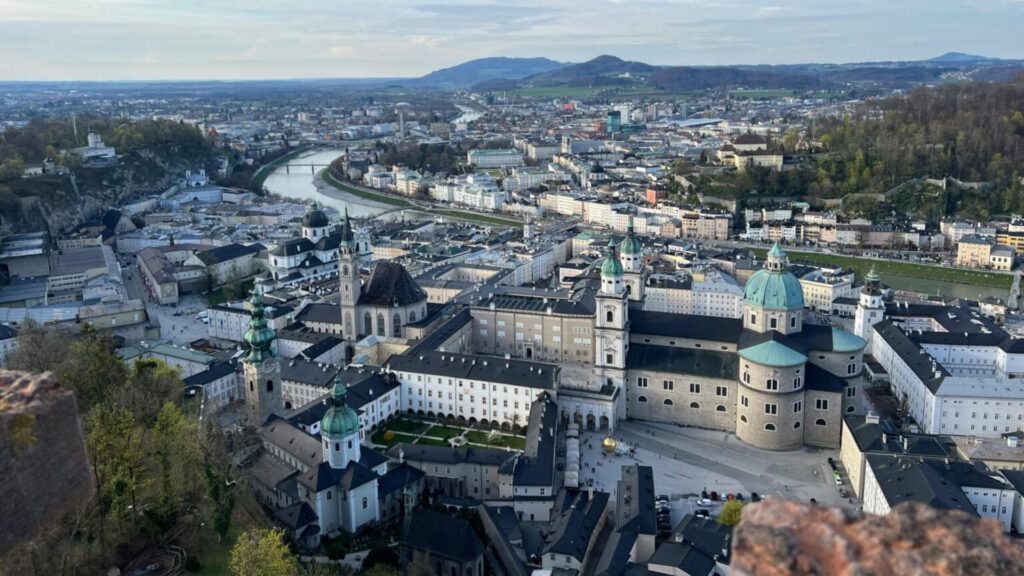
Start out with Gaisberg, Salzburg’s “local mountain.” Just a short bus ride from the center, this one’s a favorite for locals looking to stretch their legs.
It’s got that satisfying mountain feel without the need for crampons or altitude training.
The views from the top? Well, it’s all of Salzburg laid out like a map and the Alps beyond, just to show off.
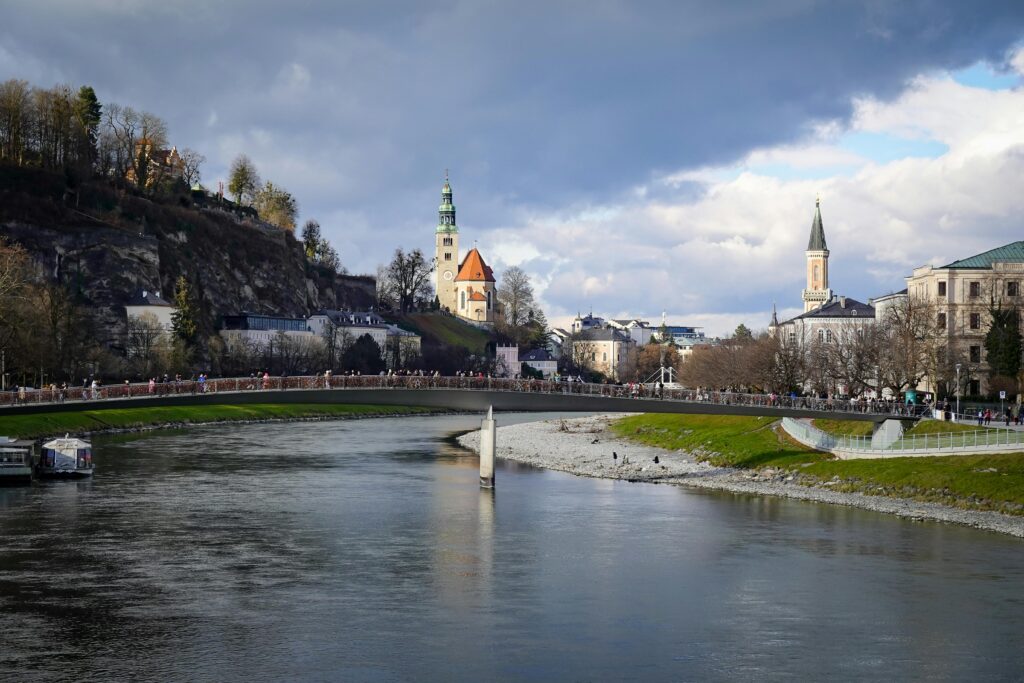
Then there’s Kapuzinerberg and Mönchsberg, which are two forested hills right in the city center.
These are perfect for urban hikes with a twist of history. You’ll pass ancient fortifications and monasteries, and you’ll also get to see panoramic spots where the skyline meets the mountains. It’s part nature walk, part time travel.
Best Hiking Regions in Salzburg State
If you’re the kind of person who likes to pick a hike based on mood (like glaciers one day and lakes the next) then Salzburg State is your kind of playground.
Hohe Tauern National Park: High-Altitude, Glacier Views
This is Salzburg’s big-league hiking territory. The Hohe Tauern is home to Austria’s tallest peaks (including the mighty Grossglockner) and the trails here feel like you’ve stepped into a high-alpine film set.
Think rugged ridgelines, glacial cirques, cascading waterfalls, and the occasional marmot squeak echoing through the valley.
Salzkammergut Lake District: Lakes, Rolling Hills, and Scenic Towns
If alpine drama isn’t your style, how about a peaceful stroll with lakeside views that belong in a travel magazine?
The Salzkammergut is a gentler side of Salzburg State. It has trails that wind through pine forests, over rolling hills, and past picture-perfect villages like Hallstatt and St. Gilgen.
It’s ideal for walking holidays and family hikes.
Tennengebirge & Dachstein: More Challenging Alpine Adventures
Are you looking for a bit more grit and elevation? You should head to the Tennengebirge and Dachstein ranges.
These limestone giants offer tougher and more technical trails, including via ferratas and remote ridge routes with wide-open views and few crowds.
The Dachstein Glacier area even sneaks in a little snow play, even in summertime.
Pinzgau Region (Zell am See, Saalbach, etc.): High-Mountain Ridges and Cozy Huts
Zell am See and the surrounding Pinzgau region are where high-mountain magic meets hut-to-hut ease.
You’ll find panoramic trails that roll along grassy ridgelines, classic Austrian huts that serve up dumplings and schnapps, and the kind of views that make you stop just to take it all in.
Saalbach and Hinterglemm have a network of lifts that make high-altitude hiking easier (and more fun), while Zell am See offers lake-and-peak combo hikes that are hard to beat.
“Avoid rookie mistakes. Our free ebook Hiking for Beginners shows you how.”
5 Best Hikes in Salzburg State
Salzburg State isn’t just one of Austria’s best hiking regions because of its scenery. It’s the sheer variety that makes it special.
You can spend one day walking beside glacier-fed lakes, the next climbing rugged alpine ridges, and then follow it up with a relaxed mountain stroll ending at a traditional Austrian hut serving warm dumplings and apple strudel.
Whether you’re chasing panoramic summits, scenic walking trails, or multi-day alpine adventures, Salzburg has no shortage of memorable hikes.
1. Gaisberg Summit Walk
Trail Snapshot
Difficulty: Easy to Moderate
Distance: 6–10 km depending on route
Best For: Scenic half-day hikes near Salzburg City
Highlights: Salzburg skyline views, alpine panoramas, easy access
Gaisberg is Salzburg City’s classic local mountain and one of the easiest ways to experience alpine hiking without venturing deep into the countryside.
The trail can be tackled directly from the city outskirts or shortened using local buses, making it ideal for travelers short on time.
The summit offers sweeping views across Salzburg’s historic center, rolling farmland, and distant Alpine peaks.
On clear days, the scenery stretches far into Bavaria and deeper into Austria’s mountain ranges.
For beginner hikers or visitors wanting a relaxed mountain experience close to the city, this is one of the best hikes in Salzburg State.
2. Krimml Waterfalls Trail
Trail Snapshot
Difficulty: Easy to Moderate
Distance: 4–8 km
Best For: Families and scenic waterfall walks
Highlights: Austria’s tallest waterfalls, forest trails, viewpoints
The Krimml Waterfalls are among Austria’s most famous natural attractions and one of the easiest scenic hikes in Salzburg State.
The trail climbs steadily beside a series of dramatic waterfalls, with multiple viewing platforms providing incredible photo opportunities along the way.
The route itself isn’t particularly technical, but the constant sound of rushing water and the cool alpine air create a memorable atmosphere, especially during summer.
For families, casual walkers, or hikers wanting a shorter adventure with huge scenery payoff, this trail is hard to beat.
3. Schafberg Panorama Trail
Trail Snapshot
Difficulty: Moderate
Distance: 10–12 km
Best For: Lake and mountain panoramas
Highlights: Wolfgangsee views, alpine ridges, classic Austrian scenery
Towering above the lakes of the Salzkammergut, Schafberg delivers some of the most iconic views in Austria.
The hike combines rolling alpine meadows with dramatic viewpoints overlooking Wolfgangsee, Mondsee, and the surrounding mountains.
Many visitors take the historic Schafberg Railway up and walk sections of the ridge, while stronger hikers can tackle the full ascent on foot for a more rewarding challenge.
This is one of those classic Austrian hikes that feels almost unreal at times, especially during sunrise or golden hour when the lakes glow beneath the mountains.
4. Dachstein Glacier Trails
Trail Snapshot
Difficulty: Moderate to Challenging
Distance: Varies by route
Best For: High-alpine scenery and dramatic landscapes
Highlights: Glacier viewpoints, suspension bridges, limestone mountains
The Dachstein region offers a more rugged and dramatic side of Salzburg hiking. Here, the landscape shifts from gentle alpine hills to towering limestone cliffs, glacier viewpoints, and exposed ridgelines.
Several trails around the Dachstein Glacier are accessible to moderately experienced hikers, while more advanced routes branch deeper into technical alpine terrain.
Suspension bridges, ice caves, and panoramic viewing platforms add to the experience.
Even if you’re not planning a full alpine traverse, the Dachstein area is worth visiting purely for the scenery alone.
5. Pinzgau Hut-to-Hut Trails
Trail Snapshot
Difficulty: Moderate to Challenging
Distance: Multi-day options available
Best For: Hut hiking and longer alpine adventures
Highlights: Mountain huts, ridgeline walking, alpine valleys
The Pinzgau region is where Salzburg State really shines for multi-day hiking. Trails weave between alpine huts, grassy ridgelines, high valleys, and dramatic mountain passes, creating the kind of classic Austrian trekking experience many hikers dream about.
Areas around Zell am See, Saalbach, and Hinterglemm offer excellent hut-to-hut routes ranging from beginner-friendly overnighters to demanding multi-day traverses.
One of the biggest highlights here is the balance between rugged scenery and comfort. You can spend the day hiking through remote alpine landscapes and still finish with hearty Austrian food and a warm mountain hut by evening.
Getting Around Salzburg for Hikers
One of the absolute joys of hiking in Salzburg Austria is how easy it is to get around without ever touching a steering wheel.
The local train and bus network is efficient and tailor-made for hikers who want to bounce between valleys, lakes, and trailheads.
The buses run like clockwork, even to high-mountain villages, and the ÖBB trains connect Salzburg City to pretty much everywhere in the region.
If you’re staying in a regional accommodation, chances are you’ll get a SalzburgerLand Card or a local “Sommer Card,” which gives you free or discounted access to public transport, cable cars, and even boat rides on the lakes.
To plan your route, you should use the ÖBB Scotty app or check local tourist offices for bus and hike combinations.
Pro tip: always check the return times. Some rural buses don’t run late, and hiking to a trailhead isn’t always the best idea unless you’re already committed to the round trip.
What to Pack for Hiking in Salzburg State
Salzburg’s weather likes to keep things interesting. In summer, the morning sunshine can turn into afternoon thunderstorms, and especially in the mountains.
Layers are your best friend: pack a lightweight waterproof jacket, a fleece or insulating layer, and sun protection.
In winter, things get crisp (and stunning), so don’t skimp on warm and breathable layers with some good footwear.
Trail signage in Austria is excellent. Color-coded difficulty levels range from easy (yellow) to black (advanced/alpine), so you’ll always know what you’re getting into.
Maps from the Austrian Alpine Club are reliable, and apps like Komoot or Alpenvereinaktiv are super handy for tracking routes.
And yes, you can hike in winter in Austria!
🗒️ Free Checklist: “Never forget the essentials — grab your free Ultimate Hiking Packing List.”
Austria knows how to do winter hiking right, and Salzburg is no exception.
While most high alpine trails are off-limits due to snow and avalanche risk, there are prepared winter hiking trails and snowshoe routes that let you soak up snowy mountain magic without needing skis.
Rauris Valley is a top pick for gentle winter hikes, since it has scenic and snow-covered paths that meander through the forest.
Zell am See and the Gastein Valley also offer well-marked winter trails, and they are often groomed and clearly signed with views that make you forget your toes are frozen.
So, is Salzburg worth visiting in winter? If you’re a hiker who likes peace and powder with some postcard scenery, the answer is a loud and snowy yes..
Be sure to check out our buyers guides to help you narrow down specific clothes and kit
- Waterproof Jacket Buyer’s Guide
- Daypack Buyer’s Guide
- Navigation & GPS Buyer’s Guide
Weather and Winter Hiking in Salzburg
The main hiking season in Salzburg State typically runs from late May through mid-October, though exact conditions vary depending on elevation and snowfall.
July and September are often considered the best overall months thanks to stable weather, open mountain huts, and long daylight hours.
Lower elevation trails around Salzburg City and the Salzkammergut region can often be hiked earlier in spring, while high alpine routes in areas like Hohe Tauern and Dachstein may still hold snow well into early summer.
Winter hiking is also popular throughout Salzburg State. Prepared snow trails around Zell am See, Rauris Valley, and Gastein offer scenic alternatives for hikers wanting snowy landscapes without committing to full alpine mountaineering or skiing.
If you’re planning winter hikes, always check avalanche conditions, weather forecasts, and trail accessibility before heading out.
July and September are often considered the best overall months thanks to stable weather, open mountain huts, and long daylight hours.
FAQs About Hiking in Salzburg State
Can you hike in Salzburg if you’re a beginner?
Absolutely. Salzburg is incredibly beginner-friendly since it has plenty of well-marked low-elevation trails suitable for all ages and fitness levels.
Is it safe to hike alone in the Salzburg Alps?
Generally, yes, Salzburg is a safe and well-developed region for solo hikers. Just follow standard precautions: let someone know your route, check the weather, stick to marked trails, and download an offline map.
When is the best time to go hiking in Salzburg?
The prime hiking season is late May to mid-October. July and September offer the best balance of clear trails and great weather. Winter hiking is also possible on marked snow trails.
Are the trails well-marked?
Yes, Austrian trail signage is among the best in Europe. You’ll find color-coded signs showing trail difficulty (yellow for easy, red for intermediate, black for advanced), along with the estimated times and clear markings on the trees, rocks, and signposts.
Do you need hiking boots or will trainers do?
For most day hikes and city-proximate trails, trail runners or sturdy trainers are fine, especially in dry conditions. But for anything involving elevation, rocky terrain, or longer distances, proper hiking boots with ankle support will be a really good idea.
Where can I find guided hikes or tours?
Most local tourist offices in Salzburg towns and valleys (like Zell am See, Saalbach, or Gastein) offer guided hikes, especially during the summer season. You can also check with local alpine clubs or use platforms like Komoot, Alpenverein, or Outdooractive.
Where to Next?
Salzburg State is a fantastic introduction to hiking in Austria, but it’s only one small part of what the Alps and wider Europe have to offer. If you’re planning your next adventure, these guides are a great place to continue exploring.
More Hiking in Austria
- Ultimate Guide to Hiking in Austria
- Best Hikes in Austria
- The Top 10 Treks in Austria
- Adlerweg Trail
Wider European Inspiration
Why Salzburg Belongs on Every Hiker’s Map
Salzburg may be world-famous for its music and architecture, but for hikers, it’s honestly a hidden gem that deserves top billing.
It offers that rare and wonderful kind of alpine adventure where you can spend the morning summiting a ridge and then by afternoon wandering historic streets or lakeside shores.


