

A brief guide on what Hiker’s Toe is, when to be worried, and how to manage the condition with preventative and post injury care tips…
Hiking is a fantastic way to stay active, explore nature, and challenge yourself physically. However, it also comes with its own set of potential foot issues, one of which is Hiker’s Toe.
This condition, also known as black toenail, is a common ailment among avid hikers. While it can be painful and unsightly, it’s important to know when to be concerned and how to prevent foot issues like this and care for your toe nails effectively.
One way to prevent Hiker’s Toe is by wearing properly fitted footwear and ensuring your feet have adequate protection during hikes. This advice is not only useful for hikers but also applies to runner’s toe, a similar condition caused by repetitive trauma to the nails during running.
In this article, we’ll dive deep into what Hiker’s Toe is, why it happens, and the best strategies for prevention and care. So, if you’re someone who loves to hike but is worried about or already suffering from Hiker’s Toe, read on to learn more.
What is Hiker’s Toe?
Hiker’s Toe typically happens when the toes repeatedly hit the front of the shoe while walking, especially during hiking downhill sections of a hike. The impact causes small blood vessels under the nail to break, leading to the accumulation of blood and the eventual discoloration of the nail.
Wearing ill-fitting hiking boots or shoes that lack sufficient room for the toes can increase the risk of developing this condition. Additionally, overuse or improper footwear, such as trail runners that don’t provide adequate protection, may exacerbate the issue.
Symptoms like foot pain, a bruised or discolored big toe, or even a bruised toenail are common indicators of Hiker’s Toe. This condition may also be more pronounced in individuals who put excessive strain on their foot and ankle during long hikes.
While it might look alarming, Hiker’s Toe is usually not a cause for serious concern and can be treated effectively with proper care. This article will explore the causes, prevention methods, and treatments for Hiker’s Toe, so you can continue to enjoy your hiking adventures with minimal discomfort.
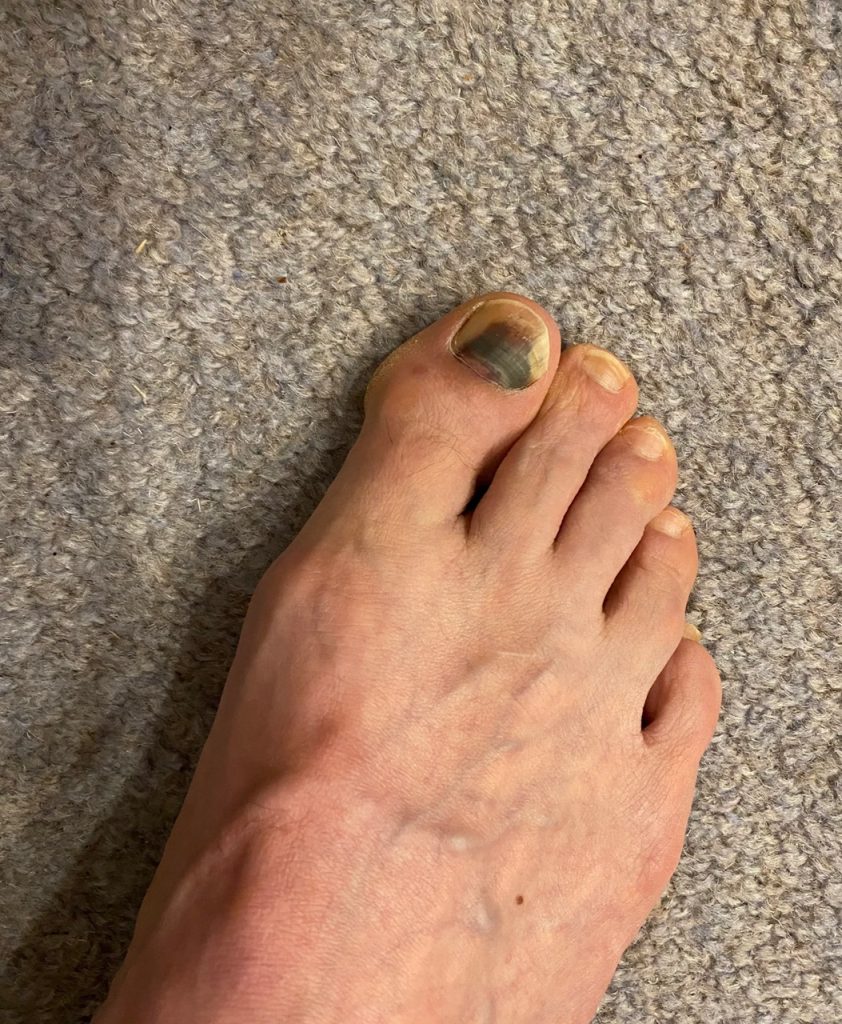
What Causes Hiker’s Toe?
Understanding the causes of Hiker’s Toe is crucial for both preventing and managing this condition. Several factors contribute to the development of Hiker’s Toe, and they are particularly common among individuals who hike regularly or engage in other activities that involve prolonged periods of walking or running.
As with most things in life, preventative measures are always preferable to treatments and cures applied after the fact.
When it comes to Hiker’s Toe, preventing it from occurring is much more effective, and not too difficult.
If you’re worried about developing Hiker’s Toe, here are steps you can take to help fend off this painful condition. These tips are trusted by many hikers who want to enjoy their adventures without discomfort.
“Every hiker starts somewhere — grab your free Hiking for Beginners guide.”
Improper Footwear
One of the most common causes of Hiker’s Toe is wearing shoes that don’t fit properly. If your hiking shoes are too tight, they can compress your toes and lead to bruising. Conversely, if they are too loose, your feet can slide forward, causing your toes to repeatedly hit the front of the shoe.
Downhill Hiking
Descending steep descents puts additional pressure on your toes as your feet slide forward in your shoes. This increased impact can easily lead to Hiker’s Toe, especially if your big toenail is long or your shoes don’t provide adequate support.
Extended Periods of Walking or Running
Extended Periods of Walking or Running: The longer you’re on your feet, the greater the chances of developing Hiker’s Toe. Marathon runners, long-distance hikers, and mountaineer enthusiasts often experience this condition due to the repetitive impact on their toes over extended periods.
Inadequate Toenail Care
Not trimming your toenails properly can also contribute to Hiker’s Toe. Long toenails are more likely to press against the inside of your shoes, increasing the risk of trauma and toenail bruising.
Heavy Loads
Carrying a heavy backpack increases the pressure on your feet and legs, making you more susceptible to Hiker’s Toe, particularly during long hikes or when trekking over uneven terrain.
Reduce unnecessary stress on your feet with our step-by-step guide on How to Pack a Hiking Backpack like a Pro!
How to Prevent Hiker’s Toe
- Choose the Right Footwear: Ensure that your hiking shoes fit properly, offering enough room in the toe box while still being snug around your heel and midfoot. A well-fitting shoe reduces the chances of your feet sliding forward, which is a key factor in preventing Hiker’s Toe.
- Trim Your Toenails Regularly: Keep your toenails trimmed short and straight across. This minimizes the risk of the nails pressing against the front of your shoes and causing trauma during hikes.
- Use Proper Lacing Techniques: Learn and use lacing techniques that secure your foot in place, especially during downhill sections. Techniques like the heel lock can help prevent your foot from sliding forward, reducing the impact on your toes.
- Wear Hiking Socks: Invest in good-quality hiking socks that provide cushioning and reduce friction. Socks made from moisture-wicking materials can also help keep your feet dry, reducing the risk of blisters and Hiker’s Toe.
- Consider Toe Protectors: For extra protection, especially on long or challenging hikes, consider using silicone toe caps or protectors. These can cushion your toes and absorb some of the impact, reducing the likelihood of bruising.
- Gradually Increase Your Hiking Distance: If you’re new to hiking or increasing your distance, do so gradually. This allows your feet to adjust to the physical demands without being subjected to excessive pressure or trauma all at once.

How to Treat Hiker’s Toe
If you’ve missed out on taking a preventative approach and are already unlucky enough to have developed Hiker’s Toe, there are fortunately a number of things you can do to support recovery. Here are some of the best treatments for Hiker’s Toe to help reduce pain, manage swelling, and get you walking in comfort again.
Rest and Elevate Your Foot
The first step in treating Hiker’s Toe is to rest and elevate your foot. This helps to reduce swelling and allows the blood to drain away from the toe, relieving pressure and pain.
Apply Ice
If your toe is swollen and painful, applying ice can help reduce inflammation and numb the area. Wrap an ice pack in a cloth and apply it to the affected toe for 15-20 minutes, several times a day.
Pain Relief
Over-the-counter pain relievers like ibuprofen can help reduce pain and inflammation. Be sure to follow the recommended dosage and consult with a healthcare provider if you have any concerns.
Drain the Blood (If Necessary)
In some cases, if the pressure under the nail is severe, a healthcare professional may need to drain the blood. This should only be done by a trained professional to avoid infection or further damage.
Protect the Toe
While your toe heals, protect it from further trauma by wearing open-toed shoes or sandals. If you need to wear closed-toe shoes, ensure they are loose-fitting and comfortable.
Allow the Nail to Fall Off Naturally
In severe cases, the toenail may eventually fall off. While this can be alarming, it’s important to let it happen naturally. The nail will gradually detach as the underlying tissue heals, and a new nail will grow in its place.

Best Advice on How to Treat Sore Feet After Hiking
If you’d like to read some of the best advice on how to treat sore feet after hiking, follow this link and check out our informative article that’ll have your tender feet back in tip-top shape in no time.
In Conclusion
Hiker’s Toe is no doubt a familiar term to anyone with experience hiking. While it can scertainly be painful, it can be dealt with in a straightforward manner.
Although most cases of Hiker’s Toe are typically not debilitating, it can still be extremely painful and dramatically affect your hiking performance, especially over long distances, rugged terrain, and in extreme climates. Issues like a bruised toe or damage to the nail bed can exacerbate the condition, particularly if you’re engaged in activities like trail running or navigating steep trails.
All too often, serious injuries result from smaller issues compounding into a larger problem.
Since your feet are a vital part of the hiking experience, it’s important to do your best to prevent and treat Hiker’s Toe, managing the condition sensibly if it arises.
With the right preventative measures and treatment methods, you can minimize downtime and keep trekking with confidence. By taking care of your feet and being mindful of the risks, you can continue to enjoy the great outdoors without letting Hiker’s Toe slow you down.


