
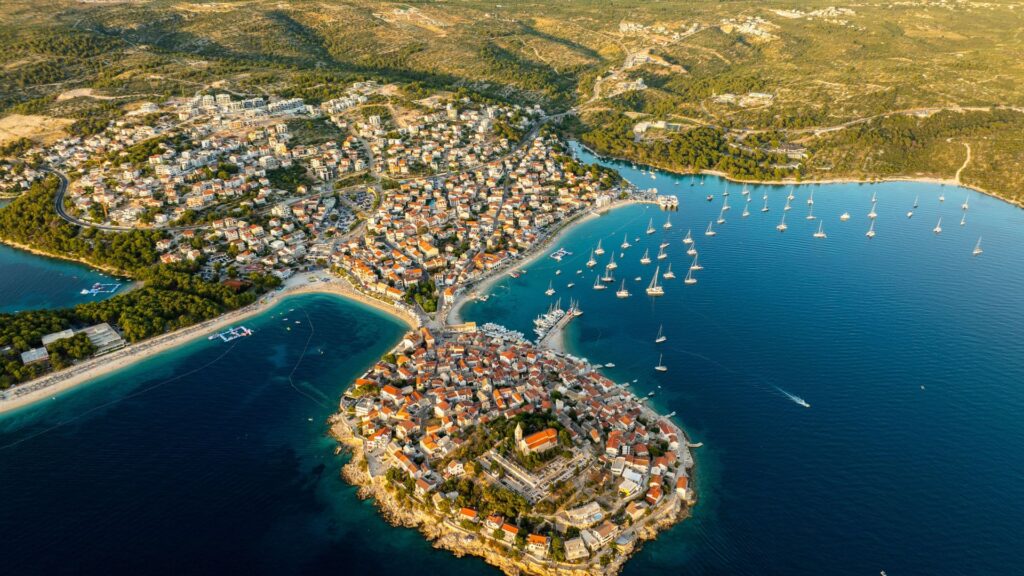
The Dalmatian Coast isn’t just a postcard-perfect stretch of Croatia’s Adriatic shoreline. It also just so happens to be a dream playground for walkers who have a curious spirit and a good pair of shoes.
Picture ancient towns still clinging to limestone cliffs, olive groves stretching to the sea, and a network of trails that winds past everything from medieval forts to hidden coves to vineyards that practically beg nonstop for a long lunch break.
For those of you who enjoy pairing a coastal breeze with a bit of elevation gain, you’ll be excited to know that this region serves up a walking experience that’s equal parts scenic and soul-soothing.
And the very best part?
You’re never far from a glass of local wine, a plate of grilled fish, or a swim in water so clear it looks filtered!
Looking for individual routes? Continue to our companion guide to the 6 Best Hikes on the Dalmatian Coast.
- Why Hike the Dalmatian Coast?
- Where to Hike on the Dalmatian Coast
- Best Hikes on the Dalmatian Coast
- Choosing the Best Base for Hiking the Dalmatian Coast
- Taking a Walking Holiday on the Dalmatian Coast
- Planning a Hiking Trip to the Dalmatian Coast
- Best Viewpoints on the Dalmatian Coast
- Beyond the Trail
- Historic Towns and Cultural Stops
- Food and Drink After Hiking
- Where to Stay Along the Dalmatian Coast
- Conclusion
- Where to Next?
Why Hike the Dalmatian Coast?
The Dalmatian Coast might be famous for its sparkling blue waters and medieval towns, but it’s also one of the best regions in Croatia to explore on foot.
Coastal trails dominate here, weaving through pine forests, past rocky outcrops, and through old fishing villages with constant sea views.
The islands—including Hvar, Korčula, Mljet, Brač, and Šipan—add another layer entirely, with walking routes that combine ferry journeys, quiet villages, beaches, vineyards, and rocky peaks.
For those of you who like variety, the Dalmatian Coast does not disappoint.
You can spend one day wandering an old town, another climbing above the Adriatic, and another walking between island villages with the sea almost permanently in view.
Where to Hike on the Dalmatian Coast
The Dalmatian Coast stretches along the Adriatic like a scenic necklace of towns, islands, cliffs, and coves.
Each comes with its own flavour and walking potential.
“Plan less, walk more.” Pick a route, set your pace, and let Europe unfold under your boots: grab your free Walking Holiday ebook today”
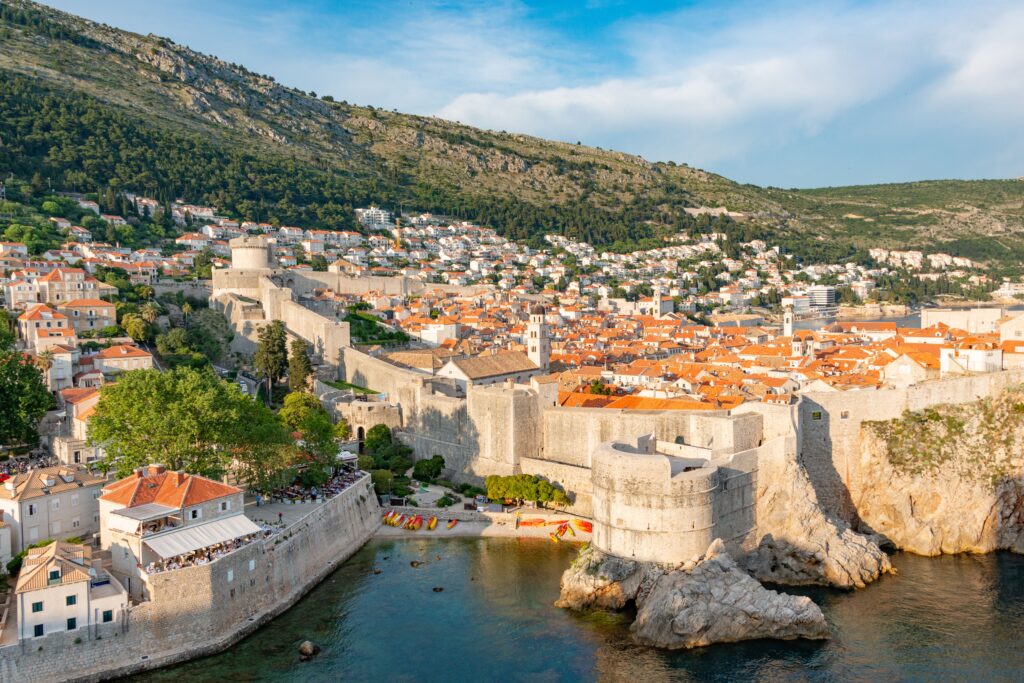
Dubrovnik and the Southern Dalmatian Coast
Dubrovnik is the obvious starting point.
You’ll find medieval walls, limestone alleys, and the iconic Mount Srđ rising just behind the city.
It’s got history, sea views, and some of the best short hikes in the region. If you’re basing yourself here, our guide to hiking in Dubrovnik covers more routes and ideas for exploring the area on foot.
Just outside the town, trails stretch out along the coast, while ferries open up nearby islands such as Lokrum and Šipan.
Dubrovnik works particularly well for travellers who want to combine sightseeing with shorter hikes and island day trips rather than building the entire visit around long mountain days.
Split and Central Dalmatia
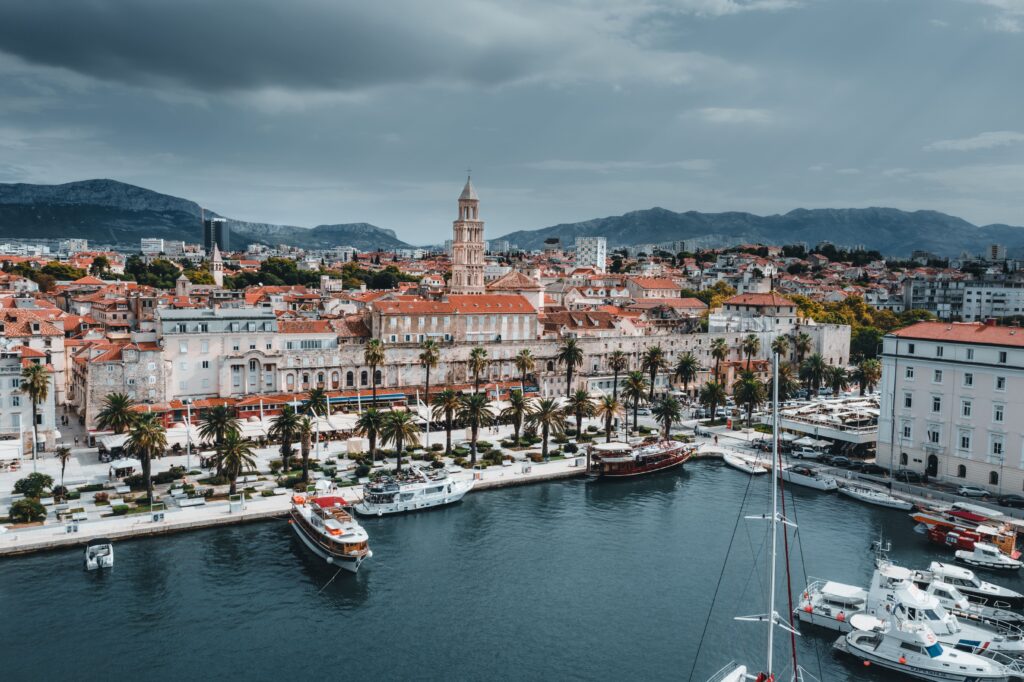
Split is another gem, balancing urban buzz with easy access to nature.
From Diocletian’s Palace to the pine-covered Marjan Hill, it’s a great place for walkers who want to mix ancient history with sea breezes and shaded trails.
Plus, it’s a prime hub for ferries heading out towards the islands.
That combination makes Split one of the most useful all-round bases on the Dalmatian Coast, particularly for walkers who want access to several different landscapes without constantly changing accommodation.
Makarska and Biokovo
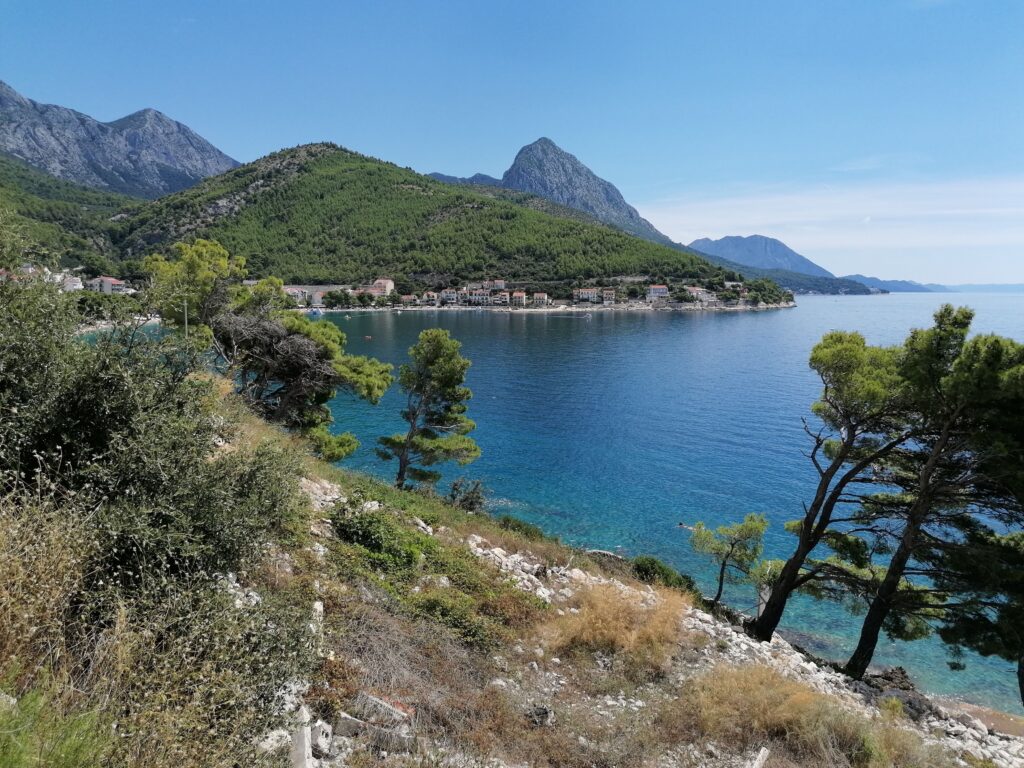
Makarska is the spot for more serious hikers aiming for the rocky heights of Biokovo Nature Park.
The town sits beneath the mountain range, giving you a very different hiking experience from the gentler coastal and island routes elsewhere in Dalmatia.
People looking for mountain air and a bit of grit may naturally lean towards Makarska.
It’s small enough to feel like a resort town without losing easy access to the dramatic terrain immediately behind it.
“First time on the trail? Hiking for Beginners has your back.”
Šibenik and Krka
Šibenik offers quick access to Krka National Park and its waterfalls, while also providing coastal walks and a historic town centre of its own.
For those of you who are chasing waterfalls, you’ll be glad to hear that Šibenik sits just a stone’s throw from Krka National Park.
It’s a useful alternative to Split or Dubrovnik for travellers who want a slightly quieter base with easy access to nature.
Zadar and Paklenica
Zadar sits slightly north but still connects well with many Dalmatian hiking routes.
It also provides relatively easy access towards Paklenica National Park, where the landscape shifts from coastline and old towns towards rugged mountain terrain.
For hikers interested in combining city time with more substantial inland routes, it can be worth including in a wider Dalmatian itinerary.
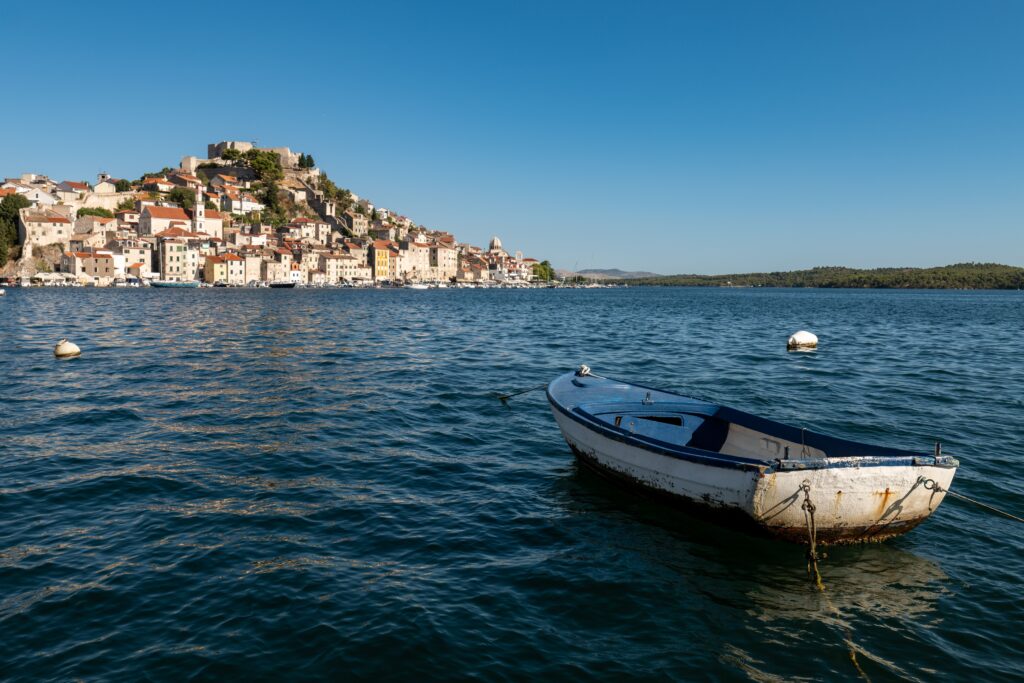
The Dalmatian Islands
Island hikes are a big hit, especially on Brač, Hvar, Korčula, Mljet, and Šipan, where you can mix scenic walking with ferry rides, villages, local food, and wine.
Brač is home to Vidova Gora, the highest island peak in the Adriatic.
Hvar combines villages, coastal scenery, and inland walking.
Korčula and Mljet offer quieter trail networks, while Šipan works well for those looking for a slower-paced island day.
The islands are particularly appealing if you prefer your walking holidays to feel less like a fixed hiking programme and more like a mix of trails, beaches, food, and village life.
Pelješac Peninsula and the Dalmatian Hinterland
If Dubrovnik and Split feel a little too busy, the Pelješac Peninsula is a solid alternative.
It’s got ridge hikes and far fewer selfie sticks.
Mljet National Park is another great pick. It’s lush, green, and often overlooked in favour of flashier destinations.
Then there’s the Dalmatian Hinterland, or Zagora, inland from Split, where trails pass through old stone villages and rugged karst landscapes with barely another hiker in sight.
These areas are worth considering if avoiding the busiest coastal destinations matters more than ticking off the best-known names.
Best Hikes on the Dalmatian Coast
The Dalmatian Coast offers everything from coastal paths and island summits to mountain routes and quieter rural trails.
Some of the standout experiences include the climb above Dubrovnik, island routes across Brač and Hvar, the mountain landscapes around Biokovo, and quieter walks through Mljet, Pelješac, and the Dalmatian Hinterland. If you want to explore beyond the coast, our guide to the best hikes in Croatia covers more of the country’s standout trails.
Rather than repeating full route descriptions here, this guide focuses on helping you choose the right area, base, season, and style of walking trip.
For distances, difficulty, elevation, trail details, and individual route recommendations, continue to our 6 Best Hikes on the Dalmatian Coast.
Choosing the Best Base for Hiking the Dalmatian Coast
When it comes to hiking the Dalmatian Coast, where you hang your hat matters.
A good base can turn a decent trip into a great one.
Split
Split makes a fantastic central base.
It has easy ferry connections and day-trip access towards Hvar, Brač, and inland areas.
It’s a solid all-rounder because it’s well connected, full of charm, and close to both the islands and inland trails.
For travellers wanting maximum flexibility without changing accommodation every couple of nights, Split is difficult to beat.
Makarska
Makarska is perfect for folks looking to explore Biokovo.
It works particularly well for those who care more about mountain hiking and elevation than easy island hopping.
The town’s position beneath the mountain range means you can spend more time walking and less time travelling to the trail.
Dubrovnik
Dubrovnik works best if you’re going to mix city sightseeing with island day hikes or stick to shorter treks in the nearby hills.
It offers a strong balance of historic walking, Mount Srđ, coastal routes, and ferry-accessible islands.
Šibenik
Šibenik is great for those eyeing Krka National Park and coastal walks nearby.
It offers a somewhat quieter alternative to the biggest Dalmatian hubs while still keeping plenty of natural attractions within reach.
Island Base or Mainland Base?
A mainland base such as Split, Dubrovnik, Makarska, or Šibenik generally provides easier transport and a wider selection of day-trip options.
An island base gives you a slower pace and puts coastal walking, villages, beaches, and island scenery directly outside your door.
For a longer trip, combining the two often makes the most sense: spend several nights on the mainland for transport flexibility, then slow things down with a few days on one of the islands.
Taking a Walking Holiday on the Dalmatian Coast
Day hikes rule the scene here and there’s simply no question about it.
Most visitors stick to easy-to-moderate loops or point-to-point hikes that start in a town and gradually wind their way to a viewpoint, beach, or well-earned lunch stop.
Island hikes are also a big part of the experience, especially on Brač, Hvar, and Šipan, where you can mix scenic walking with ferries and local wine.
For those of you who enjoy longer treks, there’s also growing interest in inn-to-inn walking holidays, particularly along coastal stretches or around the Makarska Riviera.
While hut-to-hut hiking like in the Alps isn’t as common, mountain huts do exist in places such as Paklenica, making an overnight adventure possible if you’re heading deeper into the hills.
Base-and-Day-Hike Trips
The easiest way to organise a Dalmatian walking holiday is to choose one good base and take individual day hikes.
Split, Dubrovnik, Makarska, and Šibenik all work for this approach.
You can hike during the day, return to the same accommodation each evening, and avoid spending half the trip packing bags and checking into new rooms.
Island-Hopping Walking Holidays
The ferry network also makes island hopping an obvious option.
You can combine walking on Brač, Hvar, Korčula, Mljet, or Šipan with time in the towns and beaches along the way.
This works especially well for travellers who want the walking to be part of the journey rather than the only purpose of it.
Coast and Mountain Split Stays
Another option is to divide the trip between the coast and higher terrain.
A few nights around Split or Makarska can give you access to Biokovo and mainland routes, followed by several days on an island for slower coastal walking.
For a broader look at putting a trip like this together, continue to our guide to taking a Walking Holiday in Croatia.
Planning a Hiking Trip to the Dalmatian Coast
For those of you planning to lace up and hit the trails, there are a few things absolutely worth knowing before heading out.If you’re planning a longer European adventure, our guide to planning a trek in Europe is also worth a look before you start building your itinerary.
Best Time to Hike the Dalmatian Coast
The best time to hike the Dalmatian Coast is from April to June or September to October, when temperatures are milder, trails are quieter, and the region is easier to explore on foot.
The best seasons for hiking the Dalmatian Coast are spring and autumn, specifically April to June and September to October.
These months bring mild temperatures, blooming landscapes, and fewer tourists clogging up the old towns and ferry terminals.
The trails are cooler, the sea can still be inviting, and local villages feel alive without being completely overwhelmed.
Summer—July and August—is beautiful, sure, but it also comes with scorching heat and a whole lot of people.
If you’re hiking in summer, early mornings or shaded trails are your best bet, and always bring more water than you think you’ll need.
Winter can be a peaceful time to explore, especially around the coast, but some services slow down or close entirely, so inform yourself before you show up.
🗒️ Free Checklist: “Never forget the essentials — grab your free Ultimate Hiking Packing List.”
What Are the Trails Like?
Don’t let the pretty views fool you because many Dalmatian trails are rocky, uneven, and completely sunbaked—especially inland.
Flip-flops won’t cut it unless you’re just strolling the promenade.
Trails are typically marked with red-and-white circles painted on rocks and trees, and most are easy enough to follow if you’re paying attention.
Local tourist offices often provide simple trail maps, and hiking apps can definitely be useful too.
The terrain changes considerably depending on where you walk.
Coastal routes can be rocky and exposed, island routes often mix village paths and rougher trails, while areas such as Biokovo and Paklenica bring much more substantial mountain terrain.
What to Bring for Hiking the Dalmatian Coast
Bring water.
Seriously.
Trails—especially on the islands—don’t always have fountains or shops nearby, and the sun is no joke in summer.
Even in spring or autumn, it can sneak up on you.
Sunscreen, a hat, and snacks are also smart additions.
Footwear with proper grip matters too. Much of the region is rocky and uneven, particularly away from town promenades and easier coastal paths.
Building your hiking kit? These guides will help:
- Best Hiking Footwear – Compare walking shoes and boots for rocky coastal paths, limestone trails, and rougher mountain terrain.
- Best Daypacks for Hiking – Find a practical pack for water, food, sun protection, and extra layers.
- Best Hiking Poles – Compare poles for additional stability on rocky, steep, or uneven trails.
- Best Waterproof Jackets – Choose a lightweight outer layer for changing coastal or mountain weather.
- Hiking Buyer’s Guides – Browse the full collection of hiking clothing and equipment guides.
If you’re walking near national parks or more remote inland areas, it might also be smart to let someone know your plans because cell service is decent but not guaranteed everywhere.
Getting Around the Dalmatian Coast Without a Car
Getting around isn’t too tricky.
Croatia’s bus system is reliable, relatively affordable, and gets you just about anywhere along the coast.
Ferries are practically a way of life here, especially if the islands are calling your name.
Split is the main hub for boat-hopping, with connections towards destinations such as Brač, Hvar, and Korčula.
For many travellers, the combination of buses and ferries is enough to build an entire walking holiday without renting a car.
Ferries and Island Hiking
The ferry network is one of the main reasons the Dalmatian Coast works so well for walkers.
Rather than seeing the islands as completely separate destinations, you can use the ferries to combine several different landscapes within the same trip.
That said, check schedules carefully when planning a route around a specific ferry connection, particularly outside the busiest travel months.
Do You Need to Rent a Car?
If you’ve got your eye on off-the-beaten-path villages or quiet inland trails, a rental car might be worth the splurge.
It gives you far more freedom for rural walks, inland trailheads, and early starts.
Just be ready for a few twisty mountain roads and tight parking spots in the older towns.
If your trip is concentrated around Split, Dubrovnik, major islands, or popular coastal destinations, public transport may be enough.
Getting to the Dalmatian Coast
Most folks fly into Split or Dubrovnik.
Both airports are well connected and relatively easy to navigate.
If the journey is part of the adventure, there’s always the scenic route: travelling overland from Slovenia or Bosnia, or combining other European transport with a ferry connection into Dalmatia.
That’s certainly not a bad way to arrive, especially with the sea breeze greeting you first thing in the morning!
Is the Dalmatian Coast Good for Solo Hiking?
Yes, the Dalmatian Coast is generally very comfortable for solo travellers, including hikers.
The locals are generally friendly and helpful, and many trails are well used, especially near popular towns or islands.
That said, it’s always wise to be cautious and let someone know your plans if you’re heading out alone, especially towards quieter areas or national parks.
Keep an eye on weather conditions and ferry schedules too, particularly if your route involves hopping between islands or heading into the hills.
Best Viewpoints on the Dalmatian Coast
If views are your thing—and let’s be honest, they’re kind of the whole point for most folks—there are a few standout spots for that full “wow” factor.
Mount Srđ
Mount Srđ above Dubrovnik gives you the whole city laid out like a miniature model against the Adriatic.
The combination of old city walls, red roofs, islands, and open sea makes it one of the region’s classic views.
Vidova Gora
Vidova Gora on Brač is the highest island peak in the Adriatic and delivers sweeping views over Hvar, Vis, and the surrounding sea.
It is a very different type of viewpoint from Mount Srđ, putting the emphasis much more firmly on island and coastal scenery.
Biokovo
Biokovo provides some of the most dramatic elevation above the coast.
The mountain landscapes give you wide views across the Adriatic and surrounding islands, with a much wilder feel than the lower coastal routes.
The Biokovo Skywalk also provides another perspective from high above the coastline, though it’s not for the faint of heart or weak of knees!
Beyond the Trail
Sure, the hiking is what brings folks to the Dalmatian Coast, but there’s plenty to stick around for once the boots come off too.
Historic Towns and Cultural Stops
From ancient fortresses to tiny stone villages that look like they haven’t changed in centuries, there’s no shortage of sights to soak in here.
Diocletian’s Palace in Split is basically a Roman city within a city, and it’s still alive with cafes, shops, and music often echoing through the old stone halls.
Dubrovnik’s Old Town, with its towering walls and polished limestone streets, is also a must—even if it’s just for an evening stroll after a hike.
And don’t skip Klis Fortress, perched high above Split with views stretching all the way to the sea and a whole lot of history underfoot.
Inland towns such as Trogir and Ston are worth a visit too.
Trogir for its medieval maze of alleys and coastal charm.
Ston for its famous city walls and those salty and delicious oysters that come straight from the bay.
Food and Drink After Hiking
You haven’t really hiked the Dalmatian Coast until you’ve sat down at a konoba—a local tavern—and dug into grilled fish, fresh octopus salad, or a big plate of pašticada with homemade gnocchi.
Pair it with a glass of local wine—Plavac Mali for the red lovers or a crisp Pošip if white’s more your speed—and you’re set.
The food here is simple, fresh, and made with the kind of pride that doesn’t need a fancy menu.
And after a long day of rocky trails, sea air, and elevation gain, sitting down for a proper meal becomes part of the walking experience rather than something separate from it.
Where to Stay Along the Dalmatian Coast
There’s no shortage of cosy places to crash.
Seaside guesthouses, rustic stone villas, and family-run inns dot the coast and islands.
For most walking holidays, these are more useful than formal hiking accommodation because the Dalmatian Coast is largely built around day hiking, island hopping, and staying in towns rather than traditional hut-to-hut routes.
While Croatia doesn’t have mountain huts on every corner, areas such as Paklenica and Biokovo do offer some more rustic options for those of you venturing deeper into the hills.
For most travellers, though, choosing the right base town matters far more than finding accommodation beside an individual trail.
Conclusion
The Dalmatian Coast isn’t just a place to visit, it’s a place to walk, wander, and take your sweet time soaking it all in.
For those of you who like to lace up your boots and follow the scent of pine trees and sea air, this stretch of Croatia delivers trail after trail of postcard-worthy views and laid-back towns.
The real appeal is the variety.
You can climb above an ancient city, follow an island trail to the sea, head inland towards rugged limestone mountains, or spend an easier day moving between villages, beaches, and long lunches. And if you’re keen to explore beyond Dalmatia, our guide to the best hikes in Croatia is a good place to continue planning.
For walkers who want landscapes, history, food, coast, and culture all wrapped into the same trip, the Dalmatian Coast is very difficult to beat.
Where to Next?
Planning more time on foot in Croatia and the Balkans? These guides will help:
- 6 Best Hikes on the Dalmatian Coast – Compare the region’s standout routes, viewpoints, coastal trails, and mountain walks.
- Ultimate Guide to Hiking in Croatia – Explore Croatia’s main hiking regions, landscapes, seasons, and practical planning information.
- Best Hikes in Croatia – Discover more national parks, coastal mountains, islands, waterfalls, and inland routes.
- Walking Holiday in Croatia – Learn how to combine the country’s cities, islands, coast, and mountain regions into a longer walking trip.
- Best Hikes in the Balkans – Broaden your plans with standout routes across the wider Balkan region.


