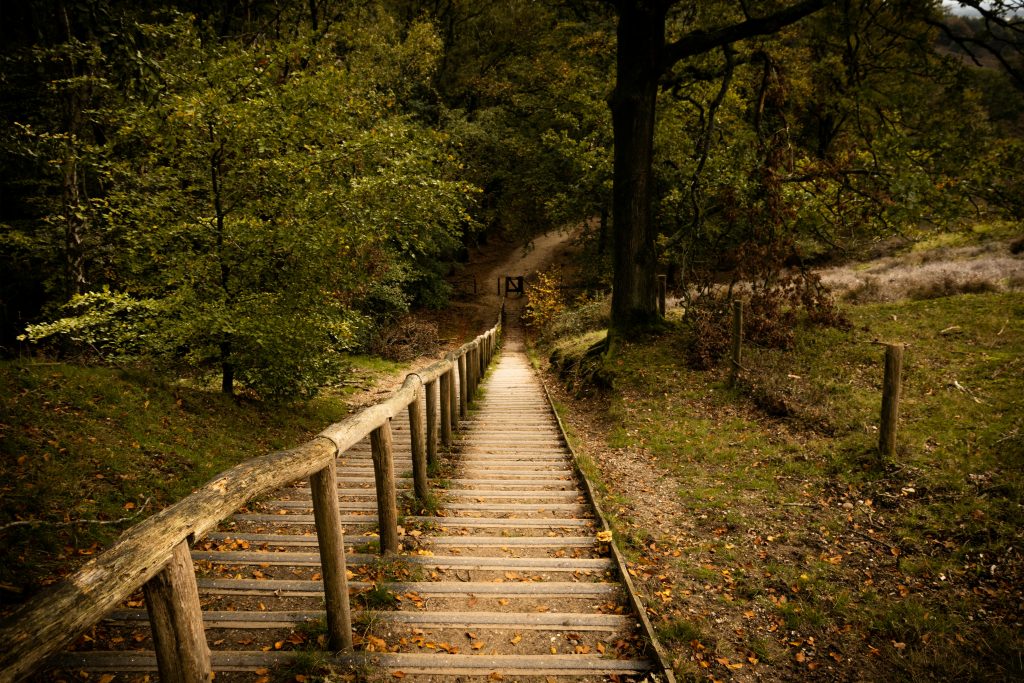
The City of Light may be well-known for romance and fashion (and croissants), but make no mistake, it’s also a city that’s designed for wandering.
The French capital is compact enough to stroll through and yet also expansive enough to reward serious walkers and hikers like yourself, and there are routes that range from iconic boulevards to quiet forests just a quick train ride away.
Regardless of whether you want to climb the hills of Montmartre, or if you want to lose yourself in the Bois de Vincennes, or if you just want to test your footing on the sandstone boulders of Fontainebleau, Paris has trails that combine history with seemingly limitless amounts of culture and natural beauty.
Why Hike in Paris?
Paris is not only walkable, it’s also practically begging to be walked. The entire city is a network of streets, bridges, and parks that lend themselves to discovery on foot.
And unlike cities where hikers must typically escape urban chaos to find a trail, Paris offers routes that are right in the heart of the action and it also delivers forests, hills, and rivers that are just beyond the périphérique.
Cultural & Historical Appeal
For those of you who like your hikes with a side of history, Paris delivers centuries in every step.
Walking the Île de la Cité is a true lesson in medieval power, while rambling through the Marais will reveal to you aristocratic mansions from the 17th century
The Left Bank brims with literary ghosts, from Hemingway’s old haunts to Sartre’s cafés.
Even the cemeteries (like Père Lachaise, Montparnasse, or Montmartre) turn into leafy hikes where tombs of legends become trail markers.
Landscape & Scenery
Paris might not boast alpine peaks to be sure, but its landscapes are more varied than first impressions may suggest.
The Seine, for instance, curves like a lazy hiking companion, and it offers quayside promenades that go on for miles.
The city’s 19th-century parks (like Buttes-Chaumont) throw in steep hills with hidden grottoes and even suspension bridges.
Beyond the city, the Fontainebleau Forest is a wild playground of sandy trails and climbing rocks and sprawling oak groves.
In short, the mix of river walks with urban hills and nearby wilderness are precisely what makes Paris a surprisingly dynamic base for hikers.
“First time on the trail? Hiking for Beginners has your back.”
Best Hiking Areas in and Around Paris
Bois de Vincennes
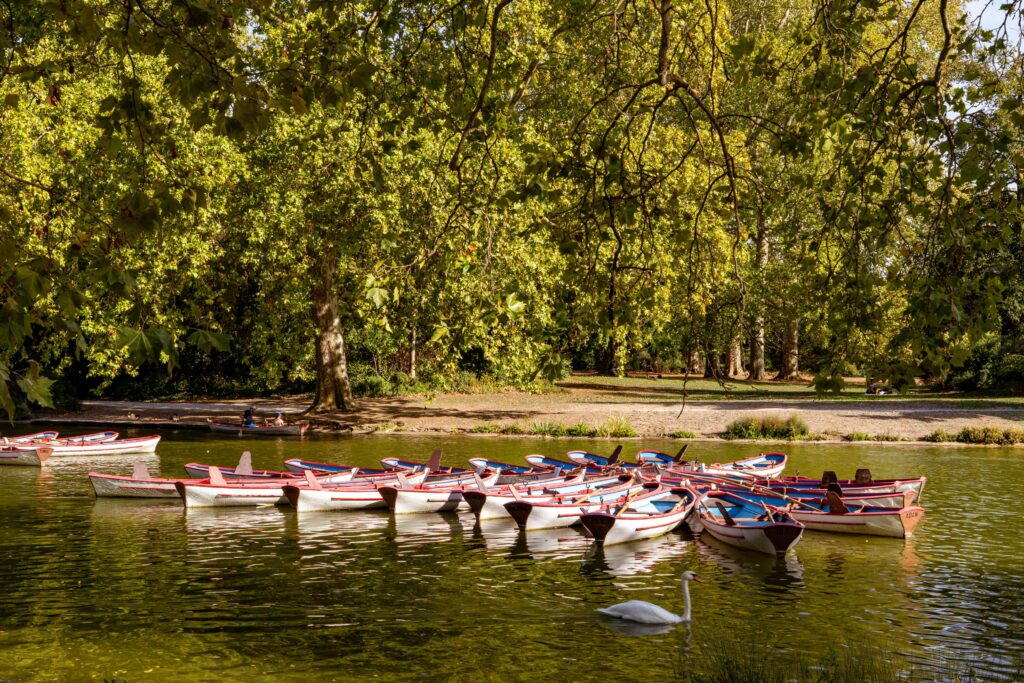
On Paris’s eastern edge, the Bois de Vincennes sprawls like a wild escape hatch. Once a royal hunting ground, it now offers close to a thousand hectares of trails around lakes, along with botanical gardens and the Parc Floral.
For those of you who crave a half-day hike without leaving the city, Vincennes will let you wander dirt paths under tall trees, spotting joggers, rowboats, and even the odd temple on an island.
One more popular route circles Lac Daumesnil, which weaves through wooded trails and past the whimsical Temple of Love (yes, that’s a thing in Paris!).
Bois de Boulogne
In the west, the Bois de Boulogne is slightly tamer but it’s also equally inviting. With over 850 hectares, it basically just mixes forest paths with lakeside trails.
The Jardin d’Acclimatation adds a whimsical detour, while the Pré-Catelan has a rose garden for a fragrant pit stop. Runners and cyclists flock here, but hikers can also carve their own quiet loops deep in the woods.
A classic walk begins at Porte Dauphine and loops around Lac Inférieur, before diving into forested paths and then circling back toward the direction of the Hippodrome.
Looking for individual routes? See our guide to the Best Hikes in and Around Paris.
Fontainebleau Forest
This is the crown jewel for Paris-based hikers. Just forty minutes by train from Gare de Lyon, Fontainebleau delivers rugged sandstone boulders along with sandy tracks and vast oak and pine forests.
The forest has over 300 kilometers (186 miles) of marked trails that range from easy loops to challenging long-distance routes like sections of the GR1.
Bouldering here is legendary, but even if you never leave the ground, the maze of paths will make for hours of exploration.
A favorite hike begins at Barbizon, which is the village beloved by painters, and meanders into the heart of the forest toward the iconic Franchard Gorge.
“Plan less, walk more.” Pick a route, set your pace, and let Europe unfold under your boots: grab your free Walking Holiday ebook today”
Parc de Sceaux
A short RER ride south, Parc de Sceaux blends manicured French gardens with meadows and groves.
Designed by André Le Nôtre (the same mind behind Versailles), its long avenues and reflecting pools make for elegant walking.
In spring, the cherry blossoms draw locals and hikers alike for pink-petaled strolls. The trails here can be looped to create anything from a short ramble to a longer exploration around the Grand Canal.
Canal Saint-Martin to Parc de la Villette
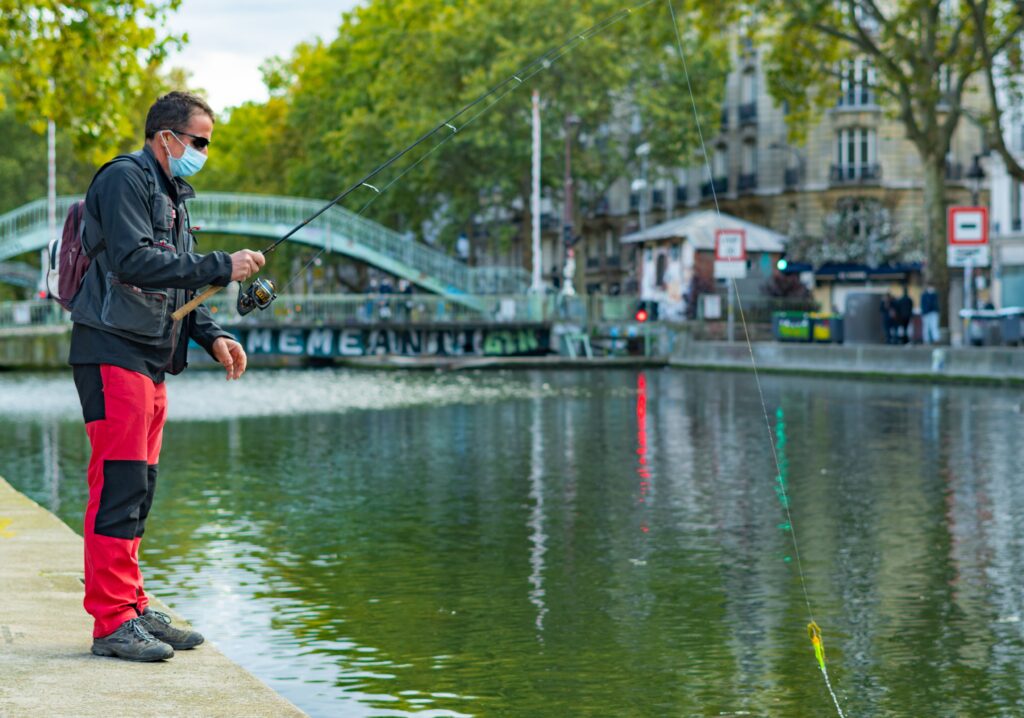
For an urban hike with character, you should start at Canal Saint-Martin, before following the towpaths under iron bridges and then heading north to Parc de la Villette.
The route mixes street art, café terraces, and leafy canalside paths.
By the time you reach the modern architecture of Villette, it will feel like you have crossed both eras and neighborhoods on foot.
The extension along the Canal de l’Ourcq adds even more distance, which is perfect for those who like their city hikes to feel like long hauls.
Taking a Walking Holiday in Paris
Paris works particularly well for a walking holiday because you don’t need to choose between sightseeing and hiking.
One day can be spent wandering through Montmartre, the Marais, and the Seine riverbanks, while the next takes you into the forests of Fontainebleau or along the lakes and woodland paths of Bois de Vincennes.
Public transport makes this style of trip particularly easy.
You can stay in one central base, explore the city on foot, and use the RER or regional trains for longer nature escapes without constantly changing accommodation.
Paris can also form part of a broader walking holiday in France, with plenty of opportunities to combine city sightseeing with countryside and trail walking. especially if you want to explore some of the country’s best hikes in France beyond the capital.
From the capital, it’s easy to continue towards other French walking regions, and our guide to hiking in France is a useful starting point for planning where to go next smaller cities, countryside trails, and longer-distance routes once you’re ready to leave the boulevards behind.
That combination of city walking, forest day trips, culture, food, and onward transport makes Paris a strong starting point for travellers who want their French walking holiday to include more than just one landscape.
Exploring Paris on Foot
From inner-city strolls to day trips that feel like mini-expeditions, Paris is full of paths that are fully worth lacing up for.
Best Viewpoints in the City
Montmartre is the obvious but unmissable choice. Climbing the cobblestone streets to Sacré-Cœur will reward you with panoramic views over zinc rooftops and church spires.
For something that’s a bit less touristic, Parc de Belleville offers a quieter rise with picnic-friendly lawns.
Another favorite viewpoint comes from walking across the Passerelle Simone-de-Beauvoir, which is where the Seine bends dramatically underfoot.
🗒️ Free Checklist: “Never forget the essentials — grab your free Ultimate Hiking Packing List.”
Best Neighbourhoods for Walking
Some of Paris’s best walking doesn’t really need a trail at all.
The Marais is ideal for slow wandering through narrow streets, hidden courtyards, and grand old mansions, while the Latin Quarter mixes steep lanes, bookshops, cafés, and some of the city’s oldest landmarks.
Île de la Cité and Île Saint-Louis are also easy to link into a longer riverside walk, with bridges crossing back and forth over the Seine and plenty of excuses to stop along the way.
For something with a more local feel, Montmartre’s quieter backstreets and the hillside neighbourhoods around Belleville provide a little more elevation and a completely different side of Paris from the grand boulevards below.
Planning a Hiking Trip to Paris
Best Time to Visit
Paris is a year-round walking city, but some seasons offer a sweeter stride than others.
Spring brings cherry blossoms in Parc de Sceaux and lilacs in the Jardin des Plantes, which makes every route feel painterly.
Summer has long daylight hours, but trails like the Canal Saint-Martin can be crowded with picnickers as well.
Autumn is downright spectacular in the Bois de Vincennes and along the Promenade Plantée, and it has fiery leaves that add drama to your hike.
Winter strips the city back to its bones, which is perfect for crisp riverside walks that are followed by steaming chocolate chaud in a café.
If Paris is just one stop on a longer adventure, planning a trek in Europe can help you work out routes, transport, and logistics before you go.
What to Bring
Paris doesn’t demand the same kit as a mountain destination, but comfortable footwear still matters when you’re spending hours on cobblestones, pavements, forest tracks, and sandy trails.
A lightweight waterproof layer is worth carrying throughout much of the year, along with a small daypack, water, snacks, and an extra layer if you’re heading farther out to places like Fontainebleau.
For longer forest walks, offline navigation or a downloaded route is also useful, particularly if you plan to wander beyond the busiest paths.
And if you’re visiting in summer, sunscreen and a hat are worth packing too, especially for exposed riverside routes and longer days outside the city.
If you’re still putting your kit together, If you’re still putting your kit together, our guide to things to bring on a day hike is a useful place to start.” This is already a very natural contextual link.
If you do realise your rain jacket, socks, or other essentials are still sitting at home, Paris is well stocked with outdoor shops.
Decathlon has stores throughout the city, while Au Vieux Campeur in the Latin Quarter covers everything from hiking footwear to navigation equipment.
If you’re heading to Fontainebleau, it’s worth picking up what you need before leaving the city.
Getting Around and Trail Access
One of the joys of hiking Paris is how easy it is to get from cobblestones to forest paths without hassle:
Public Transport
The RER network is a hiker’s best friend. RER A takes you to Vincennes, RER B drops you near Parc de Sceaux, and RER D whisks you south toward Fontainebleau.
Transilien trains handle longer hops, like to Auvers-sur-Oise for riverside rambles. And within the city, the metro will deliver you to trailheads like Buttes-Chaumont or Montmartre.
Driving and Parking
Renting a car is useful if you want maximum freedom in the forests around Paris.
Fontainebleau has ample parking near its trailheads, and the regional parks usually provide free lots too.
Driving in central Paris, however, is not for the faint of heart, with narrow streets and steep parking fees.
So stick to trains in the city, and wheels for the wilderness!
Airport and Regional Links
Charles de Gaulle and Orly airports both connect directly to the RER, so you can go from baggage claim to a trail in less than an hour.
International travelers arriving by Eurostar at Gare du Nord or TGV at Gare de Lyon will find themselves within easy reach of both urban walks and trains to Fontainebleau.
Paris is not just a hub. It’s a springboard to trails all across France.
Beyond the Trails – More Than Walking
Paris is a famous cultural heavyweight, which makes it a dream for a walking holiday that balances trails with world-class attractions.
Cultural Highlights
After a morning hike, you can trade your boots for curiosity and then explore landmarks that reward slow wandering.
The Louvre’s vast halls feel like a hike of their own, while Musée d’Orsay will let you walk through Impressionist masterpieces.
For something outdoors, the Jardin du Luxembourg mixes statues with fountains and shady promenades that are perfect for gentle exploration.
Food and Drink
Paris practically invented the hiker’s reward system. After a few hours in the Bois de Vincennes, a steaming onion soup or plate of duck confit tastes even better.
Boulangeries are ideal for pre-hike fuel, with croissants and pain au chocolat sliding neatly into backpacks.
Wine bars and brasseries will always make evenings feel celebratory, and especially when paired with a day’s worth of steps on your counter!
Day Trips
Day trips expand the hiking menu beyond city limits. Versailles is not only a palace but also a landscape park that has groves with fountains and long walking avenues.
Giverny (with Monet’s house and gardens) will let you step into Impressionist scenery before wandering along the Epte River.
And for those of you who want vineyards with your walks, you’ll be glad to hear that Reims combines Champagne houses with gentle countryside trails.
Are You Ready to Lace Up?
Paris proves that hiking does not always mean heading for the mountains, because sometimes the most rewarding trails lead through boulevards or along canals or into forests where kings once hunted.
So lace up, pack a baguette, and let Paris show you its trails!
Where to Next?
Paris makes an easy starting point for a wider walking trip through France, whether you want more city-based hiking, countryside trails, or longer routes farther from the capital.
- Best Hikes in and Around Paris – Explore the standout walks, forests, parks, viewpoints, and day hikes covered in more detail.
- Ultimate Guide to Hiking in France – Get a broader overview of France’s main hiking regions, landscapes, seasons, and trail styles.
- Best Hikes in France – Discover more of the country’s standout mountain, coastal, countryside, and national park routes.
- Walking Holiday in France – Plan a longer trip combining cities, villages, countryside, coast, and hiking regions.
- Lyon for Hikers – Continue with another French city that works well for walking, sightseeing, and nearby nature.
- Best Hikes in and Around Lyon – Explore the best routes and walking areas around Lyon.